Pack a waterproof, portable kit with several days of water and nonperishable food, a NOAA Weather Radio, spare power, light, first aid, sanitation supplies, signaling tools, documents, medicines, and needs specific to your household. Store a larger home kit and a smaller grab-and-go bag, then connect both to practiced flood and landslide evacuation routes. A kit cannot predict a landslide or make floodwater safe: official alerts and local emergency instructions always take priority.
Start with two kits, not one
A household is easier to evacuate when supplies are divided by how they will be used. Keep a comprehensive home kit where everyone can reach it, and maintain a lighter portable bag for an urgent departure. FEMA’s Ready Campaign recommends a full home supply kit plus smaller portable kits tailored to household needs.
As an Amazon Associate I earn from qualifying purchases.
Home kit
The home kit holds heavier or bulkier items: extra water and food, backup batteries, sanitation supplies, tools, spare medicines, document copies, and pet provisions. Place it in a known location above likely flood levels when possible, in containers that can be carried if you must leave.
Recommended Free Tools
Grab-and-go bag
The portable bag should contain the items needed during the first minutes of an evacuation: water, ready-to-eat food, essential medicines, a flashlight, a radio or communication plan, a first-aid supply, documents, masks, sanitation items, and pet or accessibility essentials. Do not assume you will have time to transfer supplies from the home kit after an alert or when a slope begins moving.
#1 Best Overall

- 72-HOUR EMERGENCY KIT FOR 2: Built for disaster preparedness at home, work or on the road, this 2-person survival backpack includes food, water, first aid, lighting, hygiene and shelter essentials for up to 3 days.
- FOOD, WATER & PURIFICATION: Includes two 2,400-calorie emergency food bars, six 4.225 oz water pouches, water purification tablets and a 32 oz BPA-free bottle to help support hydration and nutrition during outages or evacuations.
- FIRST AID & PERSONAL PROTECTION: Packed with a 33-piece first aid kit, 2 N95 dust masks, nitrile gloves, hygiene kits, ponchos, survival blankets and tissues for added protection, sanitation and comfort during emergencies.
- POWER, LIGHTING & COMMUNICATION: Includes a hand-crank emergency power station with flashlight, AM/FM radio, siren and cell phone charging, plus 2 emergency lightsticks and a 3-in-1 whistle, compass and thermometer.
- DELUXE SURVIVAL TOOLS IN ONE BACKPACK: Adds a multi-function tool, duct tape, bio-hazard bag and emergency contact card in a portable backpack. Ideal for earthquakes, hurricanes, blackouts, wildfire evacuation, cars and workplaces.
Baseline contents for a flood and landslide kit
Use FEMA’s current emergency-supply checklist as the baseline, then add items dictated by your household, terrain, climate, and evacuation destination. Organizing supplies by function makes monthly checks faster.
| Function | Pack | Important qualification |
|---|---|---|
| Water and food | Drinking water and nonperishable food for several days | Choose foods household members can eat and prepare with limited equipment. Confirm the latest FEMA checklist for current quantity language rather than relying on an older target. |
| Information and communication | Battery-powered or hand-crank radio that receives NOAA Weather Radio tone alerts; spare batteries; phone, charging cable, and backup battery; local maps | Test the radio and charger before an emergency. NOAA alert reception is specifically part of FEMA’s checklist. |
| Light and medical care | Flashlight and spare batteries; first-aid kit; prescription medicines and household medical supplies | Keep medicines in original labeled containers when practical and maintain a replenishment schedule. |
| Signaling and dust protection | Whistle and dust mask | Dust protection can be useful after structural damage or a slope failure, but it does not make a contaminated or unstable area safe. |
| Sanitation | Moist towelettes, garbage bags, and plastic ties | Separate a small daily-use pouch from reserve supplies so the whole bag does not need to be opened. |
| Shelter and sealing | Plastic sheeting and duct tape | These are shelter-in-place supplies in FEMA’s list. They are not a substitute for leaving when authorities order evacuation. |
| Tools and food access | Non-sparking wrench or pliers; manual can opener when canned food is packed | Use tools only if doing so is safe. Shutoffs, damaged lines, and structures may be hazardous after flooding or ground movement. |
| Documents | Copies of important documents | Keep copies in waterproof portable storage and include information needed for medical care, insurance, identification, and emergency contacts. |
Customize the kit for the people and animals leaving with you
Prescriptions and medical equipment
Add prescription medicines, glasses, hearing-aid batteries, mobility-device charging equipment, wound-care supplies, and any consumables that cannot be replaced quickly. Write down medication names, doses, allergies, clinicians, and pharmacy details. If a device uses electricity, pack its cable, adapters, and a charged backup source. Rotate supplies before they expire rather than waiting for an emergency.
Infants, children, and older adults
Pack infant formula, bottles, diapers, wipes, and age-appropriate food if needed. Children may need comfort items, identification cards, and activities that do not require power. Older adults may need incontinence supplies, communication aids, extra clothing, or help transferring into a vehicle. Assign one adult to confirm each person’s medications and mobility needs during an evacuation.
Do these 3 things before closing this tab:
1Fix the driver behind crashes, sound loss and screen glitches2Repair Windows errors before they cause bigger problems3Scan for outdated or missing drivers - takes under a minuteDisabilities and access needs
Plan for ramps, service-animal equipment, communication cards, backup batteries, and a way to transport essential devices. Keep instructions understandable to anyone who may assist. If a household member cannot use stairs or walk through moving water, identify accessible transport and an alternate destination before storm season.
Rank #2

- 72 HOUR EMERGENCY KIT FOR 2 PEOPLE WITH FOOD AND WATER: Includes 2 emergency food bars totaling 4800 calories and 12 sealed drinking water pouches to support hydration and energy during disasters. Designed for emergency preparedness, survival kits, earthquake kits, and evacuation planning.
- COMPLETE DISASTER SURVIVAL KIT WITH SHELTER AND WARMTH: Equipped with 2 emergency ponchos and 2 survival blankets to help protect against rain, wind, and cold conditions. Critical gear for outdoor emergencies, power outages, and shelter in place situations.
- FIRST AID KIT AND SAFETY PROTECTION SUPPLIES: Features a 33 piece first aid kit, dust masks, and nitrile gloves to support basic medical care and protection from debris and airborne particles. Essential for emergency response, injury care, and disaster safety.
- EMERGENCY LIGHTING AND SIGNALING TOOLS INCLUDED: Comes with 2 long lasting 12 hour lightsticks and a safety whistle for visibility and communication in low light or rescue situations. Ideal for blackout emergencies, nighttime evacuation, and search scenarios.
- COMPACT BACKPACK FOR GRAB AND GO EVACUATION: Lightweight emergency backpack keeps all survival supplies organized and ready for fast response. Perfect for home emergency kits, car emergency kits, office preparedness, and bug out bags.
Pets and service animals
Include several days of pet food, water, bowls, medications, waste bags, a leash or carrier, copies of vaccination records, and a current photo. Identify shelters, hotels, or relatives that accept animals; many emergency shelters cannot house pets except service animals. USGS and Ready.gov both emphasize including pets in evacuation planning.
Protect documents, water, and electronics from flood damage
Use a waterproof, portable container for identification copies, insurance details, property records, prescriptions, emergency contacts, and a list of serial numbers. A sealed inner pouch provides a second barrier, but test the container rather than assuming a label guarantees watertightness. Keep a digital copy encrypted on a device or account that household members can access, while retaining paper copies in case networks and power fail.
Do not store the entire kit on a basement floor or beside a drain. Choose a location above expected water entry and away from windows that could break. If a flood warning is issued, move the portable bag, medicines, documents, and electronics first; do not delay an ordered evacuation to save property.
What’s actually slowing this PC down?
Pick the symptom - the matching free tool is one click away.
Choose the right communication and power setup
Radio
FEMA’s checklist calls for a battery-powered or hand-crank radio capable of receiving NOAA Weather Radio tone alerts. A battery model is simple to operate but needs a maintained battery supply. A hand-crank model reduces dependence on disposable batteries, yet still needs testing because cranks, internal cells, and charging ports can fail. Some radios combine a flashlight or phone charger; treat those features as secondary and verify that the radio itself receives the alert channel in your area.
Rank #3

- Prepare Now for the El Nino Storm Season: El Nino pushes storms closer to the U.S. coast, leaving as little as 48 hours to prepare. Backup supplies when weather catches you off guard
- Hand-Assembled in New England: Designed by a disaster professional and assembled by a real person, not a faceless factory. Every kit checked by hand before it ships
- Emergency Lifeline When You're Stuck: For flash floods, closed roads, or power outages when you can't reach a store. Below-average hurricane forecast for El Niño doesn't mean no risk-the storm that hits may arrive faster and closer to home
- Upgraded 2026 Version: Premium lined and insulated rain poncho replaces economy version plus expanded comfort kit for extended emergencies
- Comfort-Focused Emergency Kit: Beyond basic first aid with bandages, bacitracin, lip balm, alcohol wipes, PLUS hand lotion and dental pick
Phone charging
Pack the correct cable, a charged backup battery, and a wall or vehicle adapter when available. Turn off nonessential phone functions to preserve power, but keep emergency alerts enabled. A charger cannot replace the radio: cellular networks may be congested, damaged, or unavailable during a disaster.
Maps and contact information
Keep printed local maps showing high ground, bridges, alternate roads, hospitals, shelters, and meeting points. Mark more than one route because a flooded road, debris flow, or closed bridge can make the usual path unusable. Write key phone numbers on paper in case contacts cannot be retrieved from a locked phone.
Build and test the kit step by step
- List the household. Record every person, pet, medication, device, dietary restriction, and mobility or communication need.
- Assemble the FEMA baseline. Add water and several days of nonperishable food, NOAA-capable radio, batteries, flashlight, first aid, whistle, dust mask, sanitation items, plastic sheeting, duct tape, tools, maps, and a can opener when needed.
- Add personal supplies. Pack prescriptions, medical consumables, infant or accessibility items, pet supplies, phone power, and document copies in waterproof storage.
- Divide supplies. Put frequently needed evacuation items in the portable bag and keep reserves in the home kit. Label each container and list its contents on the outside.
- Test equipment. Turn on the radio, receive a local NOAA Weather Radio broadcast, check the flashlight, inspect cables, and verify that batteries are charged and not leaking.
- Practice carrying it. Have each person lift or wear the bag. Remove nonessential weight if the designated carrier cannot move safely with it.
- Rehearse the departure. Practice leaving by the primary and alternate routes with pets and mobility equipment. Time the process without treating the result as a guaranteed evacuation window.
- Review on a schedule. Replace expired food, water, medicines, batteries, and pet supplies; update documents, contacts, maps, and destination information after household changes.
Flood readiness: the route matters as much as the supplies
Ready.gov’s flood guidance says: “Do not walk, swim or drive through flood waters. Turn Around. Don’t Drown!” Water that looks shallow can hide a washed-out road, open drain, debris, or electrical danger, and a vehicle can lose traction or float. Never use the kit as a reason to cross water.
The Tool Desk
Outbyte PC Repair FREERepair Windows errors before they cause bigger problemsFix Now →Outbyte Driver Updater FREEScan for outdated or missing drivers - takes under a minuteDriver Scan →Before flooding
- Subscribe to official local alerts and know how warnings reach your phone, radio, or another device.
- Identify where your household will go if told to evacuate, including a pet-accepting destination and an accessible option.
- Keep vehicles fueled and park them where rising water is less likely to trap them, if local guidance allows.
- Agree on a meeting place and an out-of-area contact in case household members separate.
When a warning arrives
Follow local emergency-management instructions immediately. Take the portable kit, medicines, documents, phones, and pets. Use the route authorities recommend, not a shortcut through a low crossing. If officials direct you to shelter in place, move to the designated safer area and use the radio for updates; plastic sheeting and duct tape are limited shelter supplies, not flood barriers.
Rank #4

- ESSENTIAL EVACUATION SUPPLIES: Designed to help people escape a building and get through the first hours of an emergency.
- FOOD AND WATER: Includes one 400-calorie food bar and one 4.225-ounce water pouch; both have a five-year shelf life.
- EMERGENCY GEAR: Includes a 12-hour emergency lightstick, emergency whistle, dust mask, two nitrile gloves, survival blanket, pocket tissue pack, and safety goggles.
- ONE-PERSON KIT: Provide one for every person in a facility.
- FIVE-YEAR SHELF LIFE.
Landslide readiness: recognize signs without treating them as a prediction system
USGS states that “Some landslides may provide clues that they are about to happen; others may happen suddenly without any warning signs.” An area without a mapped landslide is not proven safe because landslide-inventory mapping is incomplete. A kit is therefore only one part of readiness: route planning, alert reception, and a willingness to leave safely are essential.
Warning signs to report
- New cracks, bulges, or other deformation in soil, roads, retaining areas, or foundations.
- Unexpected flowing or ponded water on a slope, new seepage, or changes in drainage.
- Trees, fences, utility poles, or other vertical features beginning to tilt.
- Doors or windows that suddenly stick, new building cracks, or other unexplained structural movement.
- Leaking or damaged utility lines.
- Sudden or abnormal changes in a stream, well, or channel.
These signs are reasons to move away from danger if a safe route exists and to report activity to local authorities for evaluation. They are not a guarantee that a slide will occur or that the area is safe after the sign appears. Stay out of the slide path and do not approach unstable debris to inspect it.
If a slide may be occurring
Leave only if you can do so safely and follow official directions. Do not return for a forgotten bag, pet supply, or document while ground, utilities, roads, or buildings remain unstable. If immediate departure is impossible, move away from the suspected flow path as directed by emergency officials, keep the radio available, and communicate your location when it is safe.
Home storage versus a portable bag
| Format | Best use | Trade-off |
|---|---|---|
| Home kit | Bulk water, food, sanitation reserves, tools, spare batteries, and replacement supplies | More complete but difficult to move quickly; it must be stored above likely flood exposure. |
| Portable go-bag | Immediate evacuation with medicines, documents, communication, light, food, water, and personal essentials | Portable capacity is limited, so it needs replenishment from the home kit when safe. |
Preassembled kits can save shopping time, but inspect every item against the FEMA checklist and household requirements. A household-assembled kit takes more planning but makes it easier to include prescriptions, accessibility equipment, dietary needs, pet supplies, and the correct cables and documents.
Best Value
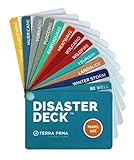
- KNOW EXACTLY WHAT TO DO — When a wildfire, earthquake, or hurricane hits, the brain freezes — even for prepared people. The Disaster Deck gives you clear, calm, step-by-step actions for 12 real disasters so you and your family move with confidence, not panic. No searching, no guessing. Just open it and go.
- 12 DISASTERS, ONE POCKET-SIZED DECK — Covers wildfire, earthquake, hurricane, flooding, tornado, tsunami, power outage, extreme heat, volcano, lightning, landslide, and emotional wellness — because staying mentally grounded is part of surviving any emergency. Color-coded guides make the right action instantly obvious, even under stress.
- READY WHEREVER LIFE TAKES YOU — Lightweight and waterproof — built for real conditions, not a bookshelf. Slips into a bug out bag, glove box, backpack, purse, or emergency kit without taking up space. Perfect for families, campers, hikers, travelers, and anyone who wants to feel genuinely prepared without being overwhelmed by it.
- EXPERT-BACKED, REAL-WORLD TESTED — Developed with emergency preparedness professionals and trauma-informed experts — not generic internet checklists. Includes proven mental wellness steps to reduce panic and help your whole family stay focused when it matters most. This is disaster resilience, not just disaster information.
- MADE IN THE USA BY A WOMEN-OWNED SMALL BUSINESS — Terra Frma is built on one belief: preparedness should feel like relief, not fear. Every guide is made in the USA with high-quality, durable materials designed to last through real emergencies — and real life. A thoughtful gift for parents, new homeowners, college students, or anyone you want to feel safe.
Common packing mistakes and safer fixes
- Relying on one device: Keep both an alert-capable radio and phone power because either network or battery may fail.
- Leaving documents unprotected: Put paper copies in waterproof portable storage and update them after changes.
- Ignoring pets: Pack animal supplies and confirm a destination that accepts them before an evacuation.
- Using an old quantity rule without checking: FEMA’s current cited checklist uses “several days” language. Verify the current checklist before adopting a numeric target from an older edition.
- Storing everything in a basement: Keep critical supplies elevated and portable.
- Waiting for certainty about a landslide: Landslides can occur without warning. Do not wait for a visible collapse if authorities direct you to leave.
- Crossing floodwater to reach safety: Turn around and use an approved alternate route.
- Overloading the go-bag: Prioritize life-sustaining, communication, medical, and identification items that the carrier can actually move.
What the kit cannot do
No emergency kit forecasts a landslide, identifies a safe slope, or makes floodwater passable. It gives a household water, information, light, basic care, and the ability to leave with critical personal supplies. Official warnings, evacuation orders, road closures, and local emergency-management instructions override the contents of any checklist. The most valuable preparation is a maintained kit paired with a practiced, pet-inclusive plan that has more than one safe route.
Frequently Asked Questions
How much water should I pack?
Use the current FEMA emergency-supply checklist for its present quantity wording. The cited current version says to provide water and nonperishable food for several days; an older FEMA checklist used a specific gallon figure, so do not transfer that older number without checking the current edition.
Should I wait for a landslide warning before evacuating?
No. USGS notes that some landslides happen suddenly without warning. Follow local authorities, leave when directed, and never risk returning to an unstable area to retrieve a kit.
Free tools Windows power users keep installed
One-click scans. No signup required.
Can I drive through a flooded road if the water looks shallow?
No. Ready.gov says not to walk, swim, or drive through floodwater. Turn around and use an official alternate route.
Quick Recap
Product prices and availability are accurate as of the date/time indicated and are subject to change. Any price and availability information displayed on Amazon at the time of purchase will apply.

