The right wet/dry vacuum is the one that matches the messes you actually collect, has enough usable capacity without becoming unmanageable, and offers measurable airflow, suction, filtration, hose size, attachments and emptying options that fit your space. Start with the work—household spills, vehicle interiors, workshop debris, or larger jobsite cleanups—then compare models intended for that work. A high peak-horsepower number alone is not a reliable buying decision.
Start with the jobs, not the biggest motor
Wet/dry vacuums can collect liquid spills and dry debris, but models differ substantially in tank size, weight, hose configuration, filters and accessories. A compact unit may be the best choice for a car, boat or occasional household spill because it is easier to carry and store. A larger tank reduces emptying during a major cleanup, yet the machine becomes bulky and considerably heavier once it contains water.
As an Amazon Associate I earn from qualifying purchases.
Identify the debris and liquid you will collect
- Light household, car or boat cleanup: Prioritize portability, a manageable tank, a crevice tool and a nozzle that fits upholstery or tight spaces.
- Workshop or renovation debris: Look for a hose and nozzle combination suited to the size of the material, secure hose retention, useful extension wands and a filter or bag system whose replacements are easy to obtain.
- Large spills and repeated emptying: Capacity, a drain spout and a practical way to move or pump out collected water become more important than a compact footprint.
Use capacity as a handling decision
Home Depot’s buying guide separates wet/dry vacuums into small, medium and large capacity classes and supplies broad performance examples for each. Those classes are retailer guidance rather than a standards-body threshold, so treat them as a way to frame your choice, not as mandatory cutoffs.
Outdated Drivers Are Slowing You Down
One free scan finds every outdated or missing driver and matches the right update for your exact hardware.Free scan · exact hardware matchWindows Errors? Fix Them Before They Spread
Repair common Windows errors and clear accumulated junk for a smoother, more stable PC - no reinstall needed.Free scan · no reinstall| Capacity class | Where it makes sense | Trade-off to check |
|---|---|---|
| Small | Short household jobs, vehicle interiors and spaces where the vacuum must be carried or stored frequently | Less room for debris and water means more emptying; compact construction can limit hose and accessory options |
| Medium | General home, garage and occasional workshop cleanup | Balances capacity and mobility, but confirm that its filled weight and storage footprint remain practical |
| Large | Big debris loads, extended workshop work and substantial liquid pickup | More capacity can mean a heavy, awkward tank when full; check wheels, handles, drain access and where it will live |
Tank volume is not the same as useful working capacity. Debris shape, a filter or bag occupying space, and the point at which the float shutoff stops liquid pickup all affect how much you can collect before stopping. Compare the complete machine in the configuration you will use, not just the number printed on the tank.
#1 Best Overall

- PORTABLE: Lightweight, 2.5-gallon wet dry shop vac offers unparalleled mobility
- IDEAL FOR SMALL MESSES: Perfect for the home, garage, cars, trucks and vans
- EASY TO STORE: Compact size, carry handle and cord wrap feature allow for easy storage
- TWO-IN-ONE CAPABILITY: Shop vacuum can be used as a blower for added versatility
- DESIGNED FOR TIGHT SPACES: 1-1/4 in. shop vacuum accessories allow for maneuverability in tight areas
Read airflow and suction specifications together
Performance figures describe different parts of the air path. Home Depot defines CFM (cubic feet per minute) as an airflow measure and sealed pressure, commonly expressed in inches of water, as a suction-pressure measure. A vacuum needs both adequate airflow to move material and pressure to overcome resistance from the hose, filter and nozzle.
Why peak horsepower is not enough
Peak horsepower is a motor rating, not a complete description of cleaning performance at the nozzle. Hose diameter and length, bends, filter loading and the design of the hose connection all affect what reaches the debris. Compare specifications among models intended for the same type of work and look for the airflow and suction figures together.
Motor design also matters. Home Depot discusses single-stage and two-stage motors in relation to different use cases; that description is a guide for matching a design to the work, not a universal rule that one stage count is always superior. A unit with a lower headline motor number can be more useful if its hose, filter area and accessories suit your debris.
What’s actually slowing this PC down?
Pick the symptom - the matching free tool is one click away.
How to interpret a listing
As an example of why separate figures matter, a Home Depot listing for the RIDGID HD1200 reports a 12-gallon tank, 144 CFM and 55 inches of lift. Those are listing specifications for that particular model, not recommended minimums and not proof that it outperforms every other vacuum. Verify that the listing describes the same edition and configuration you can purchase.
Rank #2

- CORE ADVANTAGE. Vacuum wet/dry messes AND mop tough stains simultaneously—no pre-sweeping! Clean pet-messy floors faster and more efficiently.
- PET-FOCUSED DESIGN. Powerfully tackles hair & odors! Features a tangle-free brush, hair guard to prevent clogs, & specialized pet solution to remove stains, neutralize odors, and leave freshness.
- VERSATILE USE. Safely cleans all hard floors (tile, wood, laminate, vinyl, linoleum) plus area rugs/mats. One machine for your whole house.
- CLEAN/DIRTY WATER SEPARATION. Dual-tank system keeps fresh solution and dirty water separate, preventing cross-contamination for a truly hygienic clean.
- VALUE BUNDLE & PURPOSE. Includes: 1 tangle-free roller brush, 2 bottles (8oz each) of Pet Solution & self-cleaning tray. Every purchase helps BISSELL save homeless pets!
| Specification | What it tells you | What it does not tell you by itself |
|---|---|---|
| CFM | Air volume the system is designed to move | How well a particular nozzle lifts a given material when hose and filter resistance are included |
| Sealed pressure or lift (inches of water) | Pressure available against a blocked or restricted air path | Overall pickup speed with an open nozzle |
| Peak horsepower | A motor output label used in product marketing and specifications | A complete measure of real-world cleaning ability |
| Hose diameter and length | Part of the air path that affects restriction, reach and clog resistance | A guarantee that every accessory will fit without an adapter |
Choose hose size for the material
Consumer Reports’ archival guide says 2½-inch hoses tend to work more quickly and clog less than 1¼-inch hoses. That is a general observation from its historical comparisons, not a guarantee for every model or task. A larger hose can be advantageous for bulky workshop debris, while a smaller hose may be easier to maneuver in a vehicle or around furniture. Check the hose’s actual inside diameter, length, bend radius and connection type.
Inspect filtration before you buy
Filtration affects dust control, cleanup time and long-term ownership. Consumer Reports recommends a pleated cartridge filter as easier to change and less prone to dust leaks than a two-piece paper-and-foam filter. The same guide warns that unusual filter sizes can be difficult to find, so replacement availability should be part of the purchase decision rather than an afterthought.
Confirm the dry and wet procedures
Wet pickup is not simply a matter of switching on the motor. Read the specific model’s manual for the required filter configuration, whether a filter must be removed or changed, how the float shutoff works, and how the tank and filter should be dried afterward. Procedures differ by design; using the wrong filter arrangement can restrict airflow, damage a filter or allow moisture into areas the manufacturer did not intend.
Check replacement access and fit
- Record the exact model number and filter part number before ordering.
- Confirm that cartridge filters are listed for your tank and filter cage, not merely described as “universal.”
- Check whether dry bags are optional or required for a particular mode and whether the bag attaches to your inlet.
- Look at current stock from the manufacturer or a reputable retailer; a low purchase price is less attractive if routine filter replacements are hard to source.
Match the hose, nozzles and storage system to your work
Included accessories often determine whether a vacuum is convenient or frustrating. Evaluate the complete kit and the compatibility of replacement parts rather than assuming that every attachment uses the same fitting.
Rank #3
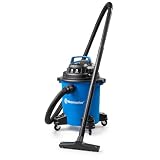
- MADE FOR: Everyday wet and dry pick-up
- POWERFUL AIRFLOW: 65 CFM easily sucks up more debris
- EXTENDED CLEANING REACH: 16-feet of cleaning reach with hose and power cord
- FEATURES: 8 accessories, including a cartridge filter for dry pick-up and a foam wet filter for wet pick-up
- COMPLETE VAC ORGANIZATION: On-board hose, cord and accessory storage
Attachments worth examining
- Utility nozzle: Covers floors and broad surfaces; check its width and clearance for the debris you collect.
- Crevice tool: Reaches seat rails, corners and narrow gaps in vehicles or workshops.
- Car nozzle: Useful when its profile fits upholstery and foot wells; verify that it is included or available for the model.
- Squeegee or wet nozzle: Helps move liquid across a hard floor; confirm that the edge and width suit your surfaces.
- Extension wands: Reduce stooping and increase reach, but add joints and length to the air path.
Look for practical connections
A swivel hose end can reduce kinks as you work. A locking hose connection helps keep the hose attached when you pull against resistance. Verify the diameter and locking style of every hose, wand and nozzle before assuming that an accessory from another vacuum will fit.
Decide whether you need bags or easier draining
A dust bag can simplify the change from dry collection to wet pickup and help keep the tank cleaner, but only when the bag is compatible and the instructions permit the intended use. Never infer wet-use permission from the bag’s shape alone; follow the model manual.
For larger quantities of water, a drain spout can avoid lifting a full tank. A compatible pump can make emptying easier still. Compare the drain location, access and hose compatibility with the place where you expect to dispose of liquid.
Plan for noise, movement and storage
Noise is a real operating condition
Consumer Reports’ Wet/Dry Vacuum Buying Guide, updated September 15, 2016, states: “All of the wet/dry vacuums we tested were loud. Some reach 85 decibels, the level at which we recommend wearing ear protection to prevent hearing damage.” The guide is archival and Consumer Reports says it no longer tests this category, so 85 decibels is a historical test observation, not a current measurement for every model. Check current model-specific noise information when it is published and consider hearing protection for loud work.
Rank #4

- Beast Series High-Performance Motor with 320 Air Watts of Power, 20kPa
- Equipped with High-Efficiency Cartridge Filter & Dust Bag for Capturing Fine Dust Particles Down to 1 Micron in Size
- 25-Feet of Cleaning Reach with Premium Kink-Resistant Hose and Power Cord
- 9 Accessories, including a Car, Utility, and Crevice Tool for Various Tasks
- Complete Vac Organization with On-Board Hose, Cord and Accessory Storage
Account for the filled weight
Water adds weight quickly, and a large tank that is easy to roll empty may be difficult to carry when full. Favor wheels that track well, a handle that lets you tip or pull the machine safely, and a drain that lets you empty it without lifting. If stairs are involved, a smaller tank may be the safer practical choice even when a larger one would reduce trips.
Measure the storage footprint
Measure the place where the vacuum will be stored, including the height needed for the hose and wands. Wall-mounting, shelving, onboard tool storage, tank shape, wheels and carrying handles can matter as much as a headline power number when the unit must be moved or put away often. Make sure the hose can be coiled without sharp bends and that the filter and bags can be stored dry.
A step-by-step buying process
- Write down the three most common jobs. Name the debris, whether the job is wet or dry, how often it occurs and the distance you carry the machine.
- Set a capacity class. Choose small, medium or large based on expected debris and water volume, then test the filled weight and storage space against your actual conditions.
- Shortlist comparable specifications. Record CFM, sealed pressure or lift, hose diameter and hose length for models designed for similar work.
- Inspect filtration. Identify the dry filter, the wet-pickup procedure, the float-shutoff instructions and the exact replacement part.
- Audit the accessories. Confirm utility, crevice, car or squeegee nozzles, extension wands, bags, drain equipment and connection types.
- Check handling and noise. Look at wheel design, handles, emptying method, storage footprint and current noise information; plan hearing protection for loud operation.
- Read the manual before checkout when possible. Confirm wet/dry changeover, filter drying, maximum fill behavior and compatible accessories for the exact model.
- Compare ownership, not just purchase price. Include replacement filters, bags, adapters and the effort required to empty, clean and store the machine.
Common buying mistakes and how to avoid them
Buying the largest tank for every job
A large tank can reduce interruptions, but it also increases bulk and filled weight. If most work is in a car or upstairs room, portability and a hose that is easy to control may deliver more value than unused capacity.
Recommended Free Tools
Choosing by peak horsepower alone
Motor horsepower does not account for airflow, sealed pressure, hose restriction, filter condition or nozzle design. Compare the full air-path specifications and intended use.
Best Value

- Terrific Suction : Our wet and dry vacuum cleaners with 2 HP motors provide 660W power, and the powerful suction deals with daily wet/dry pickup quickly.
- Portable and Compact : The 4-gallon durable pp tank is perfect for small messes and the wheel-base and top handle make it easy to carry on the job.
- Versatile and Handy : The nozzles and brush meet different cleaning needs; with an 15 ft cord and 6 ft hose, easy to reach further and higher without bending over or repeatedly moving the machine.
- Easy to Assemble and Use : Comes ready to use out of the box, just snap on the casters and piping. Easily switch to the blowing mode.
- Applications Target : Lightweight, versatile, suitable for home, basement, garage, workshop, woodshop, hotel, car wash, laundry, shop, etc.
Ignoring replacement filters
A filter that is difficult to source can turn routine maintenance into downtime. Confirm the exact replacement and its availability before committing to a model with an unusual size.
Assuming every filter works for wet pickup
Wet/dry procedures vary. Follow the model’s instructions for filter removal or installation, float shutoff and drying instead of copying the procedure from another vacuum.
Underestimating hose compatibility
A nozzle or wand that looks similar may use a different diameter or locking connection. Check the manufacturer’s compatibility information before buying add-ons.
Do these 3 things before closing this tab:
1Fix the driver behind crashes, sound loss and screen glitches2Repair Windows errors before they cause bigger problems3Scan for outdated or missing drivers - takes under a minuteForgetting how the tank is emptied
Lifting a full tank is inconvenient and potentially impractical. For frequent liquid work, prioritize a drain spout or compatible pump and make sure the outlet reaches your disposal point.
Choose by scenario
| Your situation | Priorities | Features to verify |
|---|---|---|
| Occasional household spills and dry debris | Easy storage, moderate capacity and simple changeover | Compact body, manageable filled weight, pleated cartridge replacement and a utility nozzle |
| Vehicle or boat interior | Portability, reach and control in confined spaces | Crevice and car nozzles, a hose that is easy to maneuver, suitable hose length and onboard accessory storage |
| Garage or workshop | Fast material movement and clog resistance | Appropriate hose diameter, extension wands, secure hose connection, filter availability and a tank size that fits your storage |
| Large liquid cleanup | Capacity without unsafe lifting and quick emptying | Wheels, handles, drain spout or compatible pump, float-shutoff instructions and a wet-pickup procedure |
| Frequent mixed wet and dry work | Fast, reliable mode changes and low maintenance friction | Clear filter instructions, compatible bags, readily available replacements and a tank that is easy to clean and dry |
How to use the available evidence responsibly
Consumer Reports’ guide is explicitly archival and no longer represents current category testing or model rankings. Its observations about pleated filters, hose diameters and historical noise levels are useful context, but they should not be presented as measurements of today’s products.
Home Depot’s guide, last updated September 7, 2023, offers capacity and performance guidance for shoppers. Its ranges and examples are retailer-published advice, not universal standards or independent test thresholds. Product listings, including the RIDGID HD1200 figures, describe one retailer snapshot and should be checked for the exact configuration and current availability.
Quick Recap
Final buying checklist
- The vacuum’s capacity matches your normal debris and liquid volume without making movement unsafe.
- CFM and sealed pressure are compared with models intended for the same work.
- Hose diameter, length, bends and connection style suit the material and workspace.
- The filter type, wet-pickup procedure, float-shutoff instructions and drying steps are clear.
- Replacement filters and compatible bags are available for the exact model.
- Nozzles, wands, hose ends, drains and pumps fit the jobs you listed.
- Noise, hearing protection, wheels, handles, emptying and storage have been considered.
- You have read the manual for the specific model rather than relying on a generic wet/dry procedure.
Product prices and availability are accurate as of the date/time indicated and are subject to change. Any price and availability information displayed on Amazon at the time of purchase will apply.
The Tool Desk
Outbyte PC Repair FREEClear out junk files and repair common Windows errorsFree Scan →Outbyte Driver Updater FREEFix the driver behind crashes, sound loss and screen glitchesFind Drivers →
