The best robot vacuum-and-mop combo is not the one with the biggest suction number or the longest feature list. It is the model whose mop, navigation, clearance, dock and maintenance demands fit your floors and your routine. Before comparing models, inventory your hard floors, carpets, rugs, pets, clutter, furniture clearance, thresholds and available dock space.
Use that inventory to judge independent cleaning results for the exact model, then check what the dock actually automates, which consumables it accepts and what upkeep remains. A combo robot is most useful as a regular-maintenance cleaner; it does not eliminate occasional brush, pad, tank and tray care.
As an Amazon Associate I earn from qualifying purchases.
Start with a home inventory, not a model list
Write down the conditions the robot must handle. This prevents an attractive specification from becoming an expensive mismatch.
Quick wins for a faster PC:
Fix the driver behind crashes, sound loss and screen glitchesFind Drivers →Clear out junk files and repair common Windows errorsFree Scan →Scan for outdated or missing drivers - takes under a minuteDriver Scan →- Flooring: note the percentage of sealed hard floor, low-pile carpet, thick carpet and loose rugs. Record transitions between rooms.
- Furniture: measure the lowest sofa, bed and cabinet opening, including any lip that could catch a robot.
- Thresholds: measure the height and shape of door bars, tracks and flooring transitions.
- Obstacles: list charging cables, socks, toys, shoes, pet bowls and any risk of pet waste on the floor.
- Pets: consider shedding, tracked litter and whether the robot may encounter accidents.
- Dock location: identify a level area with clearance for the robot to approach, the dock to open tanks or trays, and you to remove consumables.
- Your tolerance for chores: decide whether you will empty a bin, refill clean water, drain dirty water, wash pads and inspect brushes after cleaning.
These observations determine which specifications matter. A home with mostly sealed floors may benefit from aggressive stain scrubbing and reliable water control. A home with thick rugs needs dependable carpet detection and a mop that lifts high enough or detaches before vacuuming. A household that dislikes handling dirty pads may justify a larger full-service dock.
#1 Best Overall

- CLEAN FLOORS EVERY DAY—WITHOUT THINKING ABOUT IT. The Roomba Plus 415X vacuums and mops in one run, stopping crumbs, dust, and spills before they turn into stuck‑on messes. With 20,000 Pa and DualClean mop pads, your floors stay visibly clean from morning and night.
- NO MORE SCRUBBING DRIED‑ON MESSES. SmartScrub applies extra pressure exactly where messes are stubborn—breaking down dried food, muddy paw prints, and kitchen splatter, so you never have to scrub by hand again.
- REACHES THE PLACES DIRT USUALLY HIDES. A 46% slimmer design* fits under more furniture, while extending brushes pull debris from edges and corners—so dust doesn’t collect where traditional robots miss. *Compared to Roomba 105
- GREAT FOR HOMES WITH PETS. Tangle‑free rubber brushes capture pet fur without clogging, eliminating constant stops to cut hair off the brush.
- EVERY CLEAN STARTS WITH A FRESH MOP—NOT YESTERDAY’S DIRT. The AutoWash Dock washes and heat‑dries mop pads at 113°F after every run, preventing odors and buildup so floors aren’t cleaned with yesterday’s dirt.
Do robot vacuum mops actually work?
Yes, when expectations are set correctly. A combo robot can repeatedly remove dust, crumbs, hair and light soil, and it can maintain hard floors between deeper manual cleanings. Its value comes from consistent scheduled passes rather than from replacing every vacuum, mop or spot-cleaning task.
Carpet cleaning is a separate question. The robot must switch to vacuuming, avoid wetting the carpet and provide enough agitation and airflow for the pile. On mixed floors, look for carpet detection plus a mop-lift mechanism or removable mop assembly. Plush or loose rugs may still require no-mop zones because a raised pad can drag, dampen fibers or fail to clear the rug surface.
Results vary substantially by model and by the home. Treat manufacturer suction figures as one specification, not as a cleaning verdict. Independent tests that measure debris pickup, carpet deep cleaning, pet hair, stains, edges and navigation are more useful for predicting real performance.
Choose the mop for your floor mix
Mostly hard floors
Prioritize stain removal, controlled water delivery and edge coverage. A passive cloth that trails behind the robot may remove fresh dust but can struggle with dried spots. Dual spinning pads apply repeated contact in small areas, while a powered roller can provide a different scrubbing pattern. The mechanism name is not proof of superior results; compare stain tests for the exact model.
Check whether the robot can vary water flow by room or cleaning mode. More water is not automatically better: excess moisture can leave streaks, delay drying and put unsuitable flooring at risk. Follow the flooring maker’s care guidance for wood, laminate, stone and other finishes.
Mixed hard floor and carpet
Verify how the robot identifies carpet and what happens when it reaches it. A lift that raises the pads only slightly may still touch a high-pile rug. A removable mop module can protect rugs more reliably but adds a handling step unless the dock or robot performs removal automatically.
Confirm that carpet behavior can be configured in the app. Useful controls include vacuum-only zones, no-mop zones, room-specific water levels and a rule to vacuum carpets before wet cleaning. Do not assume a robot’s advertised multi-floor mapping means it will protect every rug; test evidence for your rug type is more relevant.
Rugs and unusual surfaces
Measure the rug edge and observe whether it has tassels, a dark pattern or a loose weave. These features can confuse sensors or catch a brush. If the model cannot keep a wet pad fully clear, create a no-mop zone and vacuum the rug separately.
Judge cleaning evidence, not marketing labels
For each candidate, seek independent results for the tasks your home requires. Consumer Reports says cleaning efficacy is a significant factor and also evaluates navigation, obstacle handling, ease of use and maintenance. Its 2026 comparison of robot vacuum-mop combos lists those categories alongside dock convenience.
| Evidence to compare | What it answers | What a weak result means |
|---|---|---|
| Loose debris pickup | Whether crumbs, dust and larger particles are collected in one or repeated passes | You may need extra passes or manual touch-ups in busy areas |
| Carpet deep cleaning | How much embedded soil is removed from the pile | A robot may maintain carpet appearance without replacing a conventional deep vacuum |
| Pet-hair pickup | Whether hair reaches the bin instead of wrapping around the brush | Expect more frequent brush cleaning and possible clumps on rugs |
| Stain and dried-soil testing | How effectively the mop loosens marks on hard floors | A feature-rich mop may still be suitable only for light maintenance |
| Edge and corner coverage | How close the robot cleans to walls and furniture | Plan for occasional manual edge work |
| Navigation and obstacle tests | Whether routes are complete and objects are avoided | The robot may get stuck, miss rooms or spread a hazard |
Only compare results produced under similar conditions. A score from one floor type, debris load or firmware version does not establish performance everywhere. If a test does not cover your obstacle, rug or stain type, treat that gap as uncertainty rather than assuming the robot will behave well.
Rank #2
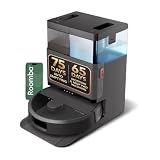
- A DEEPER CLEAN—EVEN WHERE DIRT LOVES TO HIDE. With advanced DualClean Mop Pads and PerfectEdge technology the Roomba Plus 505X reaches deeper into corners and along walls, covering 18% more floor area* so spills, crumbs, and sticky spots don’t get left behind. * Compared to standard vacuum & mop mode on coffee and grime.
- THE DOCK THAT HANDLES THE DIRTY WORK. The AutoWash Dock empties debris for up to 75 days and washes, refreshes, and heat‑dries mop pads—so you enjoy up to 4 weeks of hands‑free mopping* with consistently fresh results.
- POWERFUL ENOUGH FOR REAL‑LIFE MESSES. From scattered cereal to muddy pawprints, enjoy confident cleaning with up to 70× stronger suction* paired with dual mop pads, a multi‑surface rubber brush, and edge‑sweeping brush. * As compared to Roomba 600 series robots.
- AVOIDS CORDS, SOCKS—EVEN PET ACCIDENTS. PrecisionVision AI instantly recognizes common household obstacles and steers around them. It also detects wet and dry messes ahead and automatically makes extra passes for a noticeably cleaner result.
- SMARTER NAVIGATION, FEWER WORRIES. ClearView Pro LiDAR maps your home precisely and cleans efficiently day or night, while built‑in cliff sensors help prevent falls near stairs and ledges.
Navigation and obstacle avoidance are different
Mapping lets a robot divide the home into rooms and follow an organized path. Obstacle avoidance is the separate ability to recognize and route around objects such as cables, socks, toys, shoes and pet waste. A detailed map does not guarantee that the robot will see a charging cord in its path.
Look for object-avoidance evidence involving the items actually found in your home. Some camera-based systems can improve recognition, but a camera introduces a privacy consideration. Buyers who do not want an onboard camera may accept more pre-cleaning or choose a sensor approach with independently verified obstacle results.
Check whether the app allows room naming, selective room runs, virtual barriers and no-go or no-mop zones. Room-level control is practical when you want to clean a kitchen without sending the robot through bedrooms; Consumer Reports project leader Joan Muratore described this use case as, "That way, you can direct the robot to, for example, mop the kitchen floor."
Measure clearance and thresholds before ordering
Furniture clearance
Measure from the floor to the lowest obstruction, then compare that number with the robot’s full height, including its sensor turret. Consumer Reports’ 2024 buying guide reports robotic-mop heights ranging from 3 to 5.25 inches. That broad range is why a published model dimension cannot be treated as interchangeable with another model’s.
Leave a small practical margin rather than selecting a robot that exactly matches the opening. A slight floor unevenness, a rug edge or a hanging upholstery flap can turn nominal clearance into a jam.
Recommended Free Tools
Doorways and tracks
Traditional robot threshold capability is around 20 mm according to Vacuum Wars, but the shape and material of a transition matter. A rounded wooden strip may be easier to climb than a sharp metal track at the same height. Check single-tier performance rather than relying on an impressive claim about multiple levels or combined height.
If a threshold blocks rooms, possible solutions include a transition ramp, a keep-out zone or carrying the robot between areas. Those workarounds should be part of your routine calculation, not an afterthought.
Choose a dock by the chore it removes
Dock tiers describe automation, not necessarily cleaning quality. A more elaborate station can reduce labor while taking more floor area and creating more parts to maintain.
| Dock type | Usually automates | You still need to do | Main trade-offs |
|---|---|---|---|
| Charge-only dock | Charging the robot | Empty dust, refill water, wash and dry pads, and clean trays | Smallest and simplest, but leaves every maintenance task to you |
| Auto-empty dock | Transfers debris from the robot bin to a larger dock container | Replace bags or empty the bagless bin; handle water and mop care separately | Less dust-bin handling, with recurring bag cost on bagged systems |
| Full-service station | May wash and dry mops, refill onboard water, collect dirty water, empty debris, dispense detergent and sometimes clean its washboard | Empty tanks or bins, clean the station, inspect pads and brushes, and replace worn parts | Largest footprint, higher purchase cost and more tanks, trays, pumps and seals |
Bagged dust docks contain debris neatly but require model-specific replacement bags. Bagless bins avoid bags but can expose you to dust when emptied. A dock that washes pads still needs its dirty-water tank drained and its wash area cleaned; automation changes the frequency and type of work rather than eliminating upkeep.
Crashes, No Sound, or Screen Glitches?
Random freezes, missing sound and display glitches usually trace back to one bad driver. Find and replace yours safely.Free scan · under a minuteWindows Errors? Fix Them Before They Spread
Repair common Windows errors and clear accumulated junk for a smoother, more stable PC - no reinstall needed.Free scan · no reinstallMeasure the dock itself, not just the robot. Open tank lids, remove the dust container and slide out the washboard to confirm that walls, cabinets or shelves will not block those actions.
Rank #3

- 【2-in-1 Mopping and Vacuuming】 The ROPVACNIC Robot S1 integrates advanced electronically controlled mopping technology, significantly enhancing both cleaning efficiency and effectiveness, which makes your floors remain free from footprints, dirt, and dust throughout the day. It features an upgraded high-capacity water tank with a four-stage personalized water adjustment system, enabling it to address various stains across different settings according to user requirements.
- 【Comprehensive Intelligent Control】 Multiple Cleaning Modes, combined with personalized settings, allow you to easily accomplish various household cleaning tasks with zero effort from your smartphone. Moreover, by voice commands, you can start your cleaning while kicking back and relaxing (compatible with Alexa or Google Assistant). Enjoy an utterly hands-free cleaning experience.
- 【5200Pa Powerful Suction】A 3-point cleaning system coupled with strong suction ensures your floors are free from all dirt, dust, and crumbs for a thorough, superior clean. The highly passable compact design combined with 3-level suction facilitates cleaning in hard-to-reach areas where you can't, making it suitable for a wide range of surfaces from wood, and hard floors to low pile carpets.
- 【Smarter High Automation & Self-Recharge】 The robot aspiradora is equipped with an advanced high-coverage sensing system and multiple algorithmic data points, enabling autonomous completion of cleaning tasks—from scheduled starting, detecting obstacles, adjusting direction, and switching modes, to automatically returning to recharge. This hassle-free operation ensures a clean home when you return.
- 【Engineered for Pet Owner】 The exclusive no-entanglement design negates the need for your dirty hands to clean up tangled dog or cat hair, unlike traditional roller brushes. Its dual rotating electric side brushes sweep and collect hidden pet hair more efficiently throughout the house, saving you the hassle.
Verify water, detergent and consumables
Filters, mop pads, side brushes, main brushes, dust bags and cleaning solutions are usually model-specific. Before buying, check that current replacement parts are available for your region and calculate how often you expect to replace them.
Follow the maker’s fluid instructions exactly. Some machines are designed for water only. Unapproved detergents can damage pumps, tubing, tanks, seals or mop materials and may affect warranty coverage. A solution marketed for another robot is not automatically compatible just because it is labeled for hard floors.
- Confirm whether the dock has separate clean- and dirty-water tanks and their capacities.
- Check whether detergent is dispensed automatically or must be diluted manually.
- Find the approved solution name and whether the system permits water-only operation.
- Check the replacement schedule and price for bags, filters, pads and brushes.
- Make sure the app or dock can warn you about a full dust container, low water or a clogged tray.
Account for the routine after every run
Even a capable combo robot is a maintenance appliance. Inspect the main brush for hair, check side brushes and wheels, remove tangled fibers, and examine pads for odor or embedded grit. Empty or rinse tanks as directed and keep the dock’s wash area free of residue. Replace worn pads and filters instead of expecting software updates to restore performance.
Free tools Windows power users keep installed
One-click scans. No signup required.
A full-service station can be worth its space when frequent pad washing would otherwise stop you from running the robot. If you are willing to perform those chores and have limited floor area, a simpler dock may deliver better value. The right choice depends on which task you are actually trying to remove.
Use this comparison framework for exact models
When two candidates appear similar, compare them in the same order each time:
- Hard-floor results: compare stain removal, water control and edge coverage from independent tests.
- Carpet protection: confirm detection, mop lift height or mop removal, and test evidence on rugs resembling yours.
- Debris and pet hair: examine pickup, brush tangling and bin behavior.
- Obstacle performance: check results for cables, toys, shoes and pet-related hazards, not just map quality.
- Access: compare full robot height, dock dimensions and threshold capability.
- Dock labor: list every task automated and every task left to you.
- Ownership: verify current market price, consumables, approved solution, warranty terms and app support.
- Privacy: decide whether camera-based recognition is acceptable and whether the controls meet your expectations.
Current prices and bundled docks vary by market and retailer, so verify the exact package at the time of purchase. A lower-priced robot with a charge-only dock may cost more in time, while a premium station may be wasteful if you already mop manually without difficulty.
Independent reader supportYour contribution helps us test, update, and keep practical guides available for everyone.Match the design to common home profiles
| Home situation | Priorities | Features to question closely |
|---|---|---|
| Mostly sealed hard floors, little carpet | Stain tests, controlled water, edge reach and pad washing | Whether the mop actually scrubs dried soil; whether water settings suit the flooring |
| Hard floors plus several rugs | Reliable carpet detection, high lift or removal, no-mop zones | Lift height on plush rugs and behavior at rug edges |
| Heavy shedding pets | Pet-hair pickup, anti-tangle design, large debris capacity and obstacle avoidance | Brush cleaning frequency and performance around bowls or toys |
| Small apartment with low furniture | Short robot height, compact dock and room-level controls | Sensor-turret height and clearance for opening dock tanks |
| Large home or frequent cleaning | Reliable mapping, selective room runs, auto-emptying and adequate water capacity | Whether the robot can finish its route without repeated tank or bin intervention |
| Owner who dislikes wet chores | Pad washing and drying, dirty-water collection and easy tray access | Remaining manual cleaning, odor control and replacement-part availability |
Common buying mistakes and their fixes
Choosing by suction number
Problem: a high air-pressure or suction figure is treated as a guarantee of pickup and carpet cleaning.
Fix: compare debris, embedded-dirt and pet-hair tests for the exact model, then consider brush design and route coverage.
Assuming a map means obstacle avoidance
Problem: the robot maps rooms accurately but runs over cables or stalls at toys.
Fix: seek obstacle tests with your household objects and use barriers or a quick floor pickup when necessary.
Rank #4

- 𝟳𝟬 𝗗𝗮𝘆𝘀 𝗼𝗳 𝗛𝗮𝗻𝗱𝘀-𝗙𝗿𝗲𝗲 𝗖𝗹𝗲𝗮𝗻𝗶𝗻𝗴 - Enjoy ultimate convenience with the self-emptying station. The large 2.7L dust bag provides up to 70 Days of maintenance-free cleaning, perfect for busy households and pet owners.
- 𝟭𝟬,𝟬𝟬𝟬 𝗣𝗮 𝗛𝘆𝗽𝗲𝗿𝗙𝗼𝗿𝗰𝗲 𝗦𝘂𝗰𝘁𝗶𝗼𝗻 - With an impressive 10,000 Pa suction, it effortlessly lifts embedded pet hair, crumbs, and debris from carpets, hardwood floors, and crevices.
- 𝗗𝘂𝗮𝗹 𝗔𝗻𝘁𝗶-𝗧𝗮𝗻𝗴𝗹𝗲 𝗦𝘆𝘀𝘁𝗲𝗺 – Equipped with a JawScrapers Comb main brush and a specialized anti-tangle side brush, this innovative system minimizes hair tangling, ensuring smoother performance and reducing the need for frequent maintenance.
- 𝗩𝗶𝗯𝗿𝗮𝗥𝗶𝘀𝗲 𝟮.𝟬 𝗠𝗼𝗽𝗽𝗶𝗻𝗴 𝗦𝘆𝘀𝘁𝗲𝗺 - Experience the power of dual-zone sonic vibration technology, with scrubbing up to 3000 times per minute to remove all stains and mess, leaving your floors spotless. It lifts up to 8mm on carpets for seamless transitions. You can freely select different mopping modes on the app to clean your home.
- 𝗦𝗺𝗮𝗿𝘁 𝗖𝗮𝗿𝗽𝗲𝘁 𝗖𝗮𝗿𝗲 𝘄𝗶𝘁𝗵 𝗨𝗹𝘁𝗿𝗮𝘀𝗼𝗻𝗶𝗰 𝗗𝗲𝘁𝗲𝗰𝘁𝗶𝗼𝗻 - Intelligently identifies carpets and lifts mopping modules to avoid wetting, while automatically increasing suction power for deeper cleaning. This ensures effective dirt removal and a cleaner home without compromising delicate surfaces.
Trusting a multi-tier threshold claim
Problem: the robot reaches one transition but fails on a narrow track or a different room.
Do these 3 things before closing this tab:
1Clear out junk files and repair common Windows errors2Scan for outdated or missing drivers - takes under a minute3Repair Windows errors before they cause bigger problemsFix: measure each threshold and look for single-tier results; add a ramp or no-go zone where needed.
Buying a full-service dock without space
Problem: the station fits on paper but its tanks or trays cannot be removed.
Fix: mark the dock footprint and opening paths on the floor before ordering.
Using a convenient but unapproved detergent
Problem: residue, pump trouble, damaged seals or a warranty dispute follows.
The Tool Desk
Outbyte Driver Updater FREEScan for outdated or missing drivers - takes under a minuteDriver Scan →Outbyte PC Repair FREEClear out junk files and repair common Windows errorsFree Scan →Fix: use only the maker-approved solution or water-only mode and retain the compatibility instructions.
Expecting zero maintenance
Problem: dirty pads, clogged brushes or a neglected washboard reduce performance and create odors.
Fix: schedule a short inspection routine and replace consumables at the maker’s stated intervals.
A practical buying sequence
- Measure the lowest furniture opening, every threshold and the proposed dock location.
- Map your floors and mark rugs that require no-mop treatment.
- List the obstacles and pet-related hazards the robot must recognize or avoid.
- Decide which chores you want the dock to remove: dust emptying, pad washing, water filling, dirty-water handling or detergent dosing.
- Shortlist models with the required mop and carpet behavior, then read independent tests for cleaning efficacy, navigation and obstacles.
- Check app controls, camera preferences, warranty terms, parts availability and approved fluids.
- Compare the complete package sold in your market, including the dock and included consumables.
- Before the first scheduled run, create room maps, set no-go and no-mop zones, and remove hazards that the robot cannot reliably identify.
The final choice should survive this checklist without relying on an unverified claim. If a specification is not stated or an independent test does not cover your situation, treat it as unknown and choose the design with the safer fallback: a physical barrier, a removable mop, a simpler maintenance path or a return policy that lets you validate fit.
What’s actually slowing this PC down?
Pick the symptom - the matching free tool is one click away.
Quick Recap
Product prices and availability are accurate as of the date/time indicated and are subject to change. Any price and availability information displayed on Amazon at the time of purchase will apply.

