Free tools Windows power users keep installed
One-click scans. No signup required.
The best animal life-sim is the one whose daily loop matches how you want to spend your time. Before buying, identify the balance you want between crop and animal care, crafting, exploration, quests, authored relationships with non-player characters (NPCs), and multiplayer. Then verify the game’s pacing, supported platforms, edition, and co-op rules rather than relying on the word “cozy.”
Use the framework below to separate gentle presentation from actual mechanics. The examples are drawn from official descriptions of Stardew Valley and Fae Farm; feature pages show what each game claims to include, but they do not establish comparative quality, performance, accessibility, or player satisfaction.
| # | Preview | Product | Price | |
|---|---|---|---|---|
| 1 |

|
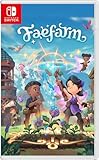
Fae Farm - Nintendo Switch (US Version) | $44.99 | Buy on Amazon |
| 2 |
|
Fae Farm | $49.99 | Buy on Amazon |
| 3 |

|
Fae Farm - Compatible for Switch - UK PAL | $54.50 | Buy on Amazon |
| 4 |

|
Minecraft - Nintendo Switch | $29.82 | Buy on Amazon |
As an Amazon Associate I earn from qualifying purchases.
Start with the activity loop, not the art style
“Cozy” is an aesthetic and mood, not a mechanical category. Two games can use soft colors, friendly animals, and low-stakes storytelling while asking you to do very different things. One may make crop planning and animal care the center of every day; another may use a farm as a base for crafting, dungeon-like exploration, and quest progression.
What’s actually slowing this PC down?
Pick the symptom - the matching free tool is one click away.
Write down the activities you would still enjoy after the novelty of decorating a homestead wears off. Rank them before you look at screenshots or promotional adjectives.
#1 Best Overall
- Cozy and customizable: Create your own character and customize your adventure with unlockable styles and decorations for your farm. The cozier your home, the better your experience!
- Magical Creatures: As you tend your farm, you can care for a variety of cuddly animals where you can collect eggs, wool, and more.
- Adventure is at your doorstep: Explore the realms of Azoria as you traverse the island with your skills and spells. Forage caves to gather resources and battle jumbles! Progress at your own pace as you uncover new mysteries and restore peace to Azoria.
- Budding Friendships: Azoria is home to a cast of colorful characters! As you progress through the story, you can build bonds with many islanders along the way. You can even find romance by going on dates and eventually getting married at Town Hall.
- One for all: You can play on your own or with up to 3 of your friends online or over local wireless.
- Farming and animal care: planting, watering, harvesting, breeding, feeding, or processing products.
- Crafting and production: making tools, machines, furniture, clothing, food, or materials.
- Exploration: gathering, fishing, mining, combat, environmental puzzles, or discovering new areas.
- Quests and story: structured objectives, character arcs, mysteries, or a largely self-directed sandbox.
- Social play: relationships with authored NPCs, multiplayer with other people, or both.
A useful test is to ask, “What will I do on an ordinary in-game morning?” If the answer is only “decorate,” the title may not satisfy someone looking for deep farming or progression. If the answer includes several systems, check whether those systems support one another or merely sit beside each other.
Evaluate the farming and homestead systems
Crop and animal care
Look for the amount of decision-making involved in planting and caring for living things. Important questions include whether seasons or weather change what can be grown, whether animals need daily attention, and whether products can be processed into higher-value goods. A game may let you place a few decorative plots, or it may make field layout, schedules, tools, and production central to progression. Neither approach is automatically better; they serve different players.
Check whether missed chores create meaningful consequences. Some players enjoy a calendar in which a neglected crop can fail, while others prefer forgiving systems that let them return after a break without a cascade of penalties. If the store page does not explain these rules, consult a current manual or platform-specific guide before purchasing.
How the homestead connects to the rest of the game
Farming is most satisfying when it feeds another system. Crops might supply ingredients for cooking, gifts for residents, or materials for machines. Animal products may fund upgrades or unlock recipes. Conversely, a farm can be a calm side activity while quests and exploration provide the main progression. Identify which role you want.
The official Stardew Valley About page presents this broader loop explicitly: raising animals and growing crops sit alongside starting an orchard, crafting machines, exploring, and building skills in farming, mining, combat, fishing, and foraging. That description is evidence of a multi-system design, not a promise that every player will value each activity equally.
Calendar pressure and recovery
Ask whether a day, season, or year can be missed without permanently losing content. A strict calendar can make planning exciting, but it can also make a relaxed player feel rushed. Find out whether events repeat, whether crops can be replanted, and whether the game offers a way to recover from an inefficient first season.
Understand what crafting actually does
“Crafting” can describe very different mechanics. Determine which of these roles applies:
- Decorative crafting: furniture, paths, fences, and visual customization with little effect on progression.
- Production crafting: machines turn farm or exploration materials into goods that can be sold, gifted, or used.
- Progression crafting: recipes unlock tools, buildings, areas, or abilities, making material collection part of the main route.
- Survival or preparation crafting: food, equipment, or consumables help you manage hazards during exploration.
Look for the input-output chain. If a recipe requires ore, ask where ore comes from and what mining involves. If a machine processes crops, ask how many machines you can place and whether processing time advances while you explore. A short recipe list can still be strategically important when each item changes how you play; a long list can be mostly cosmetic.
Rank #2
- 10011875
- 0045496479602
Also check inventory and placement limits. A game that lets you craft freely may still restrict storage, workshop space, or building locations. Those constraints determine whether crafting feels like creative expression or logistical management.
Separate NPC relationships from multiplayer
Authored NPC relationships
NPC systems are about characters written into the world. Useful signs of depth include distinct schedules, birthdays, personal quests, changing dialogue, gifts that reflect individual tastes, and relationship milestones that reveal new scenes. Ask whether residents react to your actions or simply repeat a small set of lines.
The official Stardew Valley description says more than 30 unique characters live in the valley and highlights residents’ schedules, birthdays, individual mini-cutscenes, and evolving dialogue. “Over 30 unique characters” is the publisher’s content count, not an independently audited statistic; the page was accessed in 2026. These details make the game a useful example of a life-sim where getting to know locals is a defined part of the loop.
Do these 3 things before closing this tab:
1Repair Windows errors before they cause bigger problems2Fix the driver behind crashes, sound loss and screen glitches3Clear out junk files and repair common Windows errorsMultiplayer with other people
Multiplayer is a separate design question. A game can have rich NPC relationships but no co-op, or offer co-op while giving each player only a small role in the shared story. Confirm whether multiplayer is online, local, or both; whether it requires a platform subscription; how many players can join; and whether everyone needs their own copy.
Do not infer co-op rules from a trailer showing several characters. Check the support page for the specific platform and edition you intend to buy. “Local” can mean same-screen play, split-screen, or a local wireless connection, and those are not interchangeable.
Use concrete examples to identify your fit
Stardew Valley: a broad country-life RPG loop
The official site calls Stardew Valley “an open-ended country-life RPG” and gives a PC release date of February 26, 2016. Its feature description combines crop and animal care with orchards, crafting machines, exploration, and skill progression across farming, mining, combat, fishing, and foraging. The same page emphasizes a town whose residents have schedules, birthdays, unique mini-cutscenes, and evolving dialogue. This makes it a relevant example for a player who wants a homestead to connect with exploration and detailed community interactions rather than function as a purely decorative garden.
Fae Farm: homestead, crafts, quests, and optional co-op
Phoenix Labs’ official features page describes building a homestead, learning crafts, caring for creatures, completing quests, and exploring. Its support FAQ states that the game supports solo progression and optional online or local ad-hoc co-op; the FAQ uses the promotional wording “Fae Farm is already fantastic when played solo,” which is the publisher’s opinion rather than an independent assessment.
Quick wins for a faster PC:
Clear out junk files and repair common Windows errorsFree Scan →Fix the driver behind crashes, sound loss and screen glitchesFind Drivers →Repair Windows errors before they cause bigger problemsFix Now →Nintendo’s US Switch listing says the game can be played alone or with up to three other players, for a total of four, and gives a release date of September 8, 2023. The same listing says the story unfolds independently from the in-game calendar. That distinction matters if you want to play at your own pace: the statement supports Fae Farm’s story pacing, but it does not establish identical behavior in other life-sims.
Rank #3
- UK e-store account may be required for any online features
| Question | Stardew Valley evidence | Fae Farm evidence |
|---|---|---|
| Core activity mix | Official description combines crops, animals, orchards, machines, exploration, and multiple skills. | Official features describe a homestead, crafts, creature care, quests, and exploration. |
| NPC social design | Over 30 characters, schedules, birthdays, mini-cutscenes, and evolving dialogue are listed on the official About page. | Relationships are described in the official materials; the cited pages do not provide a comparable NPC count. |
| Solo play | The cited About page does not specify current solo or co-op rules. | Official support says solo progression is supported. |
| Co-op details | Not stated in the cited About page. | Support describes online or local ad-hoc co-op; Nintendo says up to three other players can join on Switch. |
| Pacing statement | No calendar rule is established by the cited About page. | Nintendo says story progression is independent of the in-game calendar. |
| Release date in the cited source | February 26, 2016, on PC, according to the official About page. | September 8, 2023, according to Nintendo’s Switch listing. |
The table is a way to ask better questions, not a universal scorecard. Official feature lists cannot tell you which game has better controls, performance, accessibility, or long-term enjoyment.
Verify solo and co-op before you buy
- Open the support page for your platform. Prefer a publisher or platform document over a retailer summary.
- Record the connection type. Note online, local wireless, same-device, or split-screen wording exactly.
- Check the player limit. Confirm whether the number applies to the whole game or only a mode, and whether the platform version differs.
- Check progression ownership. Find out whether one player hosts the world, whether visitors keep items or progress, and whether everyone can advance quests.
- Confirm account and subscription requirements. Console online play may require a platform membership; the cited feature pages do not establish those terms.
- Verify edition compatibility. A physical cartridge, digital purchase, and downloadable expansion can have different regional or version requirements.
For Fae Farm specifically, the support FAQ is the source for optional solo play and online or local ad-hoc co-op, while Nintendo is the source for the Switch limit of up to three additional players. Treat those as platform-qualified statements, not assumptions about every edition.
Check pacing and calendar pressure
Time systems shape the emotional tone more than the word “cozy” does. A real-time clock can turn a short session into a routine; an in-game day-and-season cycle can make planning meaningful; a story-led structure can let you advance objectives whenever you choose.
Windows Errors? Fix Them Before They Spread
Repair common Windows errors and clear accumulated junk for a smoother, more stable PC - no reinstall needed.Free scan · no reinstallCrashes, No Sound, or Screen Glitches?
Random freezes, missing sound and display glitches usually trace back to one bad driver. Find and replace yours safely.Free scan · under a minuteAsk these questions before committing:
- Does the day end automatically, or can you continue working?
- Do seasons expire crops, quests, or social opportunities?
- Can you pause, save, or adjust the length of a day?
- Are story gates tied to dates, tasks, or player choice?
- What happens if you ignore a quest or miss an event?
Nintendo’s Fae Farm listing specifically says its story unfolds independently of the in-game calendar, supporting a less date-driven story pace. That is a useful fit for players who want to play at their own pace, but it should not be generalized to other games without a comparable source.
Match the purchase to your platform and format
Platform fit is part of game fit. Check the exact storefront, region, edition, input method, and storage requirement before paying. A game may appear on several platforms while having different co-op features, control schemes, or content updates on each one.
For a physical copy, verify the cartridge or disc region, language options, included updates, and whether downloadable content is bundled. The official Fae Farm support FAQ documents a physical Nintendo Switch version through major retailers, and Nintendo provides the product listing. Current stock, price, condition, edition contents, regional compatibility, and retailer terms can change, so confirm them on the live listing immediately before purchase. A clear search phrase is “Fae Farm Nintendo Switch game,” but search results are not proof of current availability.
If you prefer digital, use the platform’s own product page and check the account region and refund policy. The Steam listing for Fae Farm is a separate storefront record; do not assume that its features, price, or save compatibility match the Switch version without checking the current listing.
Recommended Free Tools
A practical decision worksheet
Use this worksheet for any animal life-sim. Fill it from current official documentation, then compare your answers with your priorities.
Rank #4
- Minecraft is a game about placing blocks and going on adventures
- Explore randomly generated worlds and build amazing things from the simplest of homes to the grandest of castles
- Play in creative mode with unlimited resources or mine deep into the world in survival mode, crafting weapons and armor to fend off the dangerous mobs
- Play on the go in handheld or tabletop modes
- Includes Super Mario Mash-Up, Natural Texture Pack, Biome Settlers Skin Pack, Battle & Beasts Skin Pack, Campfire Tales Skin Pack; Compatible with Nintendo Switch only
| Axis | Your question | What to record |
|---|---|---|
| Activity mix | What will occupy most ordinary sessions? | Approximate emphasis on farming, animals, crafting, exploration, quests, and decoration. |
| Crafting role | Does crafting decorate, earn money, unlock progress, or prepare you for hazards? | Key inputs, machines, unlock conditions, and placement limits. |
| NPC design | Are relationships a major system or occasional flavor? | Schedules, dialogue changes, gifts, quests, birthdays, and relationship gates. |
| Play together | Can you play alone and with friends in the way you want? | Online/local method, player cap, host rules, platform subscription, and edition. |
| Pacing | Will the calendar motivate or pressure you? | Day length, season rules, deadlines, pausing, and story timing. |
| Platform and format | Does the exact version suit your hardware and buying preference? | Storefront, physical/digital format, region, updates, and current availability. |
Give each axis a simple priority—essential, important, or optional. Eliminate any game that fails an essential requirement. For the remaining options, choose the one whose activity mix matches how you actually want to spend a normal session, not the one with the most features listed.
Common mistakes and how to avoid them
Assuming every cozy game is a farming game
Some titles use farming as a light resource loop while exploration, quests, or social scenes carry the experience. Read the activity description and look for concrete verbs—grow, craft, explore, fish, mine, build, or befriend—rather than relying on genre tags.
Counting NPCs instead of checking characterization
A large cast does not guarantee meaningful relationships. Look for schedules, unique scenes, evolving dialogue, and relationship consequences. The Stardew Valley figure of over 30 characters is useful context, but a count alone cannot measure depth.
The Tool Desk
Outbyte Driver Updater FREEFix the driver behind crashes, sound loss and screen glitchesFind Drivers →Outbyte PC Repair FREERepair Windows errors before they cause bigger problemsFix Now →Confusing “multiplayer” with shared progression
A lobby or visitor mode may let friends enter your farm without giving them equal control over quests, buildings, or saves. Confirm host rules and persistence before scheduling a group playthrough.
Treating one platform’s rules as universal
Player caps, local connection methods, downloadable content, and physical editions can vary by platform and region. Quote the rule with its platform attached, as with Nintendo’s up-to-three-other-players statement for Fae Farm on Switch.
Buying a physical copy without checking the current listing
Retail stock, price, condition, edition contents, and regional compatibility change. The existence of an officially documented physical version does not guarantee that a particular retailer has a suitable copy today.
What a good match looks like
Choose a farming-forward game when you want repeated crop and animal routines, production chains, and gradual homestead upgrades. Choose a crafting- and exploration-forward game when gathering resources, unlocking recipes, and opening new areas sound more appealing than optimizing fields. Choose an NPC-focused game when schedules, personal stories, gifts, and evolving conversations are the reason you return. Choose a co-op-capable title only after confirming the connection method, player limit, and progression rules for your exact platform.
The strongest purchase decision comes from matching those mechanics to your available time and preferred social setting. Read the official feature and support pages, record what is actually documented, and treat every unverified quality claim as unknown rather than filling the gap with genre expectations.
Quick Recap
Product prices and availability are accurate as of the date/time indicated and are subject to change. Any price and availability information displayed on Amazon at the time of purchase will apply.

