Small e-readers use reflective electrophoretic displays rather than conventional LCD or OLED panels. In a monochrome screen, an electric field moves charged black and white particles inside tiny capsules to form each pixel. The finished page can remain visible without continuous display power, while a side-mounted LED system and light guide illuminate the surface when the room is dark. Color models add a filter layer to that structure, so “E Ink” is not one uniform visual experience. The right choice depends on whether you mainly read text, need color illustrations, and how you use the light and refresh settings.
How do E Ink screens work?
Charged particles form the picture
E Ink Holdings describes its electronic paper as an electrophoretic display. In a monochrome panel, microscopic capsules or Microcups contain a clear fluid with negatively charged white particles and positively charged black particles. Applying an electric field moves the selected particles toward the viewing surface. White particles at the top make a pixel appear white; black particles at the top make it appear black. Changing the field changes the pixel, and a grid of pixels builds the page.
As an Amazon Associate I earn from qualifying purchases.
This is a physical movement of pigment, not a continuously glowing pixel. The display reflects light from the room in much the same basic way that printed paper does. Text is therefore easiest to see when the screen has useful ambient light, and the surface does not need to emit light simply to show a page.
Outdated Drivers Are Slowing You Down
One free scan finds every outdated or missing driver and matches the right update for your exact hardware.Free scan · exact hardware matchWindows Errors? Fix Them Before They Spread
Repair common Windows errors and clear accumulated junk for a smoother, more stable PC - no reinstall needed.Free scan · no reinstallWhy a page can stay visible without constant display power
E Ink calls its displays bistable. After an image has been drawn, the particles can stay in position without a continuous electrical refresh to preserve that unchanged image. Power is mainly required when the device updates the page.
#1 Best Overall

- 3.7" Pocket eBook Reader, Only Approx. 58g: Take your library anywhere with the XTEINK X3, a compact 3.7-inch lightweight eReader designed for everyday portability. Weighing approximately 58g and measuring just 5.1mm thin, it easily slips into your pocket or bag, making it ideal for reading during commutes, while traveling, or during quick breaks.
- Paper-feel E-Ink Reading, Made for Focus: Enjoy a clean, paper-feel E-Ink reading experience that feels gentle on the eyes and helps you stay focused. No constant notifications, no social media distractions—just a simple mini eReader built for books, manga, notes, and quiet reading time.
- Gyroscope Page-Turn + Physical Buttons: Read comfortably with one hand using gyroscope page-turn control and responsive physical buttons. Whether you are standing, commuting, or relaxing, XTEINK X3 makes page turning smoother, easier, and more intuitive than traditional touch-only reading devices.
- Personalized Features & Long-Lasting Battery:Switch between reading, photos, clock, and more for a customizable experience beyond traditional eReaders. Designed for everyday portability, XTEINK X3 delivers up to 10 hours of reading time, supporting about a week of casual reading on a single charge. For safe charging, use a locally certified charger and keep conductive objects away from the charging pin contacts during charging to help prevent short circuits.
- Magnetic-Ready Design with Pogo-Pin Charging: XTEINK X3 includes an Adhesive Metal Ring to enable magnetic attachment on compatible non-magnetic phone cases or surfaces, expanding compatibility for everyday use. The magnetic pogo-pin charging design maintains a clean, minimalist appearance while supporting convenient daily charging.
That property does not make every small reader’s battery life identical. The processor, wireless radio, storage, sensors, audio hardware and lighting still consume power. A device that syncs frequently, keeps wireless connections active or uses its front light at high brightness can use substantially more energy than one displaying a static page with those features idle.
Refresh is a mode, not one universal speed
Page turns can involve a full-screen refresh, a faster partial update, or another mode selected by the display platform and application. E Ink states that update modes vary by platform and use, so there is no single refresh-time figure that applies to every small e-reader. Menus, web content, images and animated interface elements may refresh differently from ordinary text pages.
Some refresh modes can produce a brief flash or leave temporary ghosting before a later full refresh clears it. That behavior is a display-setting and workload issue, not evidence that every E Ink panel has the same speed or artifact pattern. When comparing devices, try the tasks you actually perform—turning novel pages, opening menus, viewing illustrations and scrolling lists—instead of relying on a generic “refresh rate” label.
Do these 3 things before closing this tab:
1Clear out junk files and repair common Windows errors2Scan for outdated or missing drivers - takes under a minute3Repair Windows errors before they cause bigger problemsIs an e-reader screen backlit?
It normally uses a front light
A reflective E Ink display needs ambient light. For reading in a dim room, a small e-reader typically places LEDs around the edge of the panel. A thin light guide spreads that light across the screen surface, where it illuminates the page for your eyes to read.
This is geometrically different from an LCD or OLED backlight. Those panels emit light through the display toward the viewer. E Ink’s own explanation puts the distinction this way: “Unlike the backlights contained in LCDs and OLEDs, where the light is emitted through the display and towards your eyes, front lights do not shine directly into your eyes.” That is a description from the display manufacturer, not independent medical evidence that a particular reader prevents eye strain.
Rank #2
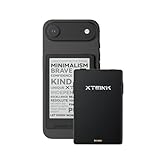
- 3.7" Pocket eBook Reader, Only Approx. 58g: Take your library anywhere with XTEINK X3, a compact 3.7-inch pocket eReader designed for true everyday portability. At only approx. 58g and 5.1mm thin, it slips easily into your pocket, bag, or daily carry setup for reading during commutes, travel, and quick breaks.
- Paper-feel E-Ink Reading, Made for Focus: Enjoy a clean, paper-feel E-Ink reading experience that feels gentle on the eyes and helps you stay focused. No constant notifications, no social media distractions—just a simple mini eReader built for books, manga, notes, and quiet reading time.
- Gyroscope Page-Turn + Physical Buttons: Read comfortably with one hand using gyroscope page-turn control and responsive physical buttons. Whether you are standing, commuting, or relaxing, XTEINK X3 makes page turning smoother, easier, and more intuitive than traditional touch-only reading devices.
- Personalized Features & Long-Lasting Battery:Switch between reading, photos, clock, and more for a customizable experience beyond traditional eReaders. Designed for everyday portability, XTEINK X3 delivers up to 10 hours of reading time, supporting about a week of casual reading on a single charge. For safe charging, use a locally certified charger and keep conductive objects away from the charging pin contacts during charging to help prevent short circuits.
- Magnetic-Ready Design with Pogo-Pin Charging: XTEINK X3 includes an Adhesive Metal Ring to enable magnetic attachment on compatible non-magnetic phone cases or surfaces, expanding compatibility for everyday use. The magnetic pogo-pin charging design maintains a clean, minimalist appearance while supporting convenient daily charging.
What the front light changes in practice
With the light off, screen appearance depends on the room and on reflections from the display surface. In a bright room or outdoors, that can be all you need. In a bedroom or airplane cabin, the front light makes the page visible without requiring a separate lamp. Its brightness and any available color-temperature controls are practical features to inspect on the specific model; the E Ink screen technology alone does not guarantee a particular control layout.
E Ink’s ComfortGaze material reports, for that named front-light design, a Blue Light Ratio reduction of up to 60% and a Blue Light Toxicity Factor reduction of up to 24% compared with a previous generation of front-light designs. Those are manufacturer-defined engineering comparisons. They do not mean an E Ink reader is blue-light-free, and they do not establish that readers will receive a medical or comfort benefit.
What is the difference between black-and-white and color E Ink?
Monochrome Carta screens
A monochrome panel uses the black and white particle system described above. For a text-focused compact reader, the important questions are whether the model provides the resolution, lighting behavior, storage and physical design you need—not simply whether its label says “E Ink.” One dated example is Rakuten Kobo’s Kobo Clara BW announcement from May 3, 2024. It lists a 6-inch E Ink Carta 1300 HD touchscreen, 1448 × 1072 resolution, dark mode, 16 GB of storage and a 1500 mAh battery.
The announcement calls the display HD but does not state a pixels-per-inch figure. It is better to use the supplied resolution than to calculate and publish a PPI that the cited product information does not provide. Availability and specifications can change by market and over time, so treat those figures as the details in that 2024 announcement rather than a guarantee of a current retail configuration.
Color Kaleido screens
Color E Ink adds a color-filter layer over the underlying electronic-ink display. Kobo’s May 3, 2024 announcement identifies the Kobo Clara Colour as using a 6-inch E Ink Kaleido 3 display with a stated resolution of 1448 × 1072. Kobo says the color models retain the glare-free E Ink texture while the filter layer supplies color.
Rank #3

- 𝗕𝗥𝗢𝗪𝗦𝗘 𝗔𝗡𝗗 𝗥𝗘𝗔𝗗 𝗘𝗕𝗢𝗢𝗞𝗦 𝗜𝗡 𝗙𝗨𝗟𝗟 𝗖𝗢𝗟𝗢𝗨𝗥 - Read in colour with a 6” E Ink Kaleido 3 display to enjoy eBook covers, comics, graphic novels, illustrations, and more.
- 𝗡𝗢 𝗠𝗢𝗥𝗘 𝗛𝗨𝗡𝗧𝗜𝗡𝗚 𝗙𝗢𝗥 𝗛𝗜𝗚𝗛𝗟𝗜𝗚𝗛𝗧𝗘𝗥𝗦 - With multiple colours available at the touch of a finger, you can highlight your eBooks. Add, erase, or change colours as you go, and easily see all your highlights by chapter at a glance
- 𝗬𝗢𝗨𝗥 𝗘𝗬𝗘𝗦 𝗪𝗜𝗟𝗟 𝗧𝗛𝗔𝗡𝗞 𝗬𝗢𝗨 – ComfortLight PRO automatically reduces blue light throughout the day, and you can personalize your reading settings via font size, line spacing, or even Dark Mode
- 𝗪𝗔𝗧𝗘𝗥𝗣𝗥𝗢𝗢𝗙 𝗙𝗢𝗥 𝗥𝗘𝗔𝗗𝗜𝗡𝗚 𝗔𝗡𝗬𝗪𝗛𝗘𝗥𝗘 – Full waterproof protection and meets requirements of IPX8 rating – waterproof for up to 60 minutes in up to 2 metres of water
- 𝗕𝗘𝗧𝗧𝗘𝗥 𝗕𝗬 𝗗𝗘𝗦𝗜𝗚𝗡 - Made with recycled and ocean-bound plastic and repairability to waterproof protection
The cited announcement does not quantify the practical contrast, brightness or color-quality difference between the two models. That matters because a filter layer changes how an image looks even when the quoted pixel dimensions are the same. If color illustrations, comics, maps or highlighted textbooks are central to your reading, compare those materials on the actual device in person when possible. A specification sheet cannot tell you whether the muted or textured appearance suits your eyes and content.
Free tools Windows power users keep installed
One-click scans. No signup required.
| Example | Display technology | Screen size | Stated resolution |
|---|---|---|---|
| Kobo Clara BW | E Ink Carta 1300 HD touchscreen | 6 inches | 1448 × 1072 |
| Kobo Clara Colour | E Ink Kaleido 3 with a color-filter layer | 6 inches | 1448 × 1072 |
Both rows reflect Rakuten Kobo’s May 3, 2024 announcement. The identical stated resolution does not mean the screens will look identical: the color model’s filter layer is the construction difference described by Kobo, while the announcement does not provide a numerical contrast or color-quality comparison.
Which screen features matter in a compact reader?
Match the display to the material
- Mostly novels and plain documents: A monochrome panel keeps the display system focused on black-and-white text. Check the model’s listed resolution, typeface controls, front-light behavior and page-turn responsiveness.
- Illustrated books, comics or color-coded documents: A Kaleido-class color panel can show color through its filter layer. Inspect your actual content because the available specifications do not establish how vivid or contrasty every image will appear.
- Mixed reading: Decide which compromise is least disruptive. Color can make diagrams and highlights more useful, while monochrome avoids the color-filter trade-off described by the manufacturer.
Read the lighting specification carefully
Look for the brightness range, whether the light is adjustable, and whether the interface offers a warmer nighttime setting. These are device-level controls, not universal properties of Carta or Kaleido. Also test the screen with the light off in daylight and at low brightness in a dark room; reflections and illumination uniformity are easier to judge than to infer from a product name.
Consider size, handling and protection together
A small reader is chosen partly for portability. Compare the physical dimensions and weight stated for each candidate, then check whether it has the water resistance you need. A six-inch screen can be easy to hold, but the bezel, buttons, case and balance affect one-handed reading as much as diagonal size. Water-resistance ratings, weight and dimensions are model-specific facts that must come from the current official specification for the exact regional version.
Check storage and ecosystem requirements
Storage capacity determines how many books, documents and audiobooks can remain on the device, but the usable library also depends on the store, file formats, borrowing services and account requirements. The Clara BW announcement lists 16 GB; it does not establish the storage capacity of the Clara Colour in the same announcement. Confirm the current model’s supported formats, library integration and regional store access before buying, especially if you plan to sideload documents or borrow library titles.
The Tool Desk
Outbyte Driver Updater FREEScan for outdated or missing drivers - takes under a minuteDriver Scan →Outbyte PC Repair FREERepair Windows errors before they cause bigger problemsFix Now →Rank #4
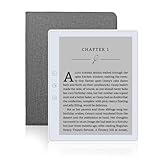
- 【Eye friendly】5.8-inch touch screen with E-Ink technology, you can enjoy an eye-friendly and comfortable reading experience anywhere at any time. The screen is as close to an ordinary paper as possible, so it does not glare in the sun and doesn’t tire your eyes.
- 【Expand your library】 32GB of storage allows you to take your entire collection with you. With a memory card slot, the e-reader can easily expand its 64GB of internal storage.
- 【Easy to carry】Weighing just 165 grams, the e-reader is a lightweight device designed to accompany you on every adventure. You can take your story to the park, the beach, a coffee shop, etc.
- 【Speakerphone】You can listen to your favorite stories through the speakers when you're busy. E-book readers have a battery life of several weeks, so you can experience uninterrupted reading on a single charge.
- 【Convenient Design】Glide through stories with a simple touchscreen swipe, or use the page-turn buttons when one hand is busy. You can also switch to landscape mode for a different reading experience. Paired with a dedicated full-wrap cover for drop and scratch protection, reading should always be this elegant and effortless.
How should battery and charging expectations be set?
The bistable screen reduces the energy needed to hold an unchanged page, but it does not provide a fixed number of reading hours or weeks between charges. Battery use depends on page-turn frequency, refresh mode, front-light brightness, wireless synchronization, downloads, audio and background software. A model with the same screen technology can therefore last differently from another model.
For the dated Clara BW example, Rakuten Kobo lists a 1500 mAh battery. That capacity is a component specification, not a promised interval between charges. Do not convert it into a universal “weeks of battery life” claim without a manufacturer test condition for the exact firmware and usage pattern.
When assessing a reader, note whether the charging connector, charging time and battery-care guidance are documented for the current edition. Those details are separate from the E Ink panel’s ability to hold a static image.
How to evaluate a small E Ink reader before buying
- Start with your dominant content. Bring a representative novel page, a color illustration, a map or a highlighted document, depending on what you read most.
- Inspect the unlit screen in bright ambient light. Check whether text remains comfortable at the viewing angle and whether reflections interfere with the page.
- Test the front light in a dim room. Move from low to high brightness and look for the controls you expect. If a warm setting matters to you, confirm that the device actually provides one.
- Try several update-heavy tasks. Turn pages, open a menu, scroll a list and display an image. Observe flashes, ghosting and responsiveness for your workload rather than assuming one refresh specification covers all activities.
- Compare color content on the color model. Use the illustrations or documents you care about. The Kaleido filter construction is documented, but the cited product information does not give a numerical contrast or color-quality score.
- Verify the current regional specification. Recheck screen technology, resolution, storage, battery, dimensions, weight, water resistance, software features and availability on the manufacturer’s current page before ordering.
- Confirm the reading ecosystem. Make sure the store, account, library service and file-transfer method fit how you obtain books and documents.
Common misconceptions to avoid
- “E Ink is always paper-identical.” Monochrome and color constructions differ, and front-light settings, surface reflections and refresh behavior vary by model.
- “The screen is backlit like a phone.” A typical front light sends illumination across the surface through a light guide; it is not the same optical arrangement as light emitted through an LCD or OLED panel.
- “Bistable means the whole reader uses almost no power.” The display can hold a page without continuous refresh, but the processor, radio, light and other hardware still draw energy.
- “Every E Ink reader has one refresh speed.” Update modes differ by platform and application, and the task being performed affects what you see.
- “A manufacturer comfort metric proves a health outcome.” Figures such as ComfortGaze’s reported reductions describe a named front-light design; they are not independent clinical evidence and do not establish that a device prevents eye strain.
Bottom line
E Ink’s appeal in a small reader comes from a reflective, bistable image that resembles printed media in ambient light and does not need continuous power to hold an unchanged page. A front light adds edge-mounted illumination through a light guide for dark environments, while color models place a filter layer over the electronic ink and can look different from monochrome panels even at the same stated resolution. Choose by the material you read, the lighting controls you actually need, the device’s refresh behavior, and its current model-specific specifications—not by the words “E Ink” alone.
Quick Recap
Product prices and availability are accurate as of the date/time indicated and are subject to change. Any price and availability information displayed on Amazon at the time of purchase will apply.

