Report the damage directly to the authority responsible for the road, even if an AI-assisted survey or map calls the road “good.” Include the road name or number, the precise location and direction of travel, the date you saw the defect, and photographs taken safely. Keep the report reference. A network rating summarizes what a survey measured; it is not proof that every defect is absent or a substitute for reporting a visible hazard.
Why a damaged road can still receive a “good” rating
Automated road surveys measure selected road-surface characteristics and combine them into condition indicators. A result therefore reflects the method, survey date and section assessed—not necessarily a live, defect-by-defect inspection. A visible defect can be missed, arise after the survey, or fail to change the measured indicators enough to move the section out of its “good” category.
As an Amazon Associate I earn from qualifying purchases.
In England, the Department for Transport (DfT) states that “SCANNER surveys cannot identify potholes as a specific defect.” Potholes may nevertheless affect the parameters SCANNER measures and contribute to the overall condition result. The distinction is important: a rating can be meaningful as a network-level measure without certifying that the road is free of potholes. DfT’s guide to road-condition statistics explains this limitation.
Timing is another possible explanation. England’s SCANNER surveys operate on a financial-year cycle, and surveys cannot take place in snow, ice or standing water. Damage caused during winter may not appear in the survey data until a later cycle. A rating also describes the assessed section at the time it was surveyed; it may not reflect later deterioration, repairs or a defect outside the section boundaries. DfT’s guidance sets out the timing and coverage context.
#1 Best Overall

- 5" HD SCREEN & DUAL-LENS FLEXIBILITY – This endoscope camera with light features a 5-inch HD screen with a 170° wide-angle view, delivering vivid real-time visuals. The dual-lens borescope camera with light allows instant switching between front and side views, making it a versatile inspection camera for automotive, plumbing, and HVAC diagnostics. Note: The endoscope cannot take pictures and videos!
- 1080P CLARITY & PRECISION FOCUS – As a high-performance boroscope, this snake camera with light delivers 1080P resolution with a 1.2-4 inches focus range for crisp close-ups. Whether used as a pipe camera or drain inspection camera, it captures fine details like cracks and corrosion, functioning as a reliable industrial endoscope for professional results.
- FLEXIBLE PROBE & WATERPROOF ILLUMINATION – The 16.4ft semi-rigid camera snake bends and holds shape to navigate tight pipes and ducts. Equipped with eight adjustable LEDs and IP67 waterproofing, this flexible camera probe with light excels as a sewer inspection camera, drain camera, or bore camera for underwater and harsh environment tasks.
- PLUG-AND-PLAY HANDHELD CONVENIENCE – No apps or Wi-Fi required—simply power on this bore scope camera with light for instant operation. The ergonomic camera scope snake with light enables one-handed use, while the 2000mAh battery provides 3–4 hours of runtime, ideal for extended plumbing camera snake with light or pipe camera with light inspections.
- BUILT FOR MULTI-INDUSTRY USE – Durable and portable, this scope camera with light serves as a inspection camera with light for mechanics, plumbers, and DIYers. From engine borescopes to plumbing camera tasks, it delivers reliable performance in harsh environments like drains, ducts, and submerged areas.
That means the disagreement is not necessarily evidence that the survey is fabricated or that the road authority has ignored the damage. The result may be older than the defect, may cover a different stretch or direction, or may summarize characteristics that do not identify the particular defect you can see. Conversely, a “good” label should not be treated as a reason to leave a current hazard unreported. Your dated observation and the survey result answer different questions: one records visible damage at a particular place and time; the other summarizes measured condition for a surveyed section.
Report the visible defect, not just the disagreement with the score
Your priority is to get the defect logged in the road authority’s own reporting and inspection process. A survey rating may help explain why the data appears inconsistent, but clear location details and current evidence make the reported hazard actionable.
- Pin down the location. Note the road name or number, nearby junction, landmark or address, and the direction of travel. If possible, identify the lane or side of the road and describe the defect’s position relative to a fixed landmark. Avoid relying on “near the town centre” or a map pin alone. If the same road runs in both directions, the direction can help the authority distinguish which carriageway or stretch you mean.
- Record what you observed. Write down the date and, if useful, the time. Describe the damage plainly—for example, a pothole, broken edge or damaged surface—and explain where it is. Do not estimate dimensions unless you can do so safely and accurately. Be precise about what you saw rather than making assumptions about how or when it formed.
- Take useful photographs safely. If you can do so without entering the road or creating a hazard, take one image showing the defect in context and another closer image showing the damage. Do not stop in a dangerous place, walk into traffic or use a phone while driving to get a picture. If a safe photograph is not possible, report the location and description anyway; do not put yourself or anyone else at risk to obtain evidence.
- Use the responsible authority’s official reporting channel. The correct channel depends on the road owner and location. DfT notes that public reporting tools exist for potholes and other road defects, but there is no single channel that applies everywhere. Check the relevant authority’s official website or reporting service rather than assuming a national or private map is the formal route. If you are unsure who owns the road, verify responsibility with the relevant local authority or road authority before relying on a report sent elsewhere.
- State the mismatch clearly. Explain that the survey or map labels the section “good,” while your dated photographs show damage at the stated location. Ask for the report to be logged and reviewed under the authority’s inspection process. Make the defect and its location the central point; the disputed rating is context, not a substitute for the information needed to find it.
- Save the record. Keep the submission, photographs and confirmation or reference number, along with any reply. These make it easier to follow up on the same reported location. If you contact the authority again, refer to the original report rather than relying on an unrecorded conversation.
If the defect presents an immediate danger, use the relevant local urgent-reporting or emergency channel; the right contact depends on the location and severity. Do not assume that an ordinary online form is monitored quickly enough for an urgent hazard. No universal urgent contact applies to every road or jurisdiction, so use the contact route the responsible authority provides for the situation.
Do these 3 things before closing this tab:
1Scan for outdated or missing drivers - takes under a minute2Repair Windows errors before they cause bigger problems3Fix the driver behind crashes, sound loss and screen glitchesAsk what the rating actually describes
If the authority’s response relies on survey data, ask for the survey date, the technology or method used, the assessed road section and direction, and what the rating means. Also ask how visible defects such as the one you reported are handled in the authority’s inspection process. Those details can distinguish a stale result, a mismatch in coverage, a method limitation or a difference between a network indicator and a defect inspection.
Rank #2

- 1920P HD Resolution: Sewer camera with 7.9mm probe can inspect hard-to-reach places effortlessly. The 2.0MP HD endoscope can observe clear snapshot images (1920x1440 resolution) and high-quality video (1920x1440 resolution) at close range.
- Easy Connection: This borescope inspection camera can easily and quickly connect with IOS 9.0+ Android 7+ system devices through the interface. Search for 'SUP-ANESOK' in the APP store or scan the QR code to download the APP. With simple operations, you can view real-time images on the screen.
- Semi-Rigid Cable & Waterproof Probe: Snake Camera can bend freely and remain semi-rigid. The 16.4ft semi-rigid cable unrolls and rolls up quickly, which provides a good mix of flexibility and rigidity. The IP67 waterproof design allows the camera to operate underwater up to 3.28 feet for 1 hour.
- Wide Applications: Scope camera suitable for various scenes, such as inside the car or around the engine, inside the pipe inspection, or the house inspection mold, and wiring. The brightness-adjustable light enables you to obtain picture information even in dark environments.
- What You Get: Endoscope Camera *1, Android connector*1,Lightning Port*1,Type-C connector,16.4ft Semi-rigid Cable *1, Accessories: Magnet *1, Hook *1, Mirror *1, Protective Cap *1, Manual *1
It can help to ask questions separately and concretely: Was the precise point I reported included in the survey? What dates does the rating cover? What method or supplier produced the data? Does the displayed label describe a measured section or an inspection of this specific defect? Has the authority inspected or repaired the location since the survey? These questions do not presume that the rating is wrong; they help establish what it can reasonably tell you about the damage you reported.
For a rating in England, ask whether it is a legacy SCANNER result or a category under PAS 2161. The two systems use different scales, so a category or number should not be interpreted without knowing which system produced it. The DfT’s road-condition guidance describes SCANNER, while its PAS 2161 information covers the newer standard.
When comparing one result with another, check the survey date and coverage first, then the technology or standard, what the method measures, the category scale and whether an authority inspection or repair has happened since. A change in a number or colour alone is not enough to show that the road physically improved or deteriorated by an equivalent amount, particularly during a change in survey method.
Recommended Free Tools
England’s rating systems: know which one you are seeing
The formal scales below are specific to England. They should not be applied to another country, nor assumed to describe every authority’s public map. A rating is useful only when paired with its method, date and assessed section.
Rank #3
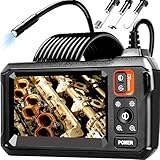
- 【4.3-INCH LCD DISPLAY】HD Endoscope camera with a 4.3-inch color LCD screen that allows you to view high-definition images in real time. Easy to operate, you can use it immediately when it is powered on. No need to use your smartphone to connect to the WIFI and no need to download any driver software. So you do not need to worry about dirtying your expensive phone at work too. Note: The endoscope cannot take pictures and videos
- 【HIGH-QUALITY SNAKE CAMERA】8 adjustable LED lights to ensure a clear image even under dark conditions. The best observation distance: 1.5 in-5 in, making inspections easier. 16.5ft Semi-Rigid cable is both stiff and flexible to better meet your needs
- 【IP67 WATERPROOF】The borescope is rated IP67 waterproof for use in inclement weather and wet environments. The snake camera probe uses an aerospace connector that is water safe to use in pools, plumbing and the rain
- 【SAVE TIME AND MONEY】This is an excellent tool for car maintenance, home inspections, electrical installation, HVAC repairs, and home DIY. The 8mm endoscope camera can easily pass through the spark plug hole to inspect the combustion chamber of the engine. Alternatively, simply drill a hole in the wall to enter the inner wall for viewing, saving the trouble of damaging the wall
- 【WHAT'S IN THE BOX】1 inspection camera with light+1 user‘s manual+1 Type-C charging cable+1 hook+1 magnet+1 side mirror, Our worry-free 180 days warranty and friendly customer service. Warning: Please use a household charger device that meets safety requirements (5V 1A) for charging. Fast charging is not supported to prevent battery overheating
| System | What the rating means | What to check |
|---|---|---|
| Historic SCANNER Road Condition Indicator | Scores from 0 to 40 indicate “good”; scores over 40 and below 100 indicate “amber”; scores of 100 or more indicate “red.” The categories summarize the surveyed section’s condition, not a guarantee that it has no potholes. | Ask when the section was surveyed and whether the displayed result is a SCANNER score. SCANNER does not identify potholes as a specific defect. |
| PAS 2161 | A five-category scale runs from category 1 (no deterioration) to category 5 (severe deterioration). Possible maintenance treatments are associated with the categories. | Ask whether the authority is reporting a PAS 2161 category, which approved survey produced it, and which section was assessed. |
The DfT says authorities must report classified-road data using approved surveys for the financial year ending March 2027. During the transition, comparisons across years can be difficult, especially where survey technologies change. A different score or category does not necessarily mean the road changed by the same amount; check whether the method and scale stayed the same. DfT’s PAS 2161 material describes the new reporting framework and timing.
These England-specific details explain why it matters to identify the label you saw before interpreting it. A score between 0 and 40 in the historic Road Condition Indicator is not the same thing as category 1 under PAS 2161, even though both use the word “good” or describe relatively favourable condition in ordinary language. Do not translate one scale into the other without an official explanation. If a map gives only a colour or a generic “good” label, ask the authority to identify the underlying measure rather than guessing from the appearance of the map.
What the rating can—and cannot—tell you
Automated visual inspection should not be treated as wholly unreliable. In England, DfT describes specifications for survey methods, accredited suppliers collecting SCANNER data, and annual quality assurance by TRL. At the same time, the department notes limits in what SCANNER identifies and comparability challenges as alternative technologies and the new standard are introduced. The DfT guide provides the quality-assurance context.
Quick wins for a faster PC:
Clear out junk files and repair common Windows errorsFree Scan →Fix the driver behind crashes, sound loss and screen glitchesFind Drivers →- A “good” result is not a repair decision about a specific pothole. It summarizes measured condition for a surveyed section.
- A low or old rating may not describe what is there now. Ask for the survey date and whether the authority has since inspected or repaired the location.
- A map label alone does not establish the survey method. Ask the authority to identify the scale and technology behind the result.
- Reporting remains useful even when the data is sound. A new defect, a defect outside the assessed section or a specific inspection concern may need a separate report.
Quality assurance and limitations can both be true. Accreditation and annual checks indicate that the data is collected and checked within a defined process; they do not mean the system identifies every pothole or that a network-level score is a real-time inventory of defects. Likewise, a reported pothole does not by itself prove the survey method failed: it may have developed later, fall outside the surveyed coverage or be a type of damage the measure does not classify separately.
Rank #4

- Easily Maneuver Your View: Tired of struggling with hard-to-reach areas during inspections? This two-way articulating borescope effortlessly navigates tight and complex spaces with its flexible and maneuverable probe. Enjoy crystal-clear visual feedback that saves you both time and money. Whether for automotive maintenance or household inspections, this tool transforms your inspection journey, making the process faster and easier than ever.
- See Every Detail in Vivid Clarity: Experience the exceptional image quality of our 4.5-inch IPS LCD color screen, delivering sharp, high-resolution visuals. Whether you’re in bright sunlight or dim conditions, this display ensures you won’t miss a thing. Plus, with no app required, it's ready to go whenever you are!
- Master the Most Challenging Inspections: Equipped with a 5FT semi-rigid gooseneck cable, this borescope provides the ideal combination of flexibility and stability, allowing you to navigate tight, intricate spaces with ease. The cable retains its shape as you guide it, giving you precise control for thorough inspections. Designed for versatility, it adapts effortlessly to various environments, ensuring no detail goes unnoticed.
- Light Up the Darkest Corners: Equipped with built-in high-brightness LED lights on the camera probe, you’ll have the visibility you need even in the darkest environments. The adjustable illumination allows you to customize the brightness for every inspection, ensuring that no detail goes unnoticed in tight or confined spaces.
- Ergonomics Meet Efficiency: This borescope is thoughtfully designed for maximum comfort and usability. The centrally located articulating joystick allows for effortless one-handed operation with either hand. The photo button is conveniently positioned on the back, making it easy to capture images or videos during inspections. Lightweight and compact, this borescope ensures prolonged use without fatigue, perfect for on-the-go inspections.
If the authority does not resolve the mismatch
Follow up using the report reference and provide the location and evidence again if needed. Ask whether the defect was logged, whether an inspection took place, and what outcome was recorded. If the response only repeats the network rating, request the survey date, method, assessed section and the process for considering a separately reported defect.
Keep the discussion focused on what remains unanswered: whether the report reached the responsible authority, whether the location and direction were clear, whether the section in the rating matches the reported point, and whether the authority considered the defect through its own inspection process. If the authority says the survey is current, ask how its date and coverage relate to your dated evidence. If it says the location is “good,” clarify whether that is a section condition category or a finding about the particular defect.
Escalation routes, repair duties, response times and complaint procedures depend on the road owner and jurisdiction. The England-wide guidance cited here does not establish a universal deadline or appeal mechanism. Check the responsible authority’s published complaints or escalation process for the particular road; do not assume a formal appeal exists or that a survey score by itself settles whether a defect should be repaired.
Frequently Asked Questions
Why does an AI road survey say a damaged road is in good condition?
A condition rating summarizes measured characteristics for a surveyed section; it is not necessarily a live, defect-by-defect inspection. The survey may predate the damage, cover a different section, or use measures that do not identify the visible defect specifically. In England, DfT says SCANNER surveys cannot identify potholes as a specific defect, although potholes may affect its measured parameters.
Best Value

- High Quality Display: The endoscope camera with light adopts a 4.3-inch IPS screen, which can provide a horizontal viewing angle of approximately 170°, and a highly sensitive chip that captures 1920x1080P HD images in real time. With colour flip and brightness shift functions, you get vivid, saturated and natural images from any angle. Note: This endoscope cannot take or store photos.
- Powerful Features Camera : Borescope delicate camera probe is equipped with 8 LED lights, which can adjust the brightness according to the button, so you don't need to worry about the dark environment. Inspection camera is also IP67 waterproof, so it is suitable for harsh and wet environments, and the optimal focusing distance (2cm-10cm) allows you to inspect the pipe wall carefully and clearly.
- Freely Bend 16.6FT Cable: The 1.29in short lens for narrow pipe inspection is half the length of conventional lenses, making it easier to manoeuvre at difficult angles. The 7.9mm camera probe and semi-rigid cable allow the snake camera to be bent at will, making it easy to reach a wide range of confined areas.
- Simple Operation: Just turn on the power and use it. There is no need to connect to WIFI with your smartphone or download any driver software. The ergonomic handle allows you to quickly pick up this lightweight sewer camera and use it comfortably without fatigue. You also do not need to worry about dirtying your expensive phone while working.
- Package Includes: Borescope Camera with Light*1, Hook*1, Magnet*1, Side Mirror*1, Type-c Data Cable*1, Manual*1. We provide 24-hour professional and attentive after-sales service. If you have any questions, please contact us.
How do I report a pothole or road defect that a survey missed?
Report it through the official channel of the authority responsible for that road. Include the road name or number, precise location, direction of travel where relevant, the date you observed it and clear photographs taken safely. Explain that the survey or map says “good,” ask for the defect to be logged and reviewed, and keep the confirmation or reference number.
Can I challenge a road-condition rating?
You can ask the authority to explain the rating and review the separately reported defect. Ask for the survey date, method or technology, assessed section and direction, the meaning of the rating, and how the authority handles visible defects in its inspection process. Whether a formal complaint or appeal route exists depends on the road owner and jurisdiction; the cited England-wide guidance does not establish a universal appeal mechanism.
Does a “good” rating mean the road has no potholes?
No. In England, the historic SCANNER Road Condition Indicator’s “good” category describes a surveyed section’s measured condition; it is not a pothole-free guarantee. SCANNER does not identify potholes as a specific defect, and a rating may also be out of date or cover a different section.
What should I ask if the authority relies on survey data?
Ask when the section was surveyed, which method or technology and supplier produced the data, what section and direction were assessed, and what the rating means. Also ask whether the authority has inspected or repaired the location since, and how the specific defect you reported is considered. In England, clarify whether the result is legacy SCANNER or a PAS 2161 category.
The Bottom Line
A “good” survey label does not make visible damage disappear. Report the defect to the responsible road authority with its exact location, direction, observation date and safe photographs; retain the reference and ask what survey date, method and section produced the rating. Survey scales and reporting routes vary by jurisdiction, and a condition score is not a defect-by-defect inspection.
Quick Recap
Product prices and availability are accurate as of the date/time indicated and are subject to change. Any price and availability information displayed on Amazon at the time of purchase will apply.

