If a fuel shortage threatens your commute, do not set out on assumptions or spend hours searching for an open station. Check official local fuel, road and public-transport updates first; postpone nonessential travel; and ask your employer about working from home, a different shift or another worksite. If you must travel, verify the operating status of your chosen service, plan a backup route, allow extra time, tell someone where you are going and carry basic supplies.
Restrictions differ by country, state and severity. Advice issued during fuel-supply pressure in New South Wales, for example, urged people to use public transport, work from home where possible and reduce nonessential driving. Those are useful principles, not universal rules: follow your own government, transport operator and emergency-service instructions.
As an Amazon Associate I earn from qualifying purchases.
Make the first decision before leaving home
A shortage can mean several different things: a few stations have temporarily run dry, deliveries are delayed across a region, or authorities have introduced emergency controls. Your safest response depends on which situation exists. Start with current information rather than rumors, social-media posts or yesterday’s queue.
Check authoritative updates
- Look at your local government or emergency-management website and official social-media channels for fuel-supply, road-closure and travel notices.
- Check the transport operator’s live status for trains, buses, trams, ferries or demand-responsive services on your route.
- Confirm whether your destination is open and whether your employer has issued a continuity notice.
- Check weather, flooding, wildfire, civil-disturbance or other hazards that could make a normal route unsafe even if fuel is available.
Information can change during the day. Recheck shortly before departure, especially if you would need to transfer between services or walk along roads with limited lighting.
#1 Best Overall

- Smooth 6 L/min Pouring: This metal can delivers up to 6 L/min with a wide 20 mm hose and snap spout, giving you smooth, splash-free pours without the annoying "glug"
- Compact Size: This 5.3Gal/20L metal can (14.2 x 7.1 x 20.1 inches) slips into your trunk with ease. Lightweight yet practical, it's ideal for road trips, camping, or outdoor work
Decide whether the journey is necessary
Postpone a leisure trip, combine errands into one outing, or use delivery and online services when practical. The New South Wales government’s fuel-supply guidance specifically recommends considering public transport, working from home and reducing nonessential travel. A nonessential journey that consumes scarce fuel or adds to congestion may also make an essential worker’s trip harder.
For a work commute, “necessary” is not the same for everyone. A hospital shift, care responsibility or job that requires your physical presence may leave little flexibility. A meeting that can be moved online may not. Treat the decision as a conversation with your manager, not as a test of loyalty or endurance.
Ask your employer for a workable alternative
Contact your manager, human-resources team or duty coordinator as soon as you see a credible disruption. Explain the specific constraint—no fuel on your route, a suspended bus, unsafe roads or an inability to reach a station—and propose an option. Employers may be able to help, but none of these arrangements is guaranteed.
Free tools Windows power users keep installed
One-click scans. No signup required.
Options to discuss
- Remote work: Work from home for the affected day or for an agreed period if your role, security controls and equipment permit it.
- Flexible hours: Start later, finish earlier or switch shifts to avoid the worst queues and match limited transport departures.
- Different worksite: Use a satellite office or a closer branch if your organization has one and it can support your duties.
- Shared travel: Coordinate a ride with a colleague who is already traveling, while agreeing on pickup points and a safe return plan.
- Leave or schedule changes: Use an appropriate leave process if no safe, practical alternative exists.
Do not assume your employer can provide fuel, reimburse every new travel cost or excuse an absence without notice. Get the arrangement, start time and reporting expectations in writing, even if the agreement is made by phone.
Rank #2

- Compact Size: Need extra fuel on the go? This 5.3Gal/20L metal gas can (14.2 x 7.1 x 20.1 inches) slips into your trunk with ease. Lightweight yet practical, it's ideal for road trips, camping, or outdoor work
- Secure Anti-Loosening: Tired of spills? This metal fuel container has a leak-proof sealing ring that stays tight even on rough rides, keeping every drop secure and cutting down on fuel waste
- Smooth 6 L/min Fast Flow: Hate slow, messy refills? This metal jerry can delivers up to 6 L/min with a wide 20 mm hose and snap spout, giving you smooth, splash-free pours without the annoying "glug"
- Military-Style Durable Build: Looking for tough? This fuel jerry can uses 0.8 mm cold-rolled steel that withstands drops, bumps, and sun. A PP extension spout makes every refill easy and clean
- Wide Application Scenarios: Where do you need fuel? Whether it's camping, off-roading, boating, or lawn work, this metal fuel can is built for drivers, adventurers, and homeowners alike
How workplaces can prepare
UK business-continuity guidance published in 2011 recommends documenting how staff normally travel and what alternatives exist. A useful workplace list records each site’s public-transport links, car-sharing possibilities, home-working capability, satellite offices and roles that must be physically present. Keep personal contact details current and identify who can authorize schedule changes.
Managers should avoid collecting more personal information than they need. The goal is a resilient staffing plan, not a permanent record of employees’ movements. Review the plan after a disruption so that a temporary workaround becomes a tested backup rather than an emergency improvisation.
Compare alternatives by the whole journey
No travel mode is automatically suitable. Compare the complete door-to-door trip for the particular day, not just the advertised departure time.
Do these 3 things before closing this tab:
1Clear out junk files and repair common Windows errors2Fix the driver behind crashes, sound loss and screen glitches3Repair Windows errors before they cause bigger problems| Option | Check before choosing it | Common limitations |
|---|---|---|
| Public transport | Live service status, reduced timetable, crowding, last departure, station access and fare-payment requirements | Services may be delayed, curtailed or full; a normal route may require a long walk or an unplanned transfer |
| Walking | Distance, daylight, footpath condition, weather, personal health and safe crossings | Not practical for long distances, unsafe conditions, mobility limitations or carrying work equipment |
| Cycling | Protected route, bicycle condition, lighting, secure parking, weather and the ability to carry essentials | May be unsuitable in severe weather, on unsafe roads or for people without access to a bicycle |
| Ride sharing | Driver reliability, pickup location, seating, cost-sharing and a return plan | Depends on another person’s schedule and vehicle; do not accept a ride that feels unsafe |
| Taxi or on-demand service | Whether vehicles are operating, estimated wait, total fare, accessibility and payment method | Availability and prices can change quickly during a disruption |
| Driving your own vehicle | Actual fuel availability, queue conditions, road status, vehicle range and a backup destination | Queues may block roads; a station can close or run out before you arrive |
Compare availability, total time, cost, safety, accessibility and weather together. A theoretically cheap option that leaves you stranded after the last connection is not a reliable plan.
Rank #3

- Fits Your Needs - Type I safety cans have a single opening for filling and pouring fluids. They are used to safely store, transport, and dispense flammable liquids.
- Easy to Use - Comes with a funnel to help with filling and pouring. The gasketed spout cap self-closes to prevent leaks or spills, and the cap assembly opens automatically to vent internal vapors
- Safe - Features a fixed handle, double interlock no-weld bottom seam, and a non-sparking flame arrestor that helps prevent liquid inside the can from igniting and keeps flames from spreading
- Compliant - Meets OSHA Standard 1910.106 and NFPA code 30 requirements, FM, UL and ULC approved; lead-free technology featuring environmentally friendly hot dipped 24-gauge galvanized steel
- Made in America - US-Made from galvanized steel which resists rust, dents, and certain chemicals. Has a baked on powder-coat finish that resists scratches, chipping, fading, and other wear
Plan an unavoidable trip step by step
UK Prepare’s transport-disruption guidance gives the core rule: “If travel is essential, allow extra time for your journey and check the latest guidance and updates for your chosen mode of transport before setting off.” Apply it as a concrete departure checklist.
- Confirm the destination. Ask the workplace or appointment provider whether you still need to attend in person and when you must arrive.
- Verify the mode. Check the operator’s latest status, not a cached journey-planner result. Save the operator’s disruption page or phone number in case data service fails.
- Choose a primary and backup route. Note an alternate station, bus corridor, walking segment or safe place where you can wait. Avoid relying on a connection with only a few minutes to spare.
- Allow a buffer. Queues, crowded platforms, diversions and slower boarding can add substantial time. Tell your employer if the revised arrival estimate changes.
- Share your plan. Tell a trusted person your destination, route and expected arrival. Send an update when you arrive or if you change plans.
- Pack essentials. Carry a charged phone, charger or portable power bank, water, food, essential medication and warm or waterproof clothing appropriate to the forecast.
- Recheck immediately before departure. A service can change between planning and leaving. If the route has become unsafe or impossible, stop and contact your employer rather than pressing on.
A power bank keeps a phone usable; it does not create fuel, reopen a station or restore a suspended service. Keep the phone in a place where you can hear emergency alerts, and conserve battery by lowering screen brightness and closing unnecessary apps.
If you drive
Do not join a long queue merely because other vehicles are there. Check whether the station is officially open, whether a purchase limit applies and whether the queue is obstructing emergency access or surrounding roads. Never leave a vehicle unattended in a fuel queue, block an intersection or argue with staff. If the station closes or the line becomes unsafe, leave and use your backup plan.
Quick wins for a faster PC:
Fix the driver behind crashes, sound loss and screen glitchesFind Drivers →Repair Windows errors before they cause bigger problemsFix Now →Scan for outdated or missing drivers - takes under a minuteDriver Scan →Use the fuel you have for the most important trip. Combining errands, avoiding unnecessary detours and driving smoothly can reduce consumption, but do not attempt unsafe “fuel-saving” tactics such as switching off lights in poor visibility or driving while fatigued.
Rank #4

- EASY TO POUR GAS CAN – Amazon exclusive, 5-gallon fuel container for easy refilling of lawnmowers, chainsaws, yard tools, recreational vehicles, ATVs, motorcycles, and other gas-powered equipment
- CONTROLLABLE FLOW WITHOUT SPILLS – SmartControl controllable flow rate means no spilling, allowing you to squeeze less for a little, or squeeze more for a lot; bonus funnel with convenient storage ring making filling cars, ATVS or other equipment easier
- FAST FILLS – Integrated air vent in spout and included funnel makes for fast flows of up to 3 gallons per minute, saving you time and hassle
- FLAME MITIGATION DEVICE – Flame mitigation device helps prevent internal vapor ignition to provide an added layer of protection for a cleaner, safer experience
- SAFE & DURABLE – EPA / CARB & Child Safety Compliant, the 5-layer construction prevents vapor leaks and preserves gasoline longer
If you use public transport
Arrive prepared for a longer wait and possible crowding. Keep medication and valuables with you, follow staff directions and do not board a vehicle that is beyond its safe capacity. If a connection is cancelled, ask staff about the next operating service before leaving the station. During an active emergency, transport staff and emergency services may direct passengers to a different exit or evacuation point; follow those instructions even if they conflict with your original route.
Pack for delays, not an imaginary emergency kit
The useful kit is small enough to carry and matched to the trip. Official UK travel-disruption advice identifies these practical items:
- Essential medication, plus any documentation or device needed to use it.
- A charged phone, charging cable and portable power bank.
- Water and a modest amount of food for an extended wait.
- Warm or waterproof clothing suited to the forecast and the time you may be outside.
Add accessibility items you normally need, such as a mobility aid, spare batteries or communication cards. If you have children, include age-appropriate snacks and supplies. Avoid carrying excessive fuel in a vehicle or container; storage and transport rules vary, and improvised containers can create a fire risk.
PC Slower Than It Used to Be?
A free scan shows the junk files, broken settings and background clutter dragging Windows down - then fixes them in one click.Free scan · Windows 10 & 11Outdated Drivers Are Slowing You Down
One free scan finds every outdated or missing driver and matches the right update for your exact hardware.Free scan · exact hardware matchUnderstand emergency fuel controls
Do not assume a national rationing scheme starts whenever one local station runs dry. The UK fuel emergency plan describes possible measures for a severe, widespread supply disruption, including prioritizing bulk fuel for critical services and limiting retail purchases. Those are contingency tools considered by authorities, not automatic instructions for every commuter and not rules that apply in every country.
Best Value
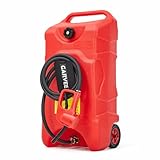
- Heavy-Duty Gas Can Construction: Built from industrial-grade HDPE, this gas can and gas tank resists corrosion, dents, and UV rays for lasting durability. The reinforced walls and tough design make this gas caddy ideal for rugged outdoor use, emergency fuel storage, or demanding job sites in extreme temperatures.
- Secure & Leak-Proof Fuel Tank: Our fuel can features dual shut-off valves and vapor-tight seals, preventing spills while securely storing gasoline, diesel, water or water. The advanced safety design includes a child-resistant cap and anti-static grounding, making this fuel tank safe for home, garage, or workshop environments.
- Efficient Fuel Transfer Pump: Equipped with a manual fuel transfer pump and ergonomic T-grip handle, you can quickly and precisely refuel your equipment. The flexible, reinforced hose and 360° rotating nozzle on this boat gas can make filling generators, tractors, and boats easy, mess-free, and controlled.
- Portable Fuel Caddy Design: Move fuel anywhere you need it! This gas caddy features 6"heavy-duty wheels, a collapsible pull handle, and ergonomic side grips for easy transport across gravel, grass, or rough terrain. The lightweight construction keeps this fuel caddy lighter and more manageable than steel alternatives.
- Versatile Multi-Fuel Compatibility: Use as a gasoline storage tank, gas tank, or 16 gal gas can for gasoline, diesel, kerosene,water or biodiesel. Gallon/liter markers, integrated tool storage, and stackable shape make this fuel tank perfect for emergency generators, marine engines, landscaping equipment, and more.
If authorities introduce a purchase limit, designated priority access, restricted hours or a travel ban, the official notice should explain who is covered and when it takes effect. Follow that notice exactly. Do not rely on forwarded screenshots, unofficial “priority” claims or advice from another jurisdiction. Keep receipts or employer authorization only when an authority or employer specifically requires them.
Safety and accessibility during the disruption
Protect yourself while waiting
Stay in a well-lit, staffed location where possible. Keep clear of roadways, idling vehicles and arguments in queues. If conditions deteriorate—fire, flooding, violence, a medical emergency or a direction to evacuate—leave the area and call the appropriate emergency number. Do not attempt to bypass barriers or enter a closed station.
Plan for access needs
Ask the transport operator about accessible vehicles, lifts, step-free entrances and replacement services. A disruption can remove the feature that normally makes a route usable, so confirm the entire chain rather than only the first vehicle. If you use a service animal, mobility aid or refrigerated medication, tell the operator or employer what accommodation is essential and identify a fallback that genuinely meets it.
Protect privacy when sharing travel plans
Tell a trusted person enough to support you—destination, expected arrival and a way to contact you. Avoid posting your live location publicly. If a colleague offers a ride, verify the vehicle and agree where you will be dropped off; you are not obliged to accept an arrangement that feels unsafe.
What to do if you cannot get fuel to get to work
Contact your employer before your shift starts. State that you cannot obtain fuel, describe the alternatives you checked and ask which approved option is available: remote work, a later start, a different site, a shared ride or leave. Keep checking official travel updates in case service resumes, but do not promise an arrival time you cannot meet.
If your job is safety-critical or your absence affects a roster, use the employer’s established escalation channel. A supervisor may be able to reassign duties or arrange coverage. If you are stranded, move to a safe location first and communicate second; do not continue walking along an unsafe road simply to avoid being late.
After the commute: improve the next decision
Record what actually failed: station supply, road access, a missed connection, payment problems, accessibility or a lack of information. Ask your employer and transport operator whether they have a formal feedback channel. For the next trip, update your alternate route, charging routine, contact list and departure buffer. A short, factual debrief helps turn a one-day disruption into a usable continuity plan without encouraging unnecessary stockpiling or risky travel.
Quick Recap
Product prices and availability are accurate as of the date/time indicated and are subject to change. Any price and availability information displayed on Amazon at the time of purchase will apply.

