Do these 3 things before closing this tab:
1Scan for outdated or missing drivers - takes under a minute2Repair Windows errors before they cause bigger problems3Fix the driver behind crashes, sound loss and screen glitchesRemovable rear buttons and paddles give your middle, ring, or little fingers another way to reach an input while you hold a controller. In most designs they do not create a new game command: you assign them to an existing button, then press that input from the back of the grip. The exact controls, mapping limits, profile behavior, and setup menu depend on the controller and platform.
This guide explains the difference between the hardware and its mapping software, shows how to configure the DualSense Edge, Xbox Elite Series 2, and supported Nintendo Switch controllers, and identifies the settings that do not transfer between systems.
As an Amazon Associate I earn from qualifying purchases.
What rear buttons and paddles actually do
A rear button or paddle is a physical control surface placed where a finger can reach it without releasing the controller. The controller firmware treats that press as an assigned input. For example, a rear control can duplicate a face button, shoulder button, stick click, or another input that the particular model allows you to select.
Recommended Free Tools
That distinction matters. A paddle normally does not add a brand-new command to a game. It gives you a second physical route to an existing command. Sony describes the DualSense Edge rear buttons as mappable to another button input, while other manufacturers may expose different assignment rules. Check the documentation for the exact model before assuming that every rear control can perform every function.
#1 Best Overall
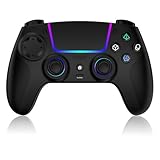
- Seamless Compatibility:This game controller is compatible with PS5, Pro, Slim, PC, and Steam Deck. Enjoy seamlesg integration with your console and all your PS5 games without any complicated setup
- Adjustable RGB Lighting: Personalize your setup with vibrant, 7-color adjustable RGB lighting. Choose from 4 distinct lighting modes (Steady, Breathing, Color Cycle, and Reactive) to match your mood, game, or gaming environment
- 3-Speed Turbo: Gain a competitive edge with the 3-speed adjustable TURBO function. Simply map any action button to turbo for rapid, continuous firing—perfect for shooting games or actions requiring high-speed input
- Programmable Back Buttons: Take command with fully programmable rear buttons M1 & M2. Map complex in-game commands or macros to these buttons, saving your configurations for instant access to advanced maneuvers and shortcuts
- Ergonomic Design: Its form-fitting shape, balanced weight, and soft-touch materials offer superior comfort. This non-slip design ensures stable control and prevents slippage, even with sweaty hands
There is no attributable statistic in the cited manufacturer documentation proving that back controls improve reaction time, aim, comfort, or competitive results. They can reduce the need to move a thumb for a frequently used input, but whether that feels better depends on your hand position, game, and chosen mapping.
Controller and platform differences at a glance
| Option | Physical rear hardware | Where mapping is configured | Profiles or saved layouts | Important storage or compatibility detail |
|---|---|---|---|---|
| DualSense Edge | Interchangeable half-dome buttons plus side-specific left and right lever buttons | Controller profile controls; on Windows, PlayStation Accessories | Up to four profiles, including the default profile | Profiles are stored in the controller and remain available when it is used with another computer or mobile device |
| Xbox Elite Wireless Controller Series 2 | Removable paddles | Xbox Accessories app | Microsoft’s cited product page does not state a profile count | Microsoft lists mapping and profile features on Xbox Series X|S, Xbox One, and Windows 10/11 |
| Nintendo Switch and Switch 2 supported controllers | Nintendo’s mapping documentation does not establish that each supported controller has physical rear paddles | System Settings → Controllers and Sensors → Change Button Mapping | Up to five custom configurations per supported controller on each system | Mappings are saved on the console, not on the controller, so they do not follow the controller to another system |
The table separates two ideas that are often mixed together: a controller can support button remapping without having rear hardware, and a controller can have removable paddles whose assignments are managed by a manufacturer app.
How to choose a useful rear-button assignment
Start with an input you use often and currently reach by moving your thumb. The rear control should duplicate that input, not replace a command that you rarely press. Treat the first layout as an experiment rather than a performance promise.
Free tools Windows power users keep installed
One-click scans. No signup required.
- List the inputs you repeat during play. Examples include a jump, crouch, reload, sprint, or a stick click, depending on the game. Use only inputs the controller software exposes.
- Assign one rear control first. A single change makes it easier to tell whether the location is comfortable and whether you accidentally press it while gripping the controller.
- Test in a low-risk area. Use a practice range, tutorial, or local session. Confirm that the game receives the intended input and that your normal face-button control still works if you wanted a duplicate.
- Check for accidental presses. Hold the controller as you normally do, relax your fingers, and move the sticks. If a paddle activates while you are not trying to press it, choose another location or assignment.
- Save a named layout only after testing. Keep a neutral or default profile available so you can return to the original controls quickly.
This process is practical guidance, not a manufacturer claim that a particular assignment is superior. Hand size, grip, game genre, and accessibility needs all affect the result.
Configuring the Sony DualSense Edge
Identify the interchangeable rear buttons
The DualSense Edge includes two rear-button styles: half-dome buttons and lever buttons. Sony says the half-dome buttons are interchangeable. The left and right lever buttons are side-specific, so the lever marked L belongs in the left slot and the one marked R belongs in the right slot. The shapes are not merely cosmetic; choose the style that your fingers can locate without changing your grip.
Rank #2

- Aim and move with precision by swapping in fresh stick modules* so you’re always playing with equipment that’s in great shape. Plus, three types of changeable stick caps help you stay comfortable in-game without sacrificing grip or stability.
- Mappable back buttons The DualSense Edge wireless controller’s two swappable sets of back buttons can be configured to any other button input, so you’ve always got game-changing actions and essential controls at your fingertips.
- Adjustable trigger lengths Manually set the travel distance of your left and right triggers for an optimal experience with whatever you’re playing. Fast-paced FPS? Set a shorter travel distance to shoot faster on the field. Competitive racer? Set a longer travel distance for precise throttle control on the track.
- Remappable buttons Remap or even deactivate specific button inputs, so you can create a completely personalized control setup that’s ideal for the game at hand.
- Quick-swap control profiles Once you’ve found your ideal control settings, you can save them to unique profiles and swap between them on-the-fly, so your favourite configurations are always ready when you are.
Remove or install a button
Sony’s removal method is deliberately simple and does not require opening the controller:
- Grip the rear button at its attachment point.
- Pull it toward the top of the controller.
- Lift the button out of its slot.
- To install a replacement, place the correct button in the slot and press it into the attachment point until it is seated.
For lever buttons, verify the L/R mark before installation. Do not force a side-specific lever into the opposite slot. Sony’s illustrated instructions are on the DualSense Edge personalization support page.
Map inputs and save profiles
DualSense Edge profiles can contain custom button and stick settings. Sony documents storage for up to four profiles, including the default profile. The profiles are saved in the controller rather than only in the computer or console, so Sony says they remain accessible when you use the controller with another computer or mobile device. See the official DualSense Edge customization documentation for the current control names and screens.
After you save more than one profile, you can switch during gameplay by holding the Fn button and selecting the corresponding face-button shortcut. The shortcut changes the active layout; it does not alter the physical button pieces. Give each profile a clear purpose, such as a general layout and a layout for a particular game, so you know which assignments are active.
Configure on Windows
On Windows, Sony directs users to the PlayStation Accessories application to edit DualSense Edge profiles. Install the current version recognized by your system, connect the controller as instructed by the app, and check for a firmware update before troubleshooting a mapping that does not appear. Sony specifically advises keeping the controller firmware current. The app is the configuration path; ordinary game settings cannot necessarily expose every Edge profile option.
Rank #3
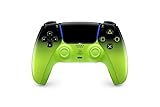
- Heighten Your Senses. Discover Deeper, highly immersive gaming experiences.
- Feel your in-game actions and environment simulated through haptic feedback
- Chat online through the built-in microphone or connect a headset directly via the 3.5mm jack
- Play on more devices Connect using a USB Type-C cable or Bluetooth wireless technology so you can easily play on more devices including Windows PC and Mac computers, Android and iOS mobile phones.
- Elevate PC gaming with advanced features like haptic feedback and adaptive triggers in a range titles
Do not confuse trigger stops with rear-button mapping
The L2 and R2 sliders are a separate hardware setting. They select long, medium, or short trigger travel. Sony states that the medium and short settings disable the trigger-effect feature. Changing a trigger stop therefore changes travel and trigger effects; it does not assign a rear button or create a new input. If trigger effects disappear after moving a slider, return the slider to the long setting when you want that feature and confirm the game supports the effect.
Quick wins for a faster PC:
Fix the driver behind crashes, sound loss and screen glitchesFind Drivers →Clear out junk files and repair common Windows errorsFree Scan →Configuring the Xbox Elite Wireless Controller Series 2
What the removable paddles are for
Microsoft identifies removable paddles as components of the Xbox Elite Series 2. The paddles provide rear access to inputs that you assign through software. Microsoft’s product information directs users to the Xbox Accessories app for paddle remapping and lists button-mapping and profile features for Xbox Series X|S, Xbox One, and Windows 10/11. Start with Microsoft’s current Elite controller product information and the Xbox Accessories instructions available for your platform; app labels and connection prompts can change with software updates.
A safe configuration workflow
- Attach only the paddles you can comfortably reach. The hardware is removable, so you can use fewer paddles if a full set causes accidental presses.
- Open Xbox Accessories on the Xbox console or supported Windows installation.
- Select the connected Elite Series 2 controller and open its button-mapping or profile controls.
- Assign an existing input to each installed paddle, save the layout, and test it in a game or practice area.
- Keep a neutral profile for games that use a different control scheme.
Microsoft’s cited product page does not state a universal number of stored profiles, so do not assume that the Xbox profile capacity matches the DualSense Edge. Use the number and save behavior shown by the current Xbox Accessories app.
Setup is not the same as repair
Normal paddle installation and mapping do not require controller disassembly. Microsoft’s repair guide says to remove the removable paddles before beginning an internal repair and lists a TR8 security driver and a plastic pry tool among repair tools. Those instructions are for component repair, not for assigning buttons. Follow the Elite Series 2 component disassembly and reassembly guide only when you are performing a repair covered by that documentation.
Changing button mappings on Nintendo Switch and Switch 2
Open the system-level mapping screen
Nintendo puts remapping in the console interface rather than in a controller-mounted profile system. On Switch and Switch 2, open System Settings → Controllers and Sensors → Change Button Mapping. Nintendo’s supported list includes Joy-Con 2 (L/R), Nintendo Switch 2 Pro Controller, Joy-Con (L/R), and Nintendo Switch Pro Controller. Nintendo also says that Nintendo Switch Lite buttons can be remapped. The support list and availability can vary by system software, so use the console’s current menu if a label differs.
PC Slower Than It Used to Be?
A free scan shows the junk files, broken settings and background clutter dragging Windows down - then fixes them in one click.Free scan · Windows 10 & 11Crashes, No Sound, or Screen Glitches?
Random freezes, missing sound and display glitches usually trace back to one bad driver. Find and replace yours safely.Free scan · under a minuteRank #4

- Ultra Customizable Controls
- Mappable Back Buttons
- DualSense Wireless Controller Features Built In
- Replaceable Stick Modules and Caps
Save a custom configuration
- Choose the connected controller from the Change Button Mapping screen.
- Select the button you want to change, then choose the replacement input offered by the system.
- Review the on-screen layout so you can spot an accidental swap.
- Save the configuration and assign it a recognizable name when prompted.
- Repeat the process for another controller only if you want a separate layout.
Nintendo allows up to five custom configurations per supported controller on each system. The mappings are stored on the console, not in the controller. If you pair that controller with another Switch or Switch 2 system, the custom layout does not travel with it; recreate or select a configuration on the second console.
Buttons Nintendo does not remap
Nintendo excludes the power, volume, Home, and Sync buttons from remapping. The feature can apply through most console situations, including gameplay and menus, but those system controls remain fixed. Nintendo’s instructions describe general remapping support; they do not establish that every listed Joy-Con or Pro Controller has a physical rear button or paddle. Do not infer rear hardware from the presence of the mapping menu.
For the official compatibility list and current screens, consult Nintendo’s Button Mapping FAQ and How to Change the Button Mapping on Nintendo Switch Controllers.
Independent reader supportYour contribution helps us test, update, and keep practical guides available for everyone.How to compare controllers with rear controls
There is no universal best layout. Compare the features that determine whether a specific controller suits your hands and platform.
| Comparison point | Questions to ask |
|---|---|
| Physical controls | How many rear pieces are included? Are they buttons, levers, or paddles? Can they be removed, swapped between sides, or left off? |
| Reach and shape | Can your fingers find the control without changing your grip? Does the shape cause accidental presses during stick movement? |
| Mapping behavior | Which existing inputs can be assigned? Is the rear control a duplicate of another button, or does the documentation establish a different function? |
| Profiles | How many layouts can be saved, and how are they selected during play? The DualSense Edge documents up to four profiles including default; the cited Xbox product page does not state a count. |
| Storage location | DualSense Edge profiles are stored in the controller. Nintendo says its mappings are stored on the console. This determines whether a layout follows the hardware. |
| Configuration platform | Does setup use console menus, a Windows app, or both? Confirm support for your console generation and operating-system version. |
| Other settings | Are trigger travel, trigger effects, stick settings, or other controls tied to the same profile? On DualSense Edge, trigger-stop settings are separate from rear-button assignments and can disable trigger effects at medium or short travel. |
Use the physical layout as a deciding factor only after confirming the software path. A controller with comfortable paddles is less useful if its mapping tool does not support your platform or preferred inputs.
Best Value

- 【MULTI-PLATFORM WIRELESS CONTROLLER】: Compatible with PS5 series consoles, Windows 10+ PC, Steam Deck, Mac, Android 10+ devices, and iOS devices. This Bluetooth gaming controller provides flexible compatibility for console, computer, and mobile gaming.
- 【HALL EFFECT JOYSTICKS & TRIGGERS】: Magnetic Hall sensing delivers smooth, precise input with reduced wear and improved resistance to stick drift, giving you confident control in FPS, racing and action games.
- 【2 PROGRAMMABLE BACK BUTTONS】: Map frequently used controls to the rear buttons for faster access without taking your thumbs off the sticks. Customize your setup directly on the controller with no app required.
- 【IMMERSIVE GAMEPLAY FEATURES】 : 6-axis motion control, adjustable dual vibration, a built-in speaker and a 3.5mm headset jack add more feedback and immersion to compatible games and devices.
- 【1500mAh BATTERY & CUSTOM RGB】: Play longer between charges with the built-in rechargeable battery, personalize your setup with adjustable RGB lighting, and use Turbo when you want rapid repeated inputs. Textured grips help keep the controller secure during long sessions.
Troubleshooting common mapping problems
The rear control does nothing
- Check which profile is active. On DualSense Edge, a profile switch can change the assignment without changing the button hardware.
- Open the platform’s mapping screen and verify that the rear control is assigned to an input the game actually uses.
- Test the controller in a system menu or practice area to separate a controller configuration issue from a game-specific control setting.
- On Windows, reconnect through the manufacturer’s configuration app and check for firmware updates before creating the profile again.
The assignment is unavailable
Some inputs are intentionally excluded. Nintendo does not allow remapping of power, volume, Home, or Sync buttons. Other controllers may restrict assignments by model or software version. Treat an unavailable command as a documented limitation rather than trying to force it through an unsupported workaround.
The layout changed after moving to another system
First identify where the profile is stored. DualSense Edge profiles are saved in the controller, while Nintendo custom mappings are saved on each console. An Xbox layout is managed through Xbox Accessories and its current profile workflow. Reconnect the controller to the original platform or recreate the layout where it is stored instead of assuming that every controller carries settings with it.
Trigger effects disappeared on a DualSense Edge
Check the L2 and R2 sliders. Sony states that medium and short trigger travel disable the trigger-effect feature. This is independent of rear-button assignments, so changing a paddle mapping will not restore the effect; return the trigger setting to long travel when appropriate.
What’s actually slowing this PC down?
Pick the symptom - the matching free tool is one click away.
A removable button feels wrong after installation
Power down or stop play, remove the piece using the documented slot method, and verify its orientation. For DualSense Edge lever buttons, check the L/R mark and corresponding slot. Do not open the controller to solve a normal fit or mapping question.
Maintenance and repair boundaries
Rear-button configuration is a software and external-hardware task. Do not disassemble a controller merely to assign a button, switch a profile, or change trigger travel. Internal repair introduces different risks and tools; Microsoft’s repair documentation specifically calls for removing Elite Series 2 paddles before disassembly and lists a TR8 security driver and plastic pry tool for that repair context.
For routine use, keep removable pieces together, install only the side-specific parts in their matching slots, and update controller firmware or the configuration app when the manufacturer instructs you to do so. If a button is physically damaged, consult the model’s official service documentation rather than treating a repair guide as a setup guide.
A practical decision guide
- You want interchangeable rear shapes and controller-stored profiles on PlayStation: the DualSense Edge documentation covers half-dome and lever options, up to four profiles including default, Fn-based switching, and Windows configuration through PlayStation Accessories.
- You want removable paddles in an Xbox ecosystem: the Elite Series 2 is the Microsoft-documented option in this comparison, with Xbox Accessories mapping on Xbox Series X|S, Xbox One, and Windows 10/11.
- You need system-wide remapping on Switch or Switch 2: use Nintendo’s Change Button Mapping screen for supported controllers, remembering that layouts are stored per console and that several system buttons cannot be changed.
- You are unsure whether a rear control adds a new command: assume it duplicates an existing input until the exact controller documentation says otherwise.
The useful outcome is a predictable, comfortable route to an input you already use. Select the physical pieces, assign one tested command at a time, save the layout where your platform supports it, and keep a default configuration for games that do not suit the custom arrangement.
Quick Recap
Product prices and availability are accurate as of the date/time indicated and are subject to change. Any price and availability information displayed on Amazon at the time of purchase will apply.

