A Soulslike is a game built around a learnable risk-and-retry loop: you enter a dangerous space, make deliberate combat decisions, risk losing progress or currency when you die, study the result, and return with a better plan. Difficulty is part of that structure, but difficulty by itself does not define the genre.
The defining idea: learning through a fair risk-and-retry loop
The most useful way to identify a Soulslike is to look for a connected set of systems rather than a checklist of surface features. The player is expected to learn an enemy, route or boss through repeated attempts. Failure should reveal something—an attack pattern, a dangerous corner, an unsafe distance, an upgrade that would help—rather than feel like a random tax.
| # | Preview | Product | Price | |
|---|---|---|---|---|
| 1 |
|
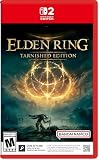
ELDEN RING: Tarnished Edition - Nintendo Switch 2 | $79.00 | Buy on Amazon |
| 2 |

|
Elden Ring (PS5) (European Version) | $34.00 | Buy on Amazon |
| 3 |

|
Bandai Namco Entertainment Elden Ring (PS4) | $47.44 | Buy on Amazon |
| 4 |

|
ELDEN RING Tarnished Edition | Digital | Nintendo Switch 2 Digital Code | $79.99 | Buy on Amazon |
As an Amazon Associate I earn from qualifying purchases.
Hidetaka Miyazaki described the Dark Souls concept as trying something, dying, learning from mistakes and eventually overcoming them. In a later interview, he said players should use their cunning, study what is happening, memorize patterns and learn from mistakes. That philosophy explains why a death can feel useful even when it costs resources: the player has gained information that makes the next attempt different.
Free tools Windows power users keep installed
One-click scans. No signup required.
Why “hard” is not a sufficient definition
Many games are difficult. A precision platformer can demand exact timing, a strategy game can punish poor planning, and a survival game can make resources scarce. None is automatically a Soulslike. The label usually implies that difficulty is embedded in a repeatable structure involving deliberate action, meaningful failure, recoverable or consequential losses, checkpoints, exploration and mastery.
#1 Best Overall
- ELDEN RING Tarnished Edition contains the Elden Ring Base Game + Shadow of the Erdtree Expansion + Additional Content (including Torrent Skins, New Armors, and More...)
- MASSIVE OPEN WORLD
- DEEP, CUSTOMIZABLE COMBAT
- NEW STARTING CLASSES
- NEW PLAYER-FRIENDLY ENHANCEMENTS
A game can also borrow only part of that structure. Some modern action games use stamina and dodge rolls but have generous checkpoints and no meaningful death penalty. Others use corpse runs and demanding bosses while presenting combat through ranged weapons or turn-based commands. Genre labels describe family resemblance, not a legal standard.
Deliberate combat: commitment, timing and readable failure
Soulslike combat makes each action matter. Attacks have startup and recovery frames, movement has a cost, and defensive choices depend on distance and timing. Pressing attack repeatedly is often less effective than choosing when to commit, when to retreat and when to wait for a telegraphed opening.
Action commitment creates consequences
A heavy swing may deal substantial damage but leave the character exposed if the enemy does not stagger. A dodge may avoid one strike yet place the player beside a second hitbox. Blocking can preserve health while draining stamina or guard stability. These trade-offs turn combat into a sequence of decisions instead of a test of input speed alone.
PC Slower Than It Used to Be?
A free scan shows the junk files, broken settings and background clutter dragging Windows down - then fixes them in one click.Free scan · Windows 10 & 11Crashes, No Sound, or Screen Glitches?
Random freezes, missing sound and display glitches usually trace back to one bad driver. Find and replace yours safely.Free scan · under a minuteReadable failure is central. If a player is killed because an attack was greedy, a dodge was late or a phase change was not recognized, the cause should be understandable in hindsight. Miyazaki has said that when players can understand why they died and feel the result was justified, that is the design goal. The next attempt then becomes an experiment: attack once instead of twice, stay outside a sweep, or save a healing item for a known phase.
Are stamina bars and dodge rolls required?
No. Stamina management and invincibility-frame dodges are common because they express commitment clearly, but neither is mandatory. A Soulslike can replace a stamina bar with posture, ammunition, heat, cooldowns or a rhythm-based defensive system. It can use a step, parry, jump, shield, grappling move or directional guard instead of a traditional roll.
What matters is that offense and defense have understandable timing and opportunity costs. The player must be able to read an encounter, choose a response and improve through practice. A roll is a familiar implementation, not the defining principle.
Death, currency and the corpse-run decision
In a traditional Souls game, death changes the next decision rather than simply resetting the last few seconds. The character may drop a currency—used for levels, upgrades or purchases—at the place of death. Returning there allows one recovery attempt. Dying again before collecting it usually erases the previous loss.
Quick wins for a faster PC:
Scan for outdated or missing drivers - takes under a minuteDriver Scan →Repair Windows errors before they cause bigger problemsFix Now →Rank #2
- Collaborating with George R.R. Martin to create the ELDEN RING mythos has been a genuinely delightful experience and a source of wonderful inspiration. The team is working hard to ensure that the world of ELDEN RING will be a fascinating place for players to explore, filled with peril and wonder from its furthest reaches to its lowest depths. This is a FromSoftware title through and through, rich in fantasy and RPG action. We sincerely hope you look forward to it.
- Building the world of ELDEN RING with Miyazaki-san and his team was a treat! The graphics, mythos, and action-RPG gameplay will deliver an unforgettable experience. I can’t wait for people to see what ELDEN RING has in store for them.” Said George R.R. Martin.
Why the corpse run matters
The dropped resource creates a tension between safety and greed. A player who reaches a checkpoint with enough currency to level up must decide whether to spend it immediately or push farther. After dying, the recovery route may pass through enemies that are now familiar, but the player is still carrying no replacement for the lost resource. Taking a shortcut, changing equipment or abandoning the recovery can all be rational choices.
Calling this a “corpse run” does not mean every Soulslike has one. It is a recurring convention, not a requirement. The important design question is whether failure creates a meaningful cost or decision that interacts with the next attempt.
Checkpoints reset part of the world
Bonfires, lamps, shrines, benches and similar checkpoints restore health and healing supplies, save progress and often allow leveling or equipment management. Resting commonly respawns ordinary enemies. That reset is deliberate: it restores the resource economy and gives the player another complete route to practice.
Checkpoint placement controls pacing. A point that is too close to a boss can remove route tension; one that is too far away can turn every attempt into repetitive travel. Dark Souls’ design addressed this by giving players selected recovery points so a death did not always send them to the beginning of an entire level.
Sekiro shows how the rule can change
Sekiro: Shadows Die Twice keeps high-stakes learning but changes the death economy. Its resurrection system lets the player return to life during some encounters, while an unrecovered death does not leave a collectible corpse. Instead, money and skill experience are reduced automatically. That removes the classic run-back choice while preserving consequences for failure.
World design: routes, shortcuts and discovery
In a Soulslike, the level is part of the challenge. Areas often contain locked doors, elevators, ladders and bridges that eventually connect back to a familiar checkpoint. Opening a shortcut changes the risk of future attempts and rewards careful observation.
Interconnected maps are common, not universal
Most Souls games loop areas together, but the structure varies. Demon’s Souls uses a level-selection model rather than one continuous map. Bloodborne links districts to a central hub and uses warp points. Elden Ring expands the idea into an open world with multiple routes, optional regions and alternative preparation paths.
Rank #3
- A New Fantasy World – Journey through the Lands Between, a new fantasy world created by Hidetaka Miyazaki, creator of the influential Dark Souls video game series, and George R. R. Martin, author of The New York Times best-selling fantasy series, A Song of Ice and Fire. Unravel the mysteries of the Elden Ring’s power. Encounter adversaries with profound backgrounds, characters with their own unique motivations for helping or hindering your progress, and fearsome creatures
- World Exploration in the Lands Between – Elden Ring features vast fantastical landscapes and shadowy, complex dungeons that are connected seamlessly. Traverse the breathtaking world on foot or on horseback, alone or online with other players, and fully immerse yourself in the grassy plains, suffocating swamps, spiraling mountains, foreboding castles and other sites of grandeur on a scale never seen before in a FromSoftware title
- Genre-Defining Gameplay – Create your character in FromSoftware’s refined action-RPG and define your playstyle by experimenting with a wide variety of weapons, magical abilities, and skills found throughout the world. Charge into battle, pick off enemies one-by-one using stealth, or even call upon allies for aid. Many options are at your disposal as you decide how to approach exploration and combat
The shared principle is meaningful navigation. The player learns which door leads where, recognizes a landmark seen from another angle and decides whether a dangerous path is worth exploring now. A map can be tightly interconnected, hub-based or open-world and still serve the same learning loop.
Exploration carries information and story
Soulslikes often avoid explaining their world in a single linear exposition sequence. Item descriptions, architecture, enemy placement, visual motifs and short NPC conversations provide fragments that players assemble. This environmental and contextual storytelling makes exploration a form of investigation.
Indirect storytelling is not the same as deliberately withholding every explanation. Strong level design guides a player who understands only part of the lore. A statue, corpse, locked gate or unusual enemy can communicate history and mechanics at the same time. A bleak fantasy setting is common, but it is not required; the storytelling method can appear in science-fiction, horror or historical settings.
Bosses as tests and progression gates
Bosses concentrate the genre’s demands into a single encounter. They often block the next region, major ability or story step, so defeating one demonstrates more than raw damage output. The player must read a large moveset, recognize phase changes, manage healing windows and understand the arena.
What a boss encounter tests
- Pattern recognition: telegraphs, delays, feints and follow-up attacks must be distinguished.
- Positioning: the safest place may be beside, behind or at a specific range rather than directly away.
- Resource control: healing, ammunition, buffs and durability may need to last through multiple phases.
- Build adaptation: resistance, damage type, status effects, summons or a different weapon can change the problem.
- Emotional discipline: a nearly defeated boss can still punish a final greedy attack.
Large arenas and multi-phase attacks are frequent because they make the fight legible while allowing escalation. A boss can be difficult without being unfair when its lethal moves have identifiable cues and the player has a plausible response.
Do these 3 things before closing this tab:
1Clear out junk files and repair common Windows errors2Fix the driver behind crashes, sound loss and screen glitches3Repair Windows errors before they cause bigger problemsBuilds, equipment and multiple solutions
Character stats, weapons, armor, spells, consumables and upgrade paths let players approach the same obstacle differently. A strength-focused weapon may stagger an enemy; a fast weapon may exploit brief openings; a spellcaster may control distance; a status effect may reward patience. This flexibility gives experimentation a purpose beyond simply increasing numbers.
Dark Souls is known for many weapon categories with distinct movesets and characteristics. Bloodborne has fewer physical weapons, but each one transforms into another form and can be customized with gems. These are different answers to the same design question: how much of the solution should come from player execution, preparation or build choice?
Rank #4
- ELDEN RING Tarnished Edition
Build variety does not mean every encounter has an easy counter. A well-designed system lets players change the odds without making mastery irrelevant. Upgrades, equipment and consumables should support learning, not replace it entirely.
Independent reader supportYour contribution helps us test, update, and keep practical guides available for everyone.Common signals versus optional features
| Feature | How strongly it signals a Soulslike | Why it matters |
|---|---|---|
| Deliberate action combat | Core signal | Actions have timing, commitment and readable consequences. |
| Learning through repeated attempts | Core signal | Failure supplies information that improves the next decision. |
| Meaningful death or resource risk | Core signal | Defeat changes how the player approaches the next run. |
| Checkpoints that reset some world state | Strong common signal | They define attempts and restore the resource economy. |
| Exploration, shortcuts or secrets | Strong common signal | Navigation and discovery are part of progression. |
| Demanding bosses | Strong common signal | Major encounters test the systems under pressure. |
| Multiple builds or equipment paths | Strong common signal | Preparation offers more than one way to solve a problem. |
| Stamina bar | Frequent but optional | It is one way to limit actions, not a genre requirement. |
| Dodge roll | Frequent but optional | Other games use parries, steps, jumps or posture systems. |
| Currency corpse run | Frequent but optional | Sekiro demonstrates a different death-loss model. |
| Bleak fantasy setting | Common aesthetic, optional | The design relationship works in other settings. |
| Co-op, invasions or New Game Plus | Optional | These extend replayability but do not define the core loop. |
How major games change the formula
| Game or pattern | What it keeps | What it changes | Main comparison axis |
|---|---|---|---|
| Dark Souls | Deliberate combat, death learning, checkpoints, interconnected routes, builds and bosses | Establishes the reference package | Baseline loop and level connectivity |
| Bloodborne | Linked world, difficult pattern-reading combat, replayability and builds | Transforming weapons, fewer physical weapons and a more aggressive defensive posture, with a hub and linked areas | Combat tempo and weapon customization |
| Sekiro: Shadows Die Twice | High-stakes learning, demanding encounters and FromSoftware-style level design | Resurrection, automatic death losses, action-adventure framing and a distinct combat system | Death economy and combat identity |
| Elden Ring | Boss mastery, builds, exploration, summons and repeated learning | Open-world freedom, optional detours, Spirit Ashes and more ways to prepare for or bypass a difficult encounter | World scale and player agency |
Bloodborne: aggression as defense
Bloodborne shifts the usual defensive rhythm toward pressure. Transforming weapons provide different reach and attack patterns, while the game rewards players who stay engaged and exploit openings rather than relying only on a shield. It remains recognizable as a Soulslike because combat still demands study, timing, route knowledge and repeated adaptation.
The Tool Desk
Outbyte PC Repair FREERepair Windows errors before they cause bigger problemsFix Now →Outbyte Driver Updater FREEScan for outdated or missing drivers - takes under a minuteDriver Scan →Sekiro: mastery of one combat language
Sekiro is often debated because its posture-and-deflection system differs sharply from the stat-heavy weapon variety of Dark Souls. Its identity comes from mastering a narrower combat language, using resurrection strategically and learning enemy rhythms. The altered death rules show that a Soulslike can preserve the learning structure while discarding the classic corpse run.
Elden Ring: an open world with escape valves
Elden Ring applies the formula to a large open world. If a boss is too strong, the player can explore another region, find an upgrade, change equipment, summon help or return later. That flexibility changes the pressure without removing the underlying loop of reading attacks, risking defeat and improving through attempts.
A practical test for labeling a new game
When deciding whether an unfamiliar title is a Soulslike, ask these questions in order:
- Does combat reward deliberate timing and information? Look for committed attacks, readable defenses and punishable mistakes.
- Does failure alter the next attempt? This may be a dropped currency, lost experience, a reset route or another meaningful cost.
- Do checkpoints structure repeated runs? Check whether they restore supplies, save progress and reset some enemies or hazards.
- Does the world make discovery mechanically valuable? Shortcuts, hidden areas, alternate routes and environmental clues should affect progression.
- Do bosses or equivalent encounters test adaptation? The challenge should involve patterns, positioning and preparation rather than only inflated health.
- Can the player develop a build or strategy? Multiple viable approaches strengthen the resemblance but are not a substitute for the learning loop.
If most answers are yes, “Soulslike” is a useful description even if the game has no stamina bar, no dodge roll, no dark fantasy and no traditional corpse run. If the only answer is “it is difficult,” the label is probably too broad.
What’s actually slowing this PC down?
Pick the symptom - the matching free tool is one click away.
Bottom line: a design relationship, not a rigid checklist
Soulslikes make failure productive. Deliberate combat teaches timing and spacing; death creates a risk calculation; checkpoints turn the world into repeatable attempts; exploration reveals shortcuts and story; bosses test adaptation; and builds let preparation influence execution. Individual games can replace or omit familiar parts—Sekiro changes death, Bloodborne changes combat tempo, and Elden Ring changes world scale—while remaining part of the same design family.
Quick Recap
Product prices and availability are accurate as of the date/time indicated and are subject to change. Any price and availability information displayed on Amazon at the time of purchase will apply.

