A comfortable all-day shoe starts with a fit that matches your actual feet, not merely the size printed on the box. Your toes need usable space, your heel should stay securely in place, and the upper should not squeeze the forefoot. Weight, cushioning, sole shape, materials and the activity you will do all matter, but no single feature guarantees comfort for every person.
Comfort is personal and task-dependent. A shoe that feels ideal for a commute may be unsuitable for hours on a hard retail floor, a particular sport or a foot condition. The most reliable approach is to test fit and walking comfort together, then compare construction features against the way you will use the shoes.
As an Amazon Associate I earn from qualifying purchases.
Why all-day comfort has no single formula
Footwear comfort is a multifactorial experience. A systematic review by Menz and colleagues (2021) examined 101 manuscripts and found that studies used varied populations, tasks and comfort measures. The authors describe the evidence as highly fragmented rather than a basis for ranking one universal shoe type.
Recommended Free Tools
Across that review, well-fitted, lightweight shoes with soft midsoles and curved rocker soles were generally perceived as comfortable. The effects of sole flexibility, the temperature and moisture inside the shoe (the shoe microclimate), and insoles were less consistent. Those features can interact with a person’s anatomy, physiology, walking pattern and task, so a specification should be treated as a comparison point, not a promise.
#1 Best Overall

- ICONIC COMFORT: Enjoy all-day comfort with anatomical cushioning, anti-odor insole technology and arch support that uses 15% cushy plant-based BLOOM foam
- EASY, SECURE FIT: Women's lace up low top sneaker with lace-up front and padded collar to ensure a snug fit for active and everyday wear plus B+ ball girth & width in medium widths (a half girth/width more than the industry B) and D ball girth & width in wide width sizes for added comfort
- RETRO PLATFORM STYLE: Sporty and versatile water-resistant faux-leather platform sneakers with approx. 1 inch platform offer a modern boost with casual flair, perfect for travel and beyond. As seen (and loved) on TikTok.
- FEEL-GOOD FLEX: Ultra-flexible outsoles with extra grip and cushioning
- EASY CLEAN: Pre-treated with Easy Clean Repellant, a topical spray applied to the sidewall of the shoe only, to keep the sides of the shoe’s sole cleaner longer. Use water (only) on a household cloth to wipe sidewall of shoe. Individual results may vary.
The practical implication is straightforward: establish fit first, then select cushioning, weight, sole geometry and upper materials for the activity and the amount of time you will spend standing or walking.
How should an all-day shoe fit?
Measure the feet you actually have
Nominal size is only a starting reference. Brands and styles can differ, and one foot can be longer or wider than the other. Measure or trace both feet when possible, and fit the larger foot. Try shoes with the socks you expect to wear; changing sock thickness can change pressure and available room.
Feet can be larger later in the day. The American Academy of Orthopaedic Surgeons (AAOS) notes that feet may swell by up to 8% during the day and recommends trying shoes toward the end of the day. If your longest periods of standing or walking occur after exercise or work, testing after a comparable activity can reveal pressure that is absent in the morning.
Outdated Drivers Are Slowing You Down
One free scan finds every outdated or missing driver and matches the right update for your exact hardware.Free scan · exact hardware matchPC Slower Than It Used to Be?
A free scan shows the junk files, broken settings and background clutter dragging Windows down - then fixes them in one click.Free scan · Windows 10 & 11Use this fitting sequence in a store or at home
- Wear the intended socks. Use the thickness and material you will use most often. Fasten laces, straps or other closures as you normally would.
- Check both shoes. Put on the left and right shoes rather than trying only one and assuming the pair is identical in feel.
- Stand before walking. Standing loads the foot and shows whether the upper presses the forefoot or the toes.
- Check toe movement. You should be able to wiggle your toes without the upper collapsing onto them.
- Check length at the longest toe. AAOS general and athletic-shoe guidance uses about 1/2 inch between the longest toe and the shoe tip. The Australian Podiatry Association (APodA) gives approximately 1 cm as a general guide. These are practical fitting references, not proven universal comfort thresholds.
- Walk on a firm, safe surface. Notice whether the heel lifts, the forefoot is pinched, or your toes slide forward when you stop.
- Test the intended motion. Turn, climb a step or walk at your normal pace if the retailer permits it. A shoe can feel acceptable while standing yet become restrictive during repeated steps.
- Reject pressure immediately. Do not count on painful areas stretching into comfort. APodA says shoes should feel comfortable immediately, and FootCareMD gives the same immediate-comfort advice for athletic shoes.
Keep the heel secure without over-tightening
The heel counter and the fastening system should hold your heel without creating a hard pressure point. A shoe that slips at the heel can cause rubbing and make you grip with your toes to keep it on. Tightening the laces until the forefoot goes numb is not a solution; choose a shape and width that hold the heel while leaving the front of the foot uncompressed.
Choose shape and width, not just extra length
A pointed toe box gives the toes less usable room than a square or round one. If the shoe is too narrow, buying a longer size may move the foot forward and create sliding rather than solve the width problem. Look for a last (the shape around which the shoe is built) that follows your forefoot and toe alignment. Width should be sufficient for the broadest part of your foot without allowing the foot to drift sideways.
What toe-box clearance should you use?
Clearance is needed for toe movement and for the foot’s length changes during the day, but more space is not automatically better. Excess volume can let the foot slide and force you to tighten the upper.
Rank #2

- ABZORB HEEL CUSHIONING - IMEVA midsole with ABZORB heel pad absorbs impact and provides added cushioning for all-day comfort during training and everyday wear
- SUEDE LEATHER UPPER - Quality suede upper delivers a classic, durable look with supportive structure that molds comfortably to your foot over time
- LACE-UP CLOSURE - Traditional lace-up design allows you to adjust the fit for maximum comfort and a secure feel during workouts and daily activities
- CUSHIONED FOOTBED - Lightly cushioned footbed provides an extra layer of soft comfort underfoot, keeping you supported through long days on your feet
- DURABLE OUTSOLE - Sturdy outsole construction offers reliable traction and long-lasting durability on gym floors, sidewalks, and everyday surfaces
| Guidance | Figure | How to interpret it |
|---|---|---|
| AAOS general and athletic-shoe guidance | About 1/2 inch from the longest toe to the tip | Use as a practical check while standing and walking; it is not a universal comfort limit. |
| Australian Podiatry Association | Approximately 1 cm | A general fitting guide; the correct amount still depends on shape, activity and foot movement. |
Use the longest toe, which may not be the big toe. Check clearance while standing because the foot lengthens under load, and verify that the upper does not press down when you walk.
The Tool Desk
Outbyte Driver Updater FREEScan for outdated or missing drivers - takes under a minuteDriver Scan →Outbyte PC Repair FREERepair Windows errors before they cause bigger problemsFix Now →Match the shoe to the activity and surface
“All day” describes duration, not one activity. Walking, commuting, standing at a work counter and moving over uneven ground place different demands on a shoe. AAOS advises conforming the shoe to both the foot and the activity rather than selecting by size alone.
For ordinary walking
FootCareMD, the American Orthopaedic Foot & Ankle Society’s patient resource, recommends a lightweight walking shoe with shock absorption under the heel and ball of the foot, a comfortable soft upper and a smooth tread. It also notes that a slightly rounded or rocker sole can encourage the foot’s natural roll during walking.
These are selection criteria, not proof that every wearer will prefer the same shoe or that a design prevents injury. A rocker may feel helpful for one walking pattern and awkward for another. Evaluate how the sole transitions from heel contact to toe-off at your normal pace.
For prolonged standing
Standing concentrates pressure differently from walking because there are fewer steps to redistribute load. Prioritize a stable fit, enough forefoot room and cushioning that remains comfortable after extended use. Test the shoe on a firm surface similar to your workplace when possible; a soft retail display floor may not reveal how the shoe feels on concrete or tile.
For mixed days
If you alternate walking, transit, stairs and standing, look for a balanced combination of secure heel hold, predictable traction and a sole that bends or rolls in a way that matches your stride. A walking shoe is not automatically the best choice for every work surface, sport or foot concern.
Rank #3
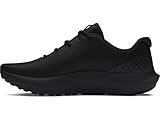
- Breathable mesh upper with synthetic overlays for added structure & support
- Enhanced cushioning around ankle collar for superior comfort
- Deluxe Comfort System sockliner molds to your foot for ultimate step-in comfort
- Charged Cushioning midsole provides all day comfort with responsiveness & durability
- Durable rubber outsole provides traction & durability with flexibility where you need it for toe-off
How cushioning, weight and sole geometry affect feel
Cushioning
Shock absorption under the heel and ball of the foot is one of FootCareMD’s walking-shoe criteria. Cushioning changes how impact and pressure feel, but maximum softness is not synonymous with comfort. A very soft midsole can feel unstable to some wearers, while a firmer platform may feel more controlled. Compare shoes by how the cushioning feels during repeated steps, not by marketing language alone.
Weight
Both the walking guidance and the systematic review favor lightweight shoes as a general comfort characteristic. Weight is only useful in context: a lighter shoe that lacks the heel hold or width you need will not be comfortable for a full day. Compare complete shoes, including any insole you will use, rather than relying on a listed upper-material weight.
Rocker shape and flexibility
A curved rocker sole can support a rolling transition through the step. The review found a general perception of comfort for curved rocker soles, while evidence about flexibility was less clear. A sole that bends at a different point from your foot can feel distracting, so walk enough to assess the transition rather than judging the shoe by hand.
Upper materials, breathability and the inside climate
A soft upper can reduce the sensation of rubbing and is part of FootCareMD’s walking-shoe advice. It should still hold the foot securely; a very loose or stretchy upper may allow unwanted movement. Check seams, overlays, tongue edges and any stiff panel that contacts your foot.
Breathability and moisture affect perceived comfort, especially during long wear, but the systematic review found that evidence about shoe microclimate is less clear and context-specific. Treat ventilation as a personal preference to test with your normal socks and environment, not as a guaranteed ranking of materials.
Independent reader supportYour contribution helps us test, update, and keep practical guides available for everyone.Should you use an insole or orthotic?
An insert can alter cushioning, arch contact and the amount of space inside the shoe. AAOS notes that a removable insole allows replacement with a cushioned insole or an orthotic. Before buying an insert, confirm that the shoe’s original insole can be removed and that the upper has enough interior volume; otherwise the added thickness can crowd the toes or raise the heel.
Rank #4

- Exceptional Cushioning: These women’s walking shoes are well-cushioned. The thick EVA midsole provides a cloud-like feel, absorbing shock and reducing impact on joints, making these women’s sports shoes ideal for daily walks and workouts.
- Breathable & Lightweight: No more sweaty feet and discomfort after long walks. The mesh upper of these women’s running shoes allows for great airflow, keeping feet cool and dry even during intense activities.
- Confident & Stable: Designed for walking and running, these women’s workout shoes feature a slip-resistant rubber outsole that enhances traction and grip on wet pavements and gym floors.
- Stylish & Protective: These women’s gym shoes are comfortable for everyday wear but also perform well for training. The added 3M reflective strip on the upper enhances visibility during nighttime walks.
- For Everyday Activities: The minimalist design makes these women’s athletic sneakers easy to pair with workout clothes and casual outfits. Whether for walking, jogging, running errands, or gym workouts, these women’s trainers keep your feet feeling fresh and supported.
The comfort review found the overall influence of insoles to be less clear than the influence of basic fit and was dependent on the population and setting studied. An insert is therefore a conditional adjustment, not a universal upgrade. If you use a prescribed orthotic, bring it when trying shoes and assess the complete shoe-and-orthotic combination.
Do these 3 things before closing this tab:
1Repair Windows errors before they cause bigger problems2Fix the driver behind crashes, sound loss and screen glitches3Clear out junk files and repair common Windows errorsHow to compare two otherwise suitable shoes
Once both candidates pass the basic fit test, compare them on the features that affect your use case. Record your impressions after several minutes of walking rather than choosing from appearance or a single specification.
| Comparison axis | Questions to ask |
|---|---|
| Toe-box shape and width | Can every toe move, and does the widest part of the shoe match the widest part of your foot? |
| Heel security | Does the heel stay down without painful tightening or rubbing? |
| Cushioning location and feel | Is impact protection present where you need it, and does the softness remain comfortable during repeated steps? |
| Weight | Does the complete shoe feel light enough for the time and distance you will cover? |
| Sole geometry | Does the tread and rocker or bend point suit your walking surface and stride? |
| Upper comfort | Are seams, overlays and closure points free from pressure while the foot moves? |
| Activity requirements | Does the shoe suit your work, walking route, sport or other specific task? |
| Insole compatibility | Can it accept your existing or planned insole without reducing toe room? |
Common reasons a shoe feels uncomfortable all day
The shoe is too short or the toe box is restrictive
Symptoms include toe pressure, rubbing at the nail or a feeling that the forefoot is being pushed together. Recheck the longest-toe clearance while standing and consider a different shape or width rather than simply increasing length.
The shoe is too wide or the heel is loose
Sliding, heel lift and repeated rubbing indicate that the foot is moving inside the shoe. Try a better-matched heel counter or closure. Do not compensate by cinching the forefoot until it is painful.
The shoe matches the foot but not the task
A shoe can fit correctly yet feel wrong on a particular surface or during a different movement pattern. Reassess sole traction, rolling action, cushioning and stability against the actual work or walking environment.
An added insert changed the fit
If discomfort began after adding an insole, check interior volume and toe clearance again. Remove the insert for comparison only if doing so is safe and consistent with your clinician’s advice; the goal is to evaluate the final configuration you will wear.
When persistent discomfort needs professional input
General fitting guidance cannot diagnose a foot problem or determine specialty footwear for an individual condition. Persistent pain, numbness, recurrent blisters, marked asymmetry or difficulty finding any tolerable shoe warrants assessment by a qualified clinician or podiatry professional. Bring the shoes you use and describe when symptoms appear. The cited orthopaedic and podiatry guidance directs people with specific foot concerns toward individualized evaluation.
Quick Recap
A practical all-day buying checklist
- Try shoes late in the day, when your feet may be larger, or after the activity that normally makes them feel largest.
- Wear your usual socks and fasten the shoes as you will at work or on walks.
- Check both shoes, stand up, walk and verify that the heel stays in place.
- Confirm toe movement and practical clearance; use the AAOS 1/2-inch or APodA approximately 1 cm guidance as a reference, not a guarantee.
- Reject any shoe that is painful during the fitting; do not plan on a painful break-in period.
- Match cushioning, weight, rocker or sole shape and tread to the surface and activity.
- Inspect the upper for pressure points and consider the likely heat and moisture environment.
- If using an insole or orthotic, test it inside the shoe and make sure it does not consume needed volume.
- Compare complete shoe-and-sock combinations, not size labels or isolated feature claims.
Product prices and availability are accurate as of the date/time indicated and are subject to change. Any price and availability information displayed on Amazon at the time of purchase will apply.

