Quick wins for a faster PC:
Fix the driver behind crashes, sound loss and screen glitchesFind Drivers →Repair Windows errors before they cause bigger problemsFix Now →Scan for outdated or missing drivers - takes under a minuteDriver Scan →A racing game is a sandbox when its central appeal is the freedom to decide where to go, what to do, and how to spend time between races. A simulation (sim) is defined primarily by how closely its driving model represents cars, tires, surfaces, weather, and race procedures. Those are separate design dimensions: an open-world game can have forgiving handling, while a technically demanding racer can still offer substantial freedom outside scheduled events.
What “sandbox” means in a racing game
“Sandbox” is a useful description of structure and player agency, not a formal, mutually exclusive racing genre. It asks what the game lets you do around and between races rather than how accurately it models a tire or suspension.
| # | Preview | Product | Price | |
|---|---|---|---|---|
| 1 |
|
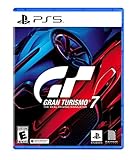
Gran Turismo 7 Standard Edition - PlayStation 5 | $42.55 | Buy on Amazon |
| 2 |

|
Gran Turismo 7 PS5 | $46.50 | Buy on Amazon |
| 3 |
|
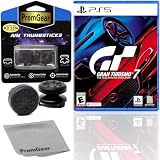
Gran Turismo 7 Standard Edition for PlayStation 5 (US Version), with PremGear ThumbSticks (2 pack: 1... | $49.95 | Buy on Amazon |
| 4 |

|
Gran Turismo 7 - For PlayStation 5 | $45.05 | Buy on Amazon |
As an Amazon Associate I earn from qualifying purchases.
Free roaming and self-chosen routes
The clearest sign is a large, explorable space in which reaching the next activity is part of play. You can leave an event, drive elsewhere, discover a route, or simply explore without being forced through a fixed sequence of races. Forza Horizon 6’s developers describe this as a large open world with “consequence-free traversal”: travel itself is meant to be low-pressure, and the player can decide what to do next.
Shortcuts and hidden paths reinforce that freedom. A sandbox racer may let you find a faster route to an event, use a trail that is not part of a formal circuit, or treat the world as a place to experiment rather than a menu of tracks. The important feature is not the map’s size alone; it is whether the map supports meaningful, player-directed movement.
#1 Best Overall
- With the return of classic cars, iconic tracks, and fan-favourite modes like GT Simulation and Sport Mode - Gran Turismo 7 is the complete Real Driving Simulator, 25 years in the making.
- Find your line. Whether you're a racer, collector, tuner, designer, photographer or arcade fan - immerse yourself in the facets of automotive culture that matter most to you.
- Connect and compete. Join an international community of drivers to share race strategies, tuning tips, livery designs and photos, before taking to the track to go head-to-head.
Optional activities instead of one required career path
Sandbox structure usually offers several kinds of activity: races, challenges, collectibles or discoveries, stunt-style tasks, car meets, and other events that can be approached in different orders. You may be able to ignore a particular event for hours without blocking all progress.
Some sandbox racers also provide tools for building or customizing spaces and events. Forza Horizon 6 coverage describes player construction and social areas alongside exploration. That turns the game world into more than a backdrop for races: it becomes a place to arrange activities, meet other players, and create reasons to return.
Freedom, consequences, and social play
In a sandbox, driving away from a race is often consequence-free in the sense used by Horizon 6’s design team: you can traverse the world without a severe penalty for taking a wrong turn or abandoning a route. That does not mean every action is consequence-free, or that the game lacks competition. It means ordinary exploration is not treated like a failed race.
Recommended Free Tools
Social spaces and spontaneous encounters are another common signal. Car meets, shared routes, and informal multiplayer activities let players define their own session goals. A game can include a structured championship and still be sandbox-like if those events sit inside a broad, optional world.
What “sim” means in a racing game
A sim-oriented racer puts its emphasis on the relationship between your inputs and the car’s behavior. Steering, throttle, braking, tire choice, fuel load, surface condition, temperature, weather, and damage can all affect the result. The question is not whether the game is difficult; it is whether its systems attempt to represent vehicle and track behavior in a detailed, consistent way.
Vehicle response and physics
Simulation features can include weight transfer under braking, changing grip, different responses from front- and rear-wheel-drive cars, and the effects of tire compounds. A sim does not need to model every real-world variable, but its handling is designed around rules that are more demanding than simply pressing a button to produce a predictable slide.
Rank #2
- 1183237
Gran Turismo 7’s official product information highlights physics simulation, changing weather, and track-surface conditions. Those systems are examples of a sim’s focus: the same car can behave differently as grip changes, and a driver has to adapt rather than rely on one permanent handling assumption.
Crashes, No Sound, or Screen Glitches?
Random freezes, missing sound and display glitches usually trace back to one bad driver. Find and replace yours safely.Free scan · under a minuteWindows Errors? Fix Them Before They Spread
Repair common Windows errors and clear accumulated junk for a smoother, more stable PC - no reinstall needed.Free scan · no reinstallTrack and race conditions
Simulation can extend beyond the car. Weather can alter visibility and grip; a wet or rubbered-in surface can change the ideal line; and race conditions can evolve over time. Turn 10’s technical material for Forza Motorsport discusses dynamic track temperature and grip, tire management, fuel management, tire compounds, and detailed car damage. These mechanics make setup, pit strategy, and consistency part of the challenge.
Structured practice and competition
Many sims organize play around tracks, practice sessions, qualifying, races, and competitive modes. That structure is common, but it is not a strict requirement. A game can model driving realistically while still offering free practice, custom events, or an open area. Conversely, a tightly organized career can use very forgiving handling and still not be a serious simulation.
Sandbox and sim are different axes
The most useful comparison asks two separate questions:
- How much freedom do I have outside a race? Look for roaming, optional events, shortcuts, exploration rewards, social spaces, and creation tools.
- How much does the driving model represent vehicle and track behavior? Look for changing grip, weather, tires, temperature, fuel, damage, and other conditions that alter the car’s response.
Progression, consequences, event structure, and multiplayer are additional axes. They help describe a particular game but do not replace the two central questions.
The Tool Desk
Outbyte Driver Updater FREEFix the driver behind crashes, sound loss and screen glitchesFind Drivers →Outbyte PC Repair FREERepair Windows errors before they cause bigger problemsFix Now →| Comparison axis | Sandbox emphasis | Sim emphasis |
|---|---|---|
| Player activity | Roaming, optional events, shortcuts, building, and social spaces. | Structured practice, races, and competitive modes can be central. |
| Driving | May use accessible or forgiving handling; an open world alone says nothing about realism. | Vehicle and track conditions such as grip, weather, tires, and temperature receive explicit attention. |
| Freedom and consequences | Exploration and traversal can be low-pressure or consequence-free. | The label does not determine whether free roaming exists; inspect the individual game. |
| Optional equipment | A standard controller may be sufficient, depending on the title and your preference. | Wheels and force feedback may be supported options, but compatibility and necessity vary by game and platform. |
This table is a comparison framework, not an industry standard or a ranking. No official source establishes a numerical threshold for calling a racer a sandbox or a sim.
Rank #3
- Included is the following: Gran Turismo 7 for PlayStatio 5 PS5, 2 pack of PremGear 2 Sizes Thumbsticks made to increase accuracy and comfort (1 High-Rise, 1 Mid-Rise), PremGear Quality Cleaning Cloth
- With the return of classic cars, iconic tracks, and fan-favourite modes like GT Simulation and Sport Mode - Gran Turismo 7 is the complete Real Driving Simulator, 25 years in the making
- BUILD YOUR DREAM GARAGE: Collect, tune, race and customize hundreds of cars and create your dream garage collection. Over 100 cars have been added since launch, including the Chevrolet Corvette CX.R Vision GT Concept, NISMO R34 GT-R Z-tune ’05 and McLaren MP4/4 ’88
- HIT THE ROAD: Race across 37 tracks with 110 layouts in both real-life locations and Gran Turismo originals, including 'Trial Mountain' and 'Deep Forest'. Find your line with Circuit Experiences, chase lap times in Time Trials and take part in themed events
- CAPTURE THE MOMENT IN SCAPES: Create stunningly realistic photos of your car collection in breathtaking locations around the world, from Yosemite National Park to Kadokawa Culture Museum in Japan
Why “sandbox versus sim” is not the same as “arcade versus sim”
“Arcade” and “sim” are often used as opposite ends of a handling spectrum, while “sandbox” describes how the game is organized. Mixing those pairs creates misleading conclusions.
An open-world racer may offer selectable assists, forgiving collisions, or accessible handling while still giving you a huge map, optional events, player-created activities, and social spaces. That is a sandbox with an accessible driving model. A track-focused game may demand careful braking, tire management, and setup work but offer little free roaming. That is a sim-oriented structure without a sandbox world.
There are also hybrids. A game can combine exploration with a demanding physics model, or provide a realistic handling option inside a world designed for casual cruising. Instead of asking which label “wins,” describe the specific systems the game actually includes.
What’s actually slowing this PC down?
Pick the symptom - the matching free tool is one click away.
Examples that show the overlap
Forza Horizon 6: a sandbox-first example
In an Official Xbox Podcast transcript published by Xbox Wire on April 8, 2026, design director Torben Ellert said: “But ultimately, freedom, really, I think, is a core design pillar for us.” That statement matches the features described in Xbox Wire’s January 22, 2026 interview: a large open world, consequence-free traversal, hidden paths, player construction, and car-meet spaces.
The same January interview gives an estimate of around 550 cars at launch. Keep “around” attached to that figure: it is a launch-roster estimate in that article, not a permanent count or a definition of the sandbox category. The more important evidence is the way the game lets players choose routes and activities.
Gran Turismo 7: a sim-oriented example
The official Gran Turismo 7 product page presents it as a physics-focused racer with changing weather, track-surface behavior, and competitive race modes. It is a useful example of a sim-oriented design because the driving model and race conditions receive explicit attention. The page lists a PS5 disc edition; edition, platform, and availability can change, so verify those details when buying.
Forza Motorsport: simulation systems on a track-focused structure
Turn 10’s June 12, 2022 technical article describes dynamic track temperature and grip, tire and fuel management, tire compounds, and detailed car damage in Forza Motorsport. Those are simulation-oriented systems even though the game’s central activity is organized around tracks and races rather than a single free-roaming world.
How to classify a game before you play it
Use this five-part check instead of trusting a store tag or a single review adjective:
- Inspect the world. Can you drive freely between events, or do you select every race from a menu?
- Count meaningful choices. Are there optional routes, discoveries, social areas, construction tools, or player-made events?
- Check the physics description. Look for explicit references to grip, weather, tire compounds, temperature, fuel, and damage.
- Examine race structure. Does the game emphasize practice, qualifying, strategy, and regulation, or quick event selection and immediate action?
- Separate assists from realism. Adjustable driving aids can make a sim approachable; removing assists does not automatically turn a sandbox into a simulation.
Write down the answers independently. A result such as “high freedom, medium simulation detail” is more informative than forcing the game into one box.
Do you need a racing wheel for a sim?
No. A wheel is optional hardware context, not a universal requirement. Turn 10’s October 11, 2024 technical discussion of Forza Race Regulations refers to gamepads, wheels, other peripherals, and force feedback as input options. That establishes that such equipment can be part of the supported input conversation; it does not establish universal compatibility or say that every player needs one.
Start with the controller or input device you already own. Consider a wheel when you specifically want finer steering control, stronger feedback, or a more cockpit-like experience, and verify the exact game, console or PC platform, and peripheral compatibility first. A wheel cannot compensate for a game whose driving model is intentionally forgiving, and a controller does not prevent a game from being simulation-oriented.
Common mistakes when using these labels
- Equating map size with sandbox design. A large map with one required event path may offer less agency than a smaller world full of optional activities.
- Equating difficulty with simulation. A hard game can use exaggerated or inconsistent physics; difficulty alone is not evidence of realism.
- Treating “sim” as a promise of free roaming. Simulation describes the driving model, not the amount of open-world exploration.
- Assuming every feature is always active. Weather, tire wear, fuel, damage, and assists may be configurable or limited to particular modes.
- Using labels as universal measurements. Official sources describe individual titles and systems, not a formal industry taxonomy or a count of racing sandboxes.
The practical answer
Choose a sandbox racer if your priority is making your own session: cruise, discover routes, jump between optional events, meet other players, or build activities. Choose a sim-oriented racer if your priority is learning how a car responds to braking, tires, temperature, weather, fuel, and changing grip. If you want both, evaluate the two axes separately and look for a title whose world freedom and driving systems match the balance you want.
Quick Recap
Product prices and availability are accurate as of the date/time indicated and are subject to change. Any price and availability information displayed on Amazon at the time of purchase will apply.

