Unauthorized satellite TV means receiving or enabling access to satellite-delivered programming without permission from the broadcaster or relevant service—particularly encrypted or subscription programming. It is a descriptive phrase, not one universal legal term: what is prohibited depends on the country, the signal, the conduct and the applicable law. Owning or using a satellite dish does not, by itself, make reception unauthorized.
What makes satellite TV reception unauthorized?
The central issue is authorization, not the presence of a dish or receiver. A broadcaster or service may authorize access through a subscription, an approved receiver, or another permitted arrangement. Access to encoded programming without that permission may be unauthorized; the same conclusion does not automatically apply to every signal a dish can receive.
As an Amazon Associate I earn from qualifying purchases.
“Encoded” or “encrypted” programming has been altered so it cannot be received intelligibly without equipment that reverses the alteration. That is different from simply receiving a satellite transmission. The U.S. statute discussed below defines encryption in terms of modifying audio or visual characteristics to prevent unauthorized receipt.
Quick wins for a faster PC:
Fix the driver behind crashes, sound loss and screen glitchesFind Drivers →Repair Windows errors before they cause bigger problemsFix Now →Scan for outdated or missing drivers - takes under a minuteDriver Scan →Is receiving any satellite signal illegal?
No general conclusion follows just from the fact that a signal comes from a satellite. The U.S. example in 47 U.S.C. § 605 includes a specific provision on private viewing that distinguishes unencrypted programming from situations where an authorization marketing system exists. Its conditions matter; it should not be reduced to a claim that all satellite reception is either allowed or prohibited.
#1 Best Overall

- Designed for wall mounting
- RF-remote capable without external antenna
- Works quickly and quietly
That U.S. statute also defines “satellite cable programming” as video programming transmitted by satellite and primarily intended for direct receipt by cable operators for retransmission to subscribers. The definition and the private-viewing provision are statutory categories, not a universal definition for other countries. The official U.S. Code page was reported as temporarily under maintenance when the statutory text was reviewed, so consult the current text before relying on it for a legal decision.
Which conduct can the phrase describe?
Unauthorized access is not the only conduct that may be relevant. Laws can distinguish among receiving programming, obtaining access by circumventing conditional access, dealing in devices intended to bypass authorization, and retransmitting a signal to others. These are related, but they are not interchangeable: a rule applying to decoder distribution or retransmission may have different requirements from one concerning private reception.
Rank #2

- Our ATSC digital TV converter box receives over-the-air ATSC digital TV broadcast via external antenna and converts it to your Analog and Digital TV, Projector, and Computer Monitor. TV recording, Favorite Channel List, Parental Control Function.
- Full HD: The 1080p output resolution allows you to watch and record free to air television depending on signal quality. Closed Caption, Auto Tuning, Timing Start Up & Shut Down.
- You can select view Photos, play MP3 music files and view movie files, and recorded TV program from your USB storage device.
- TV Recording Function: The function allows you to record TV programs in USB hard drive and playback on your TV or Computer.Note: This device does not have built-in storage and requires an external storage device. It is best suited for external hard drives with a FAT32 file system capacity of up to 4TB or flash drives with a capacity of up to 32GB.
- What You Get: 1 x Digital TV Box,1 x Remote Control,1 HDMI Cable, 1 Composite cable,1 year Warranty.
- Reception: Accessing programming without the broadcaster’s or service’s permission.
- Decoder-related conduct: Making, selling, distributing or making available equipment designed to obtain encoded programming without authorization, where the relevant law’s conditions are met.
- Retransmission: Passing programming on to other people or premises without permission, which may raise separate legal issues.
These are descriptive categories, not findings that a particular act is unlawful everywhere. The applicable statute may turn on details such as knowledge, intended use, whether programming was encoded, and whether the access was authorized.
How do the U.S. and Australian examples differ?
| Jurisdiction and source | What the cited material addresses | Important limit |
|---|---|---|
| United States — 47 U.S.C. § 605 | Definitions related to satellite cable programming and encryption, plus a conditional provision concerning private viewing. | The statutory conditions matter; this is not a rule for other countries. The official page was temporarily under maintenance when reviewed. |
| Australia — Copyright Act 1968 (Cth), current compilation dated 2 April 2026 | Provisions addressing unauthorized decoders and causing access in intelligible form to an encoded broadcast without the broadcaster’s authorization. | The decoder provision concerns conduct where the person knows or ought reasonably to know the device will enable unauthorized access. The provisions are specific to Australian law. |
The Australian provisions distinguish decoder-related conduct from causing access to an encoded broadcast. Their requirements should be read in the context of the Act; they do not establish a worldwide rule about all satellite reception.
Rank #3
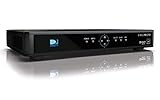
- High Definition Viewing: Enjoy crystal-clear 1080p HD picture quality on your TV with this DIRECTV H25 receiver
- Versatile Connectivity: Connect your devices seamlessly with HDMI, composite, component, and optical audio outputs
- SWM Network Compatibility: Designed to work exclusively on DIRECTV's SWiM networks, ensuring optimal performance
- Dolby Digital & DTS Audio: Immerse yourself in surround sound with supported audio formats
- Easy Setup & Use: Comes with necessary cables and an AC adapter, making installation a breeze for residential use
What does “signal piracy” mean in this context?
“Signal piracy” is a broad descriptive label often used for unauthorized access to or use of protected programming. The U.S. Trade Representative’s 2024 Special 301 Report describes signal theft as often involving circumvention of encryption or other unlawful access to cable or satellite signals. Its reported examples include hacked set-top boxes and interception and retransmission at hotels. Those examples illustrate possible conduct; they do not show that every case uses the same method or establish how prevalent it is.
Historical U.S. Copyright Office material explains that satellite programming intended for a particular audience could be received outside that audience, and that carriers and rights holders used encoding or scrambling and provided descrambling capacity to paying subscribers. This is historical context, not a description of every current satellite service or a present-day prevalence estimate. See The Cable and Satellite Carrier Compulsory Licenses: An Overview and Analysis (1992).
Rank #4
- SOME ITEMS ARE NEW FACTORY REMAN DISH NETWORK CERTIFIED*
What should you check before deciding whether access is authorized?
- Jurisdiction: Identify the country whose law applies. The examples above cover only the United States and Australia.
- Permission: Check whether the broadcaster or service authorized the access, rather than inferring permission from the fact that a signal is receivable.
- Signal and service: Determine whether the programming is unencrypted, encoded, subscription-based, or subject to an authorization system.
- Conduct: Separate personal reception from decoder manufacture or distribution, circumvention, and retransmission.
- Statutory conditions: Look for requirements such as knowledge, reasonable knowledge, or other conditions in the relevant local law.
A dish antenna or receiver can be used for authorized service or lawful reception, but the equipment alone does not settle whether a particular use is permitted. This article does not establish the law for countries beyond the U.S. and Australian examples; for a specific situation, check current local law and seek qualified legal advice where needed.
What’s actually slowing this PC down?
Pick the symptom - the matching free tool is one click away.
Quick Recap
Best Value

- 【DVB-S/S2/S2X Satellite Finder】GTMEDIA V8 Finder2 satellite signal meter supports DVB-S/S2/S2X satellite signal detection, spectrum analysis, loop search, and calculation of azimuth and elevation angles. Designed for satellite dish alignment and signal checking. Not compatible with DIRECTV or ATSC
- 【3.5-Inch LCD Screen & Setup Guide】View satellite lists, signal intensity and signal quality on the 3.5-inch LCD screen. To begin, connect the satellite LNB cable to LNB IN, open Menu > Installation, select the satellite, and configure the LNB settings. Select an active transponder, adjust the dish for signal quality and lock, then press the blue Scan key to search for channels
- 【Rechargeable Battery & Built-In Speaker】The V8 Finder2 digital satellite finder combines a built-in rechargeable battery, integrated speaker, and on-screen battery-level indicator for convenient on-site operation. Monitor the remaining battery level during satellite dish adjustments and recharge when the low-battery warning appears
- 【Satellite Finder & H.264 Decoder】Combining a satellite signal meter and DVB-S/S2/S2X receiver, the V8 Finder2 supports H.264 decoding and compatible free-to-air satellite channel viewing on the built-in screen. HDMI and AV outputs provide external display connections. Channel reception requires a compatible satellite dish, LNB, and correct installation settings
- 【Setup & Dish Alignment】Connect the satellite LNB cable to LNB IN, then open Menu > Installation. Select the target satellite and configure the LNB frequency, power, 22K, and DiSEqC settings to match the installation. Select an active transponder and slowly adjust the dish while monitoring Signal Quality and the Lock indicator. Once the signal is locked, press the blue Scan key to search for channels
Product prices and availability are accurate as of the date/time indicated and are subject to change. Any price and availability information displayed on Amazon at the time of purchase will apply.

