NVIDIA MGX is not a single server. It is an open modular reference architecture and server specification that lets OEMs and ODMs assemble accelerated-computing systems from standardized compute, networking, power, cooling and rack-scale building blocks. A finished MGX system may be a single node or part of a full AI rack, and its capabilities depend on the exact components selected by the system maker.
That distinction matters when you evaluate an “NVIDIA MGX server.” MGX is the design foundation; the partner’s specific hardware, software support, certification, service terms and operating requirements determine what you actually buy and operate.
As an Amazon Associate I earn from qualifying purchases.
What NVIDIA MGX means
MGX is NVIDIA’s modular platform for designing data-center servers and rack systems. It gives OEMs (original equipment manufacturers), ODMs (original design manufacturers) and other ecosystem partners a set of reference designs and interfaces for combining CPUs, GPUs, networking, storage, power and cooling.
Recommended Free Tools
Instead of engineering every server generation from a blank sheet, a system builder can start with an MGX design and adapt it to a target workload, form factor or customer requirement. One implementation may prioritize GPU density for model training; another may balance CPU capacity, memory and networking for high-performance computing (HPC); a third may be integrated into a rack-scale platform with coordinated power and liquid cooling.
#1 Best Overall

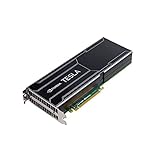
- Item Package Dimension -14.7L X 8.8W X 3.4H Inches
- Item Package Weight - 2.4 Pounds
- Item Package Quantity - 1
- Product Type - Video Card
NVIDIA describes MGX as supporting designs from a single server node through rack-scale infrastructure. The architecture therefore covers a family of possible systems rather than one universal bill of materials, motherboard or performance level.
How the modular architecture is assembled
Compute choices
An MGX design can combine different classes of processors. NVIDIA’s current product overview lists Grace and Vera CPUs, as well as x86 and other Arm-based CPUs. GPU options include rack-scale and PCIe solutions, with Blackwell and Rubin cited as examples in NVIDIA materials. These names describe components available in the broader platform portfolio, not a guarantee that every MGX server includes them or that every combination is offered by every partner.
The processor mix affects software compatibility, memory architecture, energy use and the type of parallel workloads the system handles well. A buyer should ask for the exact CPU model, socket or module arrangement, system memory capacity and supported operating systems rather than relying on the MGX label.
The Tool Desk
Outbyte Driver Updater FREEFix the driver behind crashes, sound loss and screen glitchesFind Drivers →Outbyte PC Repair FREERepair Windows errors before they cause bigger problemsFix Now →Interconnect and networking
Accelerated servers need more than GPUs. Their internal and external links determine how quickly data moves between processors, storage and other nodes. MGX designs can use NVIDIA technologies such as NVLink for high-bandwidth accelerator communication, Spectrum-X Ethernet, Quantum InfiniBand and BlueField data-processing units (DPUs), depending on the implementation.
These are architectural options, not a mandatory networking stack. Two MGX systems can have very different switch fabrics, port counts, speeds and topology. For distributed training or HPC, request a topology diagram, GPU-to-GPU connection details, network adapter model, switch compatibility and the software required to use the intended collective-communication features.
Rack-scale integration
NVIDIA’s current overview also describes a third-generation rack design that brings compute servers, networking servers, cooling, power delivery and connectors together as a coordinated system. Rack integration can simplify deployment of a large cluster, but it also creates site-level requirements. Floor loading, rack dimensions, power feeds, coolant distribution, airflow, service clearances and monitoring must be checked against the data center before delivery.
A rack-scale MGX design is therefore more than a collection of identical nodes. Its performance and availability can depend on shared switches, power shelves, cooling loops and rack management components.
Free tools Windows power users keep installed
One-click scans. No signup required.
What workloads and deployment sizes MGX targets
NVIDIA identifies artificial intelligence, HPC and Omniverse as target workloads. In practice, the suitable configuration depends on the model or simulation, data size, precision, software framework, latency target and scaling pattern.
- AI training and fine-tuning: prioritize accelerator count, GPU memory, GPU-to-GPU bandwidth and the network fabric used for multi-node collectives.
- Inference: examine accelerator memory, response-time targets, batching behavior, host-CPU capacity and power limits. A training-oriented configuration may be unnecessary for a latency-sensitive service.
- HPC: evaluate CPU performance, memory bandwidth, accelerator support, InfiniBand or Ethernet topology, storage throughput and the schedulers or MPI stack used by the application.
- Omniverse and visualization: consider graphics-capable GPUs, memory, display or remote-visualization software, storage and network latency.
MGX can be deployed as a single node when an application fits on one server, or as rack-scale infrastructure when the workload requires many accelerators and coordinated networking. MGX itself does not set a universal performance result: selected hardware, firmware, drivers, software, power and cooling all affect the outcome.
What “open” and “compatible” mean
NVIDIA says MGX supports standards including PCIe, Open Compute Project (OCP) specifications and Electronic Industries Alliance (EIA) rack specifications. NVIDIA also says MGX rack design files are available through OCP and that the ecosystem supports both Arm and x86 servers.
Those statements indicate standards compatibility and an ecosystem approach. They do not mean every MGX component is interchangeable, or that a GPU, switch, chassis or power shelf from one partner will automatically work in another partner’s system. Mechanical dimensions, firmware, thermal envelopes, power budgets, BIOS settings, driver versions and certification requirements can still constrain a configuration.
Do these 3 things before closing this tab:
1Scan for outdated or missing drivers - takes under a minute2Repair Windows errors before they cause bigger problems3Fix the driver behind crashes, sound loss and screen glitchesBefore assuming compatibility, obtain the partner’s supported-component matrix and confirm:
- the exact PCIe generation, slot layout and bifurcation rules;
- supported CPU, GPU, memory and storage combinations;
- network adapter, switch and cable requirements;
- firmware, driver and operating-system versions;
- rack unit height, rail kits and service clearances;
- power input, redundancy mode and cooling method.
How large is the MGX ecosystem?
NVIDIA’s 2024 newsroom announcement said MGX offered more than 100 system design configurations. The same announcement reported that more than 90 systems from over 25 partners had been released or were in development at that time. Those figures are NVIDIA’s counts as reported in 2024; they are not a promise that all configurations remain available or that they can be ordered in every region.
Rank #2
NVIDIA also reported that MGX could reduce development costs by up to three-quarters and development time by two-thirds, bringing development to six months. These are vendor-reported potential reductions, not independent measurements or guarantees for a particular project. A technical blog published by NVIDIA in 2025 estimated that shared reference designs could reduce a system builder’s research-and-development cost by $2–4 million per platform. That is also an attributed estimate, and actual savings depend on engineering scope, validation, supply-chain work and the degree of customization.
A concrete MGX system example
NVIDIA’s certified-systems documentation lists the GIGABYTE XH23-VG0-A NVIDIA MGX Arm Server with GH200 and CX7. It demonstrates how a partner can turn the architecture into a named server configuration with a defined CPU/GPU platform and networking components.
Crashes, No Sound, or Screen Glitches?
Random freezes, missing sound and display glitches usually trace back to one bad driver. Find and replace yours safely.Free scan · under a minuteWindows Errors? Fix Them Before They Spread
Repair common Windows errors and clear accumulated junk for a smoother, more stable PC - no reinstall needed.Free scan · no reinstallThe listing is an example, not a description of every MGX system and not proof of current retail availability. When comparing it with another partner implementation, use the complete configuration: processor and accelerator models, memory, interconnect, network ports, storage, power and cooling, supported software, certification status, rack requirements and service coverage.
MGX versus a certified server or reference architecture
| Term | What it represents | What it does not establish |
|---|---|---|
| MGX | A modular design foundation and server specification used by partners to build systems. | It is not one finished server, one fixed bill of materials or a complete cluster recipe. |
| NVIDIA-certified system | A specific server configuration that has passed NVIDIA’s certification process and is listed as a concrete system. | Certification does not make every other MGX configuration equivalent, nor does it guarantee stock in a particular market. |
| NVIDIA reference architecture | Broader guidance for building validated systems or clusters. NVIDIA describes certified servers or nodes as foundations for these architectures, with qualifying partner designs reviewed by a Design Review Board. | A certified node alone is not the same as an entire cluster design, site plan or operating service. |
This distinction prevents a common purchasing mistake: treating “MGX,” “certified,” and “reference architecture” as interchangeable labels. MGX tells you how the platform was designed; certification identifies a particular validated configuration; a reference architecture can add cluster-level topology and deployment guidance.
How to evaluate an MGX-based server
1. Match the hardware to the workload
Start with measurable requirements: model size, training or inference throughput, simulation scale, latency, concurrent users and expected growth. Then compare the exact GPU model and count, GPU memory, CPU type, system memory and storage bandwidth. Ask whether the advertised accelerator count is usable under the stated power and thermal limits.
2. Inspect the interconnect topology
For multi-GPU work, identify which accelerators share high-bandwidth links and which communicate through PCIe or a network switch. For multi-node deployments, document adapter count, link speed, switch model, oversubscription and cable type. A server with the same number of GPUs can behave very differently when its topology differs.
3. Verify software support
Request the supported operating systems, GPU driver and CUDA or other accelerator-software versions, firmware dependencies, container guidance and orchestration support. Confirm that the frameworks used by your applications support the selected Arm or x86 CPU platform. Ask how updates are delivered and whether the partner supplies a tested software stack.
4. Check power and cooling before ordering
Obtain maximum and typical system power, input voltage and phase requirements, redundant-power behavior, acoustic limits and cooling type. Rack-scale systems may require liquid-cooling distribution or special facility connections. Confirm rack depth, rail kits, weight, floor loading and service clearances with the data-center operator.
5. Confirm certification and service
Look up the exact model in NVIDIA’s certified-systems documentation when certification is required by your software vendor or procurement policy. Certification is configuration-specific, so verify the listed CPU, GPU, networking and firmware combination. Separately evaluate warranty length, on-site response, spare-parts availability, remote management, diagnostics and the partner’s update policy.
6. Compare the complete cost
Purchase price is only one part of an accelerated system’s cost. Include rack power upgrades, cooling equipment, network switches and optics, storage, operating software, support, installation, electricity and maintenance. Vendor-reported MGX development savings apply to system builders creating platforms; they should not be interpreted as a guaranteed discount on a buyer’s finished server.
What’s actually slowing this PC down?
Pick the symptom - the matching free tool is one click away.
A practical MGX deployment process
- Define the workload envelope. Record model or simulation requirements, precision, dataset size, throughput, latency, concurrency and scaling target.
- Select a CPU and accelerator combination. Decide between Arm or x86 hosting and specify the exact GPU family, memory capacity and accelerator count needed.
- Design the data path. Choose NVLink or other internal links where applicable, then size Ethernet or InfiniBand adapters, switches and cables for the number of nodes.
- Choose node or rack scale. Determine whether a single server is sufficient or whether a coordinated rack with shared power, cooling and networking is justified.
- Validate the facility. Check electrical service, redundancy, cooling capacity, rack dimensions, floor loading, coolant connections and maintenance access.
- Validate software and certification. Match the proposed configuration to the required operating system, drivers, frameworks, cluster scheduler and any certification requirement.
- Run acceptance tests. Before production, test accelerator visibility, memory, link health, network throughput, storage performance, thermal behavior, failover and recovery under the intended software stack.
- Document the deployed configuration. Record part numbers, firmware, driver versions, cabling, rack position, power feeds, cooling connections and support contacts so replacements remain configuration-compatible.
Advantages and trade-offs
Why system builders use MGX
- Reusable reference designs can shorten engineering work compared with creating every platform from scratch.
- A common architecture lets partners offer multiple CPU, GPU and networking combinations for different workloads.
- Support for PCIe, OCP and EIA rack specifications can make it easier to align designs with established data-center practices.
- The platform spans single-node systems and rack-scale designs, allowing a deployment to grow without changing the basic design methodology.
- A broad partner ecosystem gives buyers more than one source for a finished implementation.
What MGX does not solve automatically
- It does not guarantee that components from different partners can be mixed.
- It does not provide one universal performance benchmark, price or power figure.
- It does not replace application testing, software validation or facility engineering.
- It does not guarantee availability, regional support or a particular delivery date for a listed configuration.
- It does not make a single certified server equivalent to a complete cluster reference architecture.
Who should consider MGX-based infrastructure?
MGX is most relevant to organizations buying or building accelerated data-center infrastructure rather than a conventional office server. Cloud and hosting providers can use it to create differentiated server and rack offerings. Enterprises with large AI or HPC workloads can use certified partner systems as a starting point, provided they validate software and facilities. OEMs and ODMs can use the modular designs to bring customized platforms to market faster than a wholly bespoke development process.
For a small deployment, the key question is not whether a system carries the MGX name but whether its exact configuration meets the application’s memory, interconnect, power, cooling and support requirements. A certified single node may be simpler than a rack-scale design; a rapidly growing training cluster may justify the additional integration of a rack platform.
Bottom line
NVIDIA MGX is a modular blueprint for accelerated servers and racks, not a single product. It standardizes a way for partners to combine CPUs, GPUs, networking and infrastructure while adapting the result to AI, HPC, Omniverse and other workloads. NVIDIA’s reported configuration, partner and development-savings figures show the intended scale of the ecosystem, but they are vendor claims with dates and qualifications. To choose an MGX system, compare the finished partner implementations—hardware topology, software, certification, power, cooling, rack fit and service—not the MGX label alone.
Quick Recap
Product prices and availability are accurate as of the date/time indicated and are subject to change. Any price and availability information displayed on Amazon at the time of purchase will apply.

