Exzisus is a 1987 Taito horizontal space shooter in which you fly over an infested planet, fire at waves of enemies, drop missiles and deploy bird- and dog-like helper robots. It uses an eight-way joystick and two buttons, and supports one active player at a time with alternating turns for two players.
The “multi-screen” label in the supplied title needs qualification. The documented cabinet record describes a horizontal, standard-resolution raster monitor in an upright cabinet and does not identify multiple monitors or an extended multi-screen display. An unusual undocumented variant cannot be ruled out, but multi-screen hardware is not an established feature of Exzisus.
As an Amazon Associate I earn from qualifying purchases.
Exzisus at a glance
| Detail | Documented information |
|---|---|
| Developer and publisher | Taito, Japan |
| Release | Japanese arcade release dated August 1987 |
| Genre | Horizontal side-scrolling space shooter |
| Controls | Eight-way joystick and two buttons for shots and missiles |
| Cabinet | Horizontal orientation, standard-resolution raster monitor, upright/standard cabinet |
| Players | One simultaneous player; two maximum players with alternating turns |
| Versions | Original Taito release, a Taito conversion kit and a TAD-licensed export release |
Arcade History identifies the game as Exzisus, copyright 1987 Taito, with game ID B23. The International Arcade Museum also classifies it as a 1987 side-scrolling space shooter. Those records establish the game’s identity without supporting a dual-monitor or multi-screen design.
The Tool Desk
Outbyte PC Repair FREEClear out junk files and repair common Windows errorsFree Scan →Outbyte Driver Updater FREEScan for outdated or missing drivers - takes under a minuteDriver Scan →What the game is like to play
Exzisus follows the familiar arcade-shooter loop: move continuously across a scrolling planetary landscape, clear enemy formations, collect upgrades and survive long enough to reach later encounters. The Windows edition of the Taito Legends manual summarizes the premise as: “Destroy enemies as you fly over the surface of an infested planet.”
#1 Best Overall
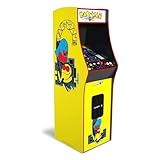
- 14 Classic Games Included: Play PAC-MAN, Galaga, Dig Dug, Pac-Land, Mappy, and more—14 built-in titles deliver hours of iconic retro arcade fun at home
- Authentic Arcade Experience: Real-feel joystick and buttons let you dodge ghosts, eat pellets, and chase high scores just like you did in the arcade
- Crisp 17-Inch Display: BOE color monitor brings every glowing maze and character to life with sharp visuals that stay true to the original arcade look
- Wi-Fi Leaderboards: Compete with players across the country by posting high scores online using built-in Wi-Fi—no quarters required
- Deluxe Cabinet Design: Over 5 feet tall with a light-up marquee, molded faux coin door, and sleek cabinet that adds retro style to any game room or space
Controls and weapons
The cabinet uses an eight-way joystick. One button fires the main weapon, while the other launches missiles. The arrangement gives the game two distinct attack rhythms: keep the shot button active while positioning your craft, then use missiles when targets or formations call for a heavier or differently placed attack.
Exzisus also sends bird-like and dog-like robots into battle. These helpers are part of the game’s power-up system rather than a second player, so the cabinet remains a single-character shooter even when several friendly units are on screen.
Player mode
The museum record lists one simultaneous player and two maximum players with alternating play. That means Exzisus is not documented as a simultaneous two-player co-op game: two people can share a cabinet, but they take turns rather than controlling separate characters together.
Recommended Free Tools
Exzisus power-up letters explained
Lettered items change the weapon or support abilities available to the player. Arcade History lists the following set:
| Letter | Power-up | Effect or role |
|---|---|---|
| L | Laser Light Blaster | Upgrades the primary weapon to a laser-style attack. |
| D | Disruption or Destruction | The source uses both names, depending on the palette or version. |
| M | Missile | Improves or supplies the missile attack. |
| F | Full Automatic | Provides automatic firing rather than requiring repeated button presses. |
| A | Aerodynamic Power | A movement or performance-oriented upgrade. |
| O | Option | Adds an auxiliary support unit to the player’s attack. |
| B | Barrier | A defensive item present in some versions, not universally documented. |
The Barrier qualification matters when comparing boards, conversion kits or regional releases. Arcade History specifically says it appears only in some versions, so a screenshot or memory of a Barrier item should not be treated as proof that every Exzisus cabinet included it.
When Exzisus is hit, Arcade History reports that the character returns to regular humanoid form. In practical terms, taking damage can remove the enhanced appearance or capability associated with the current state, making the next power-up route important even after a mistake.
Was Exzisus really a multi-screen arcade game?
No reliable record in the available documentation establishes Exzisus as a multi-screen game. The International Arcade Museum cabinet entry specifies a horizontal display, standard-resolution raster monitor and upright/standard cabinet. It does not list multiple monitors, a split display or a stretched multi-monitor playfield.
Why the confusion may persist
Arcade History lists four Z80 CPUs for the hardware. That is a processor count, not a monitor specification. Multiple CPUs can handle game logic, sound, graphics or timing without driving separate screens. Inferring a dual-screen cabinet from the CPU count would therefore be an engineering assumption, not a documented feature.
A separate search of cabinet information and a repair-log discussion of board video outputs likewise did not produce a dependable description of two-screen hardware. The careful conclusion is that multi-screen play is unverified, not that every obscure conversion or prototype variant has been disproved.
What the documented cabinet tells us
- The display orientation is horizontal, matching the side-scrolling format.
- The monitor is described as standard-resolution raster rather than a special panoramic or multi-panel system.
- The cabinet is listed as upright/standard.
- The player record describes one active player, with alternating turns for a second player.
These details fit a conventional single-monitor 1980s horizontal shooter. If you encounter a cabinet advertised as “dual-screen Exzisus,” ask for photographs, board information and regional documentation before treating that description as historically confirmed.
Release history and regional differences
Japanese arcade release
Arcade History dates the Japanese release to August 1987. The database labels the title Exzisus © 1987 Taito and gives it the identifier B23.
Do these 3 things before closing this tab:
1Clear out junk files and repair common Windows errors2Scan for outdated or missing drivers - takes under a minute3Repair Windows errors before they cause bigger problemsConversion kit
The same historical record identifies a Taito conversion-kit version. Conversion kits reused an existing cabinet shell or monitor while replacing or adapting the internal game hardware. As a result, a conversion cabinet may look different from a dedicated Exzisus machine even when the game board is authentic.
Rank #2
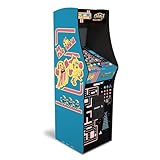
- Classic Arcade Experience: Enjoy 12 legendary games from 1981 on a full-size cabinet with real-feel joysticks, buttons, and authentic arcade-style gameplay
- Vibrant 17" Display: Features a crisp BOE 17" LCD screen that brings retro graphics to life with bright colors and sharp details for immersive gaming fun
- Wi-Fi Leaderboards: Connect to Wi-Fi and compete with players nationwide by posting high scores on global leaderboards—no subscription required
- Premium Retro Design: Over 5 feet tall with a sleek cabinet, light-up marquee, and faux coin door for a nostalgic look that enhances any game room or space
- Crisp Stereo Sound: Dual speakers deliver classic arcade soundtracks and effects just like you remember, bringing every game to life with rich audio
TAD-licensed export
Arcade History also records an export release licensed to TAD. Regional licensing can affect title screens, cabinet labels, ROM revisions and the exact power-up set. In particular, the Barrier item is documented only for some versions, so region and board revision should be recorded when cataloging a machine.
Where Exzisus appeared after the arcade
Historical listings place Exzisus in the Taito Legends compilation for PlayStation 2 and Windows. It also appears in Taito Memories II Joukan for PlayStation 2. The Windows Taito Legends manual includes a short description of the game and explains compilation features such as game descriptions, controls, options, high scores, hints and tips, and gamepad setup.
These entries confirm that the game was included in those compilations; they do not prove that new copies are still sold, that online storefront listings remain active or that modern operating systems and consoles will run them. Treat the compilation names as historical release information rather than a promise of current availability.
Quick wins for a faster PC:
Scan for outdated or missing drivers - takes under a minuteDriver Scan →Repair Windows errors before they cause bigger problemsFix Now →Fix the driver behind crashes, sound loss and screen glitchesFind Drivers →Taito’s 2021 announcement for the Egret II Mini lineup lists the games included with that product and its expansion set. Exzisus is not on those published lists. That omission is specific to that lineup and should not be generalized to every later Taito product.
Independent reader supportYour contribution helps us test, update, and keep practical guides available for everyone.Choosing a way to play
| Option | What you get | Questions to check |
|---|---|---|
| Original arcade board or conversion kit | The closest route to the 1987 control panel, display timing and regional hardware. | Is the board a Taito or TAD-licensed revision? Is the monitor and power supply compatible? Does the cabinet have a working eight-way joystick and both buttons? |
| Taito Legends on PlayStation 2 | A historical console compilation that includes Exzisus. | Does the disc match your regional console? Is the used copy complete and readable? Can your current display and console run the required video output? |
| Taito Legends on Windows | The compilation documented by the Windows manual, with gamepad and options menus. | Which Windows edition is it, and does it work with your current operating system, drivers and controller? |
| Taito Memories II Joukan on PlayStation 2 | Another historical PlayStation 2 compilation listing Exzisus. | Confirm region, disc condition, console compatibility and whether the release is legally obtainable where you live. |
No current official release, retailer stock, listing price or modern compatibility was established in the documented material. If you search for physical media, the precise historical phrase is “Taito Legends PS2,” but verify the region, seller, platform and condition yourself. For an arcade board, ask for the exact board revision and test evidence rather than relying on a generic “Exzisus cabinet” label.
How to identify an Exzisus machine
- Check the game title and board label. Look for Exzisus branding and a Taito or documented TAD-licensed board designation. A conversion cabinet may retain artwork from an earlier game.
- Confirm the monitor orientation. The documented format is horizontal, not vertical. A horizontal standard-resolution raster monitor is consistent with the museum record.
- Test both buttons. Verify that one fires the main shot and the other launches missiles. A missing or nonfunctional button can make the game appear faulty when the issue is simply the control panel.
- Test the eight-way movement. Check all eight directions for sticking, dead zones or incorrect switch wiring.
- Record the power-up set. Note whether the cabinet shows L, D, M, F, A, O and B items. Barrier may be absent on a legitimate regional or board variant.
- Check player switching. Two-player operation should alternate turns, not provide simultaneous co-op control.
Common misunderstandings and troubleshooting clues
“Four CPUs means four screens”
It does not. CPU quantity describes processing hardware. Use the cabinet’s documented monitor specification and direct board evidence when determining the display design.
“Two players” means co-op
Not in the documented arcade configuration. The museum record says one simultaneous player and two maximum players with alternating play.
Free tools Windows power users keep installed
One-click scans. No signup required.
Every version should have Barrier
Barrier is listed for some versions only. Compare the board revision and region before treating its absence as a fault.
The compilation should run on any modern system
The documented Windows release is a historical compilation. Compatibility with a current operating system, display adapter or gamepad is not established by the manual alone. Check the specific edition and hardware before buying.
Why Exzisus still matters to arcade historians
Exzisus captures a particular point in Taito’s 1987 output: a horizontal shooter built around rapid movement, letter-coded upgrades and a distinctive support-robot theme. Its conversion-kit history explains why surviving cabinets can vary in appearance, while the TAD export record shows that the game circulated beyond Japan.
Its documented format is more conventional than the “multi-screen” description suggests. The evidence points to a single horizontal standard-resolution monitor, an upright cabinet and alternating two-player turns. That clarification is useful for collectors, preservationists and players trying to match a physical machine or compilation entry to the original arcade design.
Quick Recap
Product prices and availability are accurate as of the date/time indicated and are subject to change. Any price and availability information displayed on Amazon at the time of purchase will apply.

