PC Slower Than It Used to Be?
A free scan shows the junk files, broken settings and background clutter dragging Windows down - then fixes them in one click.Free scan · Windows 10 & 11Outdated Drivers Are Slowing You Down
One free scan finds every outdated or missing driver and matches the right update for your exact hardware.Free scan · exact hardware matchEmbodied AI is artificial intelligence built into a physical system that senses its surroundings, acts in the world, and uses the results to guide what it does next. A voice assistant such as Alexa is primarily a cloud-based voice service: you speak, it interprets the request, and it replies or controls connected services. Alexa can run on a physical speaker, but a casing and a microphone do not by themselves give an AI physical-world agency. The key test is whether the AI itself perceives and changes an environment through a body.
What “embodied AI” means
The most precise current definition comes from ITU-T Recommendation F.748.66 (approved December 14, 2025): “Artificial intelligence integrated into physical systems that interact autonomously with and adapt to the physical world.”
As an Amazon Associate I earn from qualifying purchases.
That definition has three important parts:
- Integrated into a physical system: the AI is connected to hardware that can sense, compute and do something physically.
- Interacts with the physical world: it receives information from an environment and produces effects there, such as moving, grasping, steering or opening.
- Adapts: its behavior can respond to changing conditions or feedback rather than following only a fixed sequence.
“Embodied” does not mean “humanoid.” The ITU framework covers humanoid robots, quadrupeds, robot arms, autonomous vehicles and drones. A warehouse arm and an agricultural drone can therefore be embodied-AI systems even though neither resembles a person.
The Tool Desk
Outbyte PC Repair FREEClear out junk files and repair common Windows errorsFree Scan →Outbyte Driver Updater FREEScan for outdated or missing drivers - takes under a minuteDriver Scan →A body is more than a shell
In the ITU framework, a physical body includes perception sensors, computing hardware, execution mechanisms, drive systems and an energy supply. A camera, depth sensor, touch sensor or force sensor may provide perception. Motors, wheels, grippers, brakes or propellers provide execution. On-board or remote computers turn sensor data into decisions, while batteries or another power source let the system operate.
#1 Best Overall
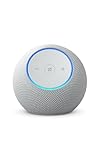
- Meet Echo Dot Max: Experience rich room-filling sound that automatically adapts to your space and fine-tunes playback. Features a built-in smart home hub and Omnisense technology for highly personalized experiences.
- Music to your ears: With nearly 3x the bass versus Echo Dot (2022 release), it fits beautifully in any space, delivering your personal sound stage with deep bass and enhanced clarity. Listen to streaming services, such as Amazon Music, Apple Music, Spotify, and SiriusXM. Encore!
- Do more with device pairing: Connect compatible Echo smart speakers and smart displays in different rooms, or pair with a second Echo Dot Max to enjoy even richer sound
- Simple smart home control: Set routines, pair and control lights, locks, and thousands of smart home devices that work with Alexa without needing a separate smart home hub. With Omnisense technology, you can activate routines via temperature or presence detection.
- Say goodbye to drop-offs and buffering: With eero Built-in, Echo Dot Max doubles as a mesh wifi extender, adding up to 1,000 sq. ft. of wifi coverage to your existing eero network.
The body also determines what the AI can learn and what errors matter. A robot arm with force feedback can detect that a part did not seat correctly. A drone can estimate its position and alter its route when wind changes. A speaker can hear a request, but unless it has separate sensors and actuators, it cannot inspect a room or physically reposition an object.
The perception–decision–action loop
Embodied behavior is best understood as a continuing loop:
- Perceive: cameras, microphones, lidar, touch, force or other sensors collect information.
- Interpret: software identifies objects, people, locations, conditions or goals.
- Decide and plan: the system selects an action, potentially breaking a goal into multiple steps.
- Execute: actuators move a body or operate a tool.
- Check the result: new sensor readings show whether the action worked.
- Adapt: the next action changes according to the observed result, within the system’s programmed autonomy and safety limits.
Not every system performs every step with the same sophistication. Some use a carefully engineered controller and do not learn during operation. Others use machine-learning models to recognize scenes, plan or adjust behavior. Calling a system embodied AI should prompt questions about which parts of this loop it actually supports.
How Alexa differs from embodied AI
Amazon describes Alexa as a cloud-based voice service available through Amazon and third-party devices. Voice is the interface: you speak a request, cloud software processes it, and the service returns speech, information or a command to a connected device.
An Alexa-enabled speaker is physically present and may contain microphones, a speaker and networking hardware. That does not make Alexa equivalent to a mobile robot. The relevant distinction is not whether a product has a physical casing; it is whether the AI senses and acts on the surrounding physical environment, then uses the outcome to guide further behavior.
Rank #2

- Your favorite music and content – Play music, audiobooks, and podcasts from Amazon Music, Apple Music, Spotify and others or via Bluetooth throughout your home.
- Alexa is happy to help – Ask Alexa for weather updates and to set hands-free timers, get answers to your questions and even hear jokes. Need a few extra minutes in the morning? Just tap your Echo Dot to snooze your alarm.
- Keep your home comfortable – Control compatible smart home devices with your voice and routines triggered by built-in motion or indoor temperature sensors. Create routines to automatically turn on lights when you walk into a room, or start a fan if the inside temperature goes above your comfort zone.
- Do more with device pairing – Fill your home with music using compatible Echo devices in different rooms, or create a home theatre system with Fire TV.
- Say goodbye to drop-offs and buffering - With eero Built-in, Echo Dot doubles as a mesh wifi extender, adding up to 1,000 sq. ft. of wifi coverage to your existing eero network.
| Comparison point | Typical voice-assistant interaction | Embodied-AI system |
|---|---|---|
| Input | Spoken words, often supplemented by a wake word and account or device data | Environmental input such as cameras, depth, touch, force, inertial sensors, microphones and other sensors; voice may also be available |
| Output | Speech, displayed information, a digital response or a command sent to a connected service | Movement or manipulation through motors, wheels, brakes, grippers, tools, propellers or other actuators, sometimes alongside speech |
| Feedback | Usually confirmation that a request was understood or a service returned a result | Sensor observations of what happened after an action, used to choose or modify subsequent actions |
| Environment | Primarily a voice conversation and a set of online or connected services | A changing physical space with obstacles, objects, surfaces, people, weather or traffic |
| Autonomy and learning | Generally responds to an utterance or an explicitly configured routine | May initiate or sequence actions and adapt to conditions; the actual level must be established for the specific system |
These are comparison questions, not absolute product categories. A voice assistant can issue commands to lights, locks or appliances, while a robot can accept spoken instructions. In those cases, voice and embodiment coexist, but they remain different dimensions: voice describes how a person communicates, whereas embodiment describes how an AI perceives and acts through a physical system.
Examples of embodied AI
Robots that manipulate objects
A robot that picks up packages, opens a door or places an item on a shelf has to account for object location, shape, grasp quality and changing surroundings. Microsoft Research uses examples such as opening doors, picking up objects and navigating around obstacles when describing physical AI. A vision-language-action model may connect a natural-language goal with visual perception and motor commands, but the reliability of that connection depends on the hardware, training and control safeguards.
Do these 3 things before closing this tab:
1Scan for outdated or missing drivers - takes under a minute2Clear out junk files and repair common Windows errors3Fix the driver behind crashes, sound loss and screen glitchesMobile robots, vehicles and drones
Autonomous vehicles and delivery robots combine localization, route planning, obstacle detection and motion control. Drones use cameras, inertial sensors and flight controllers to maintain a path and respond to conditions. These systems do not need human-like bodies or conversation to qualify as embodied; their defining feature is the closed interaction with a physical environment.
Humanoid and quadruped platforms
Humanoid form can be useful when a machine must use stairs, handles or tools designed for people. Quadrupeds can handle terrain where wheels are unsuitable. Neither shape guarantees broad intelligence. A platform may have sophisticated perception but limited task range, or it may execute a fixed routine with little adaptation.
Robot reasoning models
Google’s Gemini Robotics ER documentation describes vision-language models intended to help robots perceive and interact with the physical world, perform spatial and temporal reasoning, plan multistep tasks and orchestrate robots and tools. The documentation identified ER 2 as the latest model at the time of its July 2026 update and stated that ER 1.6 was deprecated on August 31, 2026. Those are documentation and availability statements, not proof that a model operates dependably in every real-world setting. Preview status, supported hardware and model versions can change.
Rank #3

- Your favorite music and content – Play music, audiobooks, and podcasts from Amazon Music, Apple Music, Spotify and others or via Bluetooth throughout your home.
- Alexa is happy to help – Ask Alexa for weather updates and to set hands-free timers, get answers to your questions and even hear jokes. Need a few extra minutes in the morning? Just tap your Echo Dot to snooze your alarm.
- Keep your home comfortable – Control compatible smart home devices with your voice and routines triggered by built-in motion or indoor temperature sensors. Create routines to automatically turn on lights when you walk into a room, or start a fan if the inside temperature goes above your comfort zone.
- Do more with device pairing – Fill your home with music using compatible Echo devices in different rooms, or create a home theatre system with Fire TV.
- Say goodbye to drop-offs and buffering - With eero Built-in, Echo Dot doubles as a mesh wifi extender, adding up to 1,000 sq. ft. of wifi coverage to your existing eero network.
“Robot” does not automatically mean adaptive intelligence
A robot is generally a machine equipped with actuators for one or more physical tasks. It can be fully scripted, remotely controlled or highly autonomous. The label says little about whether it can recognize unfamiliar objects, recover from an error, learn from experience or make safe decisions in an open environment.
For example, a factory arm that repeats a precisely positioned weld is embodied because it acts physically, but it may not adapt beyond the conditions its controller was designed for. A research robot that changes its grasp after sensing a slip demonstrates a stronger feedback loop. Describing both simply as “AI robots” hides the engineering difference.
How to evaluate an embodied-AI claim
When a product, paper or demonstration uses the term, ask the following questions before inferring capability:
What can it sense?
- Which sensors are present: RGB cameras, depth cameras, lidar, touch, force, microphones, GPS or inertial measurement?
- Does the system perceive the environment continuously, or only receive a preprocessed command?
- What happens when lighting, object placement, noise or weather changes?
What can it physically do?
- Which actuators and tools are controlled?
- Are actions limited to navigation, or can the system manipulate objects and use tools?
- What are the speed, payload, reach, battery and operating-area limits?
How autonomous is it?
- Can it choose intermediate steps, or must a person specify every movement?
- Does it stop safely when confidence is low or a person enters the work area?
- Which tasks are autonomous in normal operation, and which require teleoperation or approval?
How does feedback change behavior?
- Does the system verify that an action succeeded?
- Can it retry with a different approach, or does it simply repeat the same command?
- Is “learning” performed online, during offline training, or used only as a marketing term?
Strong evidence identifies the sensors, control architecture, task conditions, autonomy boundaries and failure handling. A video of a successful demonstration establishes that a particular run worked; it does not establish general reliability.
Why the distinction matters
Safety and accountability
A mistaken spoken answer is inconvenient. A mistaken physical action can break equipment, damage property or injure someone. Embodied systems therefore need collision avoidance, force limits, emergency stops, human-override procedures, controlled operating zones and testing against unusual conditions. The more freedom a system has to act, the more important its sensing and failure recovery become.
Free tools Windows power users keep installed
One-click scans. No signup required.
Rank #4

- Your favorite music and content – Play music, audiobooks, and podcasts from Amazon Music, Apple Music, Spotify and others or via Bluetooth throughout your home.
- Alexa is happy to help – Ask Alexa for weather updates and to set hands-free timers, get answers to your questions and even hear jokes. Need a few extra minutes in the morning? Just tap your Echo Dot to snooze your alarm.
- Keep your home comfortable – Control compatible smart home devices with your voice and routines triggered by built-in motion or indoor temperature sensors. Create routines to automatically turn on lights when you walk into a room, or start a fan if the inside temperature goes above your comfort zone.
- Do more with device pairing – Fill your home with music using compatible Echo devices in different rooms, or create a home theatre system with Fire TV.
- Say goodbye to drop-offs and buffering - With eero Built-in, Echo Dot doubles as a mesh wifi extender, adding up to 1,000 sq. ft. of wifi coverage to your existing eero network.
System design and user expectations
Voice interfaces are optimized for turn-taking: request, interpretation and response. Embodied systems must also communicate state, uncertainty and intent while they move. A useful robot interface might show what object it recognized, which step it is attempting and why it paused. Treating a robot as a speaker with wheels can lead users to expect conversational fluency where the real constraint is grasping, balance, localization or battery life.
Measuring performance
Voice assistants can be assessed on speech recognition, response accuracy, latency and service completion. Embodied systems require physical measures too: task-success rate under specified conditions, collision rate, recovery from disturbances, energy use, cycle time and safe-stop behavior. Results must be tied to a particular body, environment and software version.
Independent reader supportYour contribution helps us test, update, and keep practical guides available for everyone.Related terminology and standards
Organizations do not always use identical labels. Microsoft Research often uses physical AI for systems that interact with and learn from the physical world through sensory inputs and actions. The ITU recommendation uses embodied artificial intelligence and provides the formal definition quoted above. When discussing a particular project, use its own terminology but explain the capabilities in concrete terms.
ISO/TR 9241-810:2020 places physically embodied robotic and autonomous-vehicle systems in a broader landscape that also includes interactive software agents and agents acting without active user input. “Embodied” is therefore one design dimension, not a claim that a system possesses human-like general intelligence.
Recommended Free Tools
Common misconceptions
“Anything with a microphone and speaker is embodied AI.”
No. Those components provide a voice interface. Embodiment requires AI connected to physical sensing and action in the environment.
Best Value

- Meet Echo Dot Max: Experience rich room-filling sound that automatically adapts to your space and fine-tunes playback. Features a built-in smart home hub and Omnisense technology for highly personalized experiences.
- Music to your ears: With nearly 3x the bass versus Echo Dot (2022 release), it fits beautifully in any space, delivering your personal sound stage with deep bass and enhanced clarity. Listen to streaming services, such as Amazon Music, Apple Music, Spotify, and SiriusXM. Encore!
- Do more with device pairing: Connect compatible Echo smart speakers and smart displays in different rooms, or pair with a second Echo Dot Max to enjoy even richer sound
- Simple smart home control: Set routines, pair and control lights, locks, and thousands of smart home devices that work with Alexa without needing a separate smart home hub. With Omnisense technology, you can activate routines via temperature or presence detection.
- Say goodbye to drop-offs and buffering - With eero Built-in, Echo Dot Max doubles as a mesh wifi extender, adding up to 1,000 sq. ft. of wifi coverage to your existing eero network.
“Embodied AI means a humanoid robot.”
No. Arms, drones, vehicles, quadrupeds and other forms can meet the definition.
“Every robot learns.”
No. Some robots follow fixed programs, some adapt through feedback and some are remotely operated. The specific sensing, control and learning methods must be documented.
“A language model demonstration proves real-world autonomy.”
No. A model may reason about an instruction or generate a plan while the complete robot system remains limited by perception errors, actuator constraints, latency, safety rules and human supervision.
A practical rule of thumb
Ask two questions: Does the AI itself observe the physical world? and Does it change that world through a body, then use the outcome to guide what happens next? If the answer is no, you are probably looking at a voice interface, software agent or remote-control layer rather than embodied AI. If the answer is yes, examine the system’s autonomy, adaptation and safety limits instead of assuming that the label guarantees broad intelligence.
Quick Recap
Product prices and availability are accurate as of the date/time indicated and are subject to change. Any price and availability information displayed on Amazon at the time of purchase will apply.

