Quick wins for a faster PC:
Scan for outdated or missing drivers - takes under a minuteDriver Scan →Repair Windows errors before they cause bigger problemsFix Now →Fix the driver behind crashes, sound loss and screen glitchesFind Drivers →A mobile command post is a relocatable command-and-control headquarters positioned near an emergency, military operation or other complex field activity. It combines trained personnel, interoperable radios, data and video links, maps, displays, workstations, power and procedures in a vehicle, trailer, shelter or linked group of vehicles. The system gives leaders a shared operating picture and a place to assign tasks, request resources and coordinate agencies when a fixed control room is unavailable or too far away.
It is not simply a truck full of radios. The vehicle or shelter is the platform; the command staff, communications plan, software, power system and operating procedures make it useful. A post can work while moving, at a temporary halt or from an erected shelter, and can relocate as the incident changes.
As an Amazon Associate I earn from qualifying purchases.
What a mobile command post does
NFPA 1221 describes the need as being filled by a communications vehicle, sometimes called a mobile command post, and characterizes it as a mobile command-and-control headquarters. Its purpose is to place coordination close enough to an incident that leaders receive timely information and can direct operations without relying on a distant fixed facility.
The U.S. Department of Defense uses a closely related concept, the Mobile Command Center. UFC 4-010-23 defines that function as enabling emergency-operations personnel to coordinate and manage an incident when a fixed emergency operations center cannot be activated or maintained. Civilian agencies use similar systems for fires, floods, severe storms, transportation accidents and other events that disrupt normal facilities.
#1 Best Overall

- PORTABLE 4TH GEN DESIGN – Compact satellite internet antenna with the latest 4th generation technology, built for easy transport, quick setup, and reliable mobile connectivity. Ideal for travelers, RVs, remote work, rural homes, and Starlink-compatible portable internet solutions.
- HIGH-SPEED, LOW-LATENCY CONNECTIVITY – Advanced satellite internet system that delivers fast download speeds, smooth streaming, and low-lag online gaming from virtually anywhere. Stay connected whether you’re in rural areas, remote job sites, or traveling, with reliable Starlink-compatible performance.
- COMPLETE SATELLITE INTERNET KIT – Comes with a mini satellite dish antenna, mounting hardware, and essential cables for quick, hassle-free installation. Get set up in minutes and enjoy instant internet access with this Starlink-compatible portable satellite system.
- VERSATILE INTERNET SOLUTION – Perfect for remote work, travel, RVs, camping, off-grid living, or as a backup internet option in areas with limited or unreliable connectivity. Stay connected anywhere with this portable, Starlink-compatible satellite system.
- LATEST GENERATION TECHNOLOGY – Equipped with 4th gen satellite hardware that offers enhanced signal reception, stronger connectivity, and a streamlined, portable design. Engineered for greater reliability and performance, making it ideal for Starlink-compatible internet access anywhere.
In practical terms, the post connects three things:
- People: incident commanders, operations and planning staff, dispatchers, liaison officers, technical specialists and representatives of cooperating agencies.
- Information: voice traffic, status reports, maps, GPS positions, video, weather data, resource locations and decisions.
- Infrastructure: radios, networks, satellite links, power, antennas, displays, work surfaces and protected communications spaces.
Remove any one of those elements and the result is less capable. A well-equipped vehicle without trained operators is storage; a skilled staff without reliable communications cannot maintain coordination.
How a mobile command post works during an operation
1. Position near the operation
Commanders select a location that is close enough for fast information flow but outside immediate hazards such as fire spread, floodwater, unstable structures, blast effects or traffic obstructions. The site must also provide room for vehicle access, antennas, generators, security and, when needed, an attached tent or shelter. In a military setting, positioning additionally considers concealment, mobility, protection and the tactical network.
Windows Errors? Fix Them Before They Spread
Repair common Windows errors and clear accumulated junk for a smoother, more stable PC - no reinstall needed.Free scan · no reinstallOutdated Drivers Are Slowing You Down
One free scan finds every outdated or missing driver and matches the right update for your exact hardware.Free scan · exact hardware matchA post may be a single van, a truck and trailer, an armored or tracked vehicle, a shelter mounted on a vehicle, or several vehicles assigned different functions. The configuration determines how quickly the team can move and how much workspace it can provide.
2. Bring up power and connectivity
Operators start the power-distribution system, connect external power when available and deploy generators, batteries or vehicle-integrated power. They then raise antennas and activate radios, local networks, satellite terminals and other wide-area links. FEMA’s typed Mobile Communications Center resource definition calls for workstations, private command meeting space, radio-frequency communications with adjoining agencies and high-bandwidth satellite access.
Connectivity is normally layered rather than dependent on one link. Interoperable RF radios handle nearby public-safety or military users; satellite or other wide-area systems carry voice, video and data when terrestrial infrastructure is damaged; local wired or wireless networks connect workstations and displays inside the post. Redundant paths matter because a single failed cable, tower or commercial network can otherwise isolate the command team.
Rank #2

- Compact & Portable Design – Mini-size router fits in your pocket or bag; ideal for travel, RVs, cabins, and small spaces Satellite Internet Compatible – Works with systems that use Ethernet adapters or LAN-based terminals (check your provider’s hardware) Stable Wireless Performance – Delivers reliable WiFi signal for multiple devices; great for streaming, browsing, and remote work Plug & Play Setup – Easy installation with no advanced configuration required; connect to your modem or terminal and go Low Power Consumption – Energy-efficient design ideal for 24/7 operation in off-grid, solar, or battery-powered environments
3. Create a common operating picture
Staff collect reports from dispatch, field units, sensors, cameras, aircraft, partner agencies and public works or utility organizations. They place the information on shared maps and status boards, associate reports with times and locations, and display video or GPS tracks where useful. NFPA identifies data messaging, television transmission, maps and preplans, and vehicle tracking or GPS among relevant capabilities.
The common operating picture is more than a screen. Personnel validate reports, identify contradictions, mark confidence and ensure that everyone is using the same incident objectives and terminology. A map showing a road as open when a field unit has just closed it can produce a dangerous decision, so information management and discipline are as important as bandwidth.
4. Coordinate and direct action
Command staff establish priorities, assign tasks, approve tactics, request mutual aid and allocate scarce resources. Radio operators maintain communication with agencies that use different systems, while liaison personnel pass decisions to utilities, transportation authorities, hospitals or neighboring jurisdictions. Planning staff record objectives, track assignments and prepare the next operational period.
The post does not replace field commanders. It gives them a place to synchronize field commands, logistics and policy decisions, while the people closest to the hazard retain tactical control appropriate to the incident structure.
5. Displace, split or reconfigure
When the hazard moves, a road closes or the mission expands, the command post can relocate, add a shelter, transfer a function to another vehicle or operate from several coordinated nodes. Army Command Post Integrated Power and Infrastructure work combines vehicle and shelter systems with vehicle-integrated power to support operation both while moving and when halted. Civilian teams may similarly keep a communications vehicle at the incident while a larger mobile EOC handles planning and coordination elsewhere.
Recommended Free Tools
What is inside a mobile command vehicle?
Exact contents vary by mission, vehicle size and agency, but a capable system usually includes the following components.
Rank #3

- Applications: explore custom apps for purpose-built email, weather, or industry-specific requirements to provide more cost-effective, efficient use of the Iridium Certus 100 midband service.
- Messaging Apps: WhatsApp, Viber, Line, Signal, Telegram, Outlook, Gmail, Yahoo, Facebook, and Twitter.
- Web Browsing: Firefox, Opera.
- 24/7 SOS Monitoring: support is available through registration with the International Emergency Response Coordination Center (IERCC).
- Built-in Speakerphone: enjoy cellphone-quality voice communications.
| Component | Purpose | Typical considerations |
|---|---|---|
| Workstations and command area | Give supervisors and planners a place to monitor information, make decisions and hold briefings. | FEMA’s typed resources range from one to two workstations in Type 4 to six to ten in Type 1; the definition also calls for private command meeting space. |
| Interoperable radios and RF equipment | Connect the post to field units, dispatch and adjoining agencies or military units. | Requires compatible bands, channel plans, trained radio operators and antenna placement that matches terrain and coverage. |
| Satellite or wide-area communications | Carry voice, video and data when fixed networks or public cellular service are unavailable. | Bandwidth, antenna view of the sky, weather, subscription or network access and encryption requirements affect performance. |
| Local network and mission applications | Share incident-management software, files, maps, status boards and messages among operators. | Must continue working if an external connection drops and should separate administrative, operational and sensitive traffic. |
| Displays, cameras and mapping | Present the common operating picture, live feeds, GPS tracks, preplans and alerts. | Large screens help brief groups; smaller operator displays support detailed work. Video may consume substantial bandwidth. |
| Power generation and distribution | Run radios, servers, lighting, air conditioning and displays. | Includes generators, batteries, inverters, fuel management, surge protection and safe grounding; newer military designs emphasize integrated vehicle power and tactical microgrids. |
| Shelters, racks and furniture | Provide protected equipment mounting, cable management, seating and additional workspace. | Fold-out tables, quick-erect tents or linked shelters increase capacity but add setup time and logistics. |
| Security and environmental systems | Protect information and people from unauthorized access, heat, cold, dust, water and electrical hazards. | Military systems may require tactical-network protection, survivability and classified-communications controls that are not needed in every civilian vehicle. |
Mobile command post, mobile EOC and tactical command post: the differences
These labels overlap, and agencies sometimes use them differently. The most useful distinction is the mission and operating level, not the body style.
| Type | Primary role | Typical users and setting | What distinguishes it |
|---|---|---|---|
| Mobile command post | Direct and coordinate operations close to an incident. | Fire, emergency medical, law-enforcement, utility or multi-agency incident teams. | Balances rapid deployment, field communications and enough workspace for command decisions. |
| Mobile EOC | Provide emergency-operations coordination when a fixed EOC is unavailable, damaged or too distant. | Municipal, regional, state or federal emergency-management staff. | Usually supports more planners, logistics and policy coordination than a small tactical vehicle. FEMA’s typed levels span one to two workstations (Type 4) through six to ten (Type 1). |
| Tactical command post | Control maneuver or immediate field tactics for a military or specialized unit. | Commanders and staff operating with or near deployed forces. | Prioritizes mobility, tactical networks, survivability, low signature and operation during movement or short halts. |
| Mobile communications vehicle | Extend or interconnect radio and data services. | Communications technicians and dispatch or interoperability teams. | May support a command post but can be focused mainly on network access rather than full incident management. |
A large disaster may use all of them: a tactical post at the incident perimeter, a communications vehicle extending radio coverage, and a mobile EOC coordinating regional resources and recovery.
Configurations and design trade-offs
Single vehicle
A single vehicle is easiest to move and can reach a scene quickly. It is suitable when a small command team needs radios, mapping and a few workstations. Interior space, power capacity, antenna height and staff separation are limited, so extended operations may require an external awning or tent.
Trailer, shelter or multi-vehicle system
Trailers and expandable shelters provide more desks, displays and equipment racks. Linked vehicles can separate radio operations, planning, briefings and technical support. The cost is greater transport, site preparation, setup time and coordination between modules. The Department of Defense and Army concepts treat vehicle-mounted networks and rapidly erected shelters as complementary rather than mutually exclusive.
Rapid setup versus endurance
A compact post can be operational quickly, but a larger Mobile EOC supports more staff, meeting space and redundancy for a long incident. FEMA’s workstation ranges illustrate this capacity difference. Agencies should specify the longest expected mission, relief staffing and maintenance cycle instead of choosing only by vehicle size.
Mobility versus capability
Every rack, generator and shelter adds weight, fuel use and setup work. Designs intended to operate while moving need equipment secured for vibration, power conversion that works from the vehicle and communications antennas that can function in transit. Systems intended mainly for at-halt operations can carry larger screens, more servers and more comfortable work areas.
Rank #4

- Perfect Compatibility for Starlink Mini: Designed specifically for your Starlink Mini, the starlink mini 12v adapter ensures seamless power supply. No need to worry about compatibility issues. It is designed to work perfectly with your Starlink Mini device, whether you are using it at home or while traveling in an RV.
- Stable Output: The starlink mini step up converter is equipped with high-quality integrated circuits that provide a stable 36V/1.67A output under different load conditions. Efficient boost conversion technology prevents voltage drops, making it the top power solution for Starlink Mini.
- Safety Protection: The starlink mini 12v power supply is not only compatible with Starlink Mini and performs exceptionally well, but it has also passed the UL 2464 standard—the authoritative certification for multi-conductor device cables. From the conductors to the insulation layer, every component has undergone rigorous testing to withstand voltage fluctuations, heat generated during high-power charging, and maintain stability in outdoor environments. For your Starlink Mini, choose UL 2464-certified quality—it’s not just a cable, it’s globally recognized safety assurance.
- Dual-terminal Interface Design: The input end of the starlink mini dc adapter is equipped with an O-ring terminal cable, compatible with DC batteries, car batteries, solar batteries, etc. The O-ring terminal cable can be directly connected to the positive and negative terminals of the battery (supporting screw fixation or clamping), without any modifications, saving time and effort for outdoor installation!
- Wide Range of Applications: The starlink mini battery has a wide range of applications, including batteries, boats, vehicles, RVs, and camping. It works excellently as a Starlink Mini car adapter and is a key component of various Starlink Mini accessories, ensuring that your Starlink Mini system is always reliably powered.
Connectivity and resilience
Evaluate RF interoperability, satellite bandwidth, coverage, encryption, redundancy and the ability to operate without public networks. A satellite terminal may restore wide-area service but still require clear sky, trained operators and a backup power plan. Local applications should retain essential maps, contact lists and incident records during an external outage.
Do these 3 things before closing this tab:
1Clear out junk files and repair common Windows errors2Scan for outdated or missing drivers - takes under a minute3Repair Windows errors before they cause bigger problemsHow agencies deploy one: a practical sequence
- Define the mission and authority. Decide whether the system will direct field tactics, support an EOC, provide communications, or perform several roles. Identify who can activate it and who has decision authority inside.
- Choose the configuration. Match vehicle, trailer, shelter or multi-vehicle design to staff count, terrain, expected duration, security level and required mobility.
- Prepare communications plans. List radio channels and talk groups, interoperability procedures, satellite or other wide-area access, encryption rules, call signs and fallback methods. Test with partner agencies before deployment.
- Survey and secure the site. Check hazard distance, access routes, antenna placement, drainage, grounding, fuel safety, lighting, privacy and physical security. Establish a traffic and evacuation plan.
- Set up and test. Start power, deploy antennas and shelters, connect networks, verify clocks and location data, test every radio path, confirm video and maps, and record any degraded service.
- Establish the operating picture. Set reporting intervals, map symbols, source validation, incident objectives and rules for updating or archiving information.
- Run shifts and maintain the system. Use relief staffing, fuel and battery logs, equipment checks, cybersecurity controls and documented handovers. Fatigue and undocumented changes are common causes of command errors.
- Plan displacement before it is urgent. Keep routes, alternate sites, shutdown priorities and a minimum communications package ready so the post can move without losing the incident record.
- Demobilize and restore. Preserve required logs, return borrowed frequencies or equipment, inspect power and network gear, refuel, repair damage and update the deployment checklist from lessons learned.
Common failure modes and fixes
Incompatible radios
Agencies may arrive with different bands, talk groups or encryption settings. A preplanned interoperability matrix, gateway capability, spare radios and a radio operator reduce the risk. Do not assume that the presence of a radio rack means every user can communicate.
Loss of external networks
When cellular or fiber service fails, keep local maps, contact lists and incident software available offline. Use satellite or radio data for essential traffic, prioritize bandwidth for command needs and maintain a tested backup power source.
Power overload or unsafe generation
List the startup and continuous load of every device, reserve capacity for cooling and lighting, and use qualified personnel for grounding and distribution. Fuel shortages, poor ventilation and improvised extension cables can disable the post or create a hazard.
Too much information, too little decision support
Large displays do not automatically create awareness. Assign staff to validate reports, maintain a concise status board and mark stale data. Separate operationally urgent information from background feeds so commanders can act.
Setup delays
Practice the sequence with the actual crew and equipment, label cables and racks, carry preconfigured network profiles, and keep a minimal operating package that can go live before the full shelter is erected.
Best Value
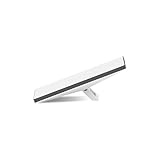
- BE AWARE: OUTSIDES REGION FEE MAY APPLY: There may be a one-time activation fee of $300 due to use of your Mini Dish outside of a specific area.
- Ultra-compact design: Smaller and lighter than the standard dish, perfect for tight spaces, travel, or temporary setups.
- Fast and reliable internet: Enjoy speeds comparable to the residential service great for web browsing, HD streaming, video calls, and more.
- Easy setup: Simple plug-and-play installation. Just point it at the sky and you're online in minutes.
- Weather-resistant build: Engineered to perform in extreme environments with durable materials and rugged construction.
Security and privacy gaps
Control access to the vehicle, lock equipment, segment networks, protect credentials and follow the applicable rules for sensitive or classified information. A civilian post may not need military-grade protection, but it still handles personal, medical, law-enforcement or infrastructure data that should not be exposed.
How to evaluate a mobile command post
- Mission fit: Can it support the required number of commanders, planners, dispatchers and partner representatives for the expected duration?
- Interoperability: Which agencies and radio systems can connect directly, through gateways or not at all?
- Resilience: What happens when commercial power, cellular service, satellite access or a primary vehicle fails?
- Mobility: Can the system travel on the roads, terrain and bridges expected in its operating area, and how long does it take to become functional?
- Power and environment: Is there enough generation, battery reserve, cooling, heating, weather protection and fuel capacity?
- Information management: Are maps, GPS, video, reports and decisions synchronized, time-stamped and available during an outage?
- Security: Are physical access, cybersecurity, encryption and information-handling requirements documented?
- Training and sustainment: Who operates each subsystem, how often is it exercised with partners, and how are software, batteries, radios and generators maintained?
Examples of mobile command-post designs
The Army’s M1068 Mobile Tactical Command Post is a tracked vehicle with integrated mission-command and radio capabilities; the Army describes its value as allowing commanders to “command from the hatch.” This illustrates a highly mobile tactical design in which the platform and communications suite remain closely integrated.
The Army’s Light Mobile Command Post is reported as transforming into a tactical command post on wheels within minutes. Its described equipment includes a quick-erect tent, a fold-out internet-configured table, monitors and a large screen. It demonstrates the rapid-setup end of the mobility-versus-workspace trade-off.
The Army’s next-generation command-post work emphasizes that a command post should not be “a mere shelter” but a mission-command and situational-awareness enabler. That principle applies to civilian systems as well: the shelter matters only insofar as it keeps people, information, communications and decisions connected.
Why mobile command posts matter
Fixed EOCs and dispatch centers remain valuable, but incidents can destroy buildings, isolate roads, overload communications or move beyond the facility’s useful range. A mobile post preserves a command function by taking the essential system to the operation. Its real capability comes from the integration of people, procedures, communications, power and a shared operating picture. When those elements are designed and exercised together, leaders can continue coordinating resources and making timely decisions even as the incident, network or command location changes.
Quick Recap
Product prices and availability are accurate as of the date/time indicated and are subject to change. Any price and availability information displayed on Amazon at the time of purchase will apply.

