A Wi-Fi outage usually cuts off app and remote features, not necessarily local controls. A power outage is different: battery-powered locks may keep working, while a thermostat’s limited internal battery can only keep the thermostat going temporarily—and does not power the heating or cooling equipment.
Power outage vs. Wi-Fi outage: what changes?
Power, Wi-Fi, internet access, and cloud services are separate dependencies. A device can appear offline in an app because it cannot reach the network even while its keypad or on-device controls still work. Conversely, a device with temporary backup power may stay on for a time after household power fails, then shut down.
As an Amazon Associate I earn from qualifying purchases.
| Failure | What may stop | What may still work |
|---|---|---|
| Wi-Fi or internet outage | App control, remote commands, cloud features, and alerts that depend on a connection. | Local controls, if the device has power and its model supports offline operation. |
| Household power outage | Devices that rely on household power, and eventually devices whose temporary backup runs out. | A battery-powered lock may continue operating; a thermostat with internal battery power may remain on temporarily. Neither guarantees that other equipment in the home is powered. |
What happens to a smart lock?
When household power goes out
Many smart locks use their own batteries rather than household electricity. Schlage says its residential electronic and smart locks are battery-operated and continue functioning during a power outage, assuming the lock’s batteries are usable. This is Schlage’s guidance, not a guarantee for every brand or model; check the manual for your exact lock. Schlage’s power-outage guidance was updated August 1, 2025.
Recommended Free Tools
When Wi-Fi or internet goes out
Remote app access and alerts may stop, but a network outage does not automatically mean the lock’s keypad or inside controls have stopped working. The exact fallback depends on the lock and how it connects to the network.
#1 Best Overall

- 𝐅𝐥𝐞𝐱𝐢𝐛𝐥𝐞 𝐖𝐚𝐲𝐬 𝐭𝐨 𝐔𝐧𝐥𝐨𝐜𝐤: Unlock the way you want: app, passcode, fingerprint, physical key, or voice via Alexa/Google Assistant. Everyone in the family can choose what works best — convenience meets flexibility. Batteries are not included.
- 𝐔𝐧𝐥𝐨𝐜𝐤 𝐅𝐫𝐨𝐦 𝐀𝐧𝐲𝐰𝐡𝐞𝐫𝐞: Built-in Wi-Fi lets you lock and unlock your door remotely anytime, anywhere from your smartphone — no extra hub needed. Stay connected and in control, even when you’re at work or on vacation. Only support 2.4Ghz network. Keep the router and lock with 65ft for better remote control.
- 𝗩𝗼𝗶𝗰𝗲 𝗖𝗼𝗻𝘁𝗿𝗼𝗹 𝗥𝗲𝗮𝗱𝘆: Pair with Alexa or Google Assistant to unlock or lock with your voice. Great for when your hands are full or you're relaxing at home and still welcome who’s at the door. Note: Please log in to your own Google or Alexa account first before use Voice Control and make sure your network connection is stable.
- 𝗬𝗼𝘂𝗿 𝗙𝗶𝗻𝗴𝗲𝗿𝘀 𝗶𝘀 𝗬𝗼𝘂𝗿 𝗞𝗲𝘆: Just one touch unlocks the door instantly. No need to search for keys — Your fingers is your keys, perfect for busy mornings. Philips wifi lock store multiple prints for easy family access.
- 𝐂𝐨𝐝𝐞 𝐀𝐜𝐜𝐞𝐬𝐬 𝐌𝐚𝐝𝐞 𝐒𝐢𝐦𝐩𝐥𝐞: Create up to 100 custom passcodes for family, friends, or renters. Easily share unlimited one-time or scheduled codes to guests, cleaners, or deliveries— no need to be home to open the door.
For the Nest × Yale Lock, Google says most passcodes continue to work while the lock is offline, and the inside thumb turn remains usable. Scheduled-access passcodes are an exception; app operation and alerts are unavailable. The lock does not connect directly to Wi-Fi: it communicates with Nest Connect over a low-power connection, and Nest Connect relays information over Wi-Fi. Google says Nest Guard can no longer serve as the bridge; only Nest Connect can connect the lock. See Google’s offline Nest × Yale guidance for model-specific details and legacy setup support.
If a Nest × Yale Lock battery is exhausted
Google documents a model-specific emergency method: hold a 9V alkaline battery against the terminals at the bottom of the Nest × Yale Lock to provide temporary power, then enter a passcode and replace the lock batteries. Do not assume this procedure applies to other locks; follow the instructions for your exact model. Google’s Nest × Yale instructions describe the method.
Rank #2
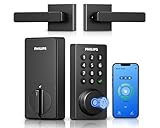
- Connect to 2.4GHz WiFi, No Hub Needed:Connect your Philips 4200 Series Wifi Door Lock Deadbolt directly to your home WiFi network—no extra hub or bridge required. Manage your door anytime, anywhere through your smartphone. 𝙉𝙊𝙏𝙀: Please keep the smart lock within 33 ft (10 m) of your Wi-Fi router. Minimize obstacles such as walls, metal objects, and interference sources for a stronger connection.
- App Control with Real-Time Access:Control smart lock remotely via the Philips Home Access App: lock/unlock, manage user codes/fingerprints, check your door lock status, and monitor access history in real time, etc, whether you’re at work or on vacation.
- Voice Assistant Compatible:Hands full? No problem. Use voice commands with Alexa or Google Assistant to lock or check the status of your front door lock set effortlessly.
- Versatile Passcode Options: This Keypad deadbolt supports permanent, one-time, periodic, and recurring PIN codes—perfect for family, guests, housekeepers, or Airbnb use. Easily manage and share access through the app for ultimate convenience and control.
- 0.3S Fingerprint Fast Access:With this fingerprint keyless entry door lock, unlock your door in 0.3 seconds with fast, secure biometric access. Store multiple fingerprints for family and trusted visitors.
What happens to a smart thermostat?
When Wi-Fi or internet goes out
A Nest thermostat that is offline cannot be controlled in the app, according to Google. If the thermostat itself remains powered and responsive, you can still use its on-device controls to set the temperature. An app reporting the thermostat as offline therefore does not, by itself, prove that the thermostat’s local controls have failed. See Google’s offline thermostat guidance.
When household power goes out
Google says Nest thermostats can draw on an internal battery for a while after losing system power. To preserve charge, a thermostat may turn off Wi-Fi and other features, and eventually shut down. The internal battery is temporary backup for the thermostat—not a power source for a furnace, boiler, heat pump, or air conditioner. Whether heating or cooling continues depends on whether that equipment has power and on any separate backup system. Google’s guidance on a Nest thermostat that will not turn on explains this power-saving behavior.
Quick Recap
Best Value
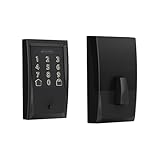
- ANYWHERE ACCESS: With built-in WiFi compatibility, you can easily and securely connect your Schlage Encode Deadbolt to your home WiFi network to control and monitor your home from anywhere with the Schlage Home app
- PEACE OF MIND: Lock and unlock from anywhere, manage up to 100 access codes for keyless entry, view lock history, receive customizable notifications and easily manage multiple locks at once - all when paired to the Schlage Home app and connected to a secure WiFi network
- VOICE CONTROL: Works with Alexa and Google Home for optional, hands-free convenience when paired with the Schlage Home app and a voice enabled device
- ADVANCED SECURITY: Secure, encrypted connection; built-in, customizable alarm for door movement and forced entry attempts; fingerprint-resistant touchscreen; certified highest residential Security, Durability and Finish rating by BHMA industry experts
- EASY INSTALL: Install in minutes with just a screwdriver, no hardwiring required; Snap ‘n Stay design helps keep the lock on the door so both hands are free; fits standard doors with 1-3/8 in to 1-3/4 in door thickness and 2-3/8 in or 2-3/4 in backset
Rank #4

- Passcode Entry: This keypad lock offers 20 access codes for family use and a temporary code for single-use guest entry
- One-Time Code: A one-time PIN code can be set for door opening and will automatically be deleted after use
- Smart Locking: Features an automatic door lock that can be set to lock in 10-99 seconds (off by default) and one-touch auto-lock by pressing and holding any key on the keypad for 2 seconds
- Long Battery Life & Low Battery Indicator: Powered by 4 AA batteries (not included), lasts up to 365 days. A red light indicator alerts you when battery level drops below 15%
- Security Deadbolt: Provides reliable home protection with its sturdy aluminum alloy construction, weather resistance (IP54), durability, anti-peeping user code protection, low battery indicator, and solid lock cylinder
Rank #3

- 6 Ways to Unlock: Unlock with a touch for less than 1s with fingerprint lock. You can also open your front door lock via the eufy Security app, using the keypad or physical key, from Apple Watch, or use your voice with Alexa/Google Voice Assistant.
- 8 Months Battery Life: With 8 AA batteries, Smart Lock C220 runs around 8 months. Experience ultimate convenience and peace of mind with our long-lasting power solution. *May vary depending on the frequency of the lock being used.
- Self-learning AI: Fingerprint door lock recognition gets more precise with every touch, so you don't have to try agian and again to get in. Never be awkward or upset at unlocking the door.
- Control from Anywhere with Built-in Wi-Fi: No bridge required, you can control your wifi smart lock from anywhere via the eufy Security app. Easy setup.
- Integrated eufy ecosystem: If you have a eufy doorbell, you can add your wifi door lock to your routines and control devices together for keyless entry within the eufy Security app.
What to check before relying on offline operation
- Identify the failure: determine whether household power, Wi-Fi, internet service, or a cloud connection is unavailable. They can cause different symptoms.
- Check local operation: test the lock keypad or inside control, or the thermostat’s on-device controls, without assuming the app’s offline status tells the whole story.
- Check device power: review the lock’s battery condition and the thermostat’s power status. A local fallback still needs a working power source.
- Check model-specific rules: confirm which passcodes, schedules, bridges, or emergency-power steps work for your exact model in its current manufacturer documentation.
- For heating or cooling, check the equipment: a thermostat that remains on does not establish that HVAC equipment has electricity or can operate during the outage.
Product prices and availability are accurate as of the date/time indicated and are subject to change. Any price and availability information displayed on Amazon at the time of purchase will apply.

