FPS, refresh rate, and frame pacing describe different parts of the path from a game engine to your eyes. FPS is how quickly the game renders or presents frames. Refresh rate is how often the monitor scans a new image. Frame pacing is whether those frames arrive at even intervals. An older game can report 60 FPS and still look or feel uneven if its frame times fluctuate, its engine expects a narrow frame-rate range, or synchronization settings force missed refreshes.
The practical goal is not the highest number in an overlay. It is a frame rate the game can sustain with consistent timing, presented in a way that suits your monitor and your tolerance for tearing or input delay.
As an Amazon Associate I earn from qualifying purchases.
FPS, refresh rate, and frame pacing: the essential difference
These terms are related, but they are not interchangeable.
| Term | What it measures | What it does not guarantee |
|---|---|---|
| FPS (frames per second) | How many frames the game renders or presents each second. | That the monitor can show every frame, or that the frames arrive evenly. |
| Refresh rate (hertz) | How often the display refreshes its scanout. A 60 Hz panel refreshes 60 times per second. | That a game will produce 60 unique frames, or that motion will be smooth. |
| Frame pacing | The regularity of the time interval between presented frames. | That a high average FPS is free of hitching; uneven intervals can feel rough. |
A 60 FPS stream with one frame every 16.67 milliseconds is temporally consistent. A stream that averages 60 FPS but alternates between very short and very long waits can look like judder. At 30 FPS, an even cadence is about 33.33 milliseconds per frame. Those are timing conversions, not promises that an older title will actually deliver those intervals.
#1 Best Overall

- 32 Inch curved 1500R gaming monitor, 240Hz high refresh rate for gameplay
- Performance: 240Hz refresh rate, Full HD 1920*1080P resolution, 1ms MPRT response time, Built-in FreeSync technology, Anti-flicker, Low blue light
- Interfaces: HDMI up to 240Hz, DP 1.4 up to 240Hz, Earphone Jack, No speakers built-in. One DP cable comes with the package
- Display Colors: 125% sRGB color gamut, 16.7M display colors, 300 Nits brightness, HDR technology, 3500:1 contrast
- Ergonomic Design: 1500R curved, Tilt: -5°~15°, VESA Compatible (100 x 100mm), 178° Wide Viewing Angle.Recommended distance of playing games in this monitor is about 1.2 meters.
Refresh rate is a capability of the display. FPS is produced by the game and the rest of the PC. Frame pacing describes the relationship between successive presentations. Keeping those distinctions clear explains most “why does this old game stutter at 60 FPS?” questions.
What the monitor actually displays
On a fixed-refresh monitor, the panel begins a scanout on a regular schedule. If the game replaces the back buffer while that scanout is in progress, the upper part of the screen can show one frame and the lower part another. That horizontal discontinuity is screen tearing.
Steam’s refresh-rate and VSync guidance describes tearing and video artifacts when synchronization is disabled because the viewer may not see complete, matching frames. NVIDIA’s Adaptive VSync documentation gives a concrete example: with VSync disabled, producing 120 frames per second on a 60 Hz display can result in tearing because the game is presenting faster than the panel refreshes.
Free tools Windows power users keep installed
One-click scans. No signup required.
A monitor’s 60 Hz setting therefore does not limit a game to 60 FPS by itself. It only gives the display 60 scanout opportunities per second. Extra rendered frames may be replaced before they are fully scanned, discarded, or partially visible.
Why an older game can stutter at 60 FPS
“60 FPS” is usually an average or a rounded counter value. It does not describe every frame’s delivery time. Several mechanisms can make a title feel uneven.
Rank #2

- 27” 240Hz 1500R Curved FHD 1080P Gaming Monitor for Game Play.
- Prioritizes Gaming Performance: Up to 240Hz high refresh rate, more immersive 1500R Curvature, FreeSync, MPRT 1ms Response Time, Black Level adjustment(shadow booster), Game Modes Preset, Crosshair.
- Cinematic Color Accuracy: 130% sRGB & DCI-P3 95% color gamut, 4000:1 contrast ratio, 300nits brightness, HDR, Anti-flicker; Anti-Glare.
- Plug & Play Design: HDMI & DP1.4 & Audio Jack(No built-in speakers), durable metal stand, tilt -5°~15, VESA 100*100mm compatible.
- Warranty: Money-back and free replacement within 30 days, 1-year quality warranty and lifetime technical support. Pls contact SANSUI service support first if any product problem.
Uneven frame times
If one frame takes 8 ms and the next takes 25 ms, the average may still look close to 60 FPS over a sample, but the long wait is visible as a hitch. Frame-time graphs and percentile results expose this better than an average. NVIDIA’s FrameView documentation uses percentile FPS and PC-latency measurements for that reason; 1% and 0.1% lows are useful summaries of the slower portions of a run, though they are not a substitute for checking the actual frame-time trace.
VSync cadence changes
With fixed-refresh VSync, a frame that misses the next refresh cannot be shown immediately. On a 60 Hz display, a title that cannot meet the 60-FPS interval may wait for a later refresh. NVIDIA documents the familiar step-down behavior: performance below a typical 60-FPS VSync cap can lock to a lower cadence such as 45 or 30 FPS. The visible result is a change in rhythm rather than a smooth slide through every intermediate rate.
What’s actually slowing this PC down?
Pick the symptom - the matching free tool is one click away.
Engine timing limits
Some older engines tie physics, animation, game speed, input polling, or simulation steps to a narrow frame-rate range. Raising an uncapped title far beyond its original target can cause unusually fast movement, broken physics, animation errors, or timing-sensitive glitches. The correct limit is therefore title-specific; verify how that game behaves before assuming that unlimited FPS is harmless.
Shader compilation and background interruptions
NVIDIA’s driver reference identifies shader compilation as a common source of gameplay stutter. A first encounter with an effect can pause while a shader is prepared, even when the overall FPS counter looks high. Background applications, driver overrides, asset streaming, and an old game’s own scheduling can create similar one-off hitches.
How VSync changes the trade-off
Vertical synchronization coordinates frame presentation with the monitor’s fixed refresh cycle. Its primary benefit is tearing control.
Rank #3

- Samsung’s 27” Odyssey G5 QHD Gaming Monitor delivers brilliant visuals for exhilarating gameplay that’s more immersive than ever before.
- QHD resolution (2560 x 1440) boasts incredibly detailed, pin-sharp images.
- With a wide 178° viewing angle, the IPS panel consistently delivers crisp, clear hues from various viewpoints.
- 180Hz Refresh Rate and 1ms response time (GtG) allow fast reactions for ultra-smooth gaming, plus G-Sync compatibility syncs the GPU and panel to reduce choppiness, screen lag, and image tearing.
- HDR10 provides brighter highlights and nuanced shadows for added depth.
When VSync is enabled
- Frames are presented in step with the display’s refresh schedule, so tearing is generally removed.
- A frame that arrives after its intended refresh may wait for a later one, increasing the interval before it appears.
- That waiting can add input latency and can create cadence jumps when performance dips below the cap.
When VSync is disabled
- The game can present as soon as a frame is ready, which can reduce synchronization-related waiting.
- If the game runs faster than the monitor, the scanout can contain portions of different frames, producing tearing.
- Steam and NVIDIA both document tearing or related visual artifacts as the normal trade-off.
There is no universal “best” switch. If a clean image matters most on a fixed-refresh display, start with VSync enabled and a sustainable target. If immediate input is more important and occasional tearing is acceptable, disabling it can be reasonable. Test the specific title because older presentation paths do not all behave identically.
PC Slower Than It Used to Be?
A free scan shows the junk files, broken settings and background clutter dragging Windows down - then fixes them in one click.Free scan · Windows 10 & 11Outdated Drivers Are Slowing You Down
One free scan finds every outdated or missing driver and matches the right update for your exact hardware.Free scan · exact hardware matchWhat FreeSync, G-SYNC, and adaptive sync add
Variable refresh rate (VRR) allows the monitor to vary its refresh timing to follow the game’s frame stream within the display’s supported range. AMD describes FreeSync as synchronizing display refresh with the frame rate of compatible graphics cards to reduce or eliminate tearing, stuttering, and related artifacts. NVIDIA’s G-SYNC guidance similarly treats the variable-refresh range as the operating window to stay inside.
VRR is useful when an older game fluctuates between rates that a fixed-refresh VSync setup handles poorly. Instead of forcing every frame into a rigid 16.67 ms schedule, the panel can wait for the next frame, subject to its minimum and maximum refresh limits.
You do not need FreeSync or G-SYNC merely because your monitor is 60 Hz. A fixed 60 Hz display can run an older title correctly with an appropriate cap and, if desired, VSync. VRR becomes valuable when frame delivery varies, when cadence changes are distracting, or when you want tearing control without always waiting for a fixed refresh. Actual behavior depends on the monitor’s stated range, graphics hardware, driver, operating-system presentation path, and the game.
Staying inside the VRR range
If a game reaches the monitor’s maximum refresh, it can leave the variable-refresh window and fall back to another synchronization behavior. NVIDIA recommends setting a maximum frame rate slightly below the display maximum when the goal is to remain inside a G-SYNC or other VRR range. The exact offset is setup-dependent; use the limiter available in the game, driver, or a trusted frame-limiting utility and confirm the result with an overlay.
Rank #4
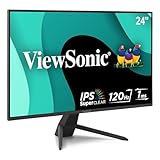
- High-Speed 120Hz Full HD IPS Display: Elevate your gaming experience with this 24 Inch 1080p (1920 x 1080) IPS monitor; featuring a smooth 120Hz refresh rate and 1ms (MPRT) response time, this display delivers the speed and clarity needed for competitive play
- Ultra-Smooth FreeSync Performance: Achieve tear-free and fluid gameplay with AMD FreeSync technology; this feature synchronizes your monitor's refresh rate with your GPU to eliminate screen tearing and stuttering for a more immersive and seamless gaming experience
- Enhanced Viewing Comfort: Minimize eye fatigue during intensive gaming sessions with integrated Flicker-Free technology and a Blue Light Filter; these eye care features provide a more comfortable viewing experience, allowing you to stay in the game for longer
- Customizable Game Mode Presets: Dominate the competition with an arsenal of pre-set visual modes tailored for FPS, RTS, and MOBA games; quickly optimize your screen settings to gain a competitive edge and enjoy the ideal contrast and color for any gaming genre
- Flexible Connectivity Options: Seamlessly connect your gaming console, PC, and laptop with versatile input options; this monitor features HDMI, DisplayPort, and VGA inputs, providing the reliable compatibility needed for all your favorite gaming and home devices
Choosing a frame-rate target
Choose the highest target the game can hold consistently, not the highest peak it reaches in an empty scene.
| Target | Frame interval | When it can make sense | Main caution |
|---|---|---|---|
| 30 FPS | About 33.33 ms | A demanding title or engine that cannot sustain 60. | Motion and input response feel less immediate; cadence must still be even. |
| 60 FPS | About 16.67 ms | The natural target for a 60 Hz display and many classic PC games. | Brief drops can trigger fixed-VSync cadence changes. |
| Another stable rate | 1000 ÷ FPS milliseconds |
A game and display combination that can hold a different rate reliably, especially within VRR. | The target must fit the monitor’s refresh or VRR limits and the engine’s safe operating range. |
For a fixed-refresh display, a cap near the chosen target prevents needless rendering above what the panel can show. For VRR, cap just below the maximum refresh when necessary to remain within the supported range. A cap can also reduce render-ahead queueing and latency, but the limiter’s quality matters: a poorly timed limiter can introduce its own unevenness.
A reliable setup sequence for an older PC game
- Confirm the display mode. Check the operating system’s actual refresh setting and the game’s own resolution and refresh options. Do not assume the desktop’s setting carried into fullscreen.
- Establish the engine’s safe range. Look for title-specific notes about physics, animation, simulation speed, or known issues at high FPS. If the game is designed around 30 or 60, begin there rather than uncapping it.
- Measure the limiting component. Observe CPU and GPU utilization, frame-time behavior, and whether the title is constrained by its own engine. A high GPU percentage suggests a graphics limit; a saturated game thread with spare GPU capacity suggests a CPU or engine limit. Treat these observations as diagnosis, not as a reason to chase a larger average.
- Select a sustainable target. Use 30, 60, or another rate that the game maintains during the heaviest scenes you actually play. Check slow sections, not only menus or hallways.
- Set a frame cap. Use the in-game limiter first when it is stable. Otherwise use a driver-level or other reliable limiter. On VRR, place the cap slightly below the monitor’s maximum if staying inside the range is the objective.
- Choose synchronization. On fixed refresh, enable VSync when tearing is distracting; disable it when latency is the priority and tearing is acceptable. On VRR, enable the display and driver features required for the supported range, then verify that the game remains inside it.
- Test a repeatable scene. Walk through the same busy area several times. Compare frame-time consistency, visible tearing, control response, and cadence changes rather than relying on one FPS number.
- Investigate remaining hitches. Check shader-compilation behavior, background processes, driver overrides, overlays, and the game’s own timing limitations before raising the cap.
Diagnosing common symptoms
The image tears, but the counter is high
The game is likely presenting more quickly than the fixed-refresh display can scan. Enable VSync, use a cap at or below the refresh target, or use VRR within its supported range. The choice depends on whether clean presentation or minimum latency is more important.
The game feels jerky even though it says 60 FPS
Inspect frame-time consistency and 1%/0.1% lows. Look for shader-compilation pauses, background CPU activity, driver overrides, and an engine that is missing its intended cadence. A stable 30-FPS cap can feel better than an erratic 60 if the title cannot sustain the latter.
VSync produces obvious drops
On fixed refresh, a late frame can miss a scanout and wait for a later one. Reduce the target to a rate the game can hold, use a well-behaved limiter, or consider VRR if the monitor and GPU support it. NVIDIA’s documented examples of 45- or 30-FPS step-downs explain why the drop may appear discrete.
Best Value

- 【INTEGRATED SPEAKERS】Whether you're at work or in the midst of an intense gaming session, our built-in speakers provide rich and seamless audio, all while keeping your desk clutter-free.
- 【EASY ON THE EYES】 Protect your eyes and enhance your comfort with Blue-Light Shift technology. This feature reduces harmful blue light emissions from your screen, helping to alleviate eye strain during long hours of use and promoting healthier viewing habits.
- 【WIDEN YOUR PERSPECTIVE】Our sleek minimal bezel design ensures undivided attention. The nearly bezel-free display seamlessly connects in a dual monitor arrangement, delivering an unobstructed view that lets you focus on more at once, completely distraction-free.
VRR appears to stop working
Check that the game is running through a presentation mode supported by the operating system and driver, that the frame rate has not reached the monitor’s ceiling, and that it has not fallen below the display’s minimum VRR rate. A cap slightly under the maximum can prevent leaving the range; very low rates may require the monitor’s low-frame-rate behavior or a different target.
Uncapping causes gameplay problems
Restore the title’s known-safe frame-rate range. Older engines may couple simulation, animation, or physics to frame timing, so a higher counter can produce incorrect behavior rather than better play.
Comparing the main approaches
| Approach | Stable frame time and lows | Tearing control | Latency tendency | Engine compatibility | Requirements and configuration |
|---|---|---|---|---|---|
| Uncapped, fixed refresh | Depends entirely on the game; peaks can hide uneven delivery. | None; tearing is possible above the display refresh. | Can be responsive, but render queue behavior varies. | Riskier for engines tied to a narrow FPS range. | Works with existing hardware; simplest setting, least control. |
| Fixed-refresh VSync | Even when the target is met; missed refreshes can create cadence steps. | Generally removes tearing. | Can add waiting and latency when a frame arrives late. | Usually compatible, but old presentation paths may behave differently. | Requires no special monitor feature; pair with a sustainable cap. |
| VRR with a cap below the ceiling | Usually handles variable delivery smoothly inside the supported range. | Designed to reduce or eliminate tearing within that range. | Often avoids fixed-refresh waits, but depends on driver and game behavior. | Still subject to engine timing limits. | Requires a compatible monitor, GPU, driver, operating-system path, and correct range settings. |
| Low fixed cap such as 30 FPS | Can be very consistent when the engine cannot sustain 60. | Use VSync or VRR if tearing must be controlled. | Less immediate than 60 FPS. | Often safer for titles built around lower rates. | Available on existing hardware if the game and limiter support it. |
There is no universal winner because the important axes are different: frame-time stability, tearing, input latency, monitor capability, engine compatibility, limiter quality, and the hardware already owned.
Recommended Free Tools
How to evaluate results without being misled
- Record the frame-time graph during a repeatable busy section, not only the average FPS.
- Compare 1% and 0.1% lows with the visible cadence; a low percentile points to slow frames but does not identify their cause.
- Check whether a hitch repeats at the same location, which can suggest shader compilation or asset work, or appears randomly, which can suggest background interference.
- Separate image artifacts from timing problems: tearing is a scanout mismatch, while stutter is irregular presentation or a missed cadence.
- Change one setting at a time so a cap, VSync mode, VRR mode, or driver override can be associated with the observed result.
Do you need a high-refresh monitor for an old game?
No. A high-refresh monitor is not a substitute for correct engine timing. If the title is designed to run at 30 or 60 FPS, a higher panel capability may simply provide unused headroom. It can still be useful if the game safely supports a higher rate or if you play other software, but the older title should be configured around its stable frame-time behavior.
Likewise, a 60 Hz monitor is not automatically a problem. Match the game’s sustainable target to the display, control tearing with VSync or VRR where available, and watch for engine-specific limits. The display’s specification matters only in relation to what the game actually presents.
Practical verdict
Start with the game’s safe frame-rate range, measure frame-time consistency, and cap it at a rate the system can hold. On a fixed-refresh monitor, use VSync when tearing is unacceptable and accept that missed refreshes can create 45/30-style cadence changes; disable it only when lower latency outweighs tearing. On a VRR display, keep the game inside the supported range and cap slightly below the maximum when needed. For older PC games, a steady 30 or 60 FPS with even pacing is usually a better result than a much higher but erratic counter.
Quick Recap
Product prices and availability are accurate as of the date/time indicated and are subject to change. Any price and availability information displayed on Amazon at the time of purchase will apply.

