U.S. diesel prices are the end result of a chain: crude oil, refinery costs and margins, distillate supply, transportation, taxes, and station-level expenses and competition. Crude is the largest single component over the long run, but a pump price does not track crude tick-for-tick. A wholesale discount or supplier deal can take time to appear because fuel bought at different stages is priced, transported, stored, and sold on different schedules. The U.S. Energy Information Administration (EIA) describes a typical lag, not one guaranteed number of days for every market or contract.
How a gallon of diesel gets its price
Retail on-highway diesel is priced through several successive layers. Each layer can move independently, and the final gallon reflects the costs and margins accumulated before it reaches a driver or fleet tank.
As an Amazon Associate I earn from qualifying purchases.
| Layer | What it includes | Why it moves |
|---|---|---|
| Crude oil | The crude feedstock purchased by refiners | Worldwide supply and demand, economic conditions, geopolitics, production expectations, and financial-market expectations |
| Refining | Processing crude into diesel and other products, plus the refiner’s operating cost and margin | Refinery outages, utilization, crude quality, product yields, maintenance, and the price of competing products |
| Wholesale distillate | Diesel traded at terminals and other wholesale points | Inventories, imports and exports, regional supply, pipeline and marine capacity, and demand from transport, industry, agriculture, and heating |
| Distribution and marketing | Terminal handling, trucking, storage, delivery, card processing, station overhead, and retailer margin | Distance from supply, labor and property costs, delivery routes, volume, local competition, and the timing of price resets |
| Taxes | Federal, state, county, and local charges | Jurisdiction and tax changes; some taxes are fixed per gallon while others can be percentage-based |
These components do not have equal weight. EIA estimates that crude oil accounted for about 51% of the monthly average U.S. retail on-highway diesel price from 2004 through 2025. That is a long-run historical share, not a promise that crude will make up 51% of every current gallon’s price.
EIA’s pump methodology calculates component shares using monthly crude costs, spot prices, weekly retail-survey prices, and average federal and state taxes. Because the inputs are measured at different times, the apparent share of refining or distribution can change while prices are catching up.
#1 Best Overall
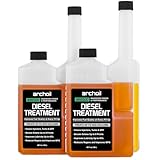
- EASY USE AT EVERY FILL-UP (2-Pack Value): Add directly to the fuel tank at each fill-up. Includes two 40 oz bottles – each treats up to 400 gallons (800 gallons total)
- FOR ALL DIESEL ENGINES: Suitable for use in all diesel vehicles and equipment - light-duty, heavy-duty, pickup, SUV, van, RV, etc. (including modern HPCR systems)
- IMPROVES LUBRICITY (ASTM D6079): Tested to improve lubricity by 43% to help protect fuel system components, including wear-sensitive parts like the CP4 pump
- BOOSTS CETANE UP TO +8: Raises cetane up to 8 points for faster ignition, smoother combustion, and improved drivability; many engines run best around 48–50 while pump diesel is often 40–45
- CLEANS INJECTORS: AR6500's detergent package removes injector deposits and restores spray patterns for improved atomization, supporting better performance and fuel economy
Crude oil is the biggest component, not the only driver
Crude is traded in a global market. Expectations about future production, consumption, economic growth, sanctions, shipping risk, and inventories can change crude prices before a physical shortage reaches a U.S. pump. A weaker dollar or stronger fuel demand abroad can also affect dollar-denominated crude prices.
When crude rises, refiners generally face a higher feedstock bill. But a refinery does not sell crude; it sells products. The amount it can charge for diesel depends on the value of diesel relative to crude and to gasoline, jet fuel, heating oil, and other outputs. A crude decline therefore does not guarantee an immediate or equal decline in diesel.
The diesel crack spread
Energy analysts often use the diesel crack spread as a proxy for a refinery margin. It compares the wholesale value of diesel with the cost of crude used to make it. If diesel prices rise faster than crude, the spread widens and the incentive or margin for producing diesel increases. A wider spread can lift wholesale diesel even when crude is flat. If the spread narrows, diesel may weaken despite firm crude.
Recommended Free Tools
Rank #2

- TWO-STEP FUEL SYSTEM RESET: Includes AR6400-D Diesel Fuel System Cleaner + AR6500 Diesel Treatment (40 oz) for a complete clean-and-maintain solution
- HOW IT WORKS: Use AR6400-D first for a deep clean (12 oz treats 30-40 gallons), then use AR6500 at every fill-up for ongoing protection (40 oz treats up to 400 gallons)
- FOR ALL DIESEL ENGINES: Suitable for all diesel vehicles and equipment, including modern HPCR systems
- CLEANS INJECTORS & RESTORES RESPONSE: Removes injector deposits and restores spray patterns for smoother running, improved response, and more efficient combustion
- IMPROVES LUBRICITY (ASTM D6079): AR6500 is tested to improve lubricity by 43% to protect fuel system components, including wear-sensitive parts like the CP4 pump
The spread is an indicator, not a literal invoice. Real refinery economics also depend on product yields, energy costs, transportation, crude grades, contracts, and whether a refinery can run at its desired rate.
Supply, inventories, and demand can amplify a crude move
Distillate supply
Diesel is part of the distillate market, which also supplies heating oil and other products. Refineries produce these fuels together, so a disruption at one plant can affect several markets. Unplanned outages, maintenance, reduced imports, strong exports, or competition for cargoes overseas can tighten available diesel in the United States.
Inventories as a buffer
Storage provides a cushion between production and consumption. When inventories are comfortable, wholesalers can draw down stocks during a short disruption. When stocks are low or falling, buyers compete more aggressively for each available barrel, and spot prices can rise quickly. An inventory number is meaningful only with its region, date, and seasonal comparison.
Rank #3

- EVERYDAY TREATMENT: Keep your diesel engine in top condition with our EDT that is designed to improve performance & maintain engine health. With regular use, you can ensure your engine runs smoothly & efficiently giving you peace of mind on the road.
- BOOST FUEL ECONOMY: Enhance your vehicle performance with our diesel additive that boosts cetane levels by up to 7 points resulting in better fuel economy & reduced maintenance costs. Say goodbye to poor acceleration & frequent trips to the mechanic.
- FUEL INJECTOR CLEANER: Cleans both internal & external injector deposits, enhances the lubricity of fuel to safeguard the fuel system components, such as the pump & injectors to increase engine longevity while also acting as a fuel system cleaner.
- PREVENTS RUST & CORROSION: While demulsifying moisture & adding stability to fuel by preventing oxidation & degradation, it also provides a reliable solution for protecting fuel systems from the damaging effects of rust & corrosion.
- EASY TO USE: Use at every fill-up, 1 oz. or 2oz. (for more cetane and lubricity boost) for every 25 gallons of diesel, this product is easy to use! Just pour it into your diesel fuel tank during your next fill up.
Seasonal and economic demand
Freight activity generally follows the economy, so trucking and industrial demand can raise diesel use during busy periods. Farm demand can increase seasonally around planting and harvest. In autumn and winter, heating-oil demand competes for distillate production and storage. Those uses share market infrastructure with diesel, so a cold-weather risk or a crop-season surge can affect prices even if road traffic is unchanged.
Free tools Windows power users keep installed
One-click scans. No signup required.
A dated 2026 example
In an analysis dated September 18, 2026, EIA reported that U.S. retail diesel averaged $6.29 per gallon on September 14. EIA attributed the high level to high crude prices and tight global distillate supply, and its outlook assumed global distillate production would remain below the prior year’s level in coming months. The same analysis reported average U.S. distillate production of 5.1 million barrels per day from January through August 2026, the highest since 2019; refinery utilization of 97% for the week ending September 11; and distillate inventories of 15.8 million barrels for that week, 13% below the 2021–2025 seasonal average. Those figures describe conditions at those dates, not a permanent price rule.
Why diesel costs differ by state, region, and station
Taxes
Taxes can create a large difference between otherwise similar wholesale prices. EIA’s January 2026 tax table lists a federal diesel tax of 24.40 cents per gallon and an average state diesel tax of 35.50 cents per gallon. The state figure excludes county and local taxes. EIA separately reported an average of 35.86 cents per gallon for state taxes and fees on another January 2026 diesel-pricing page; that is a different measure and should not be merged with the 35.50-cent figure.
Rank #4

- EASY USE AT EVERY FILL-UP: Add directly to the fuel tank at each fill-up. The long neck and measuring chamber make treating fuel simple. One 40 oz bottle treats up to 400 gallons
- FOR ALL DIESEL ENGINES: Suitable for use in all diesel vehicles and equipment - light-duty, heavy-duty, pickup, SUV, van, RV, etc. (including modern HPCR systems)
- IMPROVES LUBRICITY (ASTM D6079): Tested to improve lubricity by 43% to help protect fuel system components, including wear-sensitive parts like the CP4 pump
- BOOSTS CETANE UP TO +8: Raises cetane up to 8 points for faster ignition, smoother combustion, and improved drivability; many engines run best around 48–50 while pump diesel is often 40–45
- CLEANS INJECTORS: AR6500's detergent package removes injector deposits and restores spray patterns for improved atomization, supporting better performance and fuel economy
Because local taxes and fee structures vary, a state average cannot predict the charge at a particular station. Check the jurisdiction and the date when comparing tax numbers.
Distance and transportation
Moving fuel from a refinery or import terminal to a rack, bulk plant, or station adds trucking, pipeline, rail, marine, storage, and handling costs. EIA says about half of U.S. diesel production comes from the Gulf Coast. Markets farther from that supply, or separated by limited pipeline and marine capacity, can have a different cost base. West Coast markets are comparatively isolated and can be especially exposed to a local refinery outage.
Local station economics
A station’s price also reflects rent, labor, maintenance, payment fees, environmental compliance, delivery frequency, and the retailer’s margin. High-volume truck stops often spread fixed costs over more gallons and face intense competition, so they may post lower prices than a small, low-volume station. That is a tendency, not a guarantee: a remote truck stop with expensive deliveries can still be costly.
Best Value

- EVERYDAY TREATMENT: Keep your diesel engine in top condition with our EDT that is designed to improve performance & maintain engine health. With regular use, you can ensure your engine runs smoothly & efficiently giving you peace of mind on the road.
- BOOST FUEL ECONOMY: Enhance your vehicle performance with our diesel additive that boosts cetane levels by up to 7 points resulting in better fuel economy & reduced maintenance costs. Say goodbye to poor acceleration & frequent trips to the mechanic.
- FUEL INJECTOR CLEANER: Cleans both internal & external injector deposits, enhances the lubricity of fuel to safeguard the fuel system components, such as the pump & injectors to increase engine longevity while also acting as a fuel system cleaner.
- PREVENTS RUST & CORROSION: While demulsifying moisture & adding stability to fuel by preventing oxidation & degradation, it also provides a reliable solution for protecting fuel systems from the damaging effects of rust & corrosion.
- EASY TO USE: Use at every fill-up, 1 oz. or 2oz. (for more cetane and lubricity boost) for every 25 gallons of diesel, this product is easy to use! Just pour it into your diesel fuel tank during your next fill up.
Why wholesale changes and fuel deals reach the pump later
A spot price is the value for fuel available at a particular market point and time. A retail pump price may be based on inventory purchased earlier, a supplier’s posted rack price, a branded or unbranded formula, transportation charges, taxes, and the station’s pricing decision. Those clocks are not synchronized.
EIA explains the accounting effect this way: “Since there is typically a lag between when the spot price changes to when the retail price changes, the refining costs & profits component and the distribution & marketing costs & profits component can vary from month to month.” When spot prices rise, refining costs and profits can appear relatively large while distribution and marketing costs and profits appear relatively small. As retail prices later catch up, the distribution and marketing component increases and the refining component decreases. This describes how measured components shift during the pass-through; it is not a universal contract rule.
What can create the lag
- Inventory already purchased: A retailer may still be selling fuel acquired at an earlier rack or terminal price.
- Transport and scheduling: A truck, pipeline batch, or barge cargo can be in transit before a new wholesale quote is available.
- Pricing cadence: A supplier, fleet account, or station may reset prices daily, weekly, or on another schedule.
- Contract formulas: A deal may reference a benchmark, add a fixed margin, subtract a discount, and then add delivery and taxes. Each term can have its own effective date.
- Local competition: A station may delay a change to avoid losing volume, or move sooner to match a nearby competitor.
- Market direction: During a rapid rise, old low-cost inventory can temporarily hold down the pump price. During a rapid fall, higher-cost inventory can slow the decline.
EIA does not specify one standard number of days for spot-to-retail pass-through. The duration varies with the market, inventory position, logistics, and pricing policy. A claim that every deal reaches every pump on a fixed timetable is therefore too broad.
How to evaluate a supplier discount or fleet fuel deal
Separate the price named in the agreement from the amount ultimately paid for delivered fuel. Use the contract and invoices to answer each question below.
- Identify the benchmark. Is the price tied to a terminal rack, a published spot assessment, a futures-related index, or another reference? Note the exact location and product specification.
- Check the reset time. Record whether the benchmark is taken at a particular time, day, or averaging window, and when the new price becomes effective.
- Write out the formula. Show the benchmark, supplier margin, discount, freight, storage, environmental fees, taxes, and any minimum-volume or access charges separately.
- Map delivery points. A discount at the supplier’s terminal may not apply unchanged at a remote yard or station. Confirm who pays for trucking, demurrage, and emergency deliveries.
- Compare like with like. Use the same tax treatment, gallon measurement, payment terms, and product grade when comparing a deal with a posted pump price.
- Track invoices against the index. Keep the benchmark value, effective date, delivered quantity, and final per-gallon charge. This reveals whether a perceived delay is caused by the contract’s reset rule, transit time, or a billing error.
The general EIA evidence supports a lag between spot movements and retail prices. It does not establish the terms, timing, or savings of an individual supplier agreement; those come from the agreement itself.
A practical framework for comparing two diesel locations
| Question | What to compare | What a difference may indicate |
|---|---|---|
| Taxes | Federal, state, county, and local charges for the same date | A permanent price gap unrelated to crude or refinery margins |
| Supply access | Distance to refineries, import terminals, pipelines, and bulk plants | Higher freight or greater exposure to a constrained route |
| Regional operations | Nearby refinery outages, utilization, imports, exports, and inventories | A regional shortage or unusually wide diesel crack spread |
| Station costs | Volume, rent, labor, delivery frequency, and payment costs | Different retail margins even with the same wholesale source |
| Competition | Number and type of nearby sellers, including truck stops | Faster or slower retail response to wholesale changes |
What to monitor when prices are moving
- Crude benchmarks: Useful for the broad direction, but not a complete diesel forecast.
- Diesel crack spreads: Indicate whether diesel is becoming more or less valuable relative to crude.
- Distillate inventories: Compare the latest regional or national level with the appropriate seasonal average.
- Refinery utilization and outages: High utilization does not eliminate regional shortages if a key plant or transport link is offline.
- Imports, exports, and weather: International demand and heating conditions can tighten the same distillate pool used by road diesel.
- Your contract’s index and reset rule: This is the decisive information for predicting when a negotiated discount appears on your invoice.
The useful question is not simply “Did crude fall?” It is “Which component changed, where is the fuel priced, what inventory is being sold, and when does my agreement reset?” That sequence explains why two buyers can see different results from the same market move.
Quick Recap
Product prices and availability are accurate as of the date/time indicated and are subject to change. Any price and availability information displayed on Amazon at the time of purchase will apply.
The Tool Desk
Outbyte Driver Updater FREEFix the driver behind crashes, sound loss and screen glitchesFind Drivers →Outbyte PC Repair FREERepair Windows errors before they cause bigger problemsFix Now →
