Refresh rate is how often a monitor can update its image, response time is how quickly its pixels change state, and adaptive sync lets the monitor vary its update timing to follow the frame rate coming from the graphics system. They all affect motion, but they measure different parts of the display chain. A high number in one category cannot substitute for a weakness in another.
The three specifications at a glance
| Specification | What it measures | Typical unit | What it does not tell you |
|---|---|---|---|
| Refresh rate | How frequently the display updates | Hertz (Hz) | Whether the computer can render that many frames, or whether pixels transition cleanly |
| Response time | How long pixels take to change from one state to another | Milliseconds (ms) | Every possible color transition, overshoot, undershoot, or the setting used to obtain the figure |
| Adaptive sync (variable refresh rate) | Whether the display can change its refresh timing to match rendered frames | A supported range in Hz | That every frame-rate fluctuation or artifact will disappear, or that every port and resolution will support the same range |
Your graphics processor renders frames at a frame rate. The monitor refreshes at a refresh rate. Those rates can be equal, but they do not have to be. Adaptive sync is the link between them: within its supported operating range, the display waits for a rendered frame and refreshes when that frame is ready. VESA describes DisplayPort Adaptive-Sync as a way to change display refresh in response to the rendered frame rate, reducing tearing and stutter when the system is operating inside the display’s limits.
As an Amazon Associate I earn from qualifying purchases.
Refresh rate: how often the screen updates
What a hertz figure means
A refresh-rate specification is a cadence, not a promise about performance. A 60 Hz monitor can update up to 60 times per second; 144 Hz raises the potential cadence to 144 updates per second. The interval between updates is the reciprocal of the rate: about 16.67 milliseconds at 60 Hz, 6.94 ms at 144 Hz, and 3.57 ms at 280 Hz. These intervals describe when the display can begin a new scan, not how quickly the liquid-crystal or OLED pixels finish changing.
Outdated Drivers Are Slowing You Down
One free scan finds every outdated or missing driver and matches the right update for your exact hardware.Free scan · exact hardware matchWindows Errors? Fix Them Before They Spread
Repair common Windows errors and clear accumulated junk for a smoother, more stable PC - no reinstall needed.Free scan · no reinstallThe computer’s frame rate is independent. A game producing 90 frames per second cannot make a fixed 60 Hz panel show 90 complete updates per second. Conversely, a 240 Hz monitor does not create 240 frames per second if the game and graphics hardware produce 80. Extra refresh capacity can reduce the time available for each update and make the interface feel more immediate when the source can take advantage of it, but it cannot manufacture missing frames.
#1 Best Overall

- 32 Inch curved 1500R gaming monitor, 240Hz high refresh rate for gameplay
- Performance: 240Hz refresh rate, Full HD 1920*1080P resolution, 1ms MPRT response time, Built-in FreeSync technology, Anti-flicker, Low blue light
- Interfaces: HDMI up to 240Hz, DP 1.4 up to 240Hz, Earphone Jack, No speakers built-in. One DP cable comes with the package
- Display Colors: 125% sRGB color gamut, 16.7M display colors, 300 Nits brightness, HDR technology, 3500:1 contrast
- Ergonomic Design: 1500R curved, Tilt: -5°~15°, VESA Compatible (100 x 100mm), 178° Wide Viewing Angle.Recommended distance of playing games in this monitor is about 1.2 meters.
Why the maximum number is only part of the specification
- Check the refresh rate at the monitor’s native resolution. A panel may advertise a high figure only at a lower resolution.
- Confirm whether the highest mode is a factory default, an optional overclock, or a reduced-color mode.
- Verify that the cable and port support the desired resolution and refresh combination.
- Look at the operating system’s selected mode; a monitor connected at 144 Hz can still be running at 60 Hz until you change it.
VESA’s 2024 update to its Adaptive-Sync Display certification added optional Dual Mode testing and logo support for displays that offer different maximum refresh rates at different resolutions. The announcement used 4K/144 Hz and 1080p/280 Hz as examples, not as a universal promise for all monitors. Treat every resolution-and-refresh pairing as a separate operating mode.
Response time: how quickly pixels change
What the milliseconds describe
Response time is the duration of a pixel transition from one electrical or optical state to another. It is often expressed as gray-to-gray (GtG), but a monitor has many possible transitions, and they do not all take the same amount of time. A single “1 ms” label therefore cannot describe every transition or every scene.
Slow transitions can leave a visible trail behind a moving object, commonly called ghosting or smearing. Manufacturers use overdrive to push pixels toward their target state more aggressively. If overdrive is too strong, a pixel can pass its target and then correct itself. That produces bright or dark halos known as overshoot or inverse ghosting. If the drive is too weak, ordinary trailing remains. The best setting is usually a compromise that varies with refresh rate and frame rate.
Rank #2

- 27” 240Hz 1500R Curved FHD 1080P Gaming Monitor for Game Play.
- Prioritizes Gaming Performance: Up to 240Hz high refresh rate, more immersive 1500R Curvature, FreeSync, MPRT 1ms Response Time, Black Level adjustment(shadow booster), Game Modes Preset, Crosshair.
- Cinematic Color Accuracy: 130% sRGB & DCI-P3 95% color gamut, 4000:1 contrast ratio, 300nits brightness, HDR, Anti-flicker; Anti-Glare.
- Plug & Play Design: HDMI & DP1.4 & Audio Jack(No built-in speakers), durable metal stand, tilt -5°~15, VESA 100*100mm compatible.
- Warranty: Money-back and free replacement within 30 days, 1-year quality warranty and lifetime technical support. Pls contact SANSUI service support first if any product problem.
How to read a response-time claim
- Find out which transition standard was used, such as GtG, and whether the number is an average, a best case, or a percentile.
- Check the overdrive mode associated with the claim. “Fastest” is not automatically the clearest setting.
- Look for measurements across many transitions, not just the quickest result.
- Look for overshoot and undershoot data. VESA’s certification materials treat gray-to-gray response separately and impose limits on overshoot and undershoot because a fast figure alone does not establish clean motion.
Response time and refresh rate interact. At 144 Hz, a new refresh begins roughly every 6.94 ms. If a substantial portion of the pixels needs longer than that to settle, the panel can still show transition trails even though its refresh rate is high. Conversely, a panel with quick, well-controlled transitions can look clean at a lower refresh rate without being suitable for a high-frame-rate gaming workload.
Adaptive sync (variable refresh rate): letting the display follow the frame rate
How the timing works
With a fixed-refresh display, the panel starts updates on a regular schedule. If the graphics system finishes a new frame midway through that schedule, the monitor may begin displaying part of the new frame while the rest of the screen still contains the old one. That mismatch is the familiar horizontal tear. If the system instead waits for the next refresh, a frame can be shown twice or unevenly, which may feel like stutter.
Adaptive sync changes the display’s timing so it can refresh when a rendered frame is ready. VESA’s explanation describes the goal as matching display updates to content, reducing tearing and stutter inside the display’s supported range. It is a variable-refresh-rate mechanism, not a guarantee that every visual issue disappears. A game that repeatedly falls below the minimum supported rate, a poor overdrive mode, dropped frames, or an incompatible connection can still cause problems.
Rank #3

- Samsung’s 27” Odyssey G5 QHD Gaming Monitor delivers brilliant visuals for exhilarating gameplay that’s more immersive than ever before.
- QHD resolution (2560 x 1440) boasts incredibly detailed, pin-sharp images.
- With a wide 178° viewing angle, the IPS panel consistently delivers crisp, clear hues from various viewpoints.
- 180Hz Refresh Rate and 1ms response time (GtG) allow fast reactions for ultra-smooth gaming, plus G-Sync compatibility syncs the GPU and panel to reduce choppiness, screen lag, and image tearing.
- HDR10 provides brighter highlights and nuanced shadows for added depth.
Standards and branded implementations
AMD says its FreeSync technology uses standards including DisplayPort Adaptive-Sync and HDMI Variable Refresh Rate. Its current requirements call for a FreeSync-capable display and compatible graphics hardware with an appropriate driver. FreeSync tiers have different program requirements; the support material states that FreeSync Premium includes at least 120 Hz at minimum Full HD resolution and low-framerate compensation (LFC). Program requirements can change, so verify the exact model and current support information.
Quick wins for a faster PC:
Fix the driver behind crashes, sound loss and screen glitchesFind Drivers →Repair Windows errors before they cause bigger problemsFix Now →NVIDIA distinguishes displays with an integrated G-SYNC processor from G-SYNC Compatible displays. The latter are variable-refresh-rate displays that NVIDIA has validated for use with G-SYNC. The label does not prove that every connection, resolution, refresh rate, or operating-range combination will work on every graphics card. Compatibility remains a model-and-configuration question.
What happens outside the VRR range
Every adaptive-sync display has a minimum and maximum refresh rate. Above the maximum, the display behaves like a fixed-refresh panel unless you lower the workload or enable a different mode. Below the minimum, the display may leave adaptive sync, repeat frames, or use LFC if that feature is supported. LFC displays additional refreshes for a single rendered frame so the panel remains inside its operating window; it does not increase the game’s actual frame rate.
Rank #4
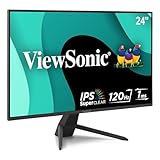
- High-Speed 120Hz Full HD IPS Display: Elevate your gaming experience with this 24 Inch 1080p (1920 x 1080) IPS monitor; featuring a smooth 120Hz refresh rate and 1ms (MPRT) response time, this display delivers the speed and clarity needed for competitive play
- Ultra-Smooth FreeSync Performance: Achieve tear-free and fluid gameplay with AMD FreeSync technology; this feature synchronizes your monitor's refresh rate with your GPU to eliminate screen tearing and stuttering for a more immersive and seamless gaming experience
- Enhanced Viewing Comfort: Minimize eye fatigue during intensive gaming sessions with integrated Flicker-Free technology and a Blue Light Filter; these eye care features provide a more comfortable viewing experience, allowing you to stay in the game for longer
- Customizable Game Mode Presets: Dominate the competition with an arsenal of pre-set visual modes tailored for FPS, RTS, and MOBA games; quickly optimize your screen settings to gain a competitive edge and enjoy the ideal contrast and color for any gaming genre
- Flexible Connectivity Options: Seamlessly connect your gaming console, PC, and laptop with versatile input options; this monitor features HDMI, DisplayPort, and VGA inputs, providing the reliable compatibility needed for all your favorite gaming and home devices
How the three specifications work together
| Situation | Refresh-rate effect | Response-time effect | Adaptive-sync effect |
|---|---|---|---|
| Desktop scrolling at a stable high frame rate | A higher rate can make scrolling updates more frequent | Fast, controlled transitions reduce visible trailing | Useful when frame production fluctuates; less important when it is perfectly stable |
| Game fluctuating between 70 and 110 frames per second | A 144 Hz panel has enough headroom for that range | Consistent transitions help keep moving edges clear | VRR can follow the changing cadence instead of forcing a fixed schedule |
| Game below the monitor’s minimum VRR rate | The panel’s maximum rate does not solve the low-frame-rate condition | Pixel behavior remains the same | LFC may help if the display and graphics system support it |
| Monitor running at a lower-resolution high-refresh mode | The advertised maximum may be available only in that mode | Response behavior may change with the selected overdrive mode | The supported VRR range can differ by resolution and input |
Think of the chain in order: the graphics system renders a frame; adaptive sync determines when the display presents it; refresh rate limits the available update cadence; response time determines how quickly each pixel settles after the update begins. A weakness at any stage can remain visible.
What to compare when choosing a monitor
Do not rank displays by the largest refresh-rate or smallest response-time number alone. Use the following checklist for the exact resolution and connection you intend to use.
| Comparison point | Questions to answer |
|---|---|
| Native resolution and refresh | What is the maximum refresh at the panel’s native resolution? Is another mode required for the headline figure? |
| VRR range | What are the minimum and maximum adaptive-sync rates at that resolution and input? |
| Low-frame-rate behavior | Is LFC specified? What happens when the frame rate drops below the minimum? |
| Response behavior | Are measurements provided across transitions, with overshoot and undershoot for each overdrive setting? |
| Connection and graphics compatibility | Does the chosen DisplayPort or HDMI input support the required mode, and is the GPU and driver compatible? |
| Evidence quality | Is the mode covered by independent testing or standards-based certification, or is it only an unqualified marketing claim? |
| Use case | Do you need high-frame-rate gaming, smooth general desktop use, or mainly video playback? |
VESA’s Adaptive-Sync Display Compliance Test Specification (CTS) is useful context because it tests more than a peak refresh figure. VESA said in 2022 that the suite contained more than 50 automated tests covering refresh rate, flicker, gray-to-gray response time, video frame drops, and video frame-rate jitter. Certification still does not replace checking your specific resolution, port, GPU, and driver, but it provides more evidence than an isolated number.
Best Value

- 【INTEGRATED SPEAKERS】Whether you're at work or in the midst of an intense gaming session, our built-in speakers provide rich and seamless audio, all while keeping your desk clutter-free.
- 【EASY ON THE EYES】 Protect your eyes and enhance your comfort with Blue-Light Shift technology. This feature reduces harmful blue light emissions from your screen, helping to alleviate eye strain during long hours of use and promoting healthier viewing habits.
- 【WIDEN YOUR PERSPECTIVE】Our sleek minimal bezel design ensures undivided attention. The nearly bezel-free display seamlessly connects in a dual monitor arrangement, delivering an unobstructed view that lets you focus on more at once, completely distraction-free.
Set up adaptive sync and verify the real operating mode
- Confirm the hardware path. Check the monitor manual for the input that supports adaptive sync, the supported VRR range, and the maximum refresh at your chosen resolution. Confirm that the graphics card and driver support the relevant standard or vendor implementation.
- Connect the correct port and cable. Use the input and cable rated for the desired resolution and refresh. If a laptop, dock, adapter, or receiver sits between the GPU and monitor, verify that device’s limits too.
- Select the intended refresh rate. In Windows, open Settings > System > Display > Advanced display, choose the monitor, and select the desired refresh rate. The labels can vary by Windows version and graphics driver.
- Enable VRR in the graphics control panel. AMD and NVIDIA expose adaptive-sync controls in their respective driver panels. Enable the feature for the connected display, then apply the setting. A monitor may also have a separate Adaptive-Sync, FreeSync, or VRR toggle in its on-screen menu.
- Choose a sensible overdrive mode. Start with the monitor’s middle or recommended response setting. Test moving objects at several frame rates; the fastest option can introduce overshoot.
- Verify the result. Use the monitor’s information screen or the operating system’s advanced-display page to confirm the active resolution and refresh. Then test a workload whose frame rate varies. Look for tearing, repeated-frame stutter, halos, and intermittent black screens rather than judging from a specification label.
Troubleshooting common problems
VRR option is missing
- Check that the monitor’s on-screen Adaptive-Sync or VRR setting is enabled.
- Try the display’s specified port; some models support VRR on one input but not another.
- Update the graphics driver and confirm the monitor is connected directly rather than through an incompatible adapter or dock.
- Recheck the selected resolution and refresh. A mode outside the monitor’s VRR range may hide the option.
The screen flickers or goes black
- Test a lower maximum refresh rate or a narrower resolution mode.
- Use a different certified cable and remove intermediate switches or receivers.
- Try a less aggressive overdrive setting; extreme pixel overdrive can make brightness changes more obvious.
- Check whether the problem occurs only near the top or bottom of the VRR range. That pattern points to a range or signal-limit issue rather than a universal panel failure.
Motion still looks smeared or shows bright trails
- Compare the monitor’s overdrive modes at the same frame rate.
- Check measurements for the transitions relevant to your content, not only the advertised best-case response.
- Make sure the source is actually running at the intended refresh rate; a 60 Hz setting can make a high-refresh monitor appear sluggish.
Tearing or stutter remains
- Check whether the rendered frame rate is outside the VRR range.
- Confirm that the driver control panel and the monitor menu both have VRR enabled.
- Look for dropped frames, frame-rate jitter, or a game setting that imposes a fixed frame cadence.
- If the frame rate exceeds the monitor’s maximum, cap it below that ceiling or reduce the workload so VRR can remain active.
Common misconceptions
“144 Hz means every game runs at 144 frames per second.”
No. It means the display can accept up to 144 refresh updates per second in that mode. The game’s frame rate depends on the graphics hardware, software settings, and scene complexity.
“1 ms response time is always better.”
No. The figure may describe one favorable transition or an aggressive overdrive mode. Clean motion requires fast transitions across the range, with controlled overshoot and undershoot.
“Adaptive sync eliminates all tearing and stutter.”
No. It coordinates refresh timing inside a supported range. Out-of-range frame rates, dropped frames, connection problems, and poor pixel tuning can still produce visible defects.
What’s actually slowing this PC down?
Pick the symptom - the matching free tool is one click away.
“FreeSync, G-SYNC, and DisplayPort Adaptive-Sync are identical.”
They address the same broad variable-refresh-rate problem, but their validation, hardware requirements, feature tiers, and supported combinations differ. Use the exact display, GPU, port, resolution, and driver information for your setup.
The practical takeaway
Start with the workload and native resolution, then choose a refresh rate that your graphics system can use. Confirm the full VRR range and connection requirements. Finally, evaluate response behavior—including overdrive artifacts—rather than treating a single millisecond claim as a complete motion-quality score. VESA’s certification approach, which separately examines refresh, flicker, gray-to-gray response, frame drops, and frame-rate jitter, reflects the same principle: a display is a system of interacting behaviors, not three isolated headline numbers.
Quick Recap
Product prices and availability are accurate as of the date/time indicated and are subject to change. Any price and availability information displayed on Amazon at the time of purchase will apply.

