Recommended Free Tools
Pollock is the most straightforward substitute for cod in a British recipe. Hake and coley are also good choices for many white-fish dishes, while haddock cooks in much the same ways as cod but has a sweeter flavour. Pick according to the recipe, the thickness and firmness of the fish available, and the source or fishery. Keep the original method as your starting point, but check the fish is fully cooked rather than transferring the cod cooking time automatically.
Choose the substitute by the dish
Cod is used in British cooking because it is a relatively mild white fish that works in breaded portions, battered fillets, pies, cakes, soups and other preparations. A replacement does not need to be identical in every respect. The useful question is whether it will behave similarly in the particular dish you are making.
As an Amazon Associate I earn from qualifying purchases.
| Substitute | Best fit | What to expect | What to check |
|---|---|---|---|
| Pollock | Fish fingers, battered fish and recipes asking for similar white fish | A practical, mild white-fish swap with direct support from an NHS fish-finger recipe | Portion size, thickness and doneness |
| Hake | Baked, pan-fried, poached and other cod-style fillet recipes | Firm, flaky, pale flesh with a subtle flavour | Current information for the stock or fishery supplying it |
| Coley | Dishes where a texture and flavour close to cod is useful | MSC describes it as similar to cod and haddock and often more affordable | Origin, fishery and current certification information |
| Haddock | Fish and chips, fish pie, fish cakes, soup and kedgeree | Can be cooked like cod, but is sweeter and comes from a smaller fish | Whether the sweeter flavour suits the sauce or seasoning |
For an intact fillet, compare the replacement with the cod specified in the recipe. A much thinner or thicker piece will not reach the same result on the same schedule. In a breaded, battered or mixed preparation, the fish is divided into portions or combined with other ingredients, so pollock or haddock is usually an uncomplicated choice.
Pollock: the easiest all-purpose swap
Pollock is the best first answer when a British recipe simply says “cod” or “white fish” and you need an ingredient that is easy to use without redesigning the dish. The NHS Healthier Families recipe for crunchy fish fingers specifically lists 500g of pollock, cod, skinless haddock or similar white fish. That is direct recipe evidence for using pollock in a breaded preparation rather than a theoretical similarity.
#1 Best Overall

- Ready-to-cook Pollock fillets
- Contains fish
- 0 g trans fat
- Source of protein
When pollock works especially well
- Homemade fish fingers and other breaded portions
- Battered fish where the fillet is cut into pieces
- Mixed dishes in which a mild white-fish flavour is not meant to dominate
- Recipes that already use the phrase “similar white fish”
How to use it
Cut or portion the pollock to match the cod pieces called for, keep the coating and oven or pan method from the original recipe, and inspect the centre before serving. The NHS fish-finger recipe bakes its shaped portions for 20 minutes at 200°C, 180°C fan, gas mark 6. That time and temperature belong to that specific NHS method and portion shape; they are not a universal conversion for every pollock fillet.
Hake: a cod-style fillet with a subtle flavour
Hake is a strong choice when the recipe presents cod as a whole fillet rather than as a minced or heavily coated filling. Great British Chefs describes hake as firm, flaky and pale, with a subtle flavour, and says it can replace cod or haddock. The Marine Stewardship Council also identifies hake as a cod substitute.
Good uses for hake
- Baking a fillet with a simple seasoning or sauce
- Pan-frying when you want a pale, flaky fish
- Poaching in a broth, milk-based preparation or other gentle liquid
- Other recipes that use cod as the main intact portion
Use the cod recipe as the framework, but compare the actual hake portion with the original fish. Follow the recipe or packet directions for that cut and method, then check the centre rather than assuming cod and hake will finish at exactly the same time.
Hake and sourcing
Hake is not automatically sustainable simply because it is an alternative to cod. Great British Chefs advises checking current sustainability information for hake stocks. Look for the origin and fishery where those details are available, and treat any certification as product-specific rather than a blanket statement about every hake sold.
Coley: similar texture and flavour, often a lower-cost option
Coley is useful when the recipe depends on a fish that feels and tastes close to cod or haddock. The MSC describes coley as similar to cod and haddock in texture and taste and notes that it is often more affordable. That makes it a sensible choice for pies, cakes, soups and other dishes in which the fish is flaked or folded through a sauce.
Where coley fits
- Fish pie fillings where the fish is surrounded by sauce and topping
- Fish cakes in which the cooked fish is mixed with potato or another binder
- Soups and stews that call for a mild, flaky white fish
- Any recipe in which a cod-like texture matters more than an exact flavour match
If the recipe calls for large cubes, cut the coley to a similar size so the pieces cook at a comparable rate. If it is sold in thin portions, begin checking earlier than the recipe’s cod timing; if it is markedly thick, allow more time. The safe approach is to follow the instructions supplied for the fish and verify doneness in the centre.
Rank #2
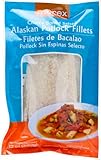
- Merex Pollock Fillets
Haddock: familiar, but sweeter than cod
Haddock can be cooked in the same broad ways as cod, but it is not flavour-neutral. BBC Food describes haddock as smaller than cod and sweeter in flavour. It lists fish and chips, pies, cakes, soups and kedgeree among its uses, so it is especially suitable for established British recipes that already accommodate a more distinctive fish taste.
Choose haddock when the recipe can welcome more flavour
- Fish and chips, where the fish is paired with batter and strong accompaniments
- Fish pie, fish cakes and soup, where seasoning and sauce are part of the finished dish
- Kedgeree, where the sweeter profile can work with the dish’s spices and rice
Use the same preparation style as the cod recipe, but taste the sauce or seasoning before serving and consider whether its sweetness changes the balance. Do not treat “can be cooked like cod” as a promise of identical flavour or identical timing.
Match the fish to the recipe format
Fish fingers and breaded portions
Pollock is the most directly evidenced choice for homemade fish fingers, with skinless haddock also named alongside cod in the NHS recipe. Hake or coley can work when cut into similar portions, but the coating, shape and thickness still determine when the centre is ready. If the recipe uses 500g of fish, replace it by weight first, then divide it into pieces of the same approximate size.
Battered fish and fish and chips
Pollock and haddock are practical choices for battered portions. Haddock brings a sweeter flavour; pollock is the more neutral swap. Hake can also suit a cod-style fillet preparation because of its firm, flaky flesh. Keep the batter and cooking method from the recipe, but check the thickest piece rather than relying only on the stated time.
Fish pie
Haddock, coley, hake and pollock can all be considered where a recipe asks for cod in a sauced filling. Coley is a particularly logical option when you want a texture and flavour close to cod or haddock. Cut every fish in the mixture to comparable sizes so one species does not remain undercooked while a thinner piece becomes overdone.
Free tools Windows power users keep installed
One-click scans. No signup required.
Fish cakes
Haddock and coley are established fits for fish cakes, and pollock is a practical alternative when the recipe asks for a mild white fish. Because the fish is combined with other ingredients, the exact species has less visual importance than the cooked fish’s texture and the seasoning. Cook the fish according to the recipe before mixing if that is what the method specifies, then check the finished cakes as directed.
Rank #3

- Wild Alaska Pollock fillets
- Hand-cut natural Pollock
- Dipped in beer-flavored batter
- Individually frozen to preserve freshness
Soup and kedgeree
Haddock is specifically listed by BBC Food for soups and kedgeree. Hake or coley can suit a soup in which flaky white fish is required, while pollock is useful where a restrained flavour is preferred. Add the replacement at the stage the recipe gives for cod and verify that the centre is cooked before serving.
How to substitute without changing the recipe blindly
- Identify the cod’s role. Decide whether it is a whole fillet, a battered portion, a breaded finger, or fish mixed into a pie, cake or soup. This determines how closely texture and appearance need to match.
- Choose the closest practical option. Start with pollock for a general white-fish swap, hake for a firm flaky fillet, coley for a cod-like texture and flavour, or haddock when a sweeter profile is acceptable.
- Match the quantity. Replace the cod by the weight stated in the recipe where possible. Keep portions similar in thickness and shape rather than using one very thick piece and several thin ones.
- Keep the original seasoning initially. Make the recipe as written, then account for haddock’s sweeter flavour or the particular strength of the sauce. A substitution is easier to judge when several other variables have not changed.
- Follow the recipe or packet method. Use the stated oven, pan, poaching or steaming instructions as the starting point. A cod timing is not a guaranteed timing for another species or cut.
- Check the thickest portion. Look at the centre of the largest piece and use a clean food thermometer if you have one. Do not judge safety from a timer alone when the fish differs in size or thickness.
- Serve only when fully cooked. If the centre is not done, continue cooking and recheck rather than trying to compensate by changing the species next time without considering the cut.
Cooking time and food-safety checks
The Food Standards Agency advises following recipe or packet instructions carefully, checking that food is cooked completely and considering a clean food thermometer. Its guidance lists these centre-temperature combinations: 60°C for 45 minutes, 65°C for 10 minutes, 70°C for 2 minutes, 75°C for 30 seconds, or 80°C for 6 seconds.
Those combinations describe time and temperature in the centre of the food; they do not create one universal oven time for cod, pollock, hake, coley or haddock. Thickness, portion shape, starting temperature and cooking method all affect how quickly the centre reaches the required condition. Use the recipe or packet directions for the specific fish, check the thickest piece, and follow the FSA’s approach rather than carrying over a timer without checking.
If the outside is done but the centre is not
- Continue cooking using the recipe’s method, checking at short intervals.
- If pieces are uneven, separate the thinner cooked pieces and return the thicker one to the heat.
- For a thermometer reading, measure the centre of the thickest portion with a clean probe.
- Do not rely on the colour of the coating or sauce to establish that the fish itself is cooked.
Sourcing and sustainability: check the product, not just the species
A species name alone does not establish that a particular purchase is sustainable. The MSC’s UK seafood guidance recommends looking for its blue ecolabel on products certified to its environmental standard. The same guidance presents hake as a cod substitute, coley as similar to cod and haddock, and Alaska pollock as versatile, but those descriptions are not a guarantee for every fishery or product.
When buying any substitute, check the origin, fishery information and current product details where they are provided. This is especially important for hake, for which Great British Chefs advises checking current sustainability information for the relevant stocks. A certified product and a product without stated certification should not be treated as equivalent merely because they carry the same species name.
Quick decisions when the recipe is already under way
The recipe says “white fish” and gives no species
Use pollock first. Hake, coley or haddock can also fit, provided the portion size and cooking method are suitable.
Rank #4

- One 32 ounce bag of Farm-Raised Tilapia Boneless Skinless Fillets
- Some of your favorite Amazon Fresh products are now part of the Amazon Grocery brand! Although packaging may vary during the transition, the ingredients and product remain the same. Thank you for your continued trust in our brands.
- No added phosphates
- Responsibly sourced
- 23g protein per serving
You have only haddock
Use it in fish and chips, pie, cakes, soup or kedgeree, or anywhere the sweeter flavour will not upset the dish. Cook it by the recipe’s method and check the centre.
What’s actually slowing this PC down?
Pick the symptom - the matching free tool is one click away.
You have thick hake fillets
Use hake for a baked, pan-fried or poached cod-style dish. Match the portions as closely as possible and do not assume the cod time is exact for the thicker fillet.
You want the closest cod-like character
Choose coley when its available texture and flavour suit the dish, or hake when a firm, flaky, pale fillet is the main requirement.
You are buying with sustainability in mind
Look for the MSC blue ecolabel and read the current origin and fishery information. Do not infer sustainability from the species name alone.
Bottom line
For most British recipes, replace cod with pollock in the same general quantity and preparation. Choose hake for a firm, flaky fillet, coley for a cod-like texture and flavour, and haddock when its sweeter taste suits the dish. Keep the original recipe as a starting point, match the fish’s thickness to the stated portions, and verify that the centre is fully cooked using the recipe or packet instructions and, where useful, a clean thermometer.
Quick wins for a faster PC:
Scan for outdated or missing drivers - takes under a minuteDriver Scan →Clear out junk files and repair common Windows errorsFree Scan →Quick Recap
Product prices and availability are accurate as of the date/time indicated and are subject to change. Any price and availability information displayed on Amazon at the time of purchase will apply.

