Quick wins for a faster PC:
Repair Windows errors before they cause bigger problemsFix Now →Scan for outdated or missing drivers - takes under a minuteDriver Scan →Clear out junk files and repair common Windows errorsFree Scan →Aerogel is not one uniformly fragile material. A conventional silica aerogel monolith is a rigid-looking, extremely porous network that can fracture during cutting, shipping or installation. Fiber-reinforced blankets, polymer-reinforced silica and polymer-based aerogels change the mechanical behavior, but each introduces trade-offs. The safest way to handle aerogel is to choose the right form first, then follow the exact product’s support, temperature and safety instructions rather than treating every aerogel as a tough solid or applying an improvised coating.
Why aerogel is so brittle
Silica aerogel begins as a wet gel. During drying, the liquid is removed while the solid network is preserved; maintaining that network is the step that makes an aerogel different from other porous materials, as NASA research chemical engineer Mary Ann Meador explains. The result is a material that is mostly empty space rather than a dense block. NASA descriptions put conventional silica aerogel at about 95% porosity.
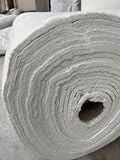
As an Amazon Associate I earn from qualifying purchases.
That open network gives aerogel very low density and excellent thermal insulation, but it leaves little solid cross-section to carry impact, bending or concentrated loads. A piece can look dimensionally solid while behaving more like a delicate three-dimensional skeleton. A grip at one corner, a tight fastener, vibration during transport or a blade that catches an edge can create a crack that travels through the monolith.
Do these 3 things before closing this tab:
1Clear out junk files and repair common Windows errors2Fix the driver behind crashes, sound loss and screen glitches3Repair Windows errors before they cause bigger problemsNASA identifies brittleness as a practical reason aerogels are difficult to process and handle. The limitation is not simply that an aerogel is “weak”: the structure can also shrink while it is being made, and further shrink when exposed to high temperatures in service. Those dimensional changes can generate cracks or pull an encapsulated object away from its intended fit.
#1 Best Overall

- Aerogel Insulation Hydrophobic Mat of High Temp.
- The mat is made of high quality aerogel, size: 12’’x12’’, thickness:10mm(3/8inch)
- This version of Spaceloft aerogel is great for Cryogenic temperatures of -328°F to 1200°F
- Unless it is rated for high temperature, don't go putting a torch to your Aerogel
- It is Hydrophobic, which means it will not absorb water. So, moisture from condensation is not a problem.
Which kind of aerogel are you handling?
Before deciding how to protect or cut the material, identify its construction. The word aerogel covers several forms whose flexibility, dusting and strength differ substantially.
| Form | Typical handling behavior | Where it fits | Main cautions |
|---|---|---|---|
| Silica monolith | Rigid, lightweight and highly porous; prone to fracture from bending, point loads and rough processing. | Applications needing a self-supporting, often transparent or precisely shaped piece. | Needs careful support, packaging and controlled processing; shrinkage and heat can cause cracking. |
| Fiber-reinforced silica blanket | A non-woven fiber matrix gives the silica network structure and allows wrapping and cutting. | Insulating pipes, surfaces and irregular shapes where conformability matters. | More robust than a monolith, but not indestructible; exposed edges may still shed dust. |
| Polymer-reinforced silica | Polymer added to the silica network can improve strength and flexibility. | Parts that need more toughness while retaining some silica-aerogel properties. | Performance depends on formulation; flexible silica composites can remain brittle and dusty. |
| Polymer-based aerogel | Uses a polymer network rather than conventional silica as the primary solid skeleton. | Designs prioritizing mechanical resilience or flexibility. | Thermal, chemical and dimensional properties are grade-specific, not interchangeable with silica. |
NASA’s 2012 Tech Brief on polyurea-based aerogel monoliths and composites discusses polymer alternatives, while a NASA-hosted paper on insulation blankets describes the fiber matrix that lets a composite bend and conform. Do not infer a monolith’s behavior from a blanket, or a polymer aerogel’s behavior from silica.
What brittleness means during real work
Processing and cutting
Machining, drilling and trimming introduce concentrated forces. A rigid monolith can chip at a cut line or split away from a hole. If a design requires a precise shape, specify the dimensions and openings before production whenever possible; removing material later is riskier than receiving a finished part. A blanket is generally easier to cut to shape because the fiber matrix holds the composite together, but the cut edge can still release particles.
The Tool Desk
Outbyte PC Repair FREERepair Windows errors before they cause bigger problemsFix Now →Outbyte Driver Updater FREEScan for outdated or missing drivers - takes under a minuteDriver Scan →Rank #2

- 30' = 142.5sq/ft, each roll is 57" wide x 30' long
- The light weight and compression strength of Spaceloft make it an excellent option for areas where weight and space may be issues.
- It is hydrophobic, which aids in preventing corrosion under insulation (CUI), which could lead to costly repairs.
- Application temperatures are greater than Cryogel Z with a range from -460°F (-270°C) to 390°F (199°C)
- Delivers up to 5 times the insulating performance of competing products.
Transport and installation
Shock and vibration can damage a monolith even when no single impact is obvious. Support the full area instead of suspending a piece by a corner, prevent it from sliding in its package, and keep clamps or fasteners from creating point loads. Let the supplier define acceptable bending radius, compression and mounting method for a blanket or composite. “Flexible” describes the format, not unlimited stretch or repeated folding.
Dust and particle shedding
NASA records a design goal for aerogels that are more flexible and do not shed insulation particles. The same technical discussions caution that some flexible silica composites retain a brittle, dusty character. Dust behavior varies with binder, fiber, surface treatment and whether an edge is exposed. There is no single universal personal-protection or cleanup protocol for every formulation, so use the product’s safety data sheet and installation instructions for cutting, ventilation, housekeeping and disposal.
Heat, shrinkage and cracking
A 2008 NASA Tech Brief reports shrinkage during production and additional shrinkage at high temperatures in use. In an encapsulation, even modest dimensional change can create gaps or stress concentrations; cracking can then compromise the insulation or the enclosure. Composite formulations in that brief were developed to reduce shrinkage and the resulting cracks, but the report does not establish one temperature limit for all aerogels. Obtain the exact grade’s continuous and short-term temperature ratings, dimensional-stability data and heating-rate limits.
Rank #3

- Innovative Nano Materials: Our Nano Fireproof Insulation Blanket is crafted from cutting-edge nano materials, offering superior fire resistance, thermal insulation, and water repellency. It’s your go-to solution for keeping your projects safe and efficient!
- Extreme Temperature Resistance**: Trust in a product that withstands extreme temperatures up to 1200°F (650°C). This Flame Retardant blanket ensures your industrial pipes and equipment are protected from heat damage, making it perfect for high-temperature applications.
- Hydrophobic and Soundproof**: Not only does this Aerogel Insulation provide excellent thermal insulation, but it’s also hydrophobic and soundproof! Say goodbye to moisture issues and noisy environments in your industrial spaces with our versatile insulation blanket.
- Easy Installation: Lightweight and easy to cut and sew, our insulation blanket saves you time and labor during installation. Whether you’re working on pipes, tanks, or industrial furnaces, you'll appreciate how effortlessly it fits to various shapes and sizes!
- Perfect for Various Uses: Designed for a wide range of applications, from power plants and military ship bulkheads to high-speed trains and lifeboats.
How reinforcement changes the trade-off
Fiber-reinforced blankets
A blanket combines silica aerogel with a non-woven fiber matrix. The fibers provide a handleable carrier, so the material can be wrapped around a pipe or vessel and cut into panels. NASA describes these blankets as more robust than monolithic silica aerogel. A September 2005 NASA Tech Brief reports a fiber-reinforced silica composite as about ten times as stiff and strong as unreinforced aerogels; that comparison is specific to the tested composite and should not be applied to every blanket or grade. The record is available at NASA’s technical-report entry.
Free tools Windows power users keep installed
One-click scans. No signup required.
Blankets solve a format problem, not every materials problem. Compression, abrasion, repeated flexing, moisture, edge exposure and high temperature can still matter. A blanket may need a facing, jacket or mechanical support chosen for the service environment, and the added layer can affect heat flow and installation clearances.
Polymer-reinforced silica
Polymer reinforcement adds a tougher phase to the silica network. In a NASA article, Meador describes a polymer-reinforced aerogel at the same density as silica aerogel as about two orders of magnitude stronger. The comparison is a source-specific result, not a guarantee for all polymer contents, densities or test directions. The polymer can also change temperature capability, optical appearance, chemical resistance and aging behavior.
Rank #4
Polymer-based aerogels
Polymer-based aerogels replace the conventional silica skeleton with a polymer network. NASA gives an 85–95% porosity range for polymer-based aerogels in the cited discussion. Their purpose is to obtain more flexibility or toughness, but the resulting material should be evaluated as its own product family. A polymer aerogel may have different flammability, solvent compatibility, thermal-expansion and long-term-aging limits than silica.
Practical handling procedure for a fragile monolith
The sequence below is a conservative framework, not a substitute for the manufacturer’s instructions. Product-specific documentation controls if it specifies a different support, tool, enclosure or exposure limit.
Recommended Free Tools
- Identify the exact formulation. Record whether it is silica, a fiber composite, polymer-reinforced silica or a polymer aerogel. Get the technical data sheet and safety data sheet, including density, dimensions, allowable compression, temperature range and dust controls.
- Inspect before moving it. Look for hairline cracks, chipped edges, powder accumulation or distortion. Photograph damage and ask the supplier whether a compromised piece remains usable; do not assume a crack is cosmetic.
- Plan support for the whole piece. Use a close-fitting tray, cradle or backing that distributes contact. Keep unsupported spans short and eliminate rocking. Do not lift a monolith by a thin tab, corner or attached wire.
- Control the work area. Limit drafts and vibration, clear the route before lifting, and keep food, electronics and other contamination-sensitive items away from cutting or unpacking. Follow the product’s stated ventilation and protective-equipment requirements rather than adopting a universal rule.
- Move slowly with two-handed support. Keep the piece level, avoid twisting and never drag it across a bench. For larger parts, use a second person or a fixture so the load is supported throughout the transfer.
- Use the supplier-approved cutting method. Mark the cut while the part is fully supported. A tool that is acceptable for one composite may crush another; do not drill, saw or snap a monolith based on its appearance. Capture or clean particles exactly as the safety documentation directs.
- Install without point loads. Prefer a distributed retainer, compliant pad or designed pocket. Tightening a clamp until the piece cannot move can crush the porous network. Allow for specified thermal expansion or contraction and avoid forcing a shrunken part into an undersized cavity.
- Check after heating or cycling. Inspect for new cracks, gaps, powder or loss of fit after the first thermal exposure and after significant vibration. Stop using a piece that has fractured into an unsupported or contaminated location until the application owner evaluates it.
Can you coat a brittle aerogel?
A protective skin can reduce handling damage and particle release, but coating a monolith is a specialized materials process. NASA’s work on protective skins describes applying a polymeric outer layer under controlled conditions. The process matters because liquid contact can collapse an aerogel’s pore structure; an arbitrary brush-on paint, solvent or sealant can destroy the very properties the monolith was selected to provide.
Best Value

- This Aerogel Insulation is New Surplus and was manufactured by Aspen Aerogels
- The light weight and compression strength of Spaceloft make it an excellent option for areas where weight and space may be issues.
- It is hydrophobic, which aids in preventing corrosion under insulation (CUI), which could lead to costly repairs.
- Application temperatures are greater than Cryogel Z with a range from -460°F (-270°C) to 390°F (199°C)
- Delivers up to 5 times the insulating performance of competing products.
Use a skin only when its chemistry, viscosity, wetting behavior, cure temperature, thickness and adhesion have been validated for the exact aerogel. Confirm that the coating does not block required porosity, transparency, outgassing performance or thermal resistance. If a supplier does not provide a qualified coating method, a designed enclosure, mesh restraint or composite format is usually a safer integration path than experimenting on the finished monolith.
Independent reader supportYour contribution helps us test, update, and keep practical guides available for everyone.Choosing a format for the application
Compare candidate materials against the conditions they will actually face, not against a generic label such as “aerogel.”
| Decision question | What to verify | Likely implication |
|---|---|---|
| Must the part remain a rigid, transparent or precisely shaped monolith? | Required optical, dimensional and structural properties. | Plan a cradle, enclosure or qualified protective skin; accept more delicate handling. |
| Must it wrap around an irregular object? | Minimum bend radius, compression recovery and seam behavior. | A fiber-reinforced blanket may be more practical than a monolith. |
| Are particles unacceptable? | Dusting tests, edge treatment, facing and cleaning requirements for the exact grade. | Select an encapsulated or faced product if validated; do not assume “flexible” means dust-free. |
| Will it see high temperatures or cycling? | Continuous and peak temperature, shrinkage, cracking and thermal expansion data. | Choose a formulation tested for that cycle and leave designed clearance. |
| Will chemicals, moisture or solvents contact it? | Compatibility of the aerogel, binder, fibers, skin and adhesive. | A polymer or coating that improves toughness may introduce chemical or temperature limits. |
| Is field cutting unavoidable? | Approved tools, dust controls, tolerances and edge-sealing method. | Favor a blanket or pre-cut composite when the supplier can provide it. |
What the published NASA work actually establishes
- NASA’s aerogel materials coverage describes conventional silica aerogel as about 95% porous and documents efforts to make it more flexible and less dusty. Its quoted strength comparison—about two orders of magnitude for a polymer-reinforced material at the same density—applies to that tested comparison.
- The September 2012 NASA Tech Brief on polyurea-based aerogel monoliths and composites treats brittleness, flexible fiber-reinforced blankets and polymer alternatives as separate engineering approaches.
- The September 2008 NASA Tech Brief on improved silica aerogel composites describes production shrinkage, additional high-temperature shrinkage and cracking that can complicate encapsulation.
- A NASA-hosted cryogenics paper explains how the non-woven fiber matrix gives a blanket flexibility and distinguishes it from monolithic silica aerogel.
- NASA’s February 11, 2016 “Flexible Aerogel” article summarizes the move toward blankets that are easier to handle, while still reflecting the underlying brittleness problem.
James Fesmire of NASA’s Kennedy Space Center called the flexible blanket a way to open new design possibilities because of its environmental and mechanical characteristics. That is a historical, attributed statement about the blanket concept—not a universal performance rating for every product. The 2008 discussion is available at NASA Spinoff’s aerogel-insulation chapter.
Common mistakes and better choices
- “It looks solid, so I can clamp it tightly.” A point load can crush the porous network. Use distributed support and the specified compression limit.
- “A blanket cannot break.” Fibers improve handling, but the silica composite can still crack, shed particles or fail under abrasion and excessive bending.
- “One temperature rating covers aerogel.” Ratings depend on formulation, binder, facing, atmosphere and exposure time. Use the exact grade’s data.
- “Any sealant will stop dust.” Liquid can collapse an aerogel. Use only a qualified skin or a mechanically designed enclosure.
- “A universal PPE recipe is sufficient.” Dust and chemical hazards differ by product. Follow the supplied safety documentation and local requirements.
- “A crack is harmless if insulation still works.” Cracking can spread during handling or heating and can create gaps in an encapsulated assembly. Have the application owner assess damaged parts.
Bottom line for handling brittle aerogel
Start by matching the material form to the job. Use a fiber-reinforced blanket when wrapping, cutting and routine installation matter more than preserving a rigid monolith; consider polymer-reinforced or polymer-based aerogels when the design needs greater toughness, while checking their different thermal and chemical limits. If a silica monolith is unavoidable, support it continuously, avoid point loads and uncontrolled liquids, control dust according to the product documentation, and verify shrinkage and cracking behavior over the full temperature cycle. Brittleness is manageable when it is treated as a design constraint rather than discovered after the piece breaks.
Quick Recap
Product prices and availability are accurate as of the date/time indicated and are subject to change. Any price and availability information displayed on Amazon at the time of purchase will apply.

