A network-attached storage (NAS) device can become your household’s central file cabinet, photo archive, media library, and backup destination. Computers, phones, televisions, and other network devices can reach the same files without passing USB drives around. NAS software can also stream media, synchronize folders, keep file versions, and copy data to a second destination.
Those capabilities are not automatic guarantees. Playback depends on codecs, client devices, network capacity, and the NAS processor; sharing depends on accounts and permissions; and a NAS is not a backup of itself unless your data is copied somewhere else. The useful question is therefore not simply whether a NAS is “powerful,” but whether the model, drives, applications, and backup plan match the jobs you need it to perform.
As an Amazon Associate I earn from qualifying purchases.
What a home NAS actually does
A NAS is a storage computer connected to your home network rather than directly to one PC. You install compatible hard disk drives (HDDs) or solid-state drives (SSDs), create storage volumes and shared folders, then let approved devices access those folders over the network.
Recommended Free Tools
For a household, that can mean one place for documents, photos, music, movies, schoolwork, and other shared material. Windows, macOS, Linux, mobile devices, browsers, smart televisions, and game consoles may use different apps or network protocols to reach the same underlying data. Synology describes this model as “One place for the household’s files, photos and media, accessible from every device on your network.”
#1 Best Overall

- Secure private cloud - Enjoy 100% data ownership and multi-platform access from anywhere
- Easy sharing and syncing - Safely access and share files and media from anywhere, and keep clients, colleagues and collaborators on the same page
- Automated Backup Protection - Set-and-forget backups for Macs, PCs and mobile devices to multiple destinations including cloud and external drives
- Home Security System - Record and monitor your property 24/7 with support for multiple IP cameras and remote viewing
- 2-Year Warranty - Reliable hardware backed by Synology's expert customer support team and ongoing software updates
A NAS can perform several different jobs:
- Central storage: files live in a shared location instead of being scattered across laptops and removable drives.
- File server: network shares let computers open, edit, and save files centrally.
- Media server: compatible clients can browse and play music, photos, and video.
- Sync and versioning system: supported software can synchronize folders and retain earlier file versions.
- Backup target: computers and phones can send backups to the NAS.
- Secondary backup source: the NAS can copy its own data to USB storage, cloud storage, or another NAS.
These are separate functions. A product that serves files well may not transcode demanding video well, and a snapshot is not the same thing as an off-device backup.
Home media: serving a file is different from transcoding it
Keeping one media library
Instead of storing separate movie, music, and photo collections on every device, you can place them in organized NAS folders. Synology’s Audio Station is designed to manage and stream music, while its Media Server can present media to DLNA-compliant devices. The company’s home file-server material also describes playing movie, music, and photo libraries on televisions, tablets, and phones.
On a home network, a television or console that supports DLNA/UPnP can discover a media server and browse available folders. A phone or tablet may use a vendor app or a compatible media application. The NAS is supplying the file; the client remains responsible for decoding formats it supports.
Quick wins for a faster PC:
Scan for outdated or missing drivers - takes under a minuteDriver Scan →Repair Windows errors before they cause bigger problemsFix Now →Direct play versus transcoding
Direct play means the client can decode the stored file as-is. This is the simplest case: the NAS reads the file and sends the data across the network. Transcoding means the NAS converts the audio or video into another format or bitrate while it is being watched. Transcoding requires more processor capacity and depends on the NAS software, codecs, and the particular file.
Do not assume that a NAS can convert every video in real time, or that a model advertised as a media server will deliver smooth 4K or remote playback. Before buying, check the selected model’s processor and supported packages, the playback device’s codec support, subtitle and audio requirements, and whether your network can sustain the media’s bitrate. A file that plays directly on a television may require conversion on an older phone or over a slower connection.
Rank #2
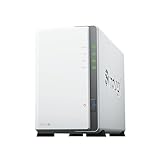
- Store, share, and protect Configure your DS223j to manage all your documents, photos, and other files, or protect your physical assets with professional video surveillance.
- CPU Model Realtek RTD1619B, System Memory 1 GB DDR4 non-ECC
- Safely access and share files and media from anywhere, and keep clients, colleagues and collaborators on the same page
- 1x RJ-45 1GbE LAN-Port, 2x USB 3.2 Gen 1 Port
- Synology DS223j 2-Bay 8TB Bundle with 2x 4TB Seagate IronWolf
Questions to answer before moving a library
- Which devices will play the files: smart TVs, streaming boxes, consoles, phones, tablets, or computers?
- Do those devices support the video containers, codecs, audio formats, and subtitles in your collection?
- Will everyone watch inside the house, or is remote access required?
- Will more than one person stream at once?
- Does the NAS application offer the indexing, user access, and playback features you need?
These checks prevent a common mistake: choosing storage capacity first and discovering later that the NAS cannot perform the required conversion.
File sharing for a household
Network shares and protocols
A NAS can expose shared folders using standard network services. Synology documentation lists SMB, FTP, NFS, and rsync, with SMB/CIFS being the usual choice for Windows, macOS, and Linux desktop access. In Windows, a share can appear in File Explorer or be mounted as a network drive; macOS and Linux provide equivalent ways to mount a network folder.
Do these 3 things before closing this tab:
1Fix the driver behind crashes, sound loss and screen glitches2Clear out junk files and repair common Windows errors3Scan for outdated or missing drivers - takes under a minuteThis arrangement avoids emailing duplicate attachments or carrying a removable drive from room to room. A family can work from one current copy of a tax document, photo archive, or project folder while keeping access rules in one administration panel.
Users, groups, and permissions
Do not make every folder public by default. Create individual accounts, place people into groups where appropriate, and grant each group only the folders it needs. For example, a shared “Family Photos” folder might be readable by everyone, while an “Accounts” folder is limited to adults. Administrative rights should be reserved for the people responsible for updates and recovery.
Permissions can apply at the shared-folder level and, depending on the software, to subfolders and individual files. Test access with a non-administrator account: a permission that looks correct in the control panel is useful only if the intended user can actually open, create, modify, and delete the expected files.
Rank #3

- One Place for All Your Data - Consolidate scattered files from multiple computers, phones and external drives into one accessible hub with 100% ownership
- Professional File Collaboration - Share projects with clients, sync documents across teams and maintain version control without Dropbox fees
- Automated Backup Protection - Set-and-forget backups for Macs, PCs and mobile devices to multiple destinations including cloud and external drives
- DIY Surveillance System - Transform IP cameras into a professional monitoring solution with motion alerts, recording schedules and remote viewing
- 2-Year Warranty - Reliable hardware backed by Synology's expert customer support team and ongoing software updates
Local access is not the same as remote access
Sharing a folder inside your home network is different from making it reachable over the internet. Remote access requires deliberate configuration, authentication, and ongoing security maintenance. Never interpret the presence of a remote-access feature as permission to expose SMB or an administration interface directly to the public internet. Use the vendor’s supported remote-access method, strong unique passwords, multi-factor authentication where available, current firmware, and the narrowest permissions that meet your need.
PC Slower Than It Used to Be?
A free scan shows the junk files, broken settings and background clutter dragging Windows down - then fixes them in one click.Free scan · Windows 10 & 11Crashes, No Sound, or Screen Glitches?
Random freezes, missing sound and display glitches usually trace back to one bad driver. Find and replace yours safely.Free scan · under a minuteControlled sharing links, browser access, and mobile applications can be convenient, but review expiration, download, and account settings before sending a link outside the household.
Backups: two directions you must plan
Backing up computers and phones to the NAS
A NAS can receive automated backups from endpoint devices. Synology lists Active Backup tools for endpoint protection, and its home material describes Synology Drive restoring documents to an earlier version. macOS Time Machine can also use a Synology NAS as a backup destination when configured according to Apple and Synology requirements.
These tools solve different problems:
- Endpoint backup: captures a computer or phone so you can recover after loss, theft, or disk failure.
- File synchronization: keeps selected working folders available on multiple devices.
- Version history: lets you retrieve an earlier copy after an accidental edit or deletion.
- Snapshots: record a point-in-time state of supported storage and can speed recovery from certain mistakes.
Choose what should be protected, how often jobs run, how long versions remain, and where restored files will go. A synchronized folder is not automatically a backup: a deletion or corruption can synchronize to every copy.
Backing up the NAS somewhere else
The reverse direction is equally important. Synology lists Hyper Backup, USB Copy, and Snapshot Replication among its backup and protection tools, with destinations that can include USB drives, cloud services, or another NAS. This creates a second copy outside the primary device.
Rank #4
- Store, share, and protect Configure your DS223j to manage all your documents, photos, and other files, or protect your physical assets with professional video surveillance.
- CPU Model Realtek RTD1619B, System Memory 1 GB DDR4 non-ECC
- Safely access and share files and media from anywhere, and keep clients, colleagues and collaborators on the same page
- 1x RJ-45 1GbE LAN-Port, 2x USB 3.2 Gen 1 Port
- Synology DS223j 2-Bay 16TB Bundle with 2x 8TB Seagate IronWolf
An external USB hard drive is a practical local destination for important household data. Keep the drive disconnected or stored separately when it is not being used if you want protection from accidental deletion, ransomware, power events, or theft affecting both devices. Cloud and off-site NAS destinations address different physical risks, but each has its own cost, bandwidth, retention, and privacy considerations.
RAID or drive redundancy can keep a NAS available when a drive fails, but it does not replace a separately stored backup. A failure, theft, malware incident, administrator mistake, or damaged NAS can affect every drive inside that one enclosure.
How to choose a NAS for your use case
There is no universal best NAS. Start with the jobs you will actually perform, then check the exact model’s drive, package, and performance limits.
| Decision | What to check | Why it matters |
|---|---|---|
| Intended use | File serving, media serving, endpoint backups, synchronization, or a combination | Applications and processor requirements differ by workload. |
| Capacity and growth | Current data size, future growth, number of drive bays, and supported expansion | Usable capacity is lower than the sum of drive labels, and replacing drives later can cost more than planning ahead. |
| Media playback | Direct-play formats, transcoding support, client codecs, and network conditions | A large disk does not guarantee smooth playback. |
| Backup destination | USB, cloud, another NAS, or more than one destination | The primary NAS needs an independent copy. |
| Access model | Local shares, browser/mobile access, remote access, user and group controls | Convenience must be balanced with account and exposure controls. |
| Compatibility | Exact supported HDDs and SSDs, packages, memory limits, and operating-system support | Drive and application compatibility is model-specific and can change with software updates. |
Synology says model selection depends on storage and performance needs and intended use. Its DS223j is presented as a personal file-server example, not as a universal choice. If you search for “Synology DS223j NAS,” verify its current specifications, supported applications, drive list, and capacity against your requirements rather than treating the example as a recommendation for every home.
The Tool Desk
Outbyte PC Repair FREERepair Windows errors before they cause bigger problemsFix Now →Outbyte Driver Updater FREEFix the driver behind crashes, sound loss and screen glitchesFind Drivers →The enclosure is only part of the purchase. Budget for compatible NAS HDDs or SSDs, and consider an external USB hard drive if you need a separate local backup. Manufacturers support a range of drives, but compatibility is still specific to the NAS model and current firmware.
Best Value

- Complete Phone & Computer Backup - Automatically protect photos, documents and videos from iPhone android, Mac and Windows to one secure location
- Your Private File Cloud - Access files from anywhere and share large projects with family or clients without relying on expensive cloud subscriptions
- Smart Home Security Hub - Monitor your home 24/7 with AI-powered surveillance that detects people, vehicles and sends instant alerts
- 100% Data Ownership - Keep full control of your personal data with multi-platform access and no monthly subscription fees
- 2-Year Warranty - Reliable hardware backed by Synology's expert customer support team and ongoing software updates
A practical setup sequence
- Inventory your data. Record the size of your documents, photos, music, videos, and device backups. Mark which data is irreplaceable and estimate growth.
- Define users and jobs. Decide who needs read access, who needs write access, which folders are private, and whether the NAS will serve media, back up endpoints, or both.
- Check the model. Confirm drive compatibility, bays, supported packages, processor capability, network interfaces, and current DSM documentation for the exact model.
- Install and initialize the drives. Follow the manufacturer’s storage-creation process, choose an appropriate storage configuration, and record recovery information securely.
- Create shared folders and accounts. Use meaningful folder names, separate private and household data, disable unused default accounts, and apply least-privilege permissions.
- Configure computers and phones. Mount SMB shares where needed, install supported synchronization or backup software, and select retention and version settings.
- Set up media services. Install the supported media package, index only the intended folders, and test playback on every major client device.
- Create the second copy. Configure Hyper Backup, USB Copy, cloud backup, or another-NAS replication. Confirm that the destination is genuinely separate from the primary storage.
- Test restoration. Restore a document, a photo folder, and—if relevant—a computer backup. A backup job that has never been restored is an assumption, not a verified recovery plan.
- Maintain the system. Apply firmware and package updates, review login alerts and storage health, test backups periodically, and revisit capacity as the library grows.
Common pitfalls and fixes
“The TV sees the NAS but will not play the movie”
The network discovery is working, but the client may not support the file’s codec, audio track, subtitle format, or bitrate. Try a known-compatible file, check the television’s supported formats, and determine whether the NAS and media software support the required transcoding. If not, use a compatible playback device or convert files before storing them.
“Everyone can see everything”
Review shared-folder permissions, inherited access, guest settings, and group membership. Test with a standard account, not an administrator account. Remove public access unless it is specifically required.
“The NAS is full even though the drives add up to more”
Usable space is affected by the storage configuration, filesystem overhead, snapshots, versions, and reserved space. Check the NAS storage manager, remove unnecessary versions only after confirming retention needs, and plan expansion before free space becomes critical.
What’s actually slowing this PC down?
Pick the symptom - the matching free tool is one click away.
“The backup says successful, but recovery fails”
Check whether the job protected the files you thought it did, whether versions have expired, and whether the destination is reachable and readable. Perform a small test restore on a schedule and keep recovery credentials and encryption keys where the household can retrieve them.
“Remote access is convenient but risky”
Turn off services you do not use, update the NAS and packages, enable multi-factor authentication where supported, use unique passwords, and avoid exposing administrative or file-sharing ports directly. Recheck every shared link and remote account periodically.
When a NAS is a good fit—and when it is not
A NAS is a strong fit when several people need a common library, when multiple computers require automated backups, or when you want control over where household files and media live. It is less compelling if you have little data, no interest in maintaining another networked computer, and are satisfied with existing device and cloud storage.
Remember the operational commitment: drives eventually fail, software needs updates, permissions need review, and backups need restore tests. The value comes from the complete system—compatible hardware, sensible access rules, reliable client support, and a second copy—not from the enclosure alone.
Free tools Windows power users keep installed
One-click scans. No signup required.
Bottom line
A home NAS can centralize files and media, share them across supported devices, stream through services such as DLNA/UPnP, and automate backups from computers and phones. Its limits are model- and client-dependent, especially for video transcoding and remote playback. Choose by workload and compatibility, secure each account and share, and always copy important NAS data to USB, cloud storage, or another NAS. With those boundaries understood, a NAS can serve as both a convenient household library and a disciplined part of a real backup strategy.
Quick Recap
Product prices and availability are accurate as of the date/time indicated and are subject to change. Any price and availability information displayed on Amazon at the time of purchase will apply.

