Do these 3 things before closing this tab:
1Fix the driver behind crashes, sound loss and screen glitches2Clear out junk files and repair common Windows errors3Scan for outdated or missing drivers - takes under a minuteAn MCP tool that runs a website audit has two separate design problems. The first is access: who may call the server, and how a client obtains permission to do so. For HTTP-based MCP servers, the answer is the OAuth-based authorization flow in the MCP specification. The second is output: what a single finding must contain so that a person or an AI client can tell what was checked, where the problem is, how certain the result is, and what to do next. MCP does not define a universal finding schema for this, so the finding format described below is a practical design built on the result model of a widely used audit engine, not a protocol requirement.
How OAuth sign-in works for an HTTP MCP server
The MCP authorization specification dated 2026-07-28, which is the current revision at the time of writing, scopes its OAuth flow to HTTP-based transports. Authorization is optional for MCP implementations. For STDIO servers, the specification says credentials should come from the environment rather than from this HTTP flow. MCP Authorization Specification, 2026-07-28
As an Amazon Associate I earn from qualifying purchases.
If your audit server runs over HTTP, the sign-in path has a fixed sequence of steps.
Free tools Windows power users keep installed
One-click scans. No signup required.
1. Treat the MCP server as a protected resource
The MCP server is the protected resource. The client requests access on behalf of a resource owner, meaning the person whose account or site is involved. The specification puts it this way: “The Model Context Protocol provides authorization capabilities at the transport level, enabling MCP clients to make requests to restricted MCP servers on behalf of resource owners.” (MCP Authorization Specification, 2026-07-28)
#1 Best Overall

- 1. 【Multi-Functional USB-C Hub & Security】** Upgraded design features a built-in **USB-C pass-through charging and data port**. Unlike basic fingerprint scanners, this allows you to simultaneously use your fingerprint login while keeping your USB-C port free for charging your laptop or connecting a wireless mouse/keyboard. Perfect for modern laptops with limited ports.
- 2. 【Premium Aluminum Build & Portability】** Crafted from a **durable aluminum alloy** casing, this scanner is built to withstand the rigors of daily travel and desk life. Included **3M adhesive backing** allows you to securely mount it to your laptop lid or desk, ensuring it stays put in your bag and is always ready for instant access.
- 3. 【Instant Windows Hello Login (<1 Sec)】** Experience **password-less login in under one second**. With full support for **Windows 10/11 and Windows Hello**, this biometric reader provides seamless, secure access to your device, apps, and websites. Just a touch and you're in—no more typing complex passwords in coffee shops or airports.
- 4. 【360° Touch & Data Pass-Through】** Equipped with **360-degree capacitive touch** technology, it reads your fingerprint accurately from any angle. The upgraded USB-C port supports **data synchronization**, allowing you to connect and read a flash drive or external hard drive through the scanner without any loss in speed.
- 5. 【Universal Compatibility for On-the-Go Pros】** Designed for modern hybrid workers. Simply plug-and-play on any **Windows 10/11 laptop or PC** with a USB-C port. No complicated setup required. The compact size and detachable cable (with the adhesive mount) make it the ideal security companion for business travel and hot-desking.
The user does not hand a password to the audit tool. The user signs in with the authorization server, and the client then presents access tokens to the MCP server.
2. Discover the authorization server
The current specification requires MCP servers to publish OAuth 2.0 Protected Resource Metadata (RFC 9728), and requires clients to use it to find the associated authorization server. Clients must also support the authorization-server discovery mechanisms the specification names, which include OAuth Authorization Server Metadata (RFC 8414) and OpenID Connect Discovery.
Rank #2

- 📱 QR CODE SETUP GUIDE: Scan the QR code on the packaging to access the setup page with Windows drivers and installation instructions. The package includes the main item and a Japanese manual. On the website, tap the 🌐 World icon to switch to English, then scroll down to download the English manual.
- 🚀 INSTANT ACCESS: Login 10x faster than typing passwords - Under 1 second!
- 🛡️ HIGH-LEVEL SECURITY: Match-On-Chip technology = Your fingerprint NEVER leaves the device
- 🎯 WORKS EVERY TIME: 99.999% accuracy with 360° recognition - Touch from any angle!
- 💻 PLUG & PLAY MAGIC: Zero software installation - Works instantly with Windows 10/11 Hello
3. Obtain a client ID through an allowed mechanism
The specification accepts three ways to get a client ID: Client ID Metadata Documents, pre-registration with the authorization server, or Dynamic Client Registration. Dynamic Client Registration is kept for compatibility and is marked deprecated, so a new server should not depend on it alone. Choose a mechanism your authorization server actually supports, and document which one you use.
What’s actually slowing this PC down?
Pick the symptom - the matching free tool is one click away.
4. Bind tokens to the MCP server with the resource parameter
Authorization and token requests must include the OAuth resource parameter, identifying the MCP server the client intends to reach. The MCP server must validate that every token presented to it was issued for that server. A token issued for a different service must be rejected, and the server should never forward a client’s token to another resource.
Rank #3

- "Hot swappable Play Arrange with 1.5m Cablemail: Enjoy bother complimentary installation and flexible placement with a generous 1.5m USB cable, allowing accessible positioning for any computer arrange lacking driver demands"
- Tap Hook for Strengthened Security: Day night private data by simply poignant the transducer to instantly hook your computer
- "FIDO Licensed Multiple Function Security: Beyond Windowslogin, this reader serves as a FIDO U2F/FIDO2 security code for websites/apps like Two processor , providing immune 2FA security"
- "Sophisticated Controlled Breathing Ligheight: Board game with a smooth sensitive light club highlighting modifiable breathing consequences, reducing organ of sight strain while enhancing beauty"
- "Recognition & Immediate Loginumberebog: Knowledge extreme fast fingerprint scanning with recognition corner, facilitating secure passcode complimentary signin through Windowslogin for 10/11 PCs and laptops in under 1 second"
5. Enforce transport and token hygiene
- Serve authorization endpoints over HTTPS. Redirect URIs must use HTTPS, or localhost for local development.
- Store tokens securely and keep them out of logs.
- Keep scope and consent visible in your design, so a user can see what the audit tool will be allowed to do.
6. Validate the issuer before redeeming a code
The 2026-07-28 release notes describe an issuer-validation hardening. Authorization servers should return the iss parameter, and clients must validate it before redeeming an authorization code. Without this check, a client can be tricked into exchanging a code issued by a different authorization server. (MCP 2026-07-28 release notes)
Decide which operations require sign-in
The MCP Apps authorization guidance describes two patterns: server-wide authorization, where every request needs a token, and per-tool authorization, where only certain tools are protected. For an audit server, the choice is practical. You can require sign-in for everything, or only for sensitive operations such as scanning a private staging site. Whichever you choose, enforce it on the server, not in the client interface. This is a design decision described in extension guidance, not a rule that every server must protect every tool the same way. (MCP Apps Authorization)
Rank #4
![ineo USB Fingerprint Reader for Windows Hello, Compact Plug and Play Security Key, Silver [Not for Mac]](https://m.media-amazon.com/images/I/41kpVE976ZL._SL160_.jpg)
- Instant Windows Hello Integration: Quickly unlock your Windows 10/11 PC with your fingerprint. No need to type passwords—just one touch for fast and secure access. Works directly with Windows Hello, no extra software needed.
- Plug & Play Simplicity: No drivers needed for genuine Windows systems—just plug it in and it works. Automatically recognized in most cases (95%+ compatibility). Tip: Manual driver update may be required for non-genuine systems.
- USB Fingerprint Reader: A compact metal fingerprint scanner for PCs and laptops that makes logging in quick and easy—just plug it into any USB port and start using it. Its ultra-portable design fits perfectly in your laptop bag.
- Microsoft-Certified Security: Fully supports Windows Hello and the Windows Biometric Framework for safe and reliable login. Features high accuracy (0.001% false acceptance / 0.1% false rejection) to keep your data secure. Also supports password and file encryption for most websites.
- Multi-User Flexibility: Store up to 10 fingerprints—perfect for shared devices at home or work. Enjoy fast and smooth access with lightning-speed authentication in under 0.5 seconds.
What one audit finding has to contain
A finding is the evidence record that the audit engine returns for one rule applied to one page. It has to answer six questions: what was checked, when, which rule, how sure the tool is, where the problem sits, and what to do about it. The following fields cover those questions and map onto the result model of axe-core, a widely used accessibility engine. (axe-core API documentation)
- Audit identity and context. Record the page URL, the run timestamp, the audit engine name and version, and the browser or runtime environment. Without these, a reader cannot tell what was checked or whether the result is still current.
- Rule identity. Include a stable rule ID, a short description, and the help text that explains what the test evaluates. A stable ID lets you track the same issue across runs.
- Impact and disposition. Include an impact or severity value and a status that separates a confirmed violation from an incomplete result that needs manual review, a pass, or a rule that does not apply. Do not collapse “needs review” into “failed”.
- Location. Give the affected node’s target selector and, where useful, a short HTML snippet. If the engine returns frame or shadow-DOM selector context, keep it, because a bare selector can be ambiguous.
- Evidence. Include the failing check message, the measured data the check produced, and related nodes when the engine supplies them. Tie the observation to the specific element and the specific rule.
- Next step. Provide a failure summary or a link to the explanatory help page. Phrase remediation so it is useful without claiming more certainty than the test has.
A compact shape for structured output
The following shape is illustrative. It is not a standardized MCP schema, but it mirrors the documented axe-core concepts. Adapt the names to your tool, and return it as structured tool output so that clients can filter and display it rather than parse prose.
Best Value
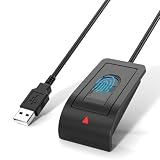
- Windows Hello Fingerprint Login: Designed for windows hello fingerprint reader compatibility on Windows 10/11 PCs, this usb fingerprint reader replaces passwords with fast one-touch biometric access. Enjoy convenient, secure login through your PC’s built-in Windows Hello system without extra software.
- Match-in-Sensor Security Protection: This fingerprint reader uses advanced biometric processing to verify fingerprints inside the sensor, helping protect your personal data. Your fingerprint information stays stored locally on your Windows device and is never uploaded or shared externally.
- Fast & Accurate Biometric Recognition: Built as a reliable fingerprint scanner for everyday computer security, this fingerprint reader for windows 11 provides quick recognition and stable performance. Access your PC, lock screens, and manage user accounts with a simple touch.
- Plug & Play Desktop Convenience: The usb fingerprint reader windows 11 solution connects easily through USB with no complicated drivers or third-party apps. The included 4ft cable provides flexible placement for desktops, workstations, and home office setups.
- Designed for Windows PC Security: This fingerprint scanner for pc supports password-free login through Windows Hello and works as a practical windows fingerprint reader for compatible systems. Compact design and angled sensor placement offer comfortable daily use.
{
  "page_url": "https://example.com/checkout",
  "checked_at": "2026-10-09T14:03:22Z",
  "engine": { "name": "axe-core", "version": "recorded per run" },
  "environment": "browser and viewport used for the run",
  "rule": {
    "id": "color-contrast",
    "description": "short statement of what the rule tests",
    "help": "explanation of the check",
    "help_url": "link to the explanatory page"
  },
  "status": "violation | incomplete | pass | inapplicable",
  "impact": "impact value reported by the engine, if any",
  "nodes": [
    {
      "target": ["css selector or frame-qualified selector"],
      "html_snippet": "short excerpt of the element",
      "checks": [
        { "id": "check id", "message": "why the check failed or was incomplete", "data": {} }
      ],
      "related_nodes": [],
      "failure_summary": "what to change, stated with the confidence the test supports"
    }
  ]
}
Confirmed violations versus results that need review
Automated audit output is not a list of certain defects. axe-core groups its results into outcome groups, and the groups mean different things. The table below uses the documented group names. Treat them as the minimum vocabulary your finding format should preserve.
| Outcome group | What it means | How to report it |
|---|---|---|
| violations | The rule ran and the element failed the check. | Report as a confirmed issue, with the failure message and location. |
| incomplete | The engine could not decide automatically, so the element needs manual review. | Report as needing review. Do not count it as a failure. |
| passes | The rule ran and the element met the check. | Report as a pass only for the elements actually tested. |
| inapplicable | The rule had no matching elements on the page. | Report as not applicable. This is not evidence that the page is compliant. |
The distinction matters most for the “incomplete” group. A reader who sees every item labeled as a defect will spend effort on false alarms, while a reader who sees “needs review” will know that a human judgment is still required.
Coverage limits to state in the output
Automated coverage has boundaries, and a finding format should say so. axe-core documents that hidden regions must be activated or rendered before they can be tested, such as menus that open on click or content behind a tab. An audit that does not render those states can return a clean result for content it never examined. Put this limit in the run context, for example as a list of states that were or were not rendered, so that a clean report is not read as a full-site guarantee. (axe-core API documentation)
Quick wins for a faster PC:
Scan for outdated or missing drivers - takes under a minuteDriver Scan →Repair Windows errors before they cause bigger problemsFix Now →Choosing a finding format
When you compare audit-finding formats, judge them on five points: traceability (can you tie a result to a page, a run, and an engine version?), location precision (does it keep frame and shadow-DOM context?), evidence quality (does it include the measured data and the failing message?), separation of confirmed and incomplete results, and remediation usefulness. A format that is weak on any one of these will produce output that looks complete but cannot be acted on with confidence.
On the access side, compare designs by the protected boundary (every tool or selected tools), the discovery and registration mechanisms each client can use, how scope and consent are shown to the user, and how tokens are validated and stored.
Quick Recap
“
Product prices and availability are accurate as of the date/time indicated and are subject to change. Any price and availability information displayed on Amazon at the time of purchase will apply.

