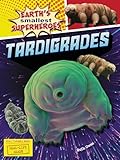
Some tardigrades, nicknamed water bears, survive near-total dehydration by entering anhydrobiosis: a reversible, ametabolic state in which biological activity nearly stops. Their survival is not explained by one “magic” molecule. Tardigrade-specific intrinsically disordered proteins (TDPs), especially cytoplasmic abundant heat-soluble (CAHS) proteins, work with residual water, membranes and, in some circumstances, the sugar trehalose to limit damage as the animal dries.
The evidence is species- and context-dependent. Studies support several interacting defenses rather than a single universal recipe, and the best-known radiation-associated protein, Dsup, is a separate finding from drought tolerance.



As an Amazon Associate I earn from qualifying purchases.
What happens when a tardigrade dries out?
Anhydrobiosis begins as water leaves the animal. Metabolism slows dramatically, cells shrink and the tardigrade eventually becomes a dry, inert form often called a tun. When water returns, some species can resume metabolism and activity. The state is therefore reversible dormancy, not ordinary dehydration followed by inevitable death.
“Near-complete dehydration” is the accurate description for the tolerant species studied; research does not establish one water-loss percentage or one maximum dry-storage time that applies to every tardigrade. Different species, life stages, habitats and drying conditions can produce different outcomes. Temperature, drying speed and how long the animal remains dry all matter.
#1 Best Overall
Drying is dangerous because proteins can unfold, membranes can lose their normal structure and chemical reactions can create concentrated, damaging environments. Tardigrades appear to reduce those problems by changing the physical state of their cell contents and by stabilizing the small amount of material that remains active.
Which proteins give water bears their drought tolerance?
Tardigrade-specific intrinsically disordered proteins
Boothby and colleagues reported in Cell in 2017 that tardigrade-specific intrinsically disordered proteins are important for desiccation tolerance. Unlike a typical enzyme, an intrinsically disordered protein does not maintain one rigid three-dimensional shape in solution. As water is removed, these proteins can assemble into a glass-like, or vitrified, state. That transition is proposed to help immobilize cellular components and reduce the molecular collisions that cause drying damage.
The proteins are not found as a universal replacement for every other stress defense. Their expression increased tolerance when introduced into heterologous systems, providing experimental support that they can protect cells beyond the tardigrade itself. Such experiments show a protective capability under defined conditions; they do not mean that one transferred protein makes any organism invulnerable.
Quick wins for a faster PC:
Fix the driver behind crashes, sound loss and screen glitchesFind Drivers →Clear out junk files and repair common Windows errorsFree Scan →CAHS proteins
CAHS proteins are a major TDP group found in the tardigrade cytoplasm. They are abundant, heat-soluble proteins that change behavior during drying and rehydration. CAHS D, one member examined in detail, forms a gel-like network in hydrated conditions and undergoes a different physical transition as water is removed. The network is thought to organize and shield cellular material, but its exact protective contribution depends on the surrounding chemistry and the system being tested.
CAHS proteins should be viewed as part of a coordinated response. Membrane-associated proteins, antioxidant systems and other tardigrade adaptations can contribute to survival, while TDPs provide one of the clearest molecular explanations for how cells remain structurally stable during water loss.
How the proposed mechanisms differ
| Mechanism or finding | Evidence type | Stress examined | Proposed protective action |
|---|---|---|---|
| TDP vitrification | Tardigrade biology and heterologous-cell experiments | Desiccation | Disordered proteins form a glass-like state that limits drying damage |
| CAHS D plus trehalose | In-vitro mixtures and in-vivo experiments | Desiccation | Two protectants act synergistically at proportions associated with tardigrade cells |
| CAHS D and residual water | Hydrated and desiccated model systems | Drying | CAHS D interacts with the small amount of water that remains rather than retaining more total water |
| Dsup | Human cultured-cell experiment | X-ray-associated DNA damage | DNA association was linked to approximately 40% suppression of induced damage in that experiment |
These rows describe related but non-identical questions. A result in cultured human cells exposed to X-rays is not evidence that the same protein causes anhydrobiosis, and an in-vitro drying result is not proof of a working treatment in people.
Why vitrification can protect a drying cell
In a wet cell, proteins and membranes move through a crowded liquid environment. As the cell dries, dissolved salts and metabolites become concentrated, increasing the chance of unwanted reactions. A vitrified matrix behaves more like a solid glass than a freely flowing liquid. Molecular movement is restricted, which can slow reactions that would otherwise damage proteins, nucleic acids and membranes.
Free tools Windows power users keep installed
One-click scans. No signup required.
The 2017 study’s model is that TDPs help create this protective glass as water leaves. Their unusual sequence composition allows them to remain soluble while hydrated and then assemble during drying. On rehydration, the process can reverse, allowing the cell to recover instead of remaining permanently trapped in a damaged state.
Vitrification does not mean the dry animal contains no water or that all chemistry stops forever. Residual water remains associated with cellular materials, and the quality of the glass depends on temperature, concentration and the other molecules present. Those details help explain why a protein can be protective in one formulation yet less effective in another.
Trehalose strengthens CAHS protection even at low levels
Many organisms that tolerate drying accumulate the sugar trehalose, which can replace some water interactions and stabilize biomolecules. Tardigrades are unusual because they often contain little or undetectable trehalose compared with other anhydrobiotic organisms. That observation initially made it tempting to treat trehalose as irrelevant to tardigrade survival.
Rank #3
A 2022 Nature Communications study tested the combination directly. It found that naturally occurring trehalose and CAHS proteins can produce synergistic protection in vitro. The concentrations and proportions associated with tardigrade biology mattered: the combination protected better than either component considered alone, and the study reported that this synergy was required for robust CAHS-mediated protection in vivo.
The Tool Desk
Outbyte PC Repair FREERepair Windows errors before they cause bigger problemsFix Now →Outbyte Driver Updater FREEScan for outdated or missing drivers - takes under a minuteDriver Scan →“This study and its findings provide a compelling argument that to do so may require the combination of different synergistic protectants,” molecular biologist Thomas Boothby said in a statement quoted by the National Science Foundation. In context, “to do so” means enabling an organism to survive drying. The finding argues against searching for one universal preservative and toward combinations tailored to a particular organism and stress.
CAHS D does not simply hold on to more water
A common explanation for a drying-tolerance protein is that it forms a gel that traps extra water. A 2023 Scientific Reports study tested that idea for CAHS D by measuring water in hydrated and desiccated systems. CAHS D did not retain more total water in the dry state than common proteins or control cells.
Instead, the results indicated that CAHS D interacts with the small amount of residual water that remains. That interaction may help maintain a favorable local environment for proteins and membranes without preventing the bulk of water from leaving. The distinction is important: drought tolerance is not necessarily a matter of keeping a large reservoir of water inside a dried animal.
The residual-water model complements, rather than automatically replaces, vitrification and trehalose synergy. The experiments used defined systems, so they identify a plausible physical contribution, not a complete description of every tissue in every tardigrade species.
Recommended Free Tools
Dsup is about DNA damage, not the whole drought story
Dsup, short for damage suppressor, is another tardigrade-unique protein often mentioned in popular explanations. In a 2016 Nature Communications study, University of Tokyo researchers expressed Dsup in human cultured cells and exposed the cells to X-rays. The experiment reported approximately 40% suppression of X-ray-induced DNA damage.
That number has a narrow meaning. It was measured in cultured human cells under an X-ray exposure protocol; it was not a percentage of extra water retained, a measure of anhydrobiosis, or evidence that Dsup protects people from radiation. Dsup’s reported DNA-association result may be relevant to radiotolerance research, but CAHS and other TDP findings are the primary evidence discussed for desiccation tolerance.
Why the response is not identical in every tardigrade
“Tardigrade” covers many species with different genomes, habitats and stress histories. Some tolerate near-complete dehydration, while others may be less tolerant or require particular drying and rehydration conditions. Protein abundance, the presence of compatible sugars and the timing of gene expression can all vary.
- Do not assign one universal dehydration percentage to all water bears.
- Do not assume a protein that works in a cultured cell reproduces the physiology of an intact animal.
- Do not treat survival after one drying cycle as proof of unlimited cycles or indefinite dry storage.
- Do not confuse resistance to drying with resistance to heat, vacuum, pressure or radiation; each stress can involve different defenses.
The strongest interpretation is therefore a network model: TDPs and CAHS proteins alter the physical state of the cytoplasm, trehalose can cooperate with them, residual-water interactions may stabilize the dry matrix, and other cellular systems handle damage that these proteins do not address.
Windows Errors? Fix Them Before They Spread
Repair common Windows errors and clear accumulated junk for a smoother, more stable PC - no reinstall needed.Free scan · no reinstallOutdated Drivers Are Slowing You Down
One free scan finds every outdated or missing driver and matches the right update for your exact hardware.Free scan · exact hardware matchWhat researchers hope to use these proteins for
Dry storage of medicines and biological materials
Because CAHS proteins and trehalose can stabilize biological material during drying, researchers have discussed formulations that could reduce reliance on continuous refrigeration for some pharmaceuticals, vaccines or laboratory reagents. These are research prospects, not established products. A useful formulation would need to preserve a specific molecule, remain safe and manufacturable, and work through realistic transport and rehydration cycles.
Best Value
Stress-tolerant crops and engineered cells
Introducing tardigrade proteins into other organisms has shown protective effects in controlled experiments, which raises the possibility of engineering cells or crops that better tolerate water shortage. A laboratory increase in tolerance is not the same as a field-ready crop: traits must work across tissues, developmental stages, pathogens, soil conditions and regulatory requirements.
Space biology
A NASA Technical Reports Server record describes work investigating tardigrade proteins for cellular stress tolerance, including yeast experiments and prospective lunar payloads. The record documents research and testing, not an operational spaceflight application. Any future use would still require validation under mission-specific radiation, vacuum, temperature and life-support conditions.
How scientists test a drought-tolerance mechanism
- Observe the animal. Researchers compare survival, recovery and molecular changes during controlled drying and rehydration, while recording species and environmental conditions.
- Identify candidate proteins. Tardigrade genes that become more active during drying or encode unusual disordered proteins are isolated for further study.
- Reconstitute the chemistry. Purified CAHS proteins, trehalose and model membranes are tested in vitro to determine whether mixtures prevent aggregation or structural damage.
- Test another cell system. Proteins are expressed in cultured cells or other organisms to see whether the proposed protection transfers outside the tardigrade.
- Separate stresses. Drying, X-ray exposure, heat and other challenges are tested independently so that a radiation result is not mislabeled as drought tolerance.
This progression explains why no single experiment settles the entire mechanism. Each level answers a different question: what the animal does, what a protein can do in isolation, and whether that activity remains useful in a living cell.
Do these 3 things before closing this tab:
1Fix the driver behind crashes, sound loss and screen glitches2Clear out junk files and repair common Windows errors3Scan for outdated or missing drivers - takes under a minuteThe evidence-based answer
Water bears survive severe drying because some species deploy a coordinated molecular defense. Tardigrade-specific intrinsically disordered proteins, including CAHS proteins, can vitrify or form protective assemblies as water leaves. Trehalose can amplify that protection even when present at low levels, and CAHS D appears to work through interactions with residual water rather than by retaining more total water. These findings fit a multi-component explanation, not a single “indestructibility” protein.
The boundary conditions matter: tolerance differs among species and experiments, Dsup’s approximately 40% figure concerns X-ray-induced DNA damage in cultured human cells, and proposed medical, agricultural and lunar applications remain under investigation.
Quick Recap
Product prices and availability are accurate as of the date/time indicated and are subject to change. Any price and availability information displayed on Amazon at the time of purchase will apply.

