PC Slower Than It Used to Be?
A free scan shows the junk files, broken settings and background clutter dragging Windows down - then fixes them in one click.Free scan · Windows 10 & 11Crashes, No Sound, or Screen Glitches?
Random freezes, missing sound and display glitches usually trace back to one bad driver. Find and replace yours safely.Free scan · under a minuteThere is no universally best payment method in India. Use UPI when the merchant accepts it and your registered phone and payment service are working; use a debit card when card acceptance is reliable or you prefer card-based authorization; keep enough cash for places, outages and situations where digital payments cannot be completed. The practical choice depends on acceptance, connectivity, transaction limits, disclosed fees, security habits and how you can seek help if a payment fails.
The short answer
Choose the method that fits the payment in front of you rather than ranking the three permanently:
As an Amazon Associate I earn from qualifying purchases.
- UPI: Usually the most convenient digital option for an accepted QR code or online checkout. It moves money directly between bank accounts through an app, works 24/7 and is described by NPCI as instant, but a payment can fail or remain pending and cannot be stopped after you initiate it.
- Debit card: A useful alternative when a merchant has a functioning card terminal, when you want card-based records, or when you do not want to disclose a UPI PIN to a merchant-facing QR flow. Your issuing bank controls transaction limits and card terms.
- Cash: The dependable fallback when there is no digital acceptance, the network or terminal is down, your phone is unavailable, or a small business accepts notes only. Cash does not depend on a point-of-sale network, but it can be lost or stolen and normally does not create an equivalent electronic transaction trail.
A sensible everyday setup is to use UPI or a debit card for convenience and records, while carrying a modest cash reserve for connectivity failures and cash-only merchants. Keep the reserve modest: carrying more cash increases the amount you could lose.
How the three methods actually work
UPI is an account-to-account payment system
NPCI describes the Unified Payments Interface (UPI) as an instant payment system built over IMPS. You register with a participating app or provider, link a bank account and authorize bank transactions with a UPI PIN. The money moves between bank accounts rather than from a stored wallet balance. NPCI says UPI payments operate 24/7, regardless of bank working hours.
#1 Best Overall

- STYLISHLY SMALL, SLIM & DISCREET: Measuring just 3 1/8" x 4 7/16", our RFID front pocket wallet is designed to be super thin and exceptionally slim. Its modern, minimalist profile fits perfectly in your pocket, purse, or travel pack without adding bulk.
- SURPRISINGLY SPACIOUS: Though slim, it features 8 slots to easily organize your essentials. Comfortably holds your driver's license, credit cards, debit cards, and membership cards, keeping everything you need right at your fingertips.
- ADVANCED RFID BLOCKING: Our slim wallets for men and women are outfitted with advanced RFID SECURE Technology. They block electronic signals to keep your identity protected while you travel, shop, or explore, safeguarding you from digital theft.
- DURABLE & STYLISH FAUX LEATHER: Crafted from premium synthetic leather, this minimalist wallet sleeve combines a luxurious look and feel with everyday functionality. Its durable construction is designed to withstand the rigors of daily use, travel, and shopping.
- THE PERFECT UNISEX GIFT: With its sleek design and practical security features, this wallet is a popular choice for both men and women. It arrives ready for gifting, making it an ideal present for the frequent traveler, minimalist, or anyone in your life!
At a shop, you may scan a QR code, choose a saved payee or enter a UPI ID. Online, you may select UPI at checkout and approve the request in your payment app. In every case, inspect the payee and amount before entering the PIN. Entering the PIN authorizes the transaction; it is not a code that someone else should need to receive, and NPCI says not to share it.
A debit card relies on the issuer and acceptance infrastructure
A debit card authorizes payment against the bank account connected to the card. The merchant must support card payments and have a working acceptance path, such as a point-of-sale terminal or online card checkout. The issuing bank or entity is responsible for setting transaction-amount limits, so two cards used by different customers can have different limits.
In the scope of the Reserve Bank of India’s payment-gateway and payment-aggregator instructions, merchants must not pass debit-card merchant discount rate (MDR) charges on to customers. If a merchant applies another convenience fee within a covered payment flow, it must disclose that fee before payment. This rule does not mean every card-related service, ATM withdrawal or bank account is free; check your issuer’s schedule and the merchant’s displayed terms.
Cash settles without a digital network
Cash is handed directly to the merchant and does not require a phone, bank app, card terminal or internet connection at the point of sale. That makes it valuable during outages and at merchants that have not enabled digital acceptance. The trade-off is physical risk: notes can be lost, stolen or miscounted, and a cash payment generally lacks the app or bank transaction record that helps document a digital purchase.
Rank #2

- QUICK ACCESS: Unlike traditional leather wallet, this mens slim wallet is equipped with the ejection mechanism. Simply press the side button on the card holder, all cards pop up at a step pattern that makes them very easy & convenient to take out.
- SLIM BODY, LARGE CAPACITY: This mens minimalist wallet holds up to 12+ cards. The aluminium chamber holds 6-8 and the leather flap holds 4-6 (1 ID window included). There are also removable money clips on the back capable of holding 15+ cash.
- CLEAR ID WINDOW: On the inside of the carbon fiber wallet, which has an ID card holder slot, which allows you to swipe the card without removing the card. It can be used to store ID card, work card, driver license, access card, traffic card, etc.
- RFID BLOCKING: This rfid wallet for men embeds a chip in the aluminum card case to block unknown scanning devices from scanning your credit cards, debit cards, and driver's licenses, maximizing the protection of your personal property.
- PERFECT PRESENT IDEA: This leather wallet is packaged in a beautiful premium box and it is great choice for men. It is a perfect credit card wallet for your friend, lover, parent or yourself on special Days.
Comparison at a glance
| Factor | UPI | Debit card | Cash |
|---|---|---|---|
| Merchant acceptance | Depends on the merchant displaying or supporting UPI and the payment provider being available. | Depends on a supported card terminal or online card checkout and functioning payment infrastructure. | Works where the merchant accepts the notes and can give change. |
| Connectivity and equipment | Generally needs a working registered phone, payment app or provider connection and the bank’s service. | Needs the card, a functioning card-acceptance device or online checkout, and the issuer’s service. | Needs no network or electronic equipment at the sale. |
| Speed | NPCI describes UPI as instant and available 24/7, although individual payments can fail or remain pending. | Authorization depends on the merchant’s terminal or online payment infrastructure and issuer response. | Immediate exchange at the counter when the amount and change are settled. |
| Limits | NPCI’s standard limit is up to ₹1 lakh per transaction; listed special categories can have higher limits, including up to ₹5 lakh for IPO and Retail Direct Scheme payments. Bank and app controls still apply. | The issuing bank or entity sets transaction-amount limits. | The cited digital-payment rules do not set a general cash-purchase limit. |
| Fees | Provider, account and transaction terms vary; do not assume every UPI service is free. | Covered merchants cannot pass debit-card MDR to customers, but other disclosed fees and issuer, ATM or account charges may apply. | No electronic processing fee at the handover, but obtaining or withdrawing cash may have separate terms. |
| Security and records | Requires careful payee and amount checks and a private UPI PIN; creates an electronic transaction record. An initiated payment cannot be stopped. | Uses card and issuer controls and normally creates a bank transaction record; protect card details and authentication credentials. | No digital credential is exposed at the counter, but cash can be lost or stolen and normally leaves no equivalent electronic record. |
| When it is strongest | Accepted QR or online checkout, routine transfers and payments when your phone and service are working. | Merchants with reliable card acceptance, or purchases where you prefer card authorization and records. | Cash-only merchants, outages, dead phone batteries, weak connectivity and emergency fallback situations. |
UPI: limits, convenience and the irreversible moment
Check the limit that applies to your transaction
NPCI’s FAQ gives a standard UPI ceiling of up to ₹1 lakh per transaction. It also identifies higher ceilings for certain categories, including some capital-market, collection, insurance and foreign-inward-remittance transactions, and up to ₹5 lakh for IPO and Retail Direct Scheme payments. These figures are operational limits, not a guarantee that every bank or app will permit every transaction. A provider can impose a lower limit, restrict a category or apply additional risk controls, and rules can change. Check the current limit shown by your bank or payment app before relying on a large transfer.
Do not treat a special-category ceiling as a general shopping limit. An IPO limit, for example, does not automatically raise the limit for a restaurant bill or a person-to-person transfer.
Authorize only after checking the payee
- Confirm that the displayed merchant name or payee matches the person or business you intend to pay.
- Check the amount, including any visible fee, before proceeding.
- Enter your UPI PIN privately in the official payment interface. Never disclose it to a merchant, caller or supposed support representative.
- Wait for the result and check the app’s transaction history rather than relying only on a verbal confirmation or a screenshot.
NPCI states that a UPI payment cannot be stopped once initiated. That makes the final verification step more important than speed. If a stranger asks you to scan a QR code or enter a PIN to “receive” money, stop and verify what the screen is actually authorizing; a PIN authorizes a bank transaction.
Free tools Windows power users keep installed
One-click scans. No signup required.
What UPI is good at
- Fast account-to-account payments without handing over cash.
- 24/7 availability, including outside normal bank working hours.
- A searchable transaction record in the app or bank account.
- Routine merchant payments and transfers when the merchant and provider are available.
Where UPI can disappoint
- A weak connection, unavailable payment service or unregistered replacement phone can interrupt the flow.
- A payment may show as failed or pending even when you expected an immediate result.
- The payment is not stop-payment reversible after initiation, so a wrong payee or amount requires complaint and bank support rather than a simple cancellation.
Debit cards: acceptance, issuer limits and fees
Acceptance is the first check
A debit card is useful only if the merchant’s terminal or online checkout accepts the card network and is operating. A shop may accept UPI but not cards, or cards but not UPI. Before choosing a card, look for the merchant’s displayed acceptance marks or ask whether the terminal is working. If a terminal is offline or the issuer cannot authorize the payment, a second attempt may not solve the underlying problem; switch to another accepted method if the purchase is time-sensitive.
Rank #3
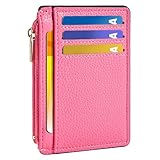
- Ultra Slim and RFID Blocking Wallet: This thin card wallet is equipped with advanced RFID blocking technology. It protects your valuable information like ID and credit cards from unauthorized scans. It also allows you to bring it along in your handbag, backpack, front pocket, or purse
- Functional Front Pocket Wallet: Despite its thin design, this credit card holder has ample space to store your cards: 6 card slots, 1 ID window for easy access to your driver's license or ID card, and 1 side compartment for cash / currency
- Credit Card Holder: Ultra-slim and lightweight, at just 4.4" x 3.14" x 0.11" and 1.05 oz, our card holder is crafted from premium lychee leather. It's the minimalist's choice for carrying essential cards with ease, and it adds no bulk to your pocket or purse
- Front Pocket Design: This slim women's card holder is designed for everyday use. Whether you’re shopping, traveling, or heading to the office, this card holder perfectly adapts to your lifestyle
- Perfect Gifts: This credit card holder with exquisite clear box makes a perfect gift for your loved ones on their Birthday, Anniversary, Mother’s Day, Valentine’s Day or Christmas. It’s the best choice for travel, dating, working, shopping, exploring or daily use, etc
Your bank sets the transaction ceiling
RBI places responsibility for transaction-amount limits with the issuing bank or entity. Review the card’s purchase and ATM limits in your bank’s current terms or app. A daily limit, online-use setting, international-use setting or temporary security block can affect a payment even when the account has enough money. The applicable limit is the one your issuer currently applies to that card, not a universal number shared by all debit cards.
Understand the MDR rule without assuming zero cost
For payment flows covered by RBI’s payment-gateway and payment-aggregator instructions, a merchant must not pass debit-card MDR to the customer. Any other applicable convenience fee in that scope must be disclosed before you pay. The instruction does not establish that every card-related service is free: account fees, card fees, ATM charges, currency conversion and other issuer or service terms can still exist. Read the amount shown on the terminal or checkout page and your bank’s fee schedule.
When a card is the better digital choice
- The merchant has a reliable card terminal but no UPI option.
- You want the transaction to appear in your bank’s card statement and prefer not to use a QR flow.
- Your phone is unavailable but you have the physical card and the merchant’s terminal is working.
- Your UPI provider is experiencing an interruption while card authorization remains available.
Protect the card, PIN, one-time passwords and online card credentials as carefully as a UPI PIN. A card record helps with identification, but it is not a reason to approve an unfamiliar amount or merchant name.
Quick wins for a faster PC:
Scan for outdated or missing drivers - takes under a minuteDriver Scan →Repair Windows errors before they cause bigger problemsFix Now →Cash: the fallback that still matters
Why cash succeeds when digital methods fail
Cash does not depend on mobile coverage, a charged phone, a bank app, a QR code, a card terminal or an authorization server at the moment of purchase. It is therefore useful for local transport, small merchants, emergencies and outages. It also avoids entering a digital credential in front of another person.
Rank #4
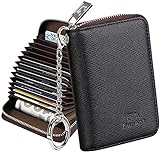
- Special Design: Multi-color optional and wear-proof classic business card holder looking.
- Plenty of Space: 16 card slots only measuring 4.1" x 3.0" x 1.1", including 13 credit card slots, 2 cash slots
- Protect Information Leakage: Prevents your vital information/cards from unnoticed scan with 2 outer layers RFID blocking materials.
- Extra Key Chain & Portable: Extra corns with key chain for your keys or lanyard. Portable use for shopping, traveling, etc.
- Great Gift: Practical compact wallet is the perfect gift. Give a thoughtful surprise to Men/Women on birthdays, holidays, celebrations, or any special occasion (e.g. Valentine's Day, Christmas, etc.).
The costs and risks are physical
Cash can disappear without a bank-side transaction to investigate. It can be stolen, dropped, damaged or handed over in the wrong amount. Counting the notes and obtaining a receipt, where available, are your main immediate checks. For a high-value purchase, a digital method may provide a more useful record and a clearer route to identify the transaction.
Do not confuse the absence of a digital limit with a recommendation to carry large amounts. Carry what you need for a realistic fallback, keep it separate from your main wallet when practical, and replenish it through a method you trust.
Independent reader supportYour contribution helps us test, update, and keep practical guides available for everyone.Offline digital payments are not the same as ordinary UPI
RBI permits a consent-based framework for small-value offline digital payments. The cited framework sets a general ceiling of ₹500 per offline transaction and ₹2,000 as the total limit for an offline instrument. UPI Lite has distinct limits within that framework. These are offline-digital limits, not the standard UPI ceiling and not a limit on cash purchases.
Recommended Free Tools
The distinction matters when you are choosing a fallback. An offline option may help in a low-connectivity situation if your bank, app and instrument support it, but it does not turn every UPI payment into an offline payment. Check the current product terms, consent requirements, alerts and recourse before relying on it.
Best Value
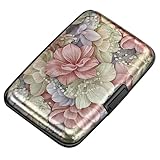
- This Credit Card Holder is made of aluminum shells, ABS plastic frame and clasp closure, RFID-blocking will protect your card data from RFID scanners and readers.
- The Size is 4.33 x 2.95 x 0.73 inches, Slim and small exterior design, are fit in your front pocket,suitable for travel and business carrying.
- Latches Safely and Securely when not in use. Rounded corner wouldn't damage on your clothes. With 7 accordion Slots, Capacity for up to more than 9 credit cards or more than 21 business cards.
- There are various patterns to choose from on the aluminum shell, including flowers, animals, and landscapes, to match your versatile style.
- This is an ideal gift that can express your thoughtfulness and kindness. Suitable for any day you want to express love on, such as Valentine's Day, birthdays, Mother's Day, etc.
How to choose at the point of sale
| Situation | First choice | Fallback | Reason |
|---|---|---|---|
| Merchant displays a working UPI QR and your phone is connected | UPI | Debit card or cash | Fast account payment and an electronic record, provided you verify the payee and amount. |
| Merchant has a working card terminal but no UPI | Debit card | Cash | Card acceptance is the available digital path; issuer limits and terms apply. |
| Phone is dead, unregistered or has no usable service | Debit card | Cash | Both avoid dependence on the UPI app at that moment, but the terminal still has to work for a card. |
| Card terminal and UPI service are unavailable | Cash | Wait or use another accepted merchant | Cash does not need electronic infrastructure at the sale. |
| Large or unusual transaction | Method with a confirmed applicable limit and clear record | Another accepted digital method | Check provider limits, fees and payee details before authorizing; do not assume the standard UPI limit covers a special transaction. |
| You are unsure whether a QR request is a payment or a receipt | Pause and verify | Use a known merchant channel | A UPI PIN authorizes a bank transaction, and an initiated payment cannot be stopped. |
What to do when a UPI payment fails or stays pending
If your account was debited but the transaction did not go through
NPCI says a failed debit should be reversed. First check the transaction status in the app and your bank account, then allow the provider’s stated process to complete. If the amount has not returned, contact your bank with the transaction reference, date, amount and payee details. Do not make repeated payments until you know whether the first attempt settled; a second authorization can create two completed payments.
If the status is pending
A pending status means the final result has not yet been confirmed to you. Check the app’s history and the merchant’s actual receipt or order status. NPCI’s FAQ directs users to contact the bank if confirmation has not arrived within the stated period. There is no single resolution time that applies to every bank, app and transaction state, so use the status and instructions shown for your specific payment.
If the payment was fraudulent, unidentified or unauthorized
Contact your bank. NPCI’s complaint guidance specifically routes fraudulent, unidentified or unauthorized transaction complaints to the customer’s bank for redress. Use the participating app’s transaction history or complaint function for transaction issues, preserve the reference number and describe exactly what you authorized, if anything. Change credentials or secure the account through official bank channels if you believe your PIN or device access was exposed.
If you paid the wrong person or amount
Because NPCI says an initiated UPI payment cannot be stopped, contact the bank and the recipient or merchant promptly through verified channels. Keep the transaction reference and screenshots of the status, but do not share your PIN or approve another request merely because someone promises a refund.
Security checklist for all three methods
- Before UPI: Match the payee name and amount; enter the PIN only in the official app; never reveal the PIN.
- Before a card payment: Check the merchant name and amount on the terminal or checkout; protect the card, PIN and one-time passwords; review issuer limits and enabled usage settings.
- Before handing over cash: Count the notes, confirm the change and request a receipt for purchases where proof matters.
- After any digital payment: Check the final status in the app or bank account, save the reference for a disputed transaction and avoid paying again while the first attempt is unresolved.
- When something looks unusual: Stop, close the screen and contact the bank or merchant through a verified number or in-app channel, not a number supplied by an unsolicited caller.
A practical everyday policy
For routine spending, enable at least two methods you can use independently: for example, UPI plus a debit card, with a small cash reserve. Before leaving for a trip or an area with uncertain connectivity, check that your phone is charged, your registered number and payment app work, your card is enabled for the expected type of transaction, and you have enough cash for transport or a basic purchase. For a high-value payment, confirm the applicable limit and fee before you authorize it, and choose the method that gives you a clear record and a support path.
The right answer changes at the counter. UPI is often the fastest convenient digital route, a debit card is a strong alternative when card acceptance and issuer authorization are available, and cash is the essential fallback when digital infrastructure or acceptance fails. Treat those as complementary tools rather than competing loyalties.
Quick Recap
Product prices and availability are accurate as of the date/time indicated and are subject to change. Any price and availability information displayed on Amazon at the time of purchase will apply.
Do these 3 things before closing this tab:
1Scan for outdated or missing drivers - takes under a minute2Repair Windows errors before they cause bigger problems3Fix the driver behind crashes, sound loss and screen glitches
