Recommended Free Tools
Unlocking a MediaTek (MTK) bootloader is often the first hard requirement for custom recovery, root, or full firmware experiments. MTKClient is a popular Windows-first utility for interacting with the MediaTek boot chain and automating parts of the unlock flow—when the device model and firmware state support it.
This guide is written as a reference-style walkthrough: you’ll confirm prerequisites, run the right MTKClient workflow, verify unlock status, and troubleshoot the most common errors you’ll hit with different MTK SoCs and vendor boot images.
As an Amazon Associate I earn from qualifying purchases.
Warning: Bootloader unlock is vendor-specific and may erase data. If your device relies on a locked boot chain for security features, unlocking can break secure boot behavior or cause boot loops. Proceed only if you accept the risks.
Quick wins for a faster PC:
Clear out junk files and repair common Windows errorsFree Scan →Fix the driver behind crashes, sound loss and screen glitchesFind Drivers →Repair Windows errors before they cause bigger problemsFix Now →What Bootloader Unlocking Changes (and Why It Matters on MTK)
On MTK devices, the boot chain typically involves a secure boot policy, a preloader stage, and a bootloader/ABL-like component that decides whether boot images are allowed. Unlocking changes the policy so your device will accept non-vendor signed boot images (custom recovery, patched boot, etc.).
#1 Best Overall

- Blazing-fast Qualcomm performance. Get the speed you need for great entertainment with a Snapdragon 680 processor and 4GB**** of RAM.
- Fluid display + immersive stereo sound. Bring your entertainment to life with an ultrawide 6.5" 90Hz* HD+ display plus stereo speakers, Dolby Atmos, and Hi-Res Audio**.
- 50MP*** Quad Pixel camera. Capture sharper, more vibrant photos day or night with 4x the light sensitivity.
- 64GB**** built-in storage. Get plenty of room for photos, movies, songs, and apps—and add up to 1TB more with a microSD card*****.
- Unbelievable battery life. Work and play nonstop with a long-lasting 5000mAh battery.*****
MTKClient’s value is that it helps you talk to the device in the right pre-boot/bootloader communication mode and apply the unlock path supported by your specific firmware setup.
Prerequisites Before You Touch MTKClient
Confirm your exact device model and Android/firmware branch
MTK unlock behavior can differ across the same brand because of different vendor bootloader implementations and security settings. Record: device model, current Android version, build number, and whether you’re on stock firmware.
Charge and power stability
Use a USB port that reliably provides power and data. Keep the phone at least 50% battery (or plugged in) so the process doesn’t brown out mid-flash.
Know what state your device is in
You need to get the phone into the mode MTKClient expects (often a preloader/DA handshake path rather than a plain fastboot mode). If your phone is totally bricked, you may need a different recovery approach.
Be prepared for data loss
Many unlock methods trigger a factory reset (FRP/userdata wipe). Back up anything you can before you start—contacts, photos, authenticator seeds, and any device-specific encryption keys.
What You Need: Files, Drivers, and Tools
MTKClient
Use the latest stable MTKClient build you can obtain from a trusted source. Keep the file(s) in a dedicated folder so you don’t mix versions while testing.
USB drivers
- Windows: Install MediaTek USB VCOM/Preloader drivers (the exact package name varies by vendor driver set). If you can, verify the device appears correctly in Device Manager when you connect it in the intended mode.
- Linux: Install udev rules for MediaTek devices if needed and run as a user with permission to access USB devices.
- macOS: macOS driver support for raw MTK preloader/USB modes can be inconsistent. Many users end up doing this on Linux or Windows for reliability.
Device-specific boot image backup (recommended)
If your goal is deeper modifications (root/custom ROM), create a backup plan first. Bootloader unlock changes what you can safely restore later.
What’s actually slowing this PC down?
Pick the symptom - the matching free tool is one click away.
Fastboot and platform tools (for verification)
Even if MTKClient is your unlocking tool, you’ll want Android platform tools installed locally to check unlock flags and to confirm the device can enter fastboot-like menus.
How MTKClient Unlocks Bootloaders on MediaTek
MTKClient typically performs three categories of actions:
- Establish communication with the MTK preloader/boot chain using the correct transport and handshake.
- Load or use a compatible Download Agent (DA) (or the vendor-provided path) to reach a stage where unlock commands/flags can be written.
- Apply the unlock action (set the unlock state, boot config flags, and/or persistent variables), then prompt a reboot.
Because these steps depend on your SoC, vendor, and firmware security configuration, the correct combination of MTKClient version + device support files matters more than people expect.
Rank #2

- Please note, this device does not support E-SIM; This 4G model is compatible with all GSM networks worldwide outside of the U.S. In the US, ONLY compatible with T-Mobile and their MVNO's (Metro and Standup). It will NOT work with Verizon, Spectrum, AT&T, Total Wireless, other CDMA carriers, it is also not compatible with their MVNO (Visible, Xfinity Mobile, US Mobile, Cricket Wireless, etc).
- Compatibility with certain third-party devices and accessibility accessories, including some hearing aids, may vary depending on manufacturer support, Bluetooth protocols, software compatibility, and regional firmware limitations. For additional hearing aid compatibility information, please refer to Samsung’s official support documentation.
- 4G LTE Bands: B1/B3/B5/B7/B8/B20/B28/B38/B40/B41
- Display: Super AMOLED, 90Hz, 800 nits (HBM) | 6.7 inches, 110.2 cm2 (~86.0% screen-to-body ratio) | 1080 x 2340 pixels, 19.5:9 ratio (~385 ppi density)
- Camera: 50 MP, f/1.8, (wide), 1/2.76", 0.64µm, AF | 50 MP, f/1.8, (wide), 1/2.76", 0.64µm, AF | 2 MP, f/2.4, (macro)
Step-by-Step: Unlock Bootloader Using MTKClient (Windows)
1) Install and verify drivers
Install MediaTek preloader/VCOM drivers. Then connect the phone in the MTK/bootloader connection mode you’re using (commonly achieved by a specific button combo while the cable is attached).
In Device Manager, confirm you don’t just see a generic device. Look for entries like MediaTek USB VCOM/Preloader (names vary).
2) Prepare a clean working directory
Create a folder like C:\MTKClient, place MTKClient files there, and keep any download agent/firmware-related files in the same folder if your MTKClient workflow expects relative paths.
3) Put the device into the expected connection state
Use your device’s vendor button combo to enter the mode MTKClient expects. If the tool has a “detect” or “connect” button, use that to confirm readiness before issuing unlock commands.
4) Run MTKClient as Administrator
Right-click the MTKClient executable and choose Run as administrator. This reduces permission issues when enumerating USB devices and writing logs.
5) Select the correct options inside MTKClient
MTKClient UIs vary by build, but the flow commonly involves:
- Choosing or auto-detecting the device/port.
- Selecting the unlock-related action (often labeled Unlock bootloader or a similar phrase).
- Providing any required input files if prompted (some builds ask for an image/patch or device database entry).
If MTKClient prompts for files, stop and verify you have the correct ones for your exact model/build. Wrong files can cause a failed handshake or a boot loop.
6) Start the unlock operation and watch the logs
Click the action button (often Start or Unlock). Don’t unplug the phone. Watch for handshake success, DA load success, and the unlock flag write step.
7) Reboot and check unlock status
When MTKClient finishes, it usually requests a reboot. Let the device boot. If it boots to a “verify boot” or bootloader warning screen, don’t panic—verify unlock status next.
Then use fastboot/bootloader UI checks (covered later) to confirm the unlock flag is truly set.
Rank #3

- Please note, this device does not support E-SIM; This 4G model is compatible with all GSM networks worldwide outside of the U.S. In the US, ONLY compatible with T-Mobile and their MVNO's (Metro and Standup). It will NOT work with other CDMA carriers, and it is also not compatible with their MVNO (Visible, Xfinity Mobile, US Mobile, Cricket Wireless, etc).
- Compatibility with certain third-party devices and accessibility accessories, including some hearing aids, may vary depending on manufacturer support, Bluetooth protocols, software compatibility, and regional firmware limitations. For additional hearing aid compatibility information, please refer to Samsung’s official support documentation.
- Camera: 50 MP, f/1.8, (wide), 1/2.76", 0.64µm, AF | 50 MP, f/1.8, (wide), 1/2.76", 0.64µm, AF | 2 MP, f/2.4, (macro). Battery: 5000 mAh, non-removable | A power adapter is NOT included.
Step-by-Step: Unlock Bootloader Using MTKClient (Linux)
1) Install prerequisites
- Install Android platform tools for verification (optional but recommended).
- Install any MTKClient runtime dependencies your build requires (often none beyond standard tools).
- Ensure libusb support is present if the tool uses USB directly.
2) Set USB permissions
Connect the device and check dmesg -w for device messages. If permissions block access, create or update udev rules for MediaTek VCOM/Preloader devices.
As a quick test, you can run MTKClient with elevated privileges, but it’s better to fix udev permissions for stability.
3) Put the device in the correct MTK connection state
Use the device-specific button sequence to get into the mode your MTKClient build expects. Confirm the device appears to the tool before starting unlock.
Windows Errors? Fix Them Before They Spread
Repair common Windows errors and clear accumulated junk for a smoother, more stable PC - no reinstall needed.Free scan · no reinstallOutdated Drivers Are Slowing You Down
One free scan finds every outdated or missing driver and matches the right update for your exact hardware.Free scan · exact hardware match4) Run MTKClient
Launch MTKClient from the folder where the tool and its support files live. If there’s a CLI mode, capture output to a log file so you can troubleshoot failures precisely.
Start the unlock action and wait for completion without disconnecting USB.
5) Verify unlock flag after reboot
Once the device reboots, check whether the bootloader is unlocked via the fastboot interface or device bootloader screen (details below).
Step-by-Step: Unlock Bootloader Using MTKClient (macOS)
On macOS, the biggest friction point is often driver/USB mode support for MTK preloader communications. If MTKClient detects the device reliably on macOS for your model, you can proceed. If it can’t consistently detect the device, switch to Linux or Windows.
Free tools Windows power users keep installed
One-click scans. No signup required.
1) Confirm the device appears in USB logs
Connect the phone in the intended mode and check System Information (USB) and console logs for recognition. If you don’t see an MTK-relevant device entry, MTKClient won’t be able to handshake reliably.
2) Run MTKClient with correct permissions
Run the tool with appropriate permissions. If it uses a GUI, ensure you have admin privileges. If it’s CLI, capture logs to file for troubleshooting.
3) Perform the unlock action and reboot
Follow the MTKClient UI/CLI prompts exactly. Then verify unlock status using fastboot/bootloader checks on the device.
Rank #4
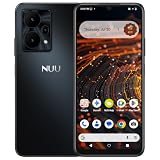
- Pure Android 16 & Large 6.7" Display: Enjoy a clean, bloatware-free Android 16 experience on a spacious 6.7" screen, with the features you need for everyday use at a great value.
- Nationwide Compatibility: Fully unlocked to work seamlessly with major U.S. carriers, including T-Mobile, AT&T and Verizon. Just insert your SIM to stay connected wherever you go.
- Built for Everyday Life & Travel: Stay connected with calls, messaging, navigation, streaming, video chats and everyday apps—ideal for work, travel and staying connected on the go.
- Expandable Storage up to 512GB: Supports microSD cards up to 512GB, giving you more space for photos, videos, music and apps without worrying about running out of storage.
- Stay Connected Anywhere: Enjoy 5G, NFC contactless payments, Bluetooth, Wi-Fi and USB-C for commuting, travel, work and everyday convenience.
Verifying the Result and Booting After Unlock
Check fastboot / bootloader status
After unlock, many devices expose an unlock flag in fastboot mode. Common checks include:
The Tool Desk
Outbyte PC Repair FREERepair Windows errors before they cause bigger problemsFix Now →Outbyte Driver Updater FREEScan for outdated or missing drivers - takes under a minuteDriver Scan →- A line such as Device unlocked or Bootloader unlocked on the bootloader screen
- Fastboot output that includes unlock state indicators
If your device supports fastboot, try platform-tools commands like fastboot devices and fastboot oem device-info (the exact subcommand depends on the vendor).
Boot behavior expectations
Some MTK devices will boot with warnings after unlock. Others may boot slower the first time while verifying updated state. If you get a hard bootloop, proceed to troubleshooting.
Common Failure Modes and Troubleshooting
MTKClient can’t detect the device
- Try a different USB port (preferably directly on the motherboard on Windows desktops).
- Replace the cable—charge-only cables are a frequent silent failure.
- Reinstall drivers and verify Device Manager shows the correct entry during the intended connection mode.
- Change phone connection timing (some devices require connecting the cable before holding buttons, others the reverse).
Handshake fails or DA load fails
This usually means a mismatch between the required Download Agent path/support files and your device firmware/security profile. Fix by using the correct MTKClient build and matching support assets for your model/SoC.
Unlock runs but bootloader still shows locked
If MTKClient reports success but the device remains locked, common causes are partial write failures or the device rejecting the unlock due to security state (or because the firmware version enforces a policy). Re-check you used the intended unlock option and required files.
Do these 3 things before closing this tab:
1Clear out junk files and repair common Windows errors2Scan for outdated or missing drivers - takes under a minute3Repair Windows errors before they cause bigger problemsDevice bootloops after unlock
- Reboot into stock recovery/bootloader and attempt a clean boot image restoration if you modified boot components.
- Restore stock firmware if your unlock workflow included any partition writes beyond unlock flags.
- Verify persistent settings: some devices require a full data wipe before normal boot proceeds.
FRP/verification lock prevents progress
If you plan to flash custom images after unlocking, FRP and verified boot enforcement can block boot image installation. Ensure you’re still able to access the bootloader and follow your device’s vendor recovery policies.
Independent reader supportYour contribution helps us test, update, and keep practical guides available for everyone.MTKDevice/Variant Differences to Watch For
MediaTek devices aren’t a single standard. Differences that affect MTKClient behavior include SoC family (older vs newer), vendor boot configuration, and whether the device uses additional enforcement layers.
| Variant factor | What it changes | What to do |
|---|---|---|
| SoC family | Which preloader/handshake path and DA works | Use MTKClient build and support files known for your SoC class |
| Vendor firmware security policy | Whether unlock writes are accepted | Confirm device is on a compatible firmware branch; avoid random image mixes |
| Boot partition layout | Where flags are stored and how boot images are validated | Don’t assume the same layout across brands/models |
| Connection mode | Whether MTKClient can talk to the device | Get the correct button combo/timing for your model |
Security, Warranty, and Data Loss Considerations
Bootloader unlock can affect device security posture. If your device uses verified boot policies, unlocking may reduce enforcement and change how partitions are trusted.
Warranty outcomes vary by region and manufacturer. In many places, unlocking can void warranty coverage for related hardware/software issues. Also assume a factory reset can happen—backup first.
Alternatives When MTKClient Fails
Official vendor unlock (if offered)
Some brands provide an official unlock program tied to an account and IMEI/device identifiers. If available, this is often the cleanest path because it matches the vendor’s expected method.
Best Value

- Unlocked: Compatible with all major U.S. carriers, including Verizon, AT&T, T-Mobile and other major carriers.
- Super-bright 6.8" display + Bass Boost. Enjoy boundless entertainment on a massive, 120Hz display and stereo speakers with 1.7x more powerful bass***.
- Long-lasting battery + TurboPower charging. Go over a day on a single charge with a 5000mAh battery and blazing-fast charging—even charge wirelessly.*
- 50MP** camera system with OIS. Capture sharper low-light photos and smoother videos with an unshakable camera system featuring Optical Image Stabilization.
- Stylish yet durable design. Enjoy the premium look and feel of vegan leather with Corning Gorilla Glass 5 and underwater protection.
Use a known-compatible firmware flash + unlock sequence
On some devices, unlock becomes possible only after you flash a specific stock firmware version (or revert to a baseline build). This is common when newer updates introduce stronger enforcement.
Use different tools for raw MTK communication
If MTKClient can’t complete the handshake, other MTK-related tools may succeed where MTKClient doesn’t—especially if they support a wider range of DA/handshake variations. Choose based on confirmed support for your SoC/vendor.
Frequently Asked Questions
Can I unlock the bootloader if my phone won’t boot into Android?
Often yes, as long as you can get the device into the correct preloader/bootloader connection mode required by the tool. If the device can’t reach that communication state at all, you’ll need a deeper hardware/firmware recovery path.
The Tool Desk
Outbyte PC Repair FREEClear out junk files and repair common Windows errorsFree Scan →Outbyte Driver Updater FREEFix the driver behind crashes, sound loss and screen glitchesFind Drivers →Will unlocking remove FRP or erase my Google account protection?
Unlocking alone doesn’t always remove FRP enforcement. FRP is tied to account/verification state and vendor policy. If FRP locks prevent booting into recovery or flashing, you may need to complete required account verification.
Is MTKClient safe to use?
It can be safe when used correctly, but every unlock process has failure risks. Use reputable sources for the tool and only run it on a device you’re ready to potentially wipe or restore.
How do I know which MTKClient version/support files fit my device?
Match by model/SoC class and firmware branch. The best signal is reports from users with identical or near-identical device builds, plus MTKClient’s own compatibility notes (if provided).
What’s the fastest way to reduce failure rate?
Use a stable Windows setup with verified MediaTek drivers, a high-quality data USB cable, and avoid mixing firmware/agent files from other models.
Recommended Free Tools
Bottom Line
Unlocking an MTK bootloader with MTKClient is usually achievable when your drivers, connection mode, and support files match your device’s security state and SoC behavior. Treat detection/handshake reliability as the primary goal—most failures happen before the unlock flag write.
If MTKClient reports completion but the bootloader remains locked, don’t keep retrying blindly. Re-check model/firmware compatibility, confirm driver recognition in the intended mode, and be ready to revert/restore stock firmware before trying again.
Quick Recap
Product prices and availability are accurate as of the date/time indicated and are subject to change. Any price and availability information displayed on Amazon at the time of purchase will apply.

