Recommended Free Tools
Choose uBlock Origin if you mainly want a free, open-source blocker inside a browser—especially Firefox—and value detailed per-site and filter-list controls. Choose AdGuard for Windows if you want the vendor’s claimed filtering for browsers and other Windows applications and accept installing a separate desktop program, meeting its hardware requirements, and deciding whether a 14-day trial merits a license. They are not equivalent products: uBlock Origin is a browser extension, while AdGuard for Windows is a system-level Windows application. That scope difference matters more than any simple winner-versus-loser ranking.
The short answer
For a Windows PC used mostly in Firefox, uBlock Origin is the more direct fit. Its project describes a free, open-source, CPU- and memory-efficient wide-spectrum content blocker with filter lists, per-site rules and advanced controls. The maintainer’s own installation guidance says, “uBO works best on Firefox.”


As an Amazon Associate I earn from qualifying purchases.
For a PC where you also want filtering in separate browsers, games, media players or other desktop applications, AdGuard for Windows is the relevant comparison. AdGuard describes version 8.0 as a desktop app that filters browser and app traffic through its own engine and adds privacy, security and parental-control modules. That broader coverage requires a separate installation, system-level networking changes and a 14-day trial or license decision.
The Tool Desk
Outbyte Driver Updater FREEScan for outdated or missing drivers - takes under a minuteDriver Scan →Outbyte PC Repair FREERepair Windows errors before they cause bigger problemsFix Now →There is no reliable universal performance winner in the available documentation. The sources do not provide an independent head-to-head test of speed, blocking efficacy, battery use or memory use. Treat capability statements from each project or vendor as descriptions of their products, not as comparative laboratory results.
#1 Best Overall
What you are actually comparing
| Question | uBlock Origin | AdGuard for Windows |
|---|---|---|
| Product type | Browser extension | Installed Windows desktop application |
| Primary scope | The browser in which it is installed | Browsers plus other Windows applications, according to the vendor |
| Filtering model | Filter lists, per-site rules and advanced controls | Desktop filtering engine with ad blocking, tracking protection, DNS, browsing security, annoyances, parental controls and app management |
| Cost information established here | Project describes it as free | 14-day trial; current license price not stated |
| Windows hardware minimum | Not stated in the cited project material; browser requirements still apply | Windows 10 or later, 6 GB RAM, two-core 2.0 GHz processor or faster, and 4 GB free disk space |
| System changes | Browser add-on installation | May install a network driver; HTTPS filtering installs a locally generated root certificate, according to AdGuard |
If “for Windows” means “I use Windows but only care about web pages,” compare uBlock Origin with a browser extension. If it means “I want traffic from many Windows programs filtered,” compare uBlock Origin with the AdGuard desktop app, not merely with AdGuard’s browser extension.
How uBlock Origin fits a Windows browser
Browser-level protection
uBlock Origin runs in a supported browser rather than acting as a general Windows traffic filter. The project lists blocking for ads, trackers, coin miners, popups and malware sites, with filter lists enabled by default and additional lists available. It also provides per-site controls, allowing a rule to be adjusted for one domain without changing every site.
Because the extension operates in the browser, traffic generated by a separate Windows app is outside its normal scope. Installing it in one browser also does not automatically protect another browser. This narrower footprint is an advantage when you want minimal system intervention, but it is a limitation if your goal is application-wide filtering.
Quick wins for a faster PC:
Clear out junk files and repair common Windows errorsFree Scan →Scan for outdated or missing drivers - takes under a minuteDriver Scan →Why Firefox is the important choice
The maintainer’s Firefox explanation documents capabilities including CNAME uncloaking, IP-address filtering, HTML filtering and reliable prevention of prefetching when the user disables it. The same explanation notes that behavior differs in Chromium-based browsers. These are maintainer-documented technical differences, not an independent ranking of browser security.
The project README’s direct wording is worth taking literally: “uBO works best on Firefox.” A Windows user selecting Firefox therefore gets the platform the maintainer identifies as the strongest fit for the extension’s feature set.
Chromium installation is not a permanent assumption
Chromium availability is changing during 2026. The project README reports that the Chrome Web Store removal date is August 31, 2026. It also lists Microsoft Edge Add-ons while quoting Microsoft’s policy that Edge would begin its consumer transition away from Manifest Version 2 extensions in August 2026, with the transition targeted for completion by the end of the year.
Rank #2
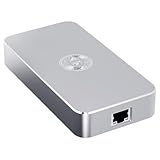
- Smart Decentralized VPN Router for Home, Office & Travel: Built with decentralized DPN technology, the SE delivers secure, private, and stable internet access across home, office, hotel, and public WiFi environments. No apps, accounts, or technical setup required.
- Plug‑and‑Play Privacy Protection with No Subscription Fees: Enjoy instant privacy the moment you power it on. The SE provides encrypted browsing, identity protection, and region‑free access without monthly charges or complicated configurations.
- Enterprise‑Grade Firewall & Network Security: Equipped with advanced filtering, ad‑blocking, and threat‑prevention features, the SE protects your devices from tracking, malicious attacks, and unsafe networks—ideal for remote work and sensitive data.
- Ultra‑Low Power, 24/7 Stable Performance: Designed for long‑term operation, the SE runs quietly and efficiently with ultra‑low power consumption. Perfect for continuous home use, multi‑device connections, and always‑on privacy.
- Compact, Portable Design for Secure Travel Connectivity: Small enough to take on the go, the SE keeps your connection safe in hotels, Airbnb stays, airports, and cafés. Protect your online identity wherever you travel with reliable plug‑and‑play security.
Those dates describe a point-in-time status, not a guarantee that a store listing or installation route will remain available. Before choosing uBlock Origin for Chrome or Edge, check the project’s current installation table and the browser’s live add-on store. Do not assume that a listing available today will remain available after a browser’s Manifest V2 transition.
Do these 3 things before closing this tab:
1Scan for outdated or missing drivers - takes under a minute2Clear out junk files and repair common Windows errors3Fix the driver behind crashes, sound loss and screen glitchesWhat the project asks you not to do
The project describes uBlock Origin as a standalone content blocker and advises users not to run it alongside another content blocker. Running overlapping blockers can create confusing exceptions, duplicated filtering and difficult troubleshooting. If you switch products, disable or remove the old blocker before evaluating the new configuration.
How AdGuard for Windows differs
System-wide scope
AdGuard presents version 8.0 as a Windows desktop product that filters browsers and applications. Its advertised modules include ad blocking, privacy protection, Safe Web, parental controls and filtering options for DNS, annoyances, browsing security, extensions and app management. The practical reason to select it is coverage outside a single browser.
“System-wide” does not mean every packet is guaranteed to be filtered in every circumstance. Coverage depends on the applications, protocols and settings involved. AdGuard’s own description is the evidence for its claimed browser-and-app scope; it is not an independent audit of every Windows program.
Network driver and HTTPS filtering
AdGuard explains that its network filtering uses a driver. For HTTPS filtering, it generates and installs a local root certificate so encrypted connections can be inspected and filtered on the computer. This is a substantial difference from adding an extension to a browser.
Read the certificate prompt carefully during setup. A local certificate authority allows the installed app to participate in encrypted-traffic inspection; that can improve filtering coverage but also changes the trust path for HTTPS connections. Keep the feature enabled only if that trade-off matches your needs, and use the app’s exclusions when a particular program cannot work correctly with interception.
Rank #3
AdGuard says its system changes are reset after uninstalling. That is a vendor statement about the product’s uninstall behavior, not an independently verified guarantee for every third-party driver or application state.
The separate AdGuard browser extension
AdGuard also publishes a browser extension identified in its official overview as version 5.5. That extension provides browser-level ad and tracker blocking. It is not the same product as AdGuard for Windows.
AdGuard says users of the Windows desktop app do not need the browser extension and can use AdGuard Assistant to manage filtering instead. Installing both may be unnecessary and can make it harder to determine which component supplied a rule or exception. For this comparison, the relevant AdGuard product is the desktop app, not version 5.5 of the standalone extension.
What’s actually slowing this PC down?
Pick the symptom - the matching free tool is one click away.
Requirements, trial and cost decisions
AdGuard for Windows requirements
AdGuard’s current knowledge base lists these minimums:
- Microsoft Windows 10 or later.
- At least 6 GB of RAM.
- A two-core processor running at 2.0 GHz or faster.
- 4 GB of free disk space.
AdGuard’s product overview says version 8.0 no longer supports Windows 8 or Windows 8.1. A machine that still runs either older operating system must be upgraded or use a different approach; do not install version 8.0 expecting support.
uBlock Origin requirements
The cited project material does not state a separate Windows RAM, processor or disk minimum for uBlock Origin. It is installed through a compatible browser, so the browser and operating system’s own requirements apply. The extension’s project description emphasizes CPU and memory efficiency, but no independent benchmark is supplied here.
Rank #4

- Entry-Level Privacy Gateway: Designed for users who want simple online privacy protection at an affordable level—ideal for basic home networking and daily internet use.
- Secure Browsing for Everyday Needs: Perfect for email, social media, online shopping, and standard streaming—protecting your connection while keeping setup and operation easy.
- Lightweight Protection Against Common Online Threats: Helps reduce exposure to unwanted ads, trackers, and risky websites, improving online safety for your household.
- Simple Setup, No Technical Skills Required: Plug it in, follow the quick steps, and start using—an excellent choice for beginners who don’t want complicated network configurations.
- Decentralized VPN (DPN) Included – No Monthly Payments: Get built-in decentralized VPN access with lifetime free usage, helping you stay private without paying recurring subscription fees
What the trial tells you
AdGuard lists a 14-day trial. The available material does not establish a current license price, renewal amount or regional tax treatment, so verify those details on the checkout screen before paying. uBlock Origin is described by its project as free and open source.
Compare the cost with the scope you need. Paying for a desktop app is easier to justify when filtering non-browser applications is the reason you need it. If all of your activity is in one browser, a free browser extension may solve the actual problem without the extra system layer.
Installation and first setup
Install uBlock Origin in Firefox
- Open Firefox’s Add-ons and Themes manager and search for the official uBlock Origin listing.
- Confirm that the publisher and project identity match the official uBlock Origin project before selecting the install control.
- Accept the browser’s permission prompt and pin the extension if you want its toolbar controls visible.
- Open the extension’s dashboard and review the enabled filter lists. Keep the defaults initially so you can identify whether a later change causes a site problem.
- Visit a site you trust, open the extension’s per-site controls and create an exception only when you understand what functionality the exception restores.
The exact store interface can change. If Firefox presents a different label, use the current official listing rather than an unofficial mirror or a similarly named add-on.
Install uBlock Origin in a Chromium browser
- Check the project’s current installation guidance first; Chromium store policy is changing during 2026.
- Use the browser store route that the project currently lists for your browser, if one is available.
- Review the extension permissions and confirm the publisher before installing.
- Open the dashboard, leave the default lists enabled initially, and test the sites and web applications you rely on.
- If the store no longer offers the extension, do not use an unverified package as a substitute. Reassess Firefox or another supported route instead.
Install AdGuard for Windows
- Check that the PC meets Windows 10-or-later, 6 GB RAM, two-core 2.0 GHz processor and 4 GB free-space requirements.
- Download the current Windows installer from AdGuard’s official product channel and launch it with an account that can approve software installation.
- Review the installer choices for network filtering and HTTPS filtering. The latter involves a locally generated root certificate.
- Complete the installation, restart any applications the installer requests, and open the AdGuard control panel.
- Use the product’s app-management and filtering sections to decide which programs should be covered. Test browsers and one or two non-browser applications separately.
- Use the 14-day trial period to check that essential sites, desktop apps, updates and sign-in flows work before deciding whether to license the product.
Controls and day-to-day management
uBlock Origin’s control model
uBlock Origin is list- and rule-oriented. Filter lists provide broad blocking, while per-site controls let you relax or tighten behavior for a particular domain. Advanced users can work with granular rules and the extension’s documented filtering options. This is powerful, but it also means that a mistaken rule can break a site until you identify and undo it.
When troubleshooting, start with the smallest change: temporarily disable filtering for the affected site, reload it, and then inspect which list or rule produced the result. Avoid switching every list at once; changing one variable makes recovery possible.
Crashes, No Sound, or Screen Glitches?
Random freezes, missing sound and display glitches usually trace back to one bad driver. Find and replace yours safely.Free scan · under a minuteWindows Errors? Fix Them Before They Spread
Repair common Windows errors and clear accumulated junk for a smoother, more stable PC - no reinstall needed.Free scan · no reinstallAdGuard’s module model
AdGuard organizes protection around desktop-app controls and modules such as ad blocking, tracking protection, DNS, annoyances, browsing security, parental controls, extensions and app management. This is easier for a household that wants a central Windows policy, but it introduces more settings and more possible interactions than a single browser add-on.
Keep a record of deliberate exclusions. If a program stops connecting after HTTPS filtering is enabled, test that program with the relevant protection setting excluded before disabling every module. If the problem disappears, restore protections one at a time to find the narrowest safe exception.
Independent reader supportYour contribution helps us test, update, and keep practical guides available for everyone.Which one should you choose?
Choose uBlock Origin when these statements describe you
- Your advertising and tracking concerns are primarily inside a web browser.
- You use Firefox or are willing to verify current Chromium availability before installing.
- You want a free, open-source project with detailed filter-list and per-site controls.
- You prefer not to install a network driver or local HTTPS inspection certificate.
- You are comfortable handling occasional site exceptions yourself.
Choose AdGuard for Windows when these statements describe you
- You want one Windows application to cover browsers and other desktop apps, as the vendor describes.
- You need central controls for privacy, DNS, annoyances, browsing security or parental restrictions.
- Your PC meets the stated Windows 10-or-later and hardware requirements.
- You accept a desktop installation, possible network-driver integration and the implications of HTTPS filtering.
- You are willing to evaluate the 14-day trial before purchasing a license.
Neither is automatically better for every Windows user
A browser-only user may gain nothing from system-wide filtering and may prefer the simpler extension. A household with several browsers and applications may find browser-by-browser extensions incomplete and prefer a central desktop policy. The right choice follows the traffic you need to control, not the longest feature list.
Privacy, security and compatibility trade-offs
Trust boundary
With uBlock Origin, the main trust boundary is the browser extension and its filter lists. With AdGuard for Windows, the trust boundary includes an installed Windows application, its network driver and, when HTTPS filtering is enabled, its local certificate. Neither description is a claim that one product is universally safer; they simply involve different levels of system access.
Site and app breakage
Any blocker can interfere with login widgets, video players, payment pages, software update checks or web applications that depend on advertising or tracking domains. Browser-level exceptions affect the browser. Desktop-app filtering can affect programs that never display a web page, so test those programs individually after installation.
Windows version changes
AdGuard’s version 8.0 support statement excludes Windows 8 and 8.1. uBlock Origin’s Chromium installation status can change as browsers move from Manifest V2 toward Manifest V3. Recheck both the operating-system requirement and the browser-store route immediately before deployment, especially on managed or older PCs.
Troubleshooting guide
A website works only when the blocker is disabled
- Reload the page with the blocker enabled and confirm the failure is repeatable.
- Create a temporary site-specific exception rather than disabling protection globally.
- For uBlock Origin, inspect the dashboard and filter-list activity, then remove or adjust the narrow rule that caused the problem.
- For AdGuard, check the app’s filtering and HTTPS settings, then test the site with the smallest relevant exception.
- Remove the exception after the site or its provider fixes the underlying incompatibility, if practical.
A Windows application loses connectivity
- Identify whether the failure began after installing AdGuard or enabling HTTPS filtering.
- Test the application with the relevant AdGuard protection or app rule excluded.
- If an exclusion fixes it, keep the exception limited to that application and document why it exists.
- If the application still fails, restore its normal settings and consult the application’s support documentation rather than adding unrelated browser extensions.
uBlock Origin is unavailable in your Chromium store
Check the project’s current installation table and the browser’s policy status. The README’s 2026 dates are time-specific: Chrome Web Store removal is reported for August 31, 2026, while Edge’s consumer MV2 transition is described as running from August through the end of 2026. If the supported store route has closed, use Firefox or evaluate a desktop product instead of downloading an unverified build.
Both products are installed and behavior is confusing
Disable one blocker temporarily, reproduce the problem, and then test the other alone. The uBlock Origin project advises against running it alongside another content blocker. AdGuard also says its Windows desktop users do not need the separate browser extension; use one clear filtering path so exceptions and logs remain understandable.
Free tools Windows power users keep installed
One-click scans. No signup required.
A practical decision checklist
- Scope: Do you need one browser, or browsers plus Windows applications?
- Browser: Are you using Firefox, where the uBlock Origin maintainer says it works best, or a Chromium browser with changing MV2 availability?
- System access: Are you comfortable with a desktop app, possible network driver and optional HTTPS certificate filtering?
- Hardware: Does the PC meet AdGuard’s 6 GB RAM, two-core 2.0 GHz CPU and 4 GB free-space minimums?
- Operating system: Is the PC on Windows 10 or later?
- Controls: Do you want filter-list and per-site rules, or centralized app and protection modules?
- Cost: Is a free extension sufficient, or will app-wide coverage justify evaluating a 14-day trial and possible license?
- Maintenance: Can you test exceptions and revisit settings when a site or application changes?
For most Firefox users who want browser protection, start with uBlock Origin. For users who specifically need filtering beyond the browser and accept the additional system setup, evaluate AdGuard for Windows during its trial. Recheck browser-store status, Windows support, version numbers and current pricing immediately before installation because all four can change.
Quick Recap
Product prices and availability are accurate as of the date/time indicated and are subject to change. Any price and availability information displayed on Amazon at the time of purchase will apply.

