Free tools Windows power users keep installed
One-click scans. No signup required.
If you can hear the television but cannot make out the words, try captions and reduce competing sound first. Persistent difficulty can be a sign of hearing loss or another speech-understanding problem, but the symptom alone cannot identify the cause. A hearing professional can assess more than whether you detect sounds, including how well you understand speech in noise.
Why can you hear the TV but miss the dialogue?
Hearing a sound and understanding the words in it are related but distinct. Speech may seem muffled, some consonants may be hard to catch, or you may need the TV louder than other people prefer. The National Institute on Deafness and Other Communication Disorders (NIDCD) lists difficulty understanding people and turning up the TV as possible signs of noise-induced hearing loss; these signs do not diagnose that condition or establish the cause in an individual. NIDCD’s guidance on noise and hearing was last updated April 28, 2025.
As an Amazon Associate I earn from qualifying purchases.
Difficulty following dialogue can also depend on the listening situation. Background sound, voices that are harder for you to follow, or the way a program is mixed may make speech less clear. The American Speech-Language-Hearing Association (ASHA) includes trouble understanding speech in noise, high-pitched voices, or speech that sounds mumbled among possible signs of hearing loss, along with increased TV volume and listening fatigue. Those patterns can have different causes, so the TV symptom alone is not enough to tell which one applies.
In some conditions, speech understanding can be more impaired than basic sound detection would suggest. NIDCD describes auditory neuropathy as one example in which a person may detect sound but have difficulty recognizing spoken words. This is an example of why the symptom deserves context, not a likely diagnosis to infer from TV trouble. The NHS also describes auditory processing disorder as difficulty understanding sounds, including speech, despite usually normal hearing; that information is not a basis for labeling an adult with TV difficulty.
#1 Best Overall

- Fire TV Soundbar Plus – Elevate your audio with an all-in-one 3.1 soundbar that’s easy to set up. Featuring built-in bass, crisp dialogue, Dolby Atmos, and DTS:X.
- Powerful sound with style – Take your entertainment to the next level with incredible sound, clarity, and depth packed into an all-in-one design.
- Crystal clear dialogue – A dedicated center dialogue channel sharpens conversations so you can catch every moment of your favorite shows.
- Sound in another dimension – Dolby Atmos features 3D sound that moves around you and clear dialogue. DTS:X delivers multi-dimensional audio for lifelike sound.
- Easy setup – Connect the included HDMI cable to your TV's HDMI eARC/ARC port and instantly enjoy audio that’s always in sync.
What to try at home first
- Turn on captions or subtitles. Check the television, set-top box, and streaming app for caption settings. ASHA recommends captioning when watching TV and video.
- Quiet competing audio. Turn down or switch off nearby music, fans, or other sound sources and see whether dialogue becomes easier to follow.
- Do not rely only on more volume. Raising volume may make sound louder without making the words clearer. If you regularly need a level that is uncomfortable for others, consider an assessment.
- Make conversation easier. Get the listener’s attention, face them, speak clearly at a regular volume, and rephrase when needed. Shouting can make speech harder to understand.
Could a TV listening device help?
A TV assistive listening device routes audio more directly to a listener. Depending on the setup, sound may reach a personal headset or receiver through wireless streaming, or a hearing loop may send it to a compatible telecoil or receiver. NIDCD describes assistive listening devices as a way to amplify desired sound, including sound from a home TV, particularly when background noise competes. ASHA also describes TV accessories using wireless streaming or loop systems.
These are categories, not a guarantee that a particular product will work for every viewer. Before buying, check how the device connects to your television and whether it works with your hearing aid or cochlear implant, if you use one. Some arrangements require a separate receiver; loop use requires compatible equipment. The cited guidance does not establish compatibility for specific models.
Rank #2

- HEAR YOUR TV BETTER: Designed with simplicity in mind, the Bose TV Speaker is an all-in-one soundbar that clarifies speech and is a simple fix for better TV sound
- WIDE, NATURAL SOUND: 2 angled full-range drivers deliver a more realistic, spatial audio experience for overall better TV sound from a small soundbar
- ENHANCED DIALOGUE: This sound bar for smart tv is designed to specifically focus on clarifying and elevating vocals and pronunciation
- BLUETOOTH TV SPEAKER: Pair your device to this Bluetooth soundbar to wirelessly stream your favorite music and podcasts. Connect up to 3 devices through the inputs (HDMI, Optical in, and AUX in); the first powered on device will automatically connect
- SIMPLE SETUP: A single connection from this compact soundbar to the TV via an optical audio cable (included) or an HDMI cable (sold separately) has you up and running in minutes
- How sound reaches you: personal headset or receiver, wireless streaming, or a loop-and-telecoil arrangement.
- What must be compatible: the TV’s available audio output and the features of the hearing aid, cochlear implant, or receiver.
- Where you listen: results may differ in a quiet room versus a noisy one.
“Wireless TV listening headphones” is a useful category phrase when exploring options, not an endorsement of a particular listing. A device can make sound easier to access, but it cannot determine why dialogue is unclear.
If you already wear hearing aids
Ask your audiologist or hearing-care professional about TV listening modes, streaming, and microphone settings rather than assuming one setting is best. In a 2024 study, Plyler, Razavi, Hausladen, and Humphrey evaluated 20 experienced hearing-aid users. TV streaming improved performance in noise when the hearing-aid microphones were muted; the study found no benefit from streaming with microphones attenuated or muted while listening in quiet. The small, specific study does not establish a universal setting or promise the same result for other listeners.
Rank #3

- Straight from the theater to your home: easy set-up, built-in tweeter, 2-ch speaker with simple Bluetooth connection
- Deep sound with Bass Reflex speaker
- High power with a slim design that matches any room and is perfect for small living spaces
- Voice enhancement feature is great for TV content with hushed dialogue, or to make conference call participants easier to hear
- Easy TV set up with HDMI ARC
Hearing aids can improve hearing and speech comprehension for some people with sensorineural hearing loss, but amplification has practical limits: devices do not perfectly separate wanted sound from background noise, and professional programming or adjustment may matter. NIDCD’s over-the-counter hearing aid guidance says OTC hearing aids are intended for adults 18 and older who believe they have mild to moderate hearing loss. It advises consulting a hearing professional when conversation is difficult in quiet or loud everyday sounds, because OTC devices may not work well for more severe loss.
Independent reader supportYour contribution helps us test, update, and keep practical guides available for everyone.When to arrange a hearing assessment
Seek a hearing professional if the difficulty persists, if speech is hard to understand even in quiet, or if one ear is markedly different from the other. Tell the professional which situations are difficult—TV dialogue, group conversation, particular voices, or speech in noise—so the assessment can address the problem you actually notice.
Rank #4

- Studio-Level Voice Performance: This sound bar features a premium 16mm silk film tweeter. It restores accurate high-frequency sound, reduces harsh distortion, and delivers clear, lifelike vocals and music, perfect for home movies and music streaming.
- High-Fidelity Bass Without Distortion: Equipped with dual 3.9*2.1 inch upgraded bass drivers and dual bass reflex ports, this soundbar for tv optimizes internal airflow. It produces strong, clean bass even at max volume, greatly upgrading your home theater sound system listening experience.
- 4-In-1 Multi-Scene Connection Solution: This tv soundbar supports TV-ARC, Optical, 3.5mm AUX and Bluetooth 5.3. It works perfectly with smart TVs, projectors, game consoles and mobile devices for a tidy, high-performance home theater sound system.
- AUX Volume Enhancement Mode: When connecting smart TVs, computers and other devices via 3.5mm AUX, double-click the boost button to amplify and restore volume. It fixes low-volume issues and ensures stable audio output from your soundbar.
- Optical Wired Stable Sound Transmission: Optical wired connection avoids signal interference and audio stutter. It eliminates popping and dropouts, enabling your sound bar to deliver consistent, pure sound quality at all times.
A basic hearing test and a speech-in-noise assessment answer different questions. ASHA notes that speech-in-noise testing may be more informative than word-recognition testing in quiet when the main complaint is understanding speech in noise. This can help explain why a quiet-room result may not fully reflect a person’s everyday listening difficulty.
For general signs and communication guidance, see ASHA’s overview of hearing loss in adults and tips for communicating with someone who has hearing loss. For information specifically about auditory neuropathy, NIDCD provides an overview of auditory neuropathy, its causes, and treatment. The NHS page on auditory processing disorder advises contacting a GP if someone has trouble hearing or understanding speech.
Quick Recap
Best Value
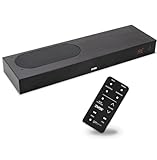
- CLEAR DIALOGUE TECHNOLOGY: Hear every word effortlessly with our sound bar for TV, featuring patented technology that separates and enhances voices, eliminating background noise. Enjoy seamless understanding, even in busy audio environments, for a frustration-free experience.
- CUSTOMIZABLE VOICE CLARITY: Tailor your listening experience with twenty AccuVoice settings, allowing you to fine-tune voice clarity for your needs. Enjoy clear dialogue from your sound bar, making every conversation crisp and easy to understand on your TV.
- RICH BASS: A powerful amplifier and dual built-in woofers deliver wide range sound, including rich bass – from a cabinet less than 2” high. Enhance your viewing experience with balanced audio that brings every beat and explosion to life.
- CONSISTENT VOLUME CONTROL: Say goodbye to jarring volume spikes with our Output Leveling feature, which instantly reduces the impact of loud commercials. Enjoy smooth, balanced audio levels for a more comfortable and uninterrupted listening experience.
- IMMERSIVE 3D SOUND EXPERIENCE: With PhaseCue virtual surround technology, enjoy room-filling 3D audio from a compact sound bar. Transform your space with rich, expansive sound that brings movies and music to life, all from one small, powerful cabinet.
Product prices and availability are accurate as of the date/time indicated and are subject to change. Any price and availability information displayed on Amazon at the time of purchase will apply.

