Recommended Free Tools
Conventional IVF incubators and time-lapse systems both provide controlled conditions for embryo culture. The key difference is observation: conventional care requires an embryologist to remove embryos briefly for periodic microscope checks, while a time-lapse system takes repeated images inside the incubator so development can be reviewed without routine removal for every observation.
That process difference may reduce handling and create a more continuous developmental record, but it has not been shown to improve the chance of a live birth for most IVF patients. Time-lapse imaging, embryo-selection software, and the clinic’s interpretation of either are separate issues. Before paying for the option, ask exactly what your clinic uses, how it changes your treatment pathway, and what the additional fee includes.
As an Amazon Associate I earn from qualifying purchases.
What the two incubator approaches actually do
Conventional IVF incubation
In a conventional laboratory, embryos remain in an incubator between scheduled assessments. The incubator maintains the culture environment, including temperature and gas conditions selected by the laboratory. At observation points, an embryologist takes the dish out briefly, examines embryos under a microscope, records developmental stage and morphology, and returns the dish to the incubator.
The embryologist therefore sees snapshots rather than an uninterrupted sequence. A check might record cell number, fragmentation, or the appearance of the inner cell mass and trophectoderm at a particular time. Events occurring between checks are not directly observed.
#1 Best Overall

- Good Quality: Our lab incubator crafted from durable galvanized sheet for good longevity and corrosion resistance. Adjustable shelf bracket and transparent window enhance usability and safety, ensuring temperature consistency
- Bright Digital Display: Easily adjust the temperature from RT to 70°C (0-158°F). The LCD panel features a clear and bright digital display, showing both the current temperature and set temperature for easy monitoring of the incubation conditions
- Excellent Heating Effects: This convection incubator has a hot air circulation system for uniform temperature distribution within the incubator. Double silicone seals minimizing lab incubator heat loss and temperature fluctuations
- Large Capacity: Inside size 11in×11in×11in (L×W×H) incubator offers ample space for various applications. Power switch is conveniently located on the incubator, easy control during incubation
- Widely Use: Our incubator serves a wide range of purposes, including reptile or amphibian chicken egg incubator, cultivation of bacteria and microorganisms, scientific research in universities and colleges
Time-lapse incubation and imaging
A time-lapse system combines an incubator with a camera and imaging software. The camera captures images at repeated intervals while embryos stay in the culture system. Embryologists can review a sequence of development instead of relying only on a few physical inspections.
Because imaging occurs within the system, the laboratory can often assess development without taking the dish out for each observation. This is the main workflow distinction; it does not automatically mean that the system uses artificial intelligence or that an algorithm chooses the embryo.
Imaging, manual grading, and algorithmic selection are different
A clinic may use time-lapse images in at least three ways:
- Observation only: the images provide a continuous record, but an embryologist makes the selection using the clinic’s usual criteria.
- Observation plus manual interpretation of the sequence: the embryologist considers the timing and pattern of developmental events in addition to morphology.
- Observation plus selection software: an algorithm analyzes images and may produce a ranking or recommendation that an embryologist then considers.
These approaches should not be treated as interchangeable. Evidence for a camera’s ability to record development does not, by itself, prove that a selection algorithm improves outcomes. Ask the clinic which of these workflows it follows.
Side-by-side comparison
| Dimension | Conventional IVF incubator | Time-lapse incubator/system |
|---|---|---|
| Observation | Periodic microscope checks by an embryologist, usually after brief removal from the incubator. | Repeated images create a developmental sequence while embryos remain in the system. |
| Handling during checks | Each physical assessment requires brief removal for viewing. | Routine imaging can be performed without removal for every observation. |
| Selection method | Embryologist assesses morphology and developmental stage at observation points. | The clinic may use manual review, an algorithm, or both; practices vary. |
| Live-birth evidence | Serves as the conventional comparator in randomized trials. | No established improvement for most patients in current regulator guidance and the TILT randomized trial. |
| Safety comparison | Established standard pathway, with laboratory-specific protocols. | The 2026 NICE evidence review reports no safety difference from conventional benchtop incubators in the evidence it evaluated. |
| Price | Usually part of the clinic’s standard IVF pathway; the amount varies by clinic and country. | May be sold as an add-on; no universal price is established by the reviewed sources. |
The comparison is about workflow, not a simple “old versus advanced” ranking. A more elaborate device can change how information is collected without changing the underlying probability that a transferred embryo results in a baby.
Why clinics use time-lapse systems
Less routine removal for observation
Every physical inspection in a conventional workflow involves taking the culture dish out, examining it, and returning it. Time-lapse imaging can allow the laboratory to review development without that repeated handling. Avoiding routine removal is a plausible operational advantage because the embryo remains in the controlled culture environment during image capture.
Rank #2

- A professionally thermostatically controlled lab incubator ceases operation once the target temp is attained. The system automatically reactivates when temp exceed the setpoint by 2°C (35.6°F), repeating this cycle to maintain stable temp regulation within the specified range
- Long press "+" "-" at the same time, the temp unit is converted to ℉. Hot air circulation system ensures uniform temp distribution throughout the incubator, with a maximum heating capacity of 65°C (148°F). Please note that when setting the temp, you need to add 5℃ (9°F) more on the target temp, for example: target 30℃ (86°F), need to set 35℃ (95°F)
- The lab incubator employs a dual-layer silicone gasket to ensure good sealing, minimizing thermal loss and temp fluctuations. Thermal equilibrium is achieved approximately 20 minutes after activation, with temp variations between shelves, range: ±0.3–0.6°C (±0.54-1.08°F)
- Made of sturdy ABS material for easy cleaning. Removable interior shelves accommodate various laboratory vessels such as glass petri dishes and test tubes
- Includes a standard 110V power cord for lab, school, and home use. Suitable for scientific research, agricultural studies. Also supports egg incubation, mushroom cultivation, yeast fermentation, etc
However, a plausible reduction in disturbance is not the same as a demonstrated improvement in live birth. The clinical question is whether the entire time-lapse pathway produces better patient outcomes, not merely whether its camera records more images.
Outdated Drivers Are Slowing You Down
One free scan finds every outdated or missing driver and matches the right update for your exact hardware.Free scan · exact hardware matchPC Slower Than It Used to Be?
A free scan shows the junk files, broken settings and background clutter dragging Windows down - then fixes them in one click.Free scan · Windows 10 & 11A fuller developmental record
Continuous or repeated images may show the timing and sequence of cell divisions that a few snapshots miss. That record can help an embryologist understand how an embryo developed under the clinic’s chosen criteria. It may also make the laboratory’s review more reproducible within its own protocol.
The existence of more information does not determine how predictive that information is. A clinic should be able to explain which observations it uses, whether those observations are validated in its patient population, and whether an algorithm’s output changes the embryologist’s decision.
What clinical studies show about live birth
Cochrane review: nine randomized trials, but uncertain evidence
The 2019 Cochrane review included nine randomized controlled trials involving 2,955 couples undergoing IVF or intracytoplasmic sperm injection. It judged the evidence low or very low quality because of concerns including risk of bias, imprecision, indirectness, and inconsistency.
Across the assessed outcomes, the review found insufficient good-quality evidence to choose time-lapse incubation and assessment, with or without selection software, over conventional incubation and assessment. The outcomes considered included live birth or ongoing pregnancy, clinical pregnancy, miscarriage, and stillbirth.
In the comparison of time-lapse with conventional image assessment versus conventional incubation and assessment, the pooled live-birth or ongoing-pregnancy estimate was odds ratio 0.91 (95% confidence interval 0.67–1.23; three randomized trials; 826 participants). Because the confidence interval includes both potential benefit and potential harm, and the evidence was uncertain, this result is not proof that the methods are equivalent. It means the studies did not provide a reliable basis for claiming an advantage.
Rank #3
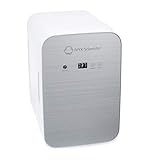
- VERSATILE: Can be set as a refrigerator or warm incubator for a variety of science projects. Especially well suited to grow yeast for sourdough bread making.
- PRECISE TEMPERATURE CONTROL: from 0°C to +55°C in increments of 1°C. If kept on the same shelf, temperature fluctuations of 0.5°C (temperature Gradient exists between the bottom and top of incubator)
- CAN BOTH HEAT AND COOL: Can cool down down ~23°C below ambient temperature, heat up to 55°C
- SMALL FOOTPRINT: external dimensions of 8x11x12 in, internal dimensions of 6x6x10 inches. 5L capacity while only weighting 9 lbs
- PORTABLE: 110V Standard power cord included, as well as a 12V car adapter allowing it to run on the go
The 2024 TILT randomized trial
The TILT study, reported in The Lancet in 2024, was a multicentre, three-group, double-blind randomized controlled trial. It compared time-lapse systems used for undisturbed embryo culture with embryo selection, undisturbed culture alone, and conventional methods of embryo culture and selection.
The investigators reported that neither time-lapse imaging with selection nor undisturbed culture without selection increased live-birth rates compared with conventional methods in the trial’s tested setting. The report’s conclusion states: "the use of time-lapse imaging systems either for undisturbed embryo culture and embryo selection, or for undisturbed culture alone, did not result in increased rates of live birth compared with conventional methods of embryo culture and selection." Read the full report at The Lancet.
A single trial cannot answer every question about every laboratory protocol or patient group. It does, however, add substantial randomized evidence to the earlier uncertain literature. Its result does not support presenting time-lapse as a routine live-birth-enhancing add-on.
Quick wins for a faster PC:
Repair Windows errors before they cause bigger problemsFix Now →Fix the driver behind crashes, sound loss and screen glitchesFind Drivers →Current regulator and guideline summaries
The UK Human Fertilisation and Embryology Authority (HFEA) says five moderate- or high-quality studies have examined whether time-lapse with manual or automated grading improves the chance of having a baby. Its patient guidance rates both manual and automated time-lapse approaches black for improving the chance of having a baby for most fertility patients. HFEA’s wording for automated analysis is: "For most fertility patients, using a time lapse incubator with automated analyses of embryos, ie by using algorithms or artificial intelligence, is rated black for improving the chances of having a baby." See HFEA’s time-lapse guidance for the current assessment.
A 2026 NICE evidence review summarizes the European Society of Human Reproduction and Embryology position as recommending against time-lapse imaging as a tool to improve live-birth rates. The same review reports no difference in safety compared with conventional benchtop incubators in the evidence it assessed. The guideline evidence document is available at NICE NG257.
What the evidence does—and does not—establish
It does not establish a higher chance of a baby for most patients
The randomized evidence and current HFEA assessment do not establish that choosing a time-lapse system increases live-birth rates for most people having IVF. A clinic may have strong internal experience with the equipment, but a local success rate is not automatically evidence that the add-on caused the difference. Patient age, embryo number, diagnosis, laboratory practice, transfer policy, and other factors can affect outcomes.
Rank #4

- MADE IN USA: Designed and manufactured by Quincy Lab in Burr Ridge, Illinois. Quincy Lab has built dependable laboratory ovens, incubators, and warmers in America since 1973. Backed by Quincy Lab's 2-year parts and labor warranty and 3-year heating element warranty.
- CAPACITY & DIMENSIONS: 0.7 cubic feet (19.8 L) interior chamber measuring 10"W x 12"H x 12"D. Includes one fixed and one adjustable stainless steel chemical-resistant wire shelf plus a precision glass thermometer with rubber grommet.
- TEMPERATURE CONTROL & RANGE: Reliable bi-metal thermostat delivers consistent temperature control from ambient +2°C up to 62°C (143°F). Ideal for cultures, cell culture work, test kits, biologicals, eggs, and general lab incubation.
- HEATING METHOD & CONSTRUCTION: Gravity convection with Incoloy heating elements. High-grade aluminum interior and powder-coated steel exterior in Dove Grey / Ivory. See-through high-optic acrylic door lets you monitor samples without breaking temperature stability. Note: acrylic door is not suitable for high-moisture applications or samples containing ammonia, alcohol, certain oils, or harsh chemicals.
- SAFETY & POWER: Illuminated power switch, thermal and electronic safety shutoff, and in-line fuse protection. UL/cUL Listed. 115V single-phase, 235W, 50/60 Hz.
It does not prove that embryos are identical under both workflows
An uncertain odds ratio with a confidence interval crossing 1 should not be translated into “the systems are proven identical.” The correct conclusion is narrower: available studies have not shown a dependable live-birth advantage, and the quality and applicability of evidence vary.
The Tool Desk
Outbyte PC Repair FREERepair Windows errors before they cause bigger problemsFix Now →Outbyte Driver Updater FREEScan for outdated or missing drivers - takes under a minuteDriver Scan →It does not prove better embryo quality
Time-lapse creates more observations, but the reviewed guidance does not establish that the equipment improves embryo quality. HFEA specifically distinguishes the potential benefit of continuous observation from claims about improving the chance of a baby and notes that it did not assess every claimed benefit, such as increased embryo quality, in the cited add-on evaluation.
It does not make every algorithm reliable
Selection software is an additional layer on top of imaging. Algorithms can be trained on particular datasets and may produce rankings that do not transfer to every laboratory or patient population. The fact that a clinic displays an algorithmic score does not tell you whether that score has been shown to improve live birth in patients like you. Ask whether an embryologist can override the result and how the software was evaluated.
Independent reader supportYour contribution helps us test, update, and keep practical guides available for everyone.Cost, availability, and what you are actually buying
Time-lapse equipment is specialist laboratory hardware operated within an IVF clinic, not a patient-use device. Clinics may include it in their standard laboratory service or charge it as an optional add-on. The reviewed sources do not establish a universal price, and costs can differ by country, clinic, treatment package, and whether embryo selection software is included.
Ask for a written breakdown that identifies:
- the additional fee for time-lapse incubation or imaging;
- whether the fee covers the entire culture period or only a specific procedure;
- whether algorithmic analysis is included or billed separately;
- who reviews the images and how the result affects embryo selection;
- whether declining the add-on changes the laboratory, transfer, or follow-up pathway; and
- what happens if the clinic’s time-lapse unit is unavailable or an embryo cannot be imaged as planned.
Do not infer value from a package label such as “advanced incubation.” The clinically relevant question is what additional service you receive and whether its expected benefit has been demonstrated for your circumstances.
Do these 3 things before closing this tab:
1Fix the driver behind crashes, sound loss and screen glitches2Repair Windows errors before they cause bigger problems3Scan for outdated or missing drivers - takes under a minuteHow to compare the options with your clinic
- Identify the default pathway. Ask how embryos are incubated and assessed when a patient does not purchase time-lapse. Request the timing and type of conventional microscope checks.
- Clarify the role of imaging. Find out whether the system is used for observation only, for manual interpretation of developmental timing, or for both imaging and algorithmic selection.
- Separate the camera from the algorithm. If software produces a score or ranking, ask what the embryologist does with it and whether the embryologist can reject it.
- Request outcome evidence in the right population. Ask what evidence the clinic relies on for patients with a profile like yours, including age range, embryo stage, fresh or frozen transfer, and the clinic’s own protocol.
- Check the financial difference. Obtain the exact additional fee and a list of inclusions. A claimed benefit cannot be weighed against cost until you know what is being purchased.
- Ask about alternatives. If you decline, confirm that you still receive the clinic’s normal incubation and embryo-assessment pathway and that declining will not delay or disadvantage treatment.
- Record the answer before consenting. Make sure the consent or treatment estimate names the service, the use of any selection software, and the cancellation or substitution policy.
When a patient might still consider it
A patient may value a more continuous record or prefer a clinic workflow that avoids routine removal for observation. Those are process preferences, not proven live-birth benefits. Someone who chooses the option should do so with the understanding that the principal established difference is how observation is performed.
Conversely, a patient who declines it is not necessarily accepting an inferior form of IVF. Conventional incubation and assessment remains the comparator used in randomized trials and is a standard pathway in IVF laboratories. The decision should therefore be based on the clinic’s explanation, the fee, and your preferences rather than on the assumption that newer equipment must produce better outcomes.
Common misunderstandings to avoid
- “More images guarantee a better embryo.” Images provide more observations; they do not guarantee improved embryo quality or implantation.
- “Time-lapse always means artificial intelligence.” A system can provide images for an embryologist without using an algorithm.
- “An algorithm chooses the best embryo objectively.” Algorithmic outputs are still part of a clinic’s clinical workflow and require interpretation; evidence of improved live birth for most patients has not been established.
- “No proven benefit means proven equality.” The evidence is not strong enough to claim that every system and protocol are identical in effect.
- “A clinic’s higher success rate proves the add-on worked.” Outcomes are influenced by many patient and laboratory factors, so an association does not establish causation.
- “The price is standardized.” Time-lapse is clinic-specific specialist equipment, and no universal consumer price is supported by the available evidence.
Questions to take to an IVF clinic
- Is time-lapse imaging used for observation only, for embryo selection, or for both?
- Does the clinic use a selection algorithm, and how does an embryologist use or override its result?
- What is the additional fee, and exactly what does it include?
- What outcome evidence does the clinic rely on for patients with a profile like mine?
- If I decline the add-on, what incubation and embryo-assessment pathway will I receive?
- How are images stored, reviewed, and incorporated into the treatment record?
- What happens if the equipment is unavailable or the imaging record is incomplete?
Bottom line
Conventional incubators provide periodic snapshots after brief microscope checks; time-lapse systems provide repeated images while embryos remain in the incubator. That can change laboratory workflow and reduce routine removal, but current randomized evidence, HFEA guidance, and the 2026 NICE review do not show a live-birth improvement for most IVF patients. Treat time-lapse imaging and embryo-selection software as separate decisions, and choose only after the clinic explains the exact process, evidence, and additional cost.
Quick Recap
Product prices and availability are accurate as of the date/time indicated and are subject to change. Any price and availability information displayed on Amazon at the time of purchase will apply.

