Free tools Windows power users keep installed
One-click scans. No signup required.
Coral reefs look spectacular because living coral tissues, symbiotic algae, and the animals sheltering in the reef create a layered palette of reds, oranges, blues, greens, yellows and purples. The color is biologically meaningful—not merely a camera effect—and it belongs to an ecosystem that covers less than 1 percent of the ocean floor while supporting about 25 percent of marine species, according to National Geographic (2024).
A 15-photo tour of reef color and life
The gallery below is designed as a visual guide. Species are identified conservatively: reef photographs often show only a partial profile, and several fish have close look-alikes. Flash or full-spectrum lighting can reveal wavelengths absorbed by seawater, so a photograph may show colors more strongly than unaided human vision at the same depth.
As an Amazon Associate I earn from qualifying purchases.
Photo 1: A coral city in blue water
Photo 2: Clownfish in an anemone
Photo 3: Beaked coralfish or butterflyfish
Photo 4: A blackfin barracuda in open water
Photo 5: Manta ray over the reef
Photo 6: A marine turtle above coral heads
Photo 7: Mosaic jellyfish
Photo 8: Sea fans in a current
Photo 9: Parrotfish grazing
Photo 10: A pygmy seahorse hidden in structure
Photo 11: Ghost goby on a sea fan
Photo 12: A Caribbean reef shark
Photo 13: Small reef invertebrates
Photo 14: A close-up of living coral tissue
Photo 15: A bleached section beside living coral
Why coral reefs are so colorful
Coral is an animal, not a plant. Reef-building corals live with zooxanthellae that use light to make energy and share some of it with their hosts. The algae’s pigments influence the coral’s brown, green or golden tones, while coral proteins can create vivid fluorescent reds, pinks, purples and greens. Color also comes from neighboring organisms: fish scales, sea fans, sponges, algae, anemones and invertebrate shells.
Outdated Drivers Are Slowing You Down
One free scan finds every outdated or missing driver and matches the right update for your exact hardware.Free scan · exact hardware matchPC Slower Than It Used to Be?
A free scan shows the junk files, broken settings and background clutter dragging Windows down - then fixes them in one click.Free scan · Windows 10 & 11Water changes what a diver sees. Red light disappears fastest with depth, so natural scenes often look predominantly blue. A strobe or full-spectrum light restores wavelengths absorbed by the water and can reveal reds and oranges that were present but visually muted. That does not make the photograph false; it means the lighting records more of the spectrum than ambient underwater light reaching the observer’s eyes.
#1 Best Overall
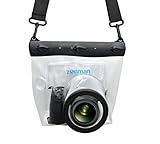
- Universal Compatibility: Designed for a wide range of DSLR, this Zonman waterproof case or bag fits most models of Canon, Nikon, Sony camera bodies. Perfect for cameras with a lens length up to 13cm or 5.12" and a diameter of 8cm or 3.15" , ensuring a secure fit for your valuable equipment. fit for cameras with lens not longer than 5.12'' like ::Canon Rebel T Series 80D 90D 55D 650D 750D 800D 6DMarkII 7DMarkII Nikon D90 D500 D610 D810 D850 D D3500 D5100 D5200 D5300 D5500 D5600 D7500 etc, or similar size.
- Easy Camera Function Access: Though fully enclosed for maximum protection, our housing case or bag features strategically placed finger holes, allowing effortless access to crucial camera functions like shutter release and zoom and focusing. Capture stunning underwater and wet-weather shots with ease.
- Ultimate Protection: Whether you're caught in rain, snow, or a sandy beach, our underwater housing case or bag shields your camera from the elements. Its complete seal locks out water, moisture, dust, mud, and sand, offering unparalleled protection in any environment.
- Dive Deep into Adventure: With an underwater depth capacity of approximately 5 meters or 16 feet, this case is ideal for a variety of water sports including diving, rafting, surfing, snorkeling, and swimming. Capture stunning underwater shots without worrying about water damage.
- Versatile Outdoor Use: Not just for water-based activities, this housing is also perfect for fishing, boating, and other outdoor pursuits where your camera might be exposed to harsh conditions. Enjoy peace of mind knowing your gear is safe from the elements.
How bleaching changes the spectacle
When unusually warm water stresses coral, the relationship with zooxanthellae can break down. The coral expels the algae and turns pale or white, a process known as bleaching. Bleached coral is still alive initially and can recover if conditions improve, but prolonged heat stress can cause starvation and death.
Warming is not the only pressure. National Geographic (2024) identifies ocean acidification, destructive fishing and pollution as additional threats. Acidification makes it harder for many reef organisms to build and maintain calcium-carbonate structures. Losing those structures removes hiding places, feeding surfaces and nursery habitat for the animals shown in the gallery.
Rank #2

- For Tough TG-6 Digital Camera
- Retains Access to All Camera Controls
- Supports Optional Lens Accessories
- Depth Rating: 147'
- Can Accommodate Two External Flashes
How many species live on a reef?
The scale is easy to underestimate from a single photograph. A Great Barrier Reef gallery cited by Condé Nast Traveler reports more than 1,500 tropical fish species and about 400 coral types. Smithsonian Ocean and FAO lists add turtles, rays, jellyfish, sea fans, crustaceans, mollusks, sponges, urchins and many small specialist animals. The U.S. National Park Service describes coral reefs as “among the most biologically diverse ecosystems on earth.”
Quick wins for a faster PC:
Scan for outdated or missing drivers - takes under a minuteDriver Scan →Clear out junk files and repair common Windows errorsFree Scan →Fix the driver behind crashes, sound loss and screen glitchesFind Drivers →| What a photograph shows | What it may indicate |
|---|---|
| Intense reds, oranges or purples | Artificial or full-spectrum light may be revealing wavelengths filtered by water; pigments can also be natural fluorescence. |
| Dense branches and crevices | Complex habitat offering shelter, feeding surfaces and nursery space. |
| Fish, turtles and rays together | Several parts of the food web and connected habitats, not a single “reef species.” |
| Bright white coral | Possible bleaching; confirm context because sediment, exposure and dead skeletons can look similar. |
Equipment for photographing a coral reef
A camera alone is not enough for safe, color-accurate underwater work. Photographers commonly use an underwater camera housing, wide-angle and macro lenses, strobes or video lights, buoyancy equipment and a red filter for suitable shallow conditions. Wide-angle lenses capture reef architecture and large animals; macro lenses reveal pygmy seahorses, gobies and polyps.
Rank #3

- Floating】:Our Dving Case Bag makes your camera to avoid dropping your valuables in the water.100% completely sealed, up to 20 meters deep.
- 【Powerful Function】:, dust, mud, sand, snow, grease, can the camera. your camera , for beach, pools, fishing, swimming, boating, kayaking, snorkeling,etc.
- 【Easy to Use】The camera can be operated directly in the case.
- 【Multi-Device Support】Our Dving Case Bag universal for most DSLRs such as for , .
- 【Quality Service】:If you have any questions about this product, you can us at any time. We have a professional customer service team and will provide you with the best quality service. We will try our best to solve your problem in time, please rest assured to buy.
- Use neutral buoyancy and keep fins, hands and equipment off the reef.
- Use strobes close to the subject to reduce the amount of water between light and lens.
- Set focus and exposure before moving close; chasing a subject increases contact risk and stirs sediment.
- Record depth and lighting conditions so viewers understand why colors may differ from unaided vision.
- Never feed, handle or reposition animals for a photograph.
What readers should take from the images
The brilliance is real, but it is not decoration detached from biology. Color signals living partnerships, camouflage, warning, courtship and habitat complexity. The same reef that produces a spectacular frame can be weakened by heat, acidification, pollution and destructive fishing. Protecting the structure behind the color is what keeps the fish, turtles, rays and tiny specialists in the picture.
Quick Recap
Best Value

- 【DESIGNED FOR】Go Pro Hero 13 Black/Hero 12 Black/Hero 11 Black/Hero 10 Black/Hero 9 Black.
- 【60M/196FT Waterproof】This waterproof housing case with upgraded waterproof sealing ring and tight buckle that help avoid water leakage effectively.You can use your camera to record underwater activity deep to 196FT/60 Meters without worrying about leaks,and it also won't damage the shooting effect, clear and vivid.
- 【STAINLESS STEEL MATERIAL】The hardware is made of stainless steel to prevent rusting after being used in the sea. You can dive into the sea do not have to worry about rust.
- 【LARGE FLAT GLASS LENS】Delivers maximum image sharpness above and below water.
- 【Excellent PMMA material&High Light Transmission】Waterproof up to 60m/196FT, ideal for diving, surfing, snorkeling and other water sports activities.Toughened glass in front of the camera, you can make your camera better light transmittance, LIGHT TRANSMISSION RATE OF 98.99%, Shoot more real, more beautiful pictures.
Rank #4

- Compatible with small DSLR/SLR cameras
- 100% waterproof protection, guaranteed for water depths up to 5 meters
- UV polycarbonate coated optical lens (diameter 85mm/3.3") allows you to take clear pictures
- Fits zoom lenses up to 9.5cm (3.7") in length
- Easy button control with the finger sleeve
Product prices and availability are accurate as of the date/time indicated and are subject to change. Any price and availability information displayed on Amazon at the time of purchase will apply.

