The Tool Desk
Outbyte PC Repair FREEClear out junk files and repair common Windows errorsFree Scan →Outbyte Driver Updater FREEScan for outdated or missing drivers - takes under a minuteDriver Scan →Thermal soaring uses rising air; dynamic soaring uses a horizontal wind-speed gradient. In thermal soaring, a pilot finds a buoyant column of air and circles or maneuvers inside it to gain altitude. In dynamic soaring, the aircraft repeatedly crosses a wind-shear layer, coordinating turns, climbs and descents to take energy from the changing wind velocity.
Both techniques let an unpowered aircraft remain aloft, but they require different weather, flight paths and risk management. A thermal pilot asks where usable convection will form. A dynamic-soaring pilot asks where a strong, organized shear exists and whether there is enough room to complete each energy-gaining cycle.
As an Amazon Associate I earn from qualifying purchases.
The short answer: vertical lift versus horizontal wind shear
A thermal is a mass of relatively warm, buoyant air rising through cooler surrounding air. A glider that circles within that updraft can climb even while its airspeed remains within the normal soaring range. The FAA Glider Flying Handbook calls thermals “the most common form of rising air used to sustain glider flight.”
What’s actually slowing this PC down?
Pick the symptom - the matching free tool is one click away.
Dynamic soaring does not depend on a sustained column of air moving upward. It extracts energy from a difference in horizontal wind velocity between adjacent layers. The aircraft crosses the shear, changes heading and altitude, and returns through the gradient in a way that increases its kinetic energy over a complete cycle. The Royal Society review Optimal dynamic soaring consists of successive shallow arcs defines it as a technique in which a bird or machine extracts propulsive energy from non-uniform horizontal winds, such as those over the ocean.
#1 Best Overall

- Ready & Easy to Fly - Built-in self-stabilization system, this RC plane is easy to fly. A beginner will learn to fly it just after hours of practice.
- Your 1st RC Glider- Light weight and durable foam structure will make it survive from some slight crashes.
- 2.4GHz Radio Control System - The remote can control the plane in 4 directions: up and down, left and right. And 2 or more planes can fly together without mutual confusion.
- Quality Assurance - We offer a 1 year aircraft warranty and a 3 months battery warranty. If a non-human problem occurs, you can contact us via Amazon message or the support email on the manual.
- Technical Support - It's common to have some problems in playing a hobby rc plane and we can solve almost all of them. Please read the user manual book carefully before start to fly.
That distinction is the key to the terminology:
- Thermal soaring: energy comes from vertical buoyant motion.
- Dynamic soaring: energy comes from spatial or temporal changes in horizontal wind speed.
- Ridge, wave and convergence soaring: separate lift mechanisms that should not automatically be called thermal or dynamic soaring.
How thermal soaring works
Why thermals rise
Sunlight warms the ground unevenly. Air in contact with a warmer surface becomes less dense than the surrounding air and begins to rise. As the rising parcel moves upward, its temperature, moisture and buoyancy determine whether it continues to climb, weakens or spreads out. Terrain, soil moisture, cloud cover and atmospheric stability all influence where thermals start and how strong they become.
For a pilot, the useful part is not simply that air is moving upward somewhere; it is that the updraft is strong and wide enough to offset the glider’s descent rate. The pilot searches for lift using visual cues, nearby clouds, terrain and instruments, then banks into a turn when a climb is detected. By adjusting bank angle and circle position, the pilot stays near the strongest part of the rising air rather than drifting into sink.
The normal thermal-soaring flight pattern
- Locate a likely source. Look for sun-heated surfaces, developing cumulus clouds and other signs of convection, while accounting for wind drift.
- Enter the lift. A sudden increase in climb rate, a positive variometer indication or a consistent change in bank pressure can identify the edge of an updraft.
- Center the climb. Turn toward the stronger side of the lift and vary the circle as the core moves or tilts with the wind.
- Leave with a plan. Stop circling when the climb weakens, the desired altitude is reached or the next glide requires a transition. Keep a reachable landing area.
Thermal strength and position change during the day. The FAA warns that no forecast can identify the exact time and location of an individual thermal an hour in advance. A forecast can describe the environment favorable for convection, but the pilot still has to find and center each usable core in real time.
Free tools Windows power users keep installed
One-click scans. No signup required.
What the National Weather Service ratings mean
The National Weather Service uses trigger temperature, thermal index and overdevelopment time in soaring forecasts. Its published categories describe forecast maximum lift, not a guaranteed climb rate for a particular glider or location.
| Forecast category | Maximum-lift threshold | How to interpret it |
|---|---|---|
| Excellent | 800 feet per minute or more | A forecast index indicating very strong potential lift; local conditions can still differ. |
| Good | 400 to less than 800 feet per minute | Useful thermal potential is forecast, subject to timing, cloud cover and local variation. |
| Fair | 200 to less than 400 feet per minute | Some climbs may be workable, but weaker cores and longer searches are likely. |
| Poor | Below 200 feet per minute | Forecast thermal lift is weak and may not exceed a particular glider’s sink rate. |
These thresholds are forecast-index definitions retrieved in 2026. They are not universal performance claims: a specific sailplane may climb faster or slower than the category suggests, and a pilot may encounter stronger or weaker lift than the regional forecast.
Rank #2

- READY & EASY TO FLY – Built-in self-stabilization system, this RC plane is easy to fly. A beginner will learn to fly it just after hours of practice.
- YOUR 1ST RC GLIDER - Light weight and durable foam structure will make it survive from some slight crashes.
- 2.4GHz RADIO CONTROL SYSTEM – The remote can control the plane in 4 directions: up and down, left and right. And 2 or more planes can fly together without mutual confusion.
- QUALITY ASSURANCE – We offer a 1 year aircraft warranty and a 3 month battery warranty. If a non-human problem occurs, you can contact us via Amazon message or the support email on the manual.
- TECHNICAL SUPPORT – It’s common to have some problems in playing a hobby rc plane and we can solve almost all of them. Please read the user manual book carefully before start to fly.
How dynamic soaring works
The wind gradient is the energy source
Near a surface, friction slows the wind. Above that boundary, the wind may be faster or travel in a different direction. A strong, organized change in wind velocity with height is a shear layer. If an aircraft crosses that layer while changing its heading and flight path at the right times, the wind can increase its airspeed and kinetic energy more than drag removes during the rest of the maneuver.
The aircraft is not “riding” a single updraft. It is repeatedly moving between air masses with different velocities. Its motion through the gradient converts wind energy into aircraft energy. The exact optimum depends on the wind profile, vehicle aerodynamics, allowable speed and maneuvering limits.
A simplified dynamic-soaring cycle
Real trajectories are tailored to the shear, but a conceptual cycle contains the following elements:
- Cross into faster-moving air. The aircraft climbs or turns through the shear so that the changing wind vector increases its airspeed relative to the surrounding air.
- Use the gained speed. The pilot or guidance system converts that airspeed into a shallow climb or acceleration while positioning for the next crossing.
- Turn through the gradient. A coordinated turn changes the aircraft’s heading relative to the wind. This is where the geometry of the maneuver determines whether energy is gained or lost.
- Descend through slower air. The aircraft returns across the shear on a path that preserves as much of the accumulated energy as possible.
- Repeat. Successive shallow arcs, S-shaped paths or related trajectories can maintain flight when each cycle gains at least as much energy as the aircraft loses to drag.
Dynamic soaring is therefore a coupled problem: the vehicle must be in the right place in the wind profile, at the right heading and speed, with enough altitude and room to complete the next turn. A shear that is strong but too turbulent, too close to terrain or too narrow to cross safely may be unusable.
Why albatrosses can travel without continuous flapping
Albatrosses commonly exploit wind differences above and near the ocean surface. Their repeated crosswind or S-shaped maneuvers let them gain energy from the shear and travel long distances without continuous flapping. “Without flapping” does not mean that an albatross never flaps: flapping may still be used for takeoff, acceleration, climbing out of an unfavorable area or other transitions. It means that sustained travel can be powered by the wind-gradient cycle rather than by repeated muscle-powered strokes.
Rank #3

- 1.Advanced 4-Channel Remote Control Airplanes: Ranger600 RC glider plane features a 4-channel remote that allows for precise control over ascents, descents, turns, and 3D aerobatic maneuvers, catering to the needs of adult enthusiasts seeking expert-level control.
- 2.Durable Design That Extends RC Plane Lifespan: A streamlined fuselage crafted from high-quality foam, paired with a rear-mounted propeller reduce nose resistance, extended flight time. Its design better protects the propeller and electronics, boosting confidence in every flight.
- 3.Three Level Flight Modes for All Skill Levels: Designed for a wide range of pilot skills, from beginners to expert. Start with assisted flight for beginners, then advance to pro mode for thrilling stunts. Help you learn flight step by step, build confidence effortlessly!
- 4.One-Key Stunts for Exciting RC Airplane Performances: With the push of a button, perform breathtaking stunts and enhance your flying sessions. The generous 23.6*18.1-inch size ensures a stable and wide-ranging flight experience. Up to 656 ft Control Distance.
- 5.Comprehensive Accessories Kit for Your RC Airplanes: The package includes 3 extra airplane batteries, 4 AA batteries for the remote, 3 propellers (one pre-installed), and a convenient five-port charger, providing everything needed for uninterrupted and enjoyable remote control plane flights.
Experimental studies discuss both continuous extraction from a wind gradient and energy gains associated with gusts or separated-flow discontinuities. For a practical comparison, the important point is that the mechanism depends on changing wind velocity, not merely on air rising beneath the bird.
Thermal soaring and dynamic soaring compared
| Aspect | Thermal soaring | Dynamic soaring |
|---|---|---|
| Energy source | Vertical buoyant updraft produced by convection | Horizontal wind-speed gradient or shear |
| Typical path | Circles or other maneuvers that keep the aircraft in rising air | Repeated shear crossings with coordinated turns, climbs and descents |
| Common environment | Sun-heated, sufficiently unstable air over land or other surfaces that generate convection | Strong, structured shear, often near the ocean surface or another atmospheric boundary |
| Main planning question | Where will usable thermals form, and when will they weaken or overdevelop? | Where is the shear, how strong is it, and is there room to complete the cycle? |
| Primary hazards | Convective turbulence, sink between thermals and overdevelopment | Shear turbulence, high maneuvering demand and limited clearance near terrain or surfaces |
| Typical users | Training and cross-country sailplanes, hang gliders and paragliders | Specialized birds, research aircraft, unmanned vehicles and pilots operating where the gradient is usable |
| What the pilot feels | A climb or sink rate that changes as the aircraft moves through a thermal core | Rapid airspeed and load changes as the aircraft crosses different wind velocities |
Do gliders use thermals or wind shear?
Gliders can use either, but ordinary soaring operations rely most often on thermals, ridge lift, mountain wave and convergence. Dynamic soaring is a specialized application because the aircraft needs a sufficiently strong and organized shear, precise energy management and room to maneuver. A sailplane may encounter shear during a normal flight without performing a dynamic-soaring cycle; merely flying through a wind change is not enough.
A pilot may also use different lift sources during one flight. For example, a sailplane could climb in thermals over sun-heated terrain, transition to ridge lift along a slope and later use mountain wave. The aircraft remains unpowered, but the energy mechanism changes from one segment to the next. Naming the actual source avoids treating every non-powered climb as thermal soaring.
How the other soaring techniques differ
Ridge or slope lift
Ridge lift occurs when wind is forced upward by terrain. The rising motion is created by the slope deflecting airflow, not by a buoyant thermal. A pilot generally flies along the windward face, maintaining a safe distance from the terrain while using the upward component of the flow.
Mountain wave
When stable air flows across a mountain range, the atmosphere can form a wave pattern with smooth lift on the windward side and strong sinking or rotor turbulence farther downwind. Wave soaring is a wind-driven atmospheric phenomenon, but it is not automatically dynamic soaring. Dynamic soaring requires the aircraft to extract energy from a wind-speed gradient through a repeated maneuver; wave soaring normally uses the sustained vertical motion in the wave.
Recommended Free Tools
Rank #4

- 【3 Flight Modes of 4CH RC Plane】RC airplane built-in Xpilot gyro stabilizer delivers stability, the 4-channel system enables precise control, paired with 3-level flight modes (Beginner to Expert) help you learn flight step by step, build confidence effortlessly!
- 【Advanced Beginners RC Plane】The Pusher Glider’s streamlined fuselage and rear-mounted propeller reduce nose resistance, extended flight time. Its design better protects the propeller and electronics, boosting confidence in every takeoff and landing.
- 【3 Batteries & Low Battery Warning】Ranger600 RC glider plane is equipped with 3 batteries, 4*AA batteries for the remote, along with a convenient 5-port charger—providing everything needed for an uninterrupted and enjoyable flight experience. Get low battery warnings so you can fly with total peace of mind.
- 【RC Glider for Outdoor Adventures】2.4G control system allows multiple aircraft fly together, this remote plane is the perfect addition to your weekend family outings or friend gatherings, enjoy fun of flying adventures with friends or family! Control range: 656ft.
- 【Always Ready To Fly】This fully assembled remote airplane is ready to fly right out of the box, just charge the battery and enjoy your flight. RC Glider Plane Dimensions: Fuselage length 18.1 inches, wingspan 23.6 inches—one of the best gifts for RC hobby.
Convergence lift
Convergence occurs where airflows meet and are forced upward, such as along a boundary between different wind regimes. The upward motion can support soaring without being a thermal. Forecasts and pilot reports should identify convergence separately because its location, width and lifetime differ from those of isolated convective cores.
Weather and forecasting: what each technique needs
Thermal-soaring questions
- Is the surface receiving enough heating to create buoyant parcels?
- Is the atmosphere unstable enough for those parcels to keep rising?
- Will cloud development mark useful lift, or will overdevelopment bring widespread shade, rain and turbulence?
- How strong is the forecast lift compared with the glider’s sink rate?
- Where are safe landing options if the next thermal cannot be found?
Trigger temperature and thermal index help describe when convection may begin and how strongly the atmosphere favors it. Overdevelopment time warns that clouds may grow beyond the conditions suitable for a comfortable soaring day. None of these products identifies every thermal; local terrain and short-lived changes still matter.
Dynamic-soaring questions
- Is there a measurable increase or change in horizontal wind with height?
- Is the gradient broad and smooth enough for repeated crossings?
- Are gusts, rotor, wave turbulence or surface obstacles likely to disrupt the cycle?
- Can the aircraft complete each turn while staying within its speed, load and altitude limits?
- Is there enough clearance from water, ground, cliffs, ships and other traffic?
A strong wind alone is not sufficient. A nearly uniform wind provides little gradient to harvest, while a violently irregular shear may offer energy in theory but no safe or repeatable trajectory in practice.
Independent reader supportYour contribution helps us test, update, and keep practical guides available for everyone.Safety and decision-making
Managing thermal-flight risks
Thermal lift is often turbulent because the same convection that produces climb also produces downdrafts and changing airflows. Keep a safe airspeed appropriate to the aircraft and turbulence, avoid spending altitude in unnecessary sink, and maintain a landing option rather than assuming the next thermal will be available. Clouds that are growing rapidly can signal overdevelopment, rain shafts and stronger turbulence.
Crashes, No Sound, or Screen Glitches?
Random freezes, missing sound and display glitches usually trace back to one bad driver. Find and replace yours safely.Free scan · under a minutePC Slower Than It Used to Be?
A free scan shows the junk files, broken settings and background clutter dragging Windows down - then fixes them in one click.Free scan · Windows 10 & 11Managing shear and wave risks
Dynamic-soaring maneuvers can place the aircraft close to the surface or a boundary layer, where there is little room to recover from an incorrect turn. Wind shear can produce abrupt airspeed and load changes. Mountain-wave operations add the possibility of rotor and powerful downdrafts beyond a crest. FAA guidance emphasizes understanding the intended lift source, preserving terrain clearance and recognizing that smooth lift on one side of a range may coexist with severe turbulence elsewhere.
Best Value
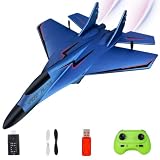
- 🛩️🛩️【Remote Control Wireless Airplane Toy 】The remote control plane features a hybrid design with the twin capabilities of a quadcopter and glider.The rigid wing of the remote control aircraft model aircraft, the 2.4G remote control signal is stable.this RC plane is easy to fly. A beginner will learn to fly it just after hours of practice.
- 🛩️🛩️【 2-Channel Remote Control】This plane works like a real plane with 2-channel control, which can be controlled by wireless remote control. The aircraft is automatically balanced, which is simple and convenient, faster.
- 🛩️🛩️【 Remote Control plane】The remote can control the plane in 4 directions: up and down, left and right. And 2 or more planes can fly together without mutual confusion, The RC plane needs to be on a stable ground and continue to accelerate and taxi for 65-100 feet before taking off. Or can be thrown to take off.
- 🛩️🛩️【 Foam RC Planes 】The light weight perfectly to ensure the flexibility and make sure the Airplane could operate easily.Lightweight material, it can float up automatically after falling into the water without sinking.
- 🛩️🛩️【 Su-35 RC Plane with Lights 】Equipped with LED night lights. Driving at night adds a gorgeous scenery to the night sky, and it can be clearly positioned when flying at night. That means kids can throw an aero jet party, especially at night, multiple drones with vibrant LED lights fly around, making for a great visual feast.
A practical go/no-go check
- Identify the mechanism. Decide whether the expected lift is convective, terrain-induced, wave, convergence or shear-based.
- Match the forecast to the mechanism. Use thermal indices for convection and wind-profile information for shear or wave; do not substitute one for the other.
- Set margins before launch. Choose minimum altitude, maximum maneuvering demand, turbulence limits and reachable landing areas.
- Verify the observation. Instruments, winds aloft, cloud behavior and nearby pilot reports should confirm that the expected structure actually exists.
- Discontinue early. Leave a weakening thermal, disorganized shear or deteriorating wave before the aircraft reaches an unrecoverable position.
Can one aircraft combine the techniques?
Yes. A glider can climb in a thermal, cruise between thermals, use ridge or wave lift and encounter wind shear during the same flight. Combining sources does not merge their definitions: the climb in a thermal is still thermal soaring, while a deliberate energy-gaining sequence across a shear is dynamic soaring.
The transition between techniques may be operationally useful. A pilot can use a thermal to gain the altitude needed for a longer glide, then follow a ridge or convergence line. A specialized vehicle may use one source for launch or repositioning and another for endurance. The deciding factors are the aircraft’s performance, the structure of the air mass and the safety margin available for the required maneuver.
Common terminology mistakes
- “Dynamic” does not mean simply turbulent. In this context it means extracting energy from changing wind velocity.
- Any climb is not a thermal. Ridge lift, wave lift and convergence have different causes.
- Any shear crossing is not dynamic soaring. The aircraft must coordinate its path to gain net energy over repeated cycles.
- Albatross flight is not magic or perpetual motion. The bird takes energy from the wind gradient and still pays aerodynamic drag and maneuvering costs.
- Forecast categories are not guarantees. The National Weather Service lift thresholds describe forecast potential, not the climb rate every pilot will see.
Which technique is relevant to your question?
If you are planning a conventional sailplane flight, start with thermal, ridge, wave and convergence forecasts because those are the lift sources most commonly used in gliding. If you are studying albatross flight, unmanned-aircraft endurance or specialized wind-gradient maneuvers, dynamic soaring is the relevant concept. The fastest way to avoid confusion is to ask what motion supplies the energy: air rising beneath the aircraft points to thermal or another vertical-lift source; a deliberate crossing of different horizontal wind velocities points to dynamic soaring.
Frequently Asked Questions
Does dynamic soaring require an ocean?
No. Oceans are a common setting because surface friction creates a useful wind profile, but the principle can work anywhere a sufficiently strong, structured horizontal wind gradient exists and the vehicle has room to maneuver.
Is mountain-wave soaring a form of dynamic soaring?
Not automatically. Mountain wave is sustained vertical motion created by airflow over terrain. Dynamic soaring specifically extracts energy through repeated maneuvering across a horizontal wind-speed gradient.
Can a thermal forecast guarantee that my glider will climb?
No. Forecast categories such as 400 to less than 800 feet per minute describe regional maximum-lift potential. Local heating, cloud cover, terrain and the glider’s sink rate determine what you actually experience.
Why can an albatross fly for long periods without flapping?
It repeatedly crosses wind layers moving at different speeds, using coordinated turns to gain energy from the gradient. Flapping may still be needed for takeoff, acceleration or transitions.
Quick Recap
Product prices and availability are accurate as of the date/time indicated and are subject to change. Any price and availability information displayed on Amazon at the time of purchase will apply.

