The S2 impactor was estimated to be 37–58 kilometers wide and to have had 50–200 times the mass of the asteroid that struck at the end of the Cretaceous and helped cause the dinosaurs’ extinction. Those are two different comparisons: the S2 estimate is not 50–200 times greater in diameter. Evidence from rocks in South Africa suggests the impact severely disrupted some shallow-water microbes, while also delivering materials that may have briefly supported other microbial communities. The study points to temporary upheaval and recovery—not a permanent reset of early life.
What was the S2 impact?
S2 is the name given to a major impact event recorded in sedimentary rocks of South Africa’s Fig Tree Group. The rocks studied place the event about 3.26 billion years ago, during the Archean Eon, when life was microbial.
As an Amazon Associate I earn from qualifying purchases.
In a 2024 paper in Proceedings of the National Academy of Sciences (PNAS), Nadja Drabon and colleagues estimated that the impactor was a carbonaceous chondrite 37–58 kilometers in diameter. They estimated its mass at 50–200 times that of the impactor associated with the Cretaceous–Paleogene (K–Pg) extinction. The mass comparison does not mean S2 was 50–200 times wider.
Recommended Free Tools
The authors note that at least 16 major Archean impact events involved bolides larger than 10 kilometers. S2 is one event in a period when very large impacts were part of Earth’s history, rather than an isolated collision with no context. The PNAS study was published on October 29, 2024.
#1 Best Overall

- 🌠 LARGE METEORITE (20-32 grams Grams ) originally weighed over a ton before hitting Earth over 4000 years ago!
- 🌠 OUT OF THIS WORLD GIFT! Comes with an ID card and Certificate of Authenticity--ready for gift giving!
- 🌠 PROUDLY HAND-ASSEMBLED by our dedicated team in Eugene, OR, USA!
How did researchers reconstruct the impact?
The team examined sedimentary rocks across the S2 event in two sections of the lowermost Fig Tree Group, informally called Umbaumba and Bruce’s Hill. They analyzed the rocks’ sedimentary structures and mineral textures, along with trace elements, total organic carbon, and carbon isotopes.
These are geological measurements, not direct observations of Archean organisms. The authors use the rocks’ composition and context to infer environmental changes and likely effects on microbial life. The evidence can indicate conditions and biological processes, but it cannot identify individual microbes or count how many died.
Rank #2

- Rocksbury Place Space Collection 2020 - Eight meteorites from around the world, a moon rock specimen, and mar rock specimen. All specimens come with description of origin and individual specimen containers.
- Meteorites
- Moon Rock
- Mars Rock
- Descriptive cards
What environmental changes followed the impact?
A tsunami disturbed coastal and shallow-water settings
The authors infer that the impact generated a giant tsunami. It likely moved debris into coastal areas and mixed iron-rich water from depth into shallower parts of the ocean, changing conditions for organisms living near the surface.
Heat, darkness, and erosion added short-term stress
The impact’s heat likely partially evaporated surface ocean water. The researchers also suggest that short-lived heating and other effects increased weathering and erosion on land. Dust and debris would have reduced sunlight, adding darkness to the immediate disruption.
Rank #3
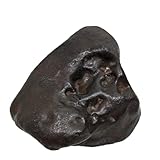
- AUTHENTIC METEORITE: Genuine iron meteorite specimen from outer space, featuring a distinctive dark fusion crust and unique surface patterns
- NATURAL FEATURES: Iron meteorite exhibits characteristic rough texture, pitted surface, and natural weathering marks from its journey through Earth's atmosphere
- Exquisite collectibles: Each specimen is completely unique in shape and texture, making it the first choice for meteorite collectors
- SCIENTIFIC VALUE: Iron meteorites contain rare metals and minerals formed during the early solar system's development
- DISPLAY WORTHY: As an impressive conversational material and educational tool, it contributes to a deeper understanding of space objects and planetary science
Impact material supplied phosphorus, while deep water supplied iron
Vaporized impactor material may have delivered phosphorus, an important nutrient, to the environment. The inferred mixing of iron-rich deep water into shallows provided another potential resource for microbes. These inputs could have been harmful or beneficial depending on the organism, habitat, and timing.
Did S2 wipe out early microbes?
The study does not conclude that S2 wiped out early life. It infers substantial mortality among shallow-water phototrophs—microbes that used light for energy—because tsunami disturbance, heating, and darkness would have made their habitat difficult to survive in. Organisms in deeper water, including chemoautotrophs that obtain energy from chemical reactions, and heat-tolerant microbes may have been less affected.
Rank #4

- Authentic Specimen: This meteorite specimen measures 0.51 x 0.23 x 0.23 in and weighs about 0.74 oz, giving you a specimen with a naturally irregular shape that is suitable for science display, classroom teaching meteorite use, and personal collection
- Teaching Tool: Designed as a student teaching meteorite and classroom teaching aid, this meteorite sample can support hands-on observation in space science and geology lessons, helping teachers present a tangible specimen for discussion, demonstration, and guided learning
- Decorative Accent: with its irregular form and natural appearance, this meteorite stone decor adds a scientific touch to desks, shelves, offices, and home displays, making it a small meteorite ornament that can fit into everyday decorative arrangements without taking much space
- Compact Display Size: the small meteorite specimen is easy to place and handle, making it suitable for science project exhibits, mineral collections, and tabletop displays where a stone meteorite specimen is needed for close viewing and simple arrangement
- Gift Idea: This unique stone specimen offers a practical choice for students, educators, and space enthusiasts who want a meteorite ornament for learning or display, and the package includes 1 x meteorite specimen for direct use after opening
The impact’s biological consequences therefore depended on where microbes lived and how they obtained energy. The same event could damage light-dependent surface communities while leaving some deeper-water or heat-loving communities comparatively less exposed.
Why do researchers think iron-cycling microbes may have flourished afterward?
In strata just above the impact layer, the researchers found abundant siderite, an iron carbonate mineral, associated with organic matter. They also found light and variable carbonate carbon-isotope values. The authors interpret this combination as consistent with microbial iron cycling after the impact.
Best Value
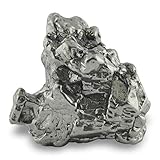
- Starborn Genuine Campo Del Cielo Meteorite Nugget 20-30 gram - 1 per order. Each Meteorite nugget is unique and will vary slightly, but will be similar to ones pictured in the images. Size approx. 1 by 3/4 inch, 20-30 grams
- These exciting meteorite fragments have a unique nugget shape caused by fractures in the natural crystalline structure of this Iron-Nickel Meteorite.
- The Campo Del Cielo Meteorite was discovered by the Spanish in 1576; it struck the earth approximately 5000 years ago in what is today Chaco Gulamba, Argentina.
That interpretation is not a direct census of microbes. Rather, the rock record supports the possibility that added iron and phosphorus helped fuel a temporary bloom of iron-cycling organisms after the most disruptive effects had passed. The authors describe the impact’s overall effects as mixed and temporary, potentially regional or global.
Did the impact “reset” early life?
“Reset” overstates the study’s conclusion if it suggests that early life was erased or permanently reorganized. The authors infer that the worst harmful effects may have lasted years to decades, followed by rapid biosphere recovery. Their conclusion is that “the environmental effects of the S2 meteorite impact, and probably other large early Archean impacts, appear to have had mixed effects on early marine life.”
In practical terms, the evidence supports immediate harm to some shallow-water communities alongside possible medium-term benefits for microbes able to use newly available nutrients and iron. It does not establish a lasting, planet-wide biological reset.
What’s actually slowing this PC down?
Pick the symptom - the matching free tool is one click away.
Quick Recap
Product prices and availability are accurate as of the date/time indicated and are subject to change. Any price and availability information displayed on Amazon at the time of purchase will apply.

