What’s actually slowing this PC down?
Pick the symptom - the matching free tool is one click away.
The Legend of Zelda: Ocarina of Time returns as a ground-up remake for Nintendo Switch 2 on 5 November 2026. Nintendo is promising rebuilt visuals, voiced cutscenes, symphonic music and modern controls, while a hands-on preview suggests a more consequential question: can convenience and surface detail preserve the sense of discovery that made the 1998 Nintendo 64 game extraordinary?
Release date, platform and editions
Nintendo lists the remake as built from the ground up for the Nintendo Switch 2 system and exclusive to that console. The product page gives a release date of 5 November 2026 (listed by Nintendo as 11/5/26) and shows both physical and digital editions. Anyone without Nintendo Switch 2 hardware will therefore need the console before playing; the original Nintendo 64 release is not being presented as the version covered by this announcement.
As an Amazon Associate I earn from qualifying purchases.
Nintendo’s 40th Anniversary Direct described it as “The legend reborn for a new generation—available 11/5!” No launch price, regional pricing, stock information or performance testing has been published in the available official material, so those details should be checked with Nintendo or local retailers closer to launch.
What Nintendo is changing
The remake is not described as a simple resolution upgrade. Nintendo says it has completely overhauled the visuals, added voiced cutscenes and expanded dialogue, recorded symphonic orchestral music, enhanced the controls and introduced modern camera movements. The overview announcement also highlights Zelda Notes, a companion service in the game-specific Nintendo Switch App.
#1 Best Overall
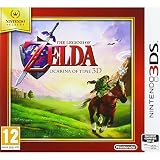
- The Legend of Zelda: Ocarina of Time 3D takes the Nintendo 64 classic - one of the most critically acclaimed games ever made - and returns it to the Nintendo 3DS & Nintendo 2DS system with the added depth and realism of stunning visuals
- Solve puzzles, travel through time and explore the immersive world
- The graphical upgrades and three-dimensional depth breathe new life into the expansive world of Hyrule New controls using the Nintendo 3DS & Nintendo 2DS system's technologies
- Switching items has never been simpler or quicker, with a touch-based inventory system Compatible with all consoles in the 3DS family
| Area | What is confirmed | What remains unknown |
|---|---|---|
| Visuals | Completely overhauled presentation designed for Switch 2 and modern displays | Official output-resolution, frame-rate and graphics-mode figures are not stated |
| Story presentation | Voiced cutscenes and expanded dialogue | Voice cast and the full extent of rewritten scenes are not stated |
| Music | Symphonic orchestral score | Track list and whether the original score can be selected are not stated |
| Controls | Jumping, dashing, enhanced controls and modern camera movements | Detailed button mapping and accessibility options are not stated |
| Distribution | Physical and digital editions | Pricing and regional availability are not stated |
How the hands-on preview plays
Matthew Castle’s preview for The Guardian describes changes that alter the rhythm of ordinary movement as much as combat. Link can sprint rather than repeatedly roll, jump manually instead of relying only on context-sensitive ledges, and rotate the camera freely. A scrolling inventory bar replaces the more constrained original item-selection flow. The preview also reports motion-controlled slingshot aiming and a larger wallet.
Sprinting and manual jumping
Sprinting should make traversing Hyrule Field less stop-start, while manual jumping gives Link a movement option familiar from later action games. These are modern conventions, but their effect is unusually visible because the 1998 game was built around more deliberate movement and fixed, highly directed interactions.
Free camera and inventory changes
A free-rotating camera can make exploration and combat easier to read, particularly in areas where the original camera was part of the challenge. The scrolling inventory bar similarly reduces friction when switching equipment. Neither change is merely cosmetic: both can shorten the pauses between deciding what to do and doing it.
Recommended Free Tools
Rank #2

- GAMER COLLECTIBLE MODEL KIT – Adults ages 18 and up can share their love of video games with the LEGO The Legend of Zelda: Ocarina of Time – The Final Battle (77093) fantasy adventure building set, a display model with 5 iconic characters from the game
- LEGO CASTLE RUINS BUILDING SET – This detailed gaming collectible features a ruined castle area, Link, Zelda and Ganondorf minifigures, and 2 more iconic characters
- FEATURES AND FUNCTIONS – Recreate the final battle scene with movable rubble, a button to raise Ganondorf from the ruins, the hidden Megaton Hammer in the tower, secret Recovery Hearts and more
- ICONIC NINTENDO CHARACTERS – This nostalgic The Legend of Zelda building set includes a large, brick-built figure of Ganon and a small, transparent build to represent Navi the fairy
- GIFT FOR ADULTS – This building set makes a great gamer gift for fans of The Legend of Zelda series or collectible LEGO models, and makes a fun Nintendo character gift for birthdays or holidays
Aiming and the shooting gallery
Castle reports that the shooting gallery feels easier thanks to responsive frame rates and motion-controlled aiming. That observation is a preview impression, not an independently measured benchmark, but it illustrates the remake’s design direction: tasks once limited by the Nintendo 64 control scheme may now depend more on player timing and accuracy.
Does the new Link design work?
The visual redesign is intentionally stylised rather than strictly photorealistic. Former Legend of Zelda art director Takaya Imamura wrote that Link’s love of ningyogeki (puppet drama) is “strongly reflected here,” connecting the character model to Shigeru Miyamoto’s tastes. That choice may divide players expecting a darker, more realistic update, but it signals that Nintendo is preserving a theatrical identity instead of treating the remake as a technical demonstration alone.
4K-era detail versus the original’s sense of awe
The preview’s central criticism is not that the remake looks poor; it is whether added detail can recreate the emotional shock of seeing Ocarina of Time in 1998. Hyrule Field gains visible surface detail, including sunlight catching puddles and grass growing from the ground. Those touches can make the environment feel denser on a modern display, yet they may also draw attention to how much of the original’s power came from suggestion, timing and the player’s imagination.
Rank #3

- Officially Licensed by Fifth Sun
- 13NNTD237B
- Lightweight, Classic fit, Double-needle sleeve and bottom hem
This creates a real trade-off. More geometry, lighting and animation can clarify spaces and reward close inspection. At the same time, filling every surface with detail can make a once-mysterious landscape feel over-explained. The preview leaves that tension unresolved, which is appropriate for a game whose appeal depends on discovery rather than visual fidelity alone.
The Tool Desk
Outbyte PC Repair FREERepair Windows errors before they cause bigger problemsFix Now →Outbyte Driver Updater FREEScan for outdated or missing drivers - takes under a minuteDriver Scan →Classic dungeons or open-world freedom?
The remake retains the traditional, controlled dungeon structure associated with Ocarina of Time. Castle contrasts that progression with the “make your own adventure” ethos of Nintendo’s more recent open-world Zelda games. The difference is structural: classic dungeons teach a sequence of ideas, gate progress with items and encounters, and guide the player toward a designed payoff; open-world design prioritises self-directed routes and improvised solutions.
For players who miss authored dungeon puzzles and a clearly staged journey, the older structure may feel refreshing rather than dated. Players seeking the systemic freedom of recent Zelda games should not assume that a modern camera or sprint button turns this remake into an open-world adventure. The preview points to modernization around the original framework, not a replacement of that framework.
Rank #4
![Nintendo 2DS - Legend of Zelda Ocarina of Time 3D [video game]](https://m.media-amazon.com/images/I/51xY00mvAfL._SL160_.jpg)
- This refurbished product is tested and certified to look and work like new. The refurbishing process includes functionality testing, basic cleaning, inspection, and repackaging. The product ships with all relevant accessories, and may arrive in a generic box
What Zelda Notes adds
Zelda Notes is a game-specific Nintendo Switch App service tied to the remake. Nintendo says it can track accomplishments and provide image-based location challenges. It also supports creating or humming ocarina melodies through compatible devices; the Switch 2 microphone can hear a hummed melody and make Link’s in-game ocarina respond. The service therefore extends the game beyond the television screen without changing the remake’s core progression.
Because Nintendo has not detailed account requirements, supported devices, regional availability or whether every feature works offline, treat Zelda Notes as an additional service rather than a reason to assume a particular phone or subscription setup.
Quick wins for a faster PC:
Fix the driver behind crashes, sound loss and screen glitchesFind Drivers →Clear out junk files and repair common Windows errorsFree Scan →Should you buy the physical or digital edition?
Nintendo has confirmed both formats but has not published pricing or file-size information. The practical choice depends on how you use Switch 2:
- Choose physical if you want a cartridge, the ability to resell or lend the game where permitted, and less dependence on internal storage for the initial install.
- Choose digital if you want immediate access at launch, do not want to change cartridges, and have enough console storage for the download and any updates.
- Wait for final details if regional pricing, collector packaging, storage requirements or launch-day availability will determine your decision.
Is the remake worth it on Switch 2?
The answer depends on which part of Ocarina of Time you value most. The confirmed additions make the game easier to approach: sprinting, manual jumping, a free camera, faster item selection, motion aiming, voiced scenes and orchestral music remove several barriers associated with the 1998 control scheme. The preview also suggests that the underlying dungeon-led adventure remains intact.
The uncertainty is artistic rather than technical. Nintendo has not yet demonstrated that denser visuals can reproduce the original’s sense of wonder, and no independent performance measurements or review score are available. For newcomers, this is the most accessible official entry point announced for the classic adventure. For longtime players, the deciding question is whether a carefully modernised presentation can coexist with the deliberate pacing and imaginative restraint that made the original a landmark.
Quick Recap
Product prices and availability are accurate as of the date/time indicated and are subject to change. Any price and availability information displayed on Amazon at the time of purchase will apply.

