Free tools Windows power users keep installed
One-click scans. No signup required.
There is no single “best” steering setup for every player in The Crew Motorfest. The reliable way to make handling steadier is to start with a controllable preset, identify whether the problem is unwanted input at rest or an overly aggressive response through the control’s travel, then adjust one steering setting at a time. Motorfest exposes dead zone, linearity and highest values for relevant inputs, while wheel users also get dynamic wheel range and dynamic force feedback options.
What to change when Motorfest steering feels twitchy
Steering complaints usually fall into one of three patterns: the car moves before you intentionally steer, a tiny stick or wheel movement produces too much rotation, or the input never reaches the response you expect at full travel. Those symptoms point to different controls, so changing every slider at once makes the result harder to diagnose.
As an Amazon Associate I earn from qualifying purchases.
- Dead zone controls how much movement around the resting position is ignored.
- Linearity shapes how input builds from the beginning of the travel to the end.
- Highest sets the maximum input threshold or value exposed by the game.
Ubisoft names these controls in its accessibility and wheel-support documentation, but does not publish the exact algorithms behind them or a universal numerical setup. Treat the definitions above as practical orientation rather than a claim about undocumented implementation details.
Where the relevant controls fit
Controller presets and sliders
Motorfest provides configurable control presets and individual sliders for steering, throttle and brake. Depending on the active device and preset, you may also see vibration and driving-assist options. The menu can expose different controls for a gamepad and a wheel, so first confirm that the game has selected the device you are actually using.
#1 Best Overall

- Immersive Gaming Experience: Perfect for Xbox and PC gaming titles, the Driving Force simulates the feeling of driving a real car with precision steering and pressure-sensitive pedals
- Premium Control: The Driving Force feedback racing wheel provides a detailed simulation of driving a real car, with helical gearing delivering smooth, quiet steering and a hand-stitched leather cover
- Customizable Pedals: These pressure-sensitive nonlinear brake pedals provide a responsive, accurate braking feel on a sturdy base - with adjustable pedal faces for finer control
- 900-Degree Rotation: Lock-to-lock rotation of the Driving Force means you can turn the wheel around two and a half times, hand over hand on wide turns - just like a real F1 race car
- Up Your Game: Take your racing simulation to the next level with Driving Force accessories like the Driving Force Shifter or desk and rig mounts
If a preset locks the steering option you want to change, switch to a preset that permits individual adjustment, then return to the steering section and verify that the new preset did not reset another preference.
Wheel-specific options
Ubisoft’s wheel-support information describes button remapping, dynamic wheel range and dynamic force feedback. Dynamic wheel range can adapt the in-game steering range, while dynamic force feedback is described as “precise feedback tuned for each supported steering wheels based on the vehicle you use and the parameters you selected.” The wording indicates an adaptive feature, not a promise that every wheel, car or setting combination behaves identically.
The same support material lists wheel and accessory linearity, dead zone and highest values as adjustable. Keep those in-game settings separate from the wheel’s own driver, firmware or hardware controls. This guide does not establish current driver-menu names or safe per-model force-feedback values.
Dead zone: remove drift without creating a dead center
What it does
A dead zone is the amount of movement near the control’s rest position that the game ignores. On a controller, it can hide stick drift: a worn stick may report a small steering signal while your thumb is off the stick. On a wheel, an unintended signal can come from calibration, mounting or sensor behavior.
Rank #2

- REALISTIC RACING SIMULATION DUO: Feel what is like to drive a real race car with G920 Driving Force Racing Wheel & Pedals and Driving Force Shifter
- PAIRED FOR PRECISION: Take full control of the race with G920 Driving Force Racing Wheel & Pedals and Driving Force Shifter
- PRECISE CONTROL: Helical transmission gears reduce noise and vibration with anti-backlash keeping wheel and pedals tight. The six-speed “H” shifter helps you execute smooth, accurate gear transitions
- FORCE FEEDBACK: The dual motor force-feedback realistically simulates the feel of tires on a turn, understeer, oversteer, drifting and more
- PREMIUM BUILD: Look, feel and durability of a real race car wheel, pedals and shifter. Wheel cover, knob and boot are covered in high-quality, hand-stitched leather with a solid steel gear shaft and polished metal pedals
How to tune it
- Center the stick or wheel while the car is stationary and observe whether the steering indicator moves without input.
- If the car wanders or the indicator moves at rest, increase the dead zone only enough to stop that unintended signal.
- If the steering feels unresponsive around center and the device is stable at rest, test a smaller dead zone.
- Drive the same low-speed corner after each change. Stop increasing the value once unwanted movement disappears; a large dead zone can make initial corrections feel delayed.
Do not assume zero is always correct. Some community posts recommend zero dead zone for a particular controller or wheel, while others retain a small amount to compensate for drift. Those are personal reports, not controlled tests, and the right value depends on the condition and calibration of your device.
Linearity: make the response less abrupt or less sluggish
What it means in practice
Linearity changes how steering builds across the input’s travel. If the car reacts sharply to the first few degrees of wheel rotation or a tiny stick movement, the response may feel too aggressive near center. If you must move the control a long way before the car turns, it may feel too gradual. The slider changes the shape of that response rather than adding physical travel to the device.
A repeatable adjustment
- Choose a familiar corner that you can approach at the same speed, preferably a medium-speed grip turn rather than a drift initiation.
- Move linearity one small step in the direction that should address the symptom.
- Repeat the corner three or four times without changing assists, vehicle or camera.
- Record whether turn-in became calmer, delayed, or unchanged, then make only one further adjustment.
Community advice spans very different linearity preferences: one wheel comment suggests a zero setting, while a controller discussion suggests a much higher range. The disagreement is useful evidence that device type, vehicle choice and driving goal matter; it is not evidence that either number is objectively optimal.
What’s actually slowing this PC down?
Pick the symptom - the matching free tool is one click away.
Highest: check the top of the input range
The highest control represents the maximum input threshold or value exposed by Motorfest. It matters when the game does not recognize the full travel of a stick or wheel, or when an update or calibration change alters the relationship between physical movement and the in-game indicator.
Rank #3
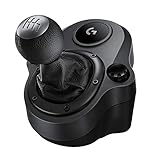
- Works with G29 and G920 Driving Force Racing Wheels Driving Force shifter is designed for both G29 and G920 Driving Force racing wheels, to enhance the latest PC and console racing titles. Add Driving Force shifter to your racing wheel setup to complete your racing rig for a more realistic experience.
- Quality Construction With a solid steel gear shaft, Driving Force shifter is built for precision racing and long-lasting reliability. The knob and boot are covered in high-quality, hand-stitched leather, giving it a look and feel similar to a high-performance race shifter and giving you a more comfortable, durable experience.
- Six-Speed Shifter with Push-Down Reverse The six-speed “H” shifter moves fluidly and solidly clicks into each gear, helping you execute smooth, accurate gear transitions on hairpin turns and straightaways.
- Secure Mounting Durable built-in clamps and bolt points allow Driving Force shifter to be mounted securely to a table or racing rig, to minimize shifting or wobbling during aggressive race maneuvers.
- Compatible with Windows 11/10/8.1/7, Xbox Series X/S, Xbox One, PlayStation 5, PlayStation 4 consoles, and games that support Logitech force feedback racing wheel
With the vehicle stationary, move the control smoothly from center to its physical limit and watch the input display. If the indicator reaches its maximum early, the highest value may be limiting usable travel. If it never reaches maximum, check the device’s calibration and connection before assuming the slider is at fault. Adjust the game setting in small increments and verify full response again.
A controller tuning procedure that you can repeat
Use this sequence instead of copying a number from another player.
- Confirm the device. Disconnect or disable other input devices that could be selected accidentally, then verify the active controller in Motorfest.
- Select a controllable preset. Pick the preset that already feels predictable and allows individual steering changes.
- Check for rest input. With the car stopped, release the stick and look for movement. Address drift with the smallest effective dead zone.
- Set a baseline run. Drive one repeatable route using the same car, camera, assists and weather. Note where the steering feels twitchy, delayed or short of full lock.
- Change one value. Adjust dead zone, linearity or highest, but never two of them in the same test.
- Repeat the same situation. Compare the same corner or maneuver at a similar speed. A different road or vehicle can hide the effect of the change.
- Keep a short record. Write down the old value, new value and a plain-language result such as “less snap on turn-in” or “still drifts at rest.”
- Recheck after updates. Reopen the menu after every substantial patch and verify the values before tuning again.
This is a practical method inferred from the controls and the variation in player reports; Ubisoft does not publish it as a test protocol or certify a best configuration.
Wheel tuning: separate game settings from hardware behavior
Start with calibration and connection
Before changing force feedback or steering response, make sure the wheel is centered, recognized by the correct platform and connected directly according to the manufacturer’s instructions. A physical center offset can look like a dead-zone problem, while a connection or calibration fault can prevent the input from reaching its highest value.
Rank #4

- TRUEFORCE: Next-gen TRUEFORCE technology connects to game engines for high-definition feedback; experience the ultimate driving experience with processing at 4000 times per second
- Programmable dual clutch: Get off the starting line cleaner and faster; a programmable dual clutch simulates real race car launch assist right from the controller, when playing supported games
- Control your game: Fine-tune your speed with a built-in LED RPM indicator; integrated PlayStation 5, PS4, PC game controls, a 24-point selector and progressive brake spring keep steering under control
- Premium Racing Design: Refreshed Logitech G gear design includes premium materials like a hand-stitched black leather wheel cover and polished metal pedals; experience the pleasure of driving at home
- On-wheel game controls: Take charge of wheel sensitivity, force feedback levels and simulated steering; Logitech G Hub Gaming software enable button customisation right from the controller
Use dynamic features deliberately
Dynamic wheel range and dynamic force feedback are optional tools, not mandatory fixes for twitchy steering. Test them with the same car and route used for your baseline. If feedback becomes distracting or masks the steering response, lower the hardware’s feedback strength separately from the in-game response controls, where the device and its software provide that option.
Example of platform-specific support
Ubisoft lists the Logitech G920 wheel set as a supported example for Xbox Series X|S. That is platform-specific support evidence, not proof of current retail availability or compatibility with every platform. Before buying or troubleshooting any wheel, verify the current Motorfest device list and support for your console or PC.
Controller versus wheel: which adjustment matters most?
| Consideration | Controller | Wheel |
|---|---|---|
| Input travel | Short stick travel makes small movements feel significant. | Longer physical rotation can provide more room for corrections, but only if calibration and range are recognized correctly. |
| Dead zone | Often used to mask stick drift; use the smallest value that stops unintended input. | Useful for unwanted center signals or calibration irregularities; a large value can make the wheel feel disconnected. |
| Linearity | Shapes how quickly steering builds across the stick’s limited travel. | Shapes response across wheel rotation and can change how much correction is needed near center. |
| Highest | Check that the stick reaches full steering response at its physical limit. | Check that the wheel reaches the expected maximum range after calibration and any dynamic-range setting. |
| Compatibility | Use the controller preset and options shown for the active gamepad. | Support varies by platform and model; Ubisoft’s Logitech G920 example is listed for Xbox Series X|S. |
Neither input type is established by the cited material as faster, more accurate or universally better. Choose the device whose physical feel you prefer, then tune its response to your own hands and equipment.
Grip driving, drifting and vehicle differences
Settings that feel calm for a high-speed grip corner may feel too slow when you deliberately initiate a drift. A community controller discussion explicitly asks whether advice is “for grip not drifting right?”, which highlights the distinction rather than resolving it. Test the driving style you actually use: stable cornering, rapid direction changes and drift initiation place different demands on the first part of steering travel.
Best Value

- Perfect Driving Experience: The Logitech G920 Racing Wheel for Xbox, PlayStation, and PC is engineered for the perfect driving experience with dual-motor force feedback, stainless steel paddle shifters, and a hand-stitched leather wheel
- Dual-Motor Force Feedback: Feel your tires on every turn and type of terrain. Sense under and oversteer drifting with precision. Feel every weight shift and tire slip, and the road conditions that caused them
- Motor Sport Construction: Driving Force handles the stress of racing action and is built for long-lasting reliability. Solid steel ball bearings are used in the wheel shaft. Stainless steel paddle shifters and pedals feel great under pressure
- 900-Degree Rotation: The 900-degree lock-to-lock rotation of the Driving Force means you can turn the wheel two and a half times. It’s the same degree of motion as a steering wheel inside a car
- Wheel Mounted Controls: All your controls are where you can reach them. The D-Pad, buttons, and paddle shifters are incorporated into the racing wheel. LED indicator lights positioned just above the center of the wheel tell you exactly when to up or down-shift so you maintain maximum acceleration without taking your eyes off the track
Also test more than one vehicle category before making a permanent change. Motorfest’s steering feel can vary with vehicle behavior, speed and the amount of correction a corner requires. Keep the car and route fixed while tuning, then validate the final setting in the events you normally play.
What to do after a patch
Ubisoft’s Season 7 patch notes state: “Fixed Steering Deadzone not being at intended default value.” The note confirms that a game update has previously corrected the dead-zone default. It does not establish whether later patches changed the behavior again, so recheck the steering menu after updates instead of assuming your saved baseline is unchanged.
- Open the active control preset and write down the current steering values.
- Confirm the device is still selected correctly.
- Check for rest input and full-range response.
- Run the same baseline corner before making any new adjustment.
Troubleshooting by symptom
The car turns when you barely touch the control
- Check for stick or wheel input at rest.
- If there is drift, raise dead zone only enough to suppress it.
- If there is no rest input, adjust linearity incrementally and retest the same corner.
The car wanders while the stick or wheel is released
- Inspect the physical center and connection.
- Increase dead zone in small steps.
- If the issue persists at a large dead zone, investigate device calibration rather than continuing to hide the symptom with software.
Full steering never arrives
- Move the control to its physical limit while watching the in-game indicator.
- Check the highest value and the device’s calibration.
- For a wheel, verify that dynamic wheel range has not changed the expected relationship between rotation and in-game steering.
The wheel feels numb around center
- Reduce an unnecessarily large dead zone.
- Check whether linearity is making the first part of travel too gradual.
- Separate steering response from force-feedback strength; stronger feedback does not correct an incorrect input curve.
Optional hardware note
A wheel is not required to improve handling. The central gains come from matching dead zone, linearity and highest to the device you already own. If you are considering a wheel set, use Ubisoft’s current supported-device information and your platform’s compatibility requirements as the checklist. The Logitech G920 appears in Ubisoft’s Xbox Series X|S support examples, but availability, pricing and support can change.
Do these 3 things before closing this tab:
1Repair Windows errors before they cause bigger problems2Fix the driver behind crashes, sound loss and screen glitches3Clear out junk files and repair common Windows errorsQuick Recap
Key takeaways for a steadier setup
- Start with the preset that already feels controllable.
- Use dead zone to address unintended input, not as a general smoothness slider.
- Use linearity to shape abrupt or gradual steering response.
- Use highest and calibration checks when the control does not reach full response.
- Change one value at a time and test the same corner or maneuver.
- Treat community numbers as personal examples, not validated defaults.
- For wheels, test dynamic range and force feedback separately from steering response.
- Recheck every setting after an update, especially the steering dead zone.
Product prices and availability are accurate as of the date/time indicated and are subject to change. Any price and availability information displayed on Amazon at the time of purchase will apply.

