Quick wins for a faster PC:
Repair Windows errors before they cause bigger problemsFix Now →Scan for outdated or missing drivers - takes under a minuteDriver Scan →Clear out junk files and repair common Windows errorsFree Scan →The most reliable starting point is Nothing X’s Balanced or default EQ, a properly sealed pair of ear tips, and the noise mode that matches your surroundings: ANC for steady noise, Adaptive ANC when conditions change, and Transparency when you need to hear people or traffic. There is no single perfect EQ curve for every ear, recording or Nothing Ear generation. Make small, controlled changes, compare at the same volume, and identify your exact model before relying on a menu name or gesture.
Start with fit before changing sound
Ear-tip seal affects both bass and noise control. If a tip is loose, outside sound leaks in and low frequencies can disappear, making ANC seem ineffective. A poor seal can also tempt you to add excessive bass in the equaliser, which may make music muddy without fixing isolation.
As an Amazon Associate I earn from qualifying purchases.
- Insert both earbuds and gently twist or reseat them until they feel stable.
- Try a different supplied tip size on either side if one ear feels loose or pressurized.
- Use the model’s available fit test, if Nothing X provides one, and follow its result rather than assuming both ears need the same size.
- Only after the seal is comfortable should you judge bass, ANC or Transparency. Keep the same track and volume while comparing changes.
Nothing’s own troubleshooting guidance says that an ear cushion or ear tip that is not fitted tightly can reduce or negate the noise-cancellation effect. Treat fit as a prerequisite, not as a final tweak.
Do these 3 things before closing this tab:
1Repair Windows errors before they cause bigger problems2Fix the driver behind crashes, sound loss and screen glitches3Clear out junk files and repair common Windows errorsSet a neutral baseline in Nothing X
Nothing X is the control center for supported Nothing Ear models. Connect the earbuds, open the device page, and begin with Balanced or the default EQ profile. This gives you a reference point before personalization and avoids mistaking a large tonal change for an improvement.
#1 Best Overall
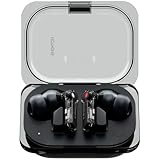
- Powerful 11 mm driver: We've made our driver even more compact. With double the power than Ear (2), Ear (a) delivers an even deeper bass performance. The extra space gives sound waves more room to vibrate. With two new vents, airflow is improved inside the bud. For less distortion and richer overall clarity
- Smart Active Noise Cancellation: Up to 45 dB,Nothing Ear (a) automatically checks for noise leakage between the earbud and your ear canal, then applies more noise cancellation to make up for it. So you receive the best possible noise cancellation. Happens every time you put them in. So you can go from quiet rooms to busy streets without hearing a thing (other than what's playing)
- Clear Voice Technology: Clear as day. Ear (a) isolates your voice from everyday distractions so calls on-the-go feel like face-to-face conversations. With a new talk mic and extra airway on the stem for wind to pass through, we’ve reduced interference by 60% compared to Ear (2)
- Long Playtime, Fast Charging: For speedy power-ups, Ear (a) can Fast Charge for 10 minutes and deliver 10 hours of music playback (with ANC turned off). Compared to Ear (2), Ear (a) can deliver 40.5% more non-stop play time on a single charge. Or pop your earbuds back in the case and stretch listening time to over 42.5 hours (with ANC turned off)
- More Performance: Low Lag mode,Reduced audio lag for better gaming. Stay connected to two devices at the same time. Play music on your laptop then seamlessly switch to answer a call on your phone. Effortless. Adaptive ANC,Next-level escapism. Switch between 3 levels of noise cancellation. Or let Ear (a) take control. By selecting 'Adaptive' in the Nothing X app, Ear (a) automatically applies the right level of noise cancellation according to your surroundings in real time.
- Open Nothing X and connect the Nothing Ear earbuds.
- Open the Equaliser section.
- Select Balanced or the default profile.
- Play two or three familiar recordings that include vocals, bass and cymbals.
- Listen at a comfortable, repeatable volume. If you change volume between profiles, the louder setting can seem better even when the tonal balance is not.
Write down the problem you are trying to solve before touching a slider. Examples include bass that masks vocals, vocals that sit too far back, or cymbals that sound sharp. Change only one or two bands, then compare with the same passage. If the result is worse, return to the baseline instead of adding more compensating boosts.
How Advanced Equaliser works
On supported Nothing Ear models, Nothing describes an 8-band Advanced Equaliser. Its controls are Frequency, Q factor and Gain. Frequency chooses the area of the spectrum you are affecting; gain raises or lowers that area; Q factor controls how broad or narrow the adjustment is.
A broad, gentle change is usually easier to live with than a narrow, extreme notch or boost. If you are unsure about Q, begin with a moderate-width adjustment and a small gain change. The exact frequency labels and available controls can differ by model and firmware, so use the bands shown for your earbuds rather than copying a curve designed for another generation.
Balanced listening
Leave the EQ on Balanced or default. This is the best reference for judging recordings, comparing ANC modes and deciding whether a later change genuinely helps. It is also the safest choice when several people use the earbuds or when you listen to many genres.
More bass without losing definition
Raise the lowest band or bands slightly if kick drums and bass lines lack weight. If the result makes male vocals, guitars or lower piano notes cloudy, reduce the adjacent low-mid area instead of continuing to boost the sub-bass. A sealed tip may restore more bass than an EQ boost, so recheck the fit after making this change.
Rank #2

- Smart Noise Cancelling: Nothing but the music. Nothing ear wireless earbuds with up to 45 dB Active Noise Cancellation, Ear features our most effective and intelligent noise cancelling powers yet. Now 1.8x stronger than others. Ear automatically checks for noise leakage between the earbud and your ear canal, then applies more noise cancellation to make up for it. So you receive the best possible noise cancellation
- Clear Voice Technology: HiRes Wireless Audlio, Nothing Ear buds supports high resolution streaming over Bluetooth. The result is powerfully pure audio with no quality damage. Just how the artistintended. Up to 1 Mbps 24 bit/192 kHz with LHDC 5.0 and up to 990 kbps with frequencies up to 24 bit/96 kHz with LDAC, Requires devices that support LHDC or LDAC, Nothing wireless Ear isolates your voice from everyday distractions so calls on-the-go feel like face-to-face conversations.
- Long Playtime, Fast Charging: Ear supports up to 2.5W wireless charging. Power-up on-the-go with reverse charge on compatible devices, like Phone (2). Powered to go further, Ear lasts 25% longer than Ear (2) on a single charge. Or top-up in the case and use consistently for over 40.5 hours (ANC turned off). For speedy power-ups, Ear can Fast Charge for 10 minutes and deliver 10 hours of playback (with ANC turned off)
- Custom Ceramic Driver: Nothing Ear ultra compact but beyond powerful. Our 11 mm driver delivers an unbeatable audio experience.Coupled with a new ceramic diaphragm, we’ve increased airflow by 10% within each bud. For less distortion and richer clarity. Plus, advanced voice pickup tech cuts through background noise so your calls sound natural, like you’re talking face to face.
- More Performance: Stay connected to two devices at the same time. Play music on your laptop then seamlessly switch to answer a call on your phone. Effortless. Reduce audio lag for seamless gaming. Triggered automatically in Game Mode on a Nothing phone. With end-to-end latency at less than 120 ms. Microsoft Swift Pair, LED charging status, Pinch controls, Find My Earbuds, Water resistance IP54 buds / IP55 case, Google Fast Pair, Ear Tip Fit Test supported.
Clearer vocals and speech
Apply a small lift in the midrange when voices sound recessed behind instruments. Keep the change narrow enough to avoid making the entire mix nasal or forward. Test both spoken dialogue and female vocals; a setting that helps one can make the other sound hard if the gain is too high.
Less harshness
If cymbals, consonants or sibilants are sharp, reduce the upper-treble band modestly. Do not remove all treble in pursuit of a softer sound, because that can make detail and air disappear. Check several recordings, since a bright master may be the source of the problem rather than the earbuds.
Recommended Free Tools
More treble detail
When the presentation sounds dull, try a small upper-treble lift. Stop as soon as cymbals become aggressive or voices develop a hiss. Treble changes are especially sensitive to ear-tip seal and listening volume, so make them only after fit and volume are consistent.
| Listening goal | Starting adjustment | What to monitor |
|---|---|---|
| Balanced, all-purpose sound | Keep Balanced or default | Use this as the reference for every later comparison |
| Stronger bass | Make a small low-frequency gain increase | Muddiness, masked vocals and boomy kick drums |
| Vocal clarity | Apply a small midrange lift | Nasal tone or vocals becoming unnaturally prominent |
| Smoother treble | Reduce upper treble slightly | Loss of detail or a dull presentation |
| Extra treble detail | Raise upper treble slightly | Sibilance, hiss and cymbals that become piercing |
These are listening goals, not universal presets. The most useful setting is the one that solves a specific problem on your ears without creating a new one. Because the available bands and labels vary, the app’s Advanced Equaliser controls matter more than a copied list of numerical values.
Choose ANC, Adaptive ANC, Transparency or normal mode
EQ changes the tonal balance of music. ANC and Transparency change how much outside sound reaches you. Choose them independently: a bass adjustment cannot repair a poor seal, and a stronger ANC setting cannot correct recessed vocals.
Rank #3
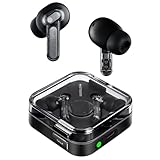
- Your Voice, Amplified. The Noise, Eliminated: Integrated into the Nothing Ear (3) charging case is a advanced dual-microphone system powered by specialized ambient filtering mics. This technology, called Super Mic, precisely targets your voice while cutting through extreme background noise (up to 95 dB), ensuring your calls and voice messages are transmitted with absolute clarity
- Intelligent Silence, Immersive Sound: Featuring Smart Hybrid ANC, Nothing Ear (3) delivers up to 45 dB of Active Noise Cancellation. This Bluetooth wireless earbuds recalibrate every millisecond to block a wide range of noise with a 5000Hz undesired noise to enjoy crystal-clear audio. Switch to Transparency Mode to seamlessly connect with your surroundings
- Super Mic, Tap to Engage: To activate the Nothing ear buds Super Mic, simply press and hold the 'TALK' button with the case within 5cm of your mouth for optimal clarity in loud settings. Hold for quick commands, or double-tap to lock it for extended conversations
- Hi-Res Audio & Ultra-Clear Voice: The Nothing Ear 3 brings you premium Hi-Res Wireless Audio and superior call quality, thanks to 6 HD microphones. With advanced Bluetooth 5.4, these anc earbuds offer smooth, lossless streaming that stays true to the original sound. Inside, a 12mm driver and innovative ceramic diaphragm improve airflow by 10%, reducing distortion and enhancing clarity
- Your Way with Nothing X App : Fine-tune your sound using adjustable EQ, Ultra Bass, and Adaptive Active Noise Cancellation settings.Dive into gaming with dedicated Low Lag Mode, and interact effortlessly using ChatGPT on your Nothing phone. All your Nothing devices work together in perfect, seamless harmony
| Situation | Recommended mode | Reason |
|---|---|---|
| Aircraft cabin, train or bus engine | ANC | These environments contain relatively steady low-frequency noise that active cancellation is designed to reduce. |
| Air conditioning or office HVAC | ANC | Continuous mechanical noise is a good match for conventional cancellation. |
| Changing noise during a commute | Adaptive ANC | Nothing says Adaptive mode monitors environmental noise and adjusts cancellation on supported models. |
| Announcements, conversation or traffic awareness | Transparency | Ambient sound is deliberately fed through so you can hear your surroundings. |
| Quiet room or a preference for no processing | Off or normal mode, where available | Some generations let you include an Off or normal option in the control cycle; others expose a different set of modes. |
Adaptive ANC is a sensible first choice when the environment changes from quiet to loud or from one type of noise to another. It is not a guarantee of maximum isolation in every situation. Wind, voices and sudden sounds can behave differently from a constant engine hum, and the modes available depend on the Nothing Ear generation and firmware.
Free tools Windows power users keep installed
One-click scans. No signup required.
Configure and use the controls
Nothing’s official control guidance for products that use a Roller is to press and hold the Roller to switch between Active Noise Cancellation and Transparency Mode. Nothing Ear earbuds use the equivalent pinch-and-hold style control on models that support it, but the gesture and mode cycle can vary by generation. Confirm the current assignment in Nothing X rather than assuming a control from another pair of Nothing earbuds applies to yours.
- Open Nothing X and select your connected earbuds.
- Open the controls or gesture-customisation area.
- Check which action is assigned to pinch-and-hold or the relevant physical control.
- Select the ANC and Transparency modes you actually use.
- If the model allows it, add Off or normal mode to the cycle so you can bypass noise processing without opening the app.
- Test the gesture once in a safe, quiet place before relying on it near traffic or while boarding transport.
Do not assume that every Nothing Ear generation offers the same ANC levels, Adaptive option or Off mode. The app’s current menu for your connected firmware is the authoritative list.
Why noise cancellation or Transparency can feel weak
The ear tips are not sealing
This is the first check because it affects both modes. Reseat the earbuds, try another tip size and run the available fit test. Test again before making any EQ change.
You are using the wrong mode for the sound
ANC is intended for external noise reduction, while Transparency intentionally increases awareness of the surroundings. If you selected Transparency, outside sound is supposed to remain audible. If you need isolation, switch to ANC or Adaptive ANC where supported.
What’s actually slowing this PC down?
Pick the symptom - the matching free tool is one click away.
Rank #4

- Powerful 11 mm driver: We've made our driver even more compact. With double the power than Ear (2), Ear (a) delivers an even deeper bass performance. The extra space gives sound waves more room to vibrate. With two new vents, airflow is improved inside the bud. For less distortion and richer overall clarity
- Smart Active Noise Cancellation: Up to 45 dB,Nothing Ear (a) automatically checks for noise leakage between the earbud and your ear canal, then applies more noise cancellation to make up for it. So you receive the best possible noise cancellation. Happens every time you put them in. So you can go from quiet rooms to busy streets without hearing a thing (other than what's playing)
- Clear Voice Technology: Clear as day. Ear (a) isolates your voice from everyday distractions so calls on-the-go feel like face-to-face conversations. With a new talk mic and extra airway on the stem for wind to pass through, we’ve reduced interference by 60% compared to Ear (2)
- Long Playtime, Fast Charging: For speedy power-ups, Ear (a) can Fast Charge for 10 minutes and deliver 10 hours of music playback (with ANC turned off). Compared to Ear (2), Ear (a) can deliver 40.5% more non-stop play time on a single charge. Or pop your earbuds back in the case and stretch listening time to over 42.5 hours (with ANC turned off)
- More Performance: Low Lag mode,Reduced audio lag for better gaming. Stay connected to two devices at the same time. Play music on your laptop then seamlessly switch to answer a call on your phone. Effortless. Adaptive ANC,Next-level escapism. Switch between 3 levels of noise cancellation. Or let Ear (a) take control. By selecting 'Adaptive' in the Nothing X app, Ear (a) automatically applies the right level of noise cancellation according to your surroundings in real time.
The environment is changing rapidly
Adaptive ANC is designed for changing conditions, but no mode removes every sound equally. Compare Adaptive with standard ANC in the same location. For a steady engine or HVAC, standard ANC may be the clearer choice; for a mixed commute, Adaptive may require less manual switching.
Your model does not expose the mode you expect
Nothing Ear names, ANC levels and available gestures vary by generation and firmware. Check the connected device’s menu in Nothing X instead of looking for a control shown in instructions for another model.
You are trying to fix isolation with EQ
Boosting bass can make music seem fuller while doing nothing to outside noise. Return to Balanced, verify the seal and select the correct noise mode. Only then tune the sound.
The comparison is being made at different volumes
A louder profile often sounds more detailed or powerful. Keep volume constant, use the same musical passage and switch profiles repeatedly. This makes it easier to separate a real tonal improvement from a loudness difference.
The Tool Desk
Outbyte Driver Updater FREEFix the driver behind crashes, sound loss and screen glitchesFind Drivers →Outbyte PC Repair FREERepair Windows errors before they cause bigger problemsFix Now →Use Personal Sound Profile after the basics work
On supported Ear models, Nothing documents a hearing test under Personal Sound Profile. Depending on the device and firmware, you may reach it from device settings or the Equaliser area. Menu labels and availability are not identical across generations.
Best Value

- Powerful 11 mm Driver: We've engineered an even more compact driver that delivers twice the power of Ear (2). In Nothing Ear (a) wireless earbuds, this means deeper, more impactful bass. The refined design provides sound waves with greater space to resonate, while two additional vents optimize internal airflow. The result is reduced distortion and richer, clearer audio overall.
- 45 dB Smart Active Noise Cancellation: Nothing Ear (a) earbuds continuously monitors the seal between the earbud and your ear canal. If noise leakage is detected, it instantly adjusts the cancellation intensity to compensate—ensuring you always get the fullest possible noise reduction. Every time you put them in, they adapt. Move from a quiet room to a busy street without hearing a thing besides your audio.
- Clear Voice Technology: Crystal-clear calls, anytime, anywhere. Nothing Ear (a) ear buds isolates your voice from background noise, making on-the-go conversations feel like you’re talking in person. We’ve added a dedicated talk microphone and an airflow channel along the stem to drastically reduce wind interference—resulting in 60% less noise compared to Ear (2).
- Long-Lasting Battery & Fast Charging: Get back to your music in minutes. With Fast Charge, just 10 minutes of charging delivers up to 10 hours of playback (ANC off). On a full charge, Nothing Ear (a) bluetooth earbuds provides 40.5% more continuous playtime than Ear (2). And with its compact case, you can extend total listening time to over 42.5 hours (ANC off)—so your audio keeps going, day after day.
- More Performance: Engineered for seamless versatility, Nothing Ear (a) wireless earbuds keeps you connected and immersed. Low Latency Mode ensures lag-free gaming, while dual-device connectivity lets you instantly switch between laptop and phone. Adaptive ANC intelligently adjusts to your surroundings or allows manual control through three noise cancellation levels—all via the Nothing X app.
- Establish a comfortable ear-tip seal first.
- Open the Personal Sound Profile or hearing-test option shown for your model.
- Complete the test in a quiet environment and follow the app’s instructions.
- Compare the resulting profile with Balanced using familiar tracks at the same volume.
- Keep the profile only if it improves your listening without making vocals, bass or treble less natural.
Personalisation is an optional refinement, not a substitute for fit or a reason to skip a neutral baseline. If you change tip size, repeat your listening check because the acoustic seal has changed.
Practical settings for common situations
Working in an office
Use ANC for steady HVAC noise. Keep the EQ on Balanced unless speech in music is consistently recessed; then try a small midrange lift. Switch to Transparency before speaking with a colleague so you do not need to remove both earbuds.
Commuting by train or aircraft
Start with ANC for the continuous engine or rail noise. If the sound environment changes along the route, try Adaptive ANC. Use a modest bass adjustment only after confirming the seal, since low-frequency leakage can otherwise lead you to overboost.
Walking near roads
Prioritise awareness. Transparency is the appropriate mode when you need to hear traffic, announcements or people. Keep the EQ at Balanced or use only a subtle change; no sound profile replaces visual attention and safe road behaviour.
Listening at home
In a quiet room, Balanced gives the clearest reference for judging recordings. If you prefer more impact, make a small low-frequency adjustment and check that vocals remain distinct. Use Off or normal mode if your model supports it and you want to compare the unprocessed presentation.
Common mistakes to avoid
- Copying a numerical EQ curve without knowing whether it was made for your Nothing Ear generation, ear shape or music library.
- Changing many bands at once, which makes it impossible to identify what helped.
- Boosting bass to compensate for a loose tip.
- Judging profiles at different playback volumes.
- Assuming Transparency is faulty because it lets outside sound through; that is its purpose.
- Assuming every Nothing Ear model has identical ANC levels, Adaptive ANC, gestures or menu labels.
- Running a hearing test before establishing a reliable physical fit.
For most listeners, the dependable sequence is simple: fit the tips, set Balanced, choose ANC, Adaptive ANC or Transparency for the environment, then make one small EQ change at a time. That process produces a setting you can explain and reproduce instead of a curve that only sounds impressive for a few minutes.
Quick Recap
Product prices and availability are accurate as of the date/time indicated and are subject to change. Any price and availability information displayed on Amazon at the time of purchase will apply.

