What’s actually slowing this PC down?
Pick the symptom - the matching free tool is one click away.
If you want science fiction that takes physics, astronomy, and engineering seriously, start with Andy Weir’s The Martian. It makes practical problem-solving central to its story, while also taking a plot-enabling liberty with Mars’s weather. For different flavors of science-led fiction, try Project Hail Mary for problem-solving mixed with invented science, Arthur C. Clarke’s Rendezvous with Rama for methodical exploration, or Kim Stanley Robinson’s Red Mars for a society-scale vision of colonization.
“Hard science fiction” is a useful description of stories that give scientific reasoning and constraints a prominent role—not a certificate that every event is physically possible. The books below differ in how far they extrapolate from familiar science, how accessible their problem-solving is, and how large a future they imagine. The best choice depends on which of those qualities you want.
| # | Preview | Product | Price | |
|---|---|---|---|---|
| 1 |

|
Zero-Point Prop: Hard Science Fiction Thriller | $2.99 | Buy on Amazon |
| 2 |

|
Frequency: Hard Science Fiction | $6.99 | Buy on Amazon |
| 3 |

|
Dark Matter: A Novel | $11.65 | Buy on Amazon |
| 4 |
|
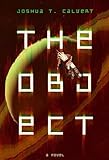
The Object: Hard Science Fiction | $7.99 | Buy on Amazon |
| 5 |

|
Children of Time | $8.69 | Buy on Amazon |
As an Amazon Associate I earn from qualifying purchases.
How these books differ
| Book | Scientific approach | Story scale | Best fit |
|---|---|---|---|
| The Martian by Andy Weir | Practical, science-grounded problem-solving, with a major plot-enabling weather liberty | Individual survival | Readers who want an accessible engineering-survival story |
| Project Hail Mary by Andy Weir | Detailed scientific reasoning alongside invented phenomena and alien biology | Interstellar problem-solving | Readers comfortable with a substantial speculative turn |
| Rendezvous with Rama by Arthur C. Clarke | Exploration, mechanics, and astrophysics; praised for scientifically accurate descriptions by MasterClass | Encounter with an extraordinary object | Readers drawn to methodical exploration |
| Red Mars by Kim Stanley Robinson | Astrophysics and geopolitics inform an imagined colonization future | Planetary settlement and society | Readers interested in long-term social and political change |
| The Three-Body Problem by Cixin Liu | A real orbital-mechanics concept becomes a starting point for ambitious speculation | Cosmic-scale speculation | Readers who want big ideas and can accept an uncertain scientific premise |
Start with practical problem-solving
The Martian by Andy Weir
When astronaut Mark Watney is stranded on Mars, survival depends on working through practical problems. MasterClass and Phillip Strang describe the novel as science-grounded and accessible, making it a strong first pick if you want the story’s engineering challenges to drive the plot.
Do these 3 things before closing this tab:
1Clear out junk files and repair common Windows errors2Fix the driver behind crashes, sound loss and screen glitches3Repair Windows errors before they cause bigger problemsIts most famous scientific liberty is the storm that sets the story in motion. In a 2015 article, TIME reported that Mars’s atmosphere is barely 1% of Earth’s density and argued that a storm on Mars could not exert the force the novel requires. TIME also raised questions about radiation and oxygen, while noting plausible details in the crop-growing passages and the artificial-gravity physics of a rotating torus. The result is not a flawless simulation of a Mars mission, but a science-led survival story built around a consequential exception.
#1 Best Overall
Weir acknowledged the plot device in a statement reproduced by TIME: “I needed a way to force the astronauts off the planet, so I allowed myself some leeway.”
Choose how much invention you want
Project Hail Mary by Andy Weir
Choose this if you enjoy detailed problem-solving but do not need every premise to come from established science. Space.com’s 2026 discussion describes the novel as occupying a middle ground: it uses science-rich reasoning, but astrophage and Rocky’s alien biology are inventions. The care the characters bring to reasoning through those ideas does not make the underlying phenomena established science.
Rank #2
The Three-Body Problem by Cixin Liu
This is a more speculative choice for readers intrigued by orbital mechanics and cosmic-scale ideas. The three-body problem is a real concept in orbital mechanics; that does not mean the book’s planetary scenario is scientifically possible. MasterClass makes that distinction, so approach the novel as ambitious fiction with a real scientific point of departure, not as a reliable account of a feasible planetary system.
Recommended Free Tools
Pick a story about exploration or a whole society
Rendezvous with Rama by Arthur C. Clarke
Clarke’s novel is a good fit if you would rather follow methodical exploration than a survival checklist. MasterClass includes it among hard-SF examples and praises its scientifically accurate descriptions. That is an editorial assessment, not a contemporary scientific audit; the book’s appeal here is its emphasis on mechanics, astrophysics, and investigating the unfamiliar.
Rank #3
Red Mars by Kim Stanley Robinson
For a much broader canvas, Robinson imagines Mars colonization through planetary science, politics, and the formation of a new society. MasterClass describes the novel in terms of astrophysics and geopolitics. Its long-horizon settlement scenario is an expansive planetary and social vision, not a near-term feasibility plan.
Quick Recap
Best Value
Rank #4
How to judge “realistic science” in a novel
- Look for the role science plays. In The Martian, practical problem-solving is central to individual survival; in Rendezvous with Rama, exploration and mechanics shape the story.
- Separate extrapolation from invention. A story can reason carefully from its premises while inventing phenomena, as Project Hail Mary does. A real concept in the premise does not validate every consequence, as the distinction around The Three-Body Problem shows.
- Match the scope to your interest. Choose individual survival, an exploratory encounter, or a society-scale future according to the kind of question you want the book to pursue.
- Expect selective liberties. A scientific constraint may be bent to start a plot, as with the Mars storm in The Martian. A caveat about one premise need not erase the value of the book’s other science-led ideas.
Product prices and availability are accurate as of the date/time indicated and are subject to change. Any price and availability information displayed on Amazon at the time of purchase will apply.

