Windows Errors? Fix Them Before They Spread
Repair common Windows errors and clear accumulated junk for a smoother, more stable PC - no reinstall needed.Free scan · no reinstallCrashes, No Sound, or Screen Glitches?
Random freezes, missing sound and display glitches usually trace back to one bad driver. Find and replace yours safely.Free scan · under a minuteIf you like Ultima, the right next game depends on which part of the series you mean: a foundational computer-RPG lineage, early top-down turn-based adventuring, later party play and dialogue, or moral decision-making. Start with Wizardry or Might and Magic for another major classic series; follow the Realms of Arkania trilogy if you want the historical companion most often suggested to Ultima VII players; choose Questron for an early single-hero pattern; and try Exile for a party-and-dialogue profile associated with later Ultima. Use Ultima IV itself as the touchstone if virtues and ethical play are the main attraction.
There is no single “Ultima-like” formula
Ultima changed substantially across its eras. A player drawn to the open-ended feeling of one entry may not want the same perspective, combat structure or social systems in another. “Like Ultima” can mean several different requests:


As an Amazon Associate I earn from qualifying purchases.
- Foundational classic computer RPG design: You want another long-running lineage from the genre’s formative period.
- Early top-down play: You prefer a single hero, an overhead world and turn-based encounters.
- Later party adventuring: You want multiple characters, more involved conversations and the sense of directing a group.
- World exploration and reactivity: You value discovering a place whose locations and people respond to what you do, rather than moving through a strictly linear sequence.
- Virtue-driven role-playing: You want choices to express a moral code instead of treating every encounter as an opportunity for indiscriminate combat or theft.
The recommendations below are therefore a set of targeted matches, not an objective ranking. A historical review of Ultima VII points readers toward Realms of Arkania, Wizardry and Might and Magic. A fan-maintained Ultima-clone taxonomy supplies the more specific leads for Questron and Exile. That taxonomy identifies traits, but it is a community reference and labels itself a stub, so treat those entries as useful directions rather than critical verdicts.
Quick match: choose by the part of Ultima you want more of
| Game or series | Best fit for an Ultima fan who wants… | What the evidence supports | What not to assume |
|---|---|---|---|
| Wizardry | Another foundational classic computer-RPG lineage | Genre history treats it alongside Ultima as a major CRPG series; an Ultima VII review names it as a possible next choice. | It is not established as having Ultima’s world simulation, storytelling or moral system. |
| Might and Magic | A second major classic lineage to explore | It is identified with Ultima and Wizardry in genre history and is also suggested by the Ultima VII review. | The sources do not establish a one-to-one mechanical match with any particular Ultima entry. |
| Realms of Arkania trilogy | A historical companion recommendation for Ultima VII fans | The review explicitly points readers to the trilogy. | No entry-by-entry comparison or current availability is established. |
| Questron | Early top-down, turn-based, single-hero play | The community taxonomy groups it with that design profile. | The taxonomy is a lead generator, not a ranked or comprehensive critical source. |
| Exile | Party play and complex dialogue associated with later Ultima | The taxonomy groups it with characteristics associated with Ultima V. | This grouping does not prove identical systems or superior quality. |
| Ultima IV: Quest of the Avatar | Moral choices and an explicit ethical framework | Genre history describes its eight virtues and says it discourages indiscriminate looting and killing. | It is a touchstone within the series, not a non-Ultima alternative. |
Wizardry: choose another foundational CRPG lineage
Wizardry is the safest first stop when your interest is historical rather than tied to one specific Ultima mechanic. A genre history covering the golden age of computer role-playing games (1985–1993) places Wizardry and Ultima among the major lineages that shaped classic CRPGs. That makes Wizardry a useful contrast: you are exploring another central branch of the same formative tradition, not buying a substitute advertised as an unofficial sequel.
#1 Best Overall
The distinction matters for expectations. The available recommendations do not establish that Wizardry reproduces Ultima’s world reactivity, virtue system, dialogue style or perspective. Start it when what you want is the feel of learning a historically important rules-driven computer RPG and seeing how a neighboring series solves the problems of character growth, party management and dungeon adventure.
Who should start here
- Players who enjoy comparing different foundational approaches to classic CRPG design.
- Readers who want a series with enough identity to stand beside Ultima, rather than a modern game that borrows one surface feature.
- Anyone who is comfortable judging the fit by its own design instead of expecting the same world model.
Who should choose something else first
If your priority is specifically a single protagonist in an overhead world, the taxonomy-based Questron lead below is more precise. If your priority is moral role-playing, use Ultima IV as the reference point instead of expecting Wizardry to supply that framework.
Might and Magic: another major series, without pretending it is identical
Might and Magic is the other broad recommendation supported by both the genre history and the historical Ultima VII review. It belongs in the same “try another classic lineage” category as Wizardry. That is valuable for players who want to understand the range of design that existed around Ultima, not merely repeat one game’s formula.
What’s actually slowing this PC down?
Pick the symptom - the matching free tool is one click away.
Use it as a comparison project: identify which parts of classic role-playing you miss when the world, party structure or narrative emphasis changes. The source material does not provide a title-by-title mechanical comparison, so a responsible recommendation stops at lineage and audience fit. It should not promise the same degree of simulation, storytelling or ethical play found in a particular Ultima installment.
Rank #2
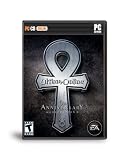
- Electronic Arts 15305 Ultima Online 9th Anniv PC
A good reason to pick it after Wizardry
Trying both gives you two neighboring reference points before you decide that you need a closer match. If neither satisfies your preferred perspective or social systems, the more targeted choices below tell you where to look next.
Realms of Arkania: follow the historical Ultima VII trail
A review focused on Ultima VII explicitly recommends the Realms of Arkania trilogy along with Wizardry and Might and Magic. That is a meaningful signal for someone whose reference point is specifically the later, more ambitious side of Ultima. It is also a historical recommendation, not evidence of a current consensus or a claim that every entry in the trilogy matches Ultima VII feature for feature.
How to use this recommendation
- Start with your reason for liking Ultima VII. Was it the scale of the setting, the party perspective, conversations or the feeling of inhabiting a broader world?
- Approach the trilogy as a companion path. The available source points to the series as a whole and does not supply an entry-by-entry comparison.
- Keep availability separate from historical fit. The recommendation confirms why the trilogy belongs on an Ultima fan’s shortlist, but it does not verify current storefront listings, prices or supported operating systems.
This is the best lead in the list for readers who want to follow a critic’s contemporaneous advice rather than infer similarity from a taxonomy label. It is not the best choice if what you really want is the early single-hero, top-down pattern.
Free tools Windows power users keep installed
One-click scans. No signup required.
Questron: an early, focused match for top-down turn-based play
The fan-maintained Ultima-clone taxonomy identifies Questron with an early design profile: top-down presentation, turn-based combat and a single hero. That makes it a useful recommendation when your favorite Ultima memories are about moving one protagonist through an overhead world and making deliberate decisions in turn-based encounters.
Rank #3
![Diablo IV | Age of Hatred Collection | Nintendo Switch 2 [Code in a Box]](https://m.media-amazon.com/images/I/316PBtvThiL._SL160_.jpg)
- COMPLETE DIABLO IV COLLECTION – Includes the Diablo IV base game plus the Vessel of Hatred and Lord of Hatred expansions in one action RPG bundle for Nintendo Switch 2.
- SWEEPING DARK FANTASY CAMPAIGN – Unlikely heroes arise, ancient foes stir, and no soul is safe as Mephisto, the Prime Evil of Hatred, spreads his corruption across Sanctuary.
- 8 PLAYABLE CLASSES – Master eight distinct Diablo IV classes, including the all-new Paladin and Warlock, and build the hero you want to play.
- EXPLORE NAHANTU – Take up the Spiritborn class and become the apex predator of the jungles of Nahantu in the Vessel of Hatred expansion.
- JOURNEY TO THE ISLES OF SKOVOS – Adventure to the never-before-seen region of Skovos in the Lord of Hatred expansion.
Why the profile matters
Perspective and party structure change how an RPG feels before you have learned a single rule. A single-hero game concentrates decisions in one character. Top-down presentation emphasizes movement through a map rather than a first-person corridor view. Turn-based combat gives you time to choose actions instead of demanding real-time reactions. Those are concrete reasons to put Questron ahead of a broader series recommendation for this particular player.
What the taxonomy can and cannot tell you
- It supports using Questron as a lead for that combination of traits.
- It does not establish a ranking, a review consensus or an identical implementation of Ultima systems.
- It does not verify current purchase options, platform support or preservation status.
Choose it when the shape of play is your priority. Do not choose it solely because the word “clone” appears in a community label; the useful information is the specific design profile attached to the entry.
Exile: a lead for party play and dialogue
The same taxonomy groups Exile with characteristics associated with later Ultima V-type play, especially party play and complex dialogue. This makes it the targeted recommendation for readers who remember Ultima less as a solo adventure and more as a group of characters moving through a world where conversations are part of progress and identity.
When Exile is the better fit
- You want decisions distributed across a party rather than concentrated in one hero.
- You see dialogue complexity as a defining feature, not optional flavor text.
- You are looking for a lead associated with later Ultima characteristics rather than the earliest overhead, single-character pattern.
Keep the recommendation qualified
The taxonomy’s grouping is a classification aid, not a critical ranking. It does not establish that Exile reproduces every later-Ultima system, nor does it provide current availability or pricing. Treat it as a title to investigate when party-and-dialogue design is the deciding axis.
Ultima IV: the essential touchstone for moral role-playing
If the reason you love Ultima is ethical decision-making, another series may be the wrong place to begin. Ultima IV: Quest of the Avatar is the clearest touchstone in this list because its role-playing framework is organized around eight virtues:
| Virtue | What it contributes to the role-playing premise |
|---|---|
| Honesty | A direct standard for truthful conduct. |
| Compassion | A reason to treat vulnerable or defeated characters as more than obstacles. |
| Valor | A model of courage rather than simple aggression. |
| Spirituality | An inward or reflective dimension to the avatar’s development. |
| Humility | A check against assuming power automatically makes the hero right. |
| Sacrifice | A framework in which the player may give something up for a larger principle. |
| Justice | A distinction between winning and acting fairly. |
| Honor | A broader standard for keeping one’s conduct worthy of trust. |
A genre history describes the game as discouraging indiscriminate looting and killing. That is the important distinction for a virtue-focused player: the game’s premise asks what kind of person the avatar becomes, not merely whether the avatar survives. No non-Ultima recommendation in the available material is documented as delivering this exact eight-virtue structure.
Use Ultima IV as your comparison baseline
When evaluating another classic RPG, ask whether it gives you explicit moral principles, consequences for violating them, or simply a combat-and-reward loop. That question prevents a common mismatch: choosing a game because it is old and party-based when what you actually want is ethical role-playing.
Quick wins for a faster PC:
Repair Windows errors before they cause bigger problemsFix Now →Fix the driver behind crashes, sound loss and screen glitchesFind Drivers →Exploration and world reactivity: the feature the shortlist cannot promise
Exploration and reactivity are often what players mean when they describe Ultima as special. You may want a setting that invites wandering, remembers your behavior or allows problems to be approached in more than one way. The recommendations above should not be presented as guaranteed substitutes for that experience. The supplied historical recommendations establish shared CRPG lineage or a critic’s suggested companion; the taxonomy supplies perspective, party and dialogue labels. They do not establish equivalent world simulation for Wizardry, Might and Magic, Realms of Arkania, Questron or Exile.
How to choose when exploration is your top priority
- Identify your reference entry. “Exploration” in an early top-down game may mean map discovery; in a later party-oriented game it may include conversations and responses from locations or characters.
- Use the historical review for a starting path. If your reference is Ultima VII, begin with Realms of Arkania, Wizardry or Might and Magic, while treating the recommendation as a lead.
- Do not infer reactivity from age or genre status. A classic CRPG lineage can be important without reproducing the same simulation priorities.
Perspective, party size and dialogue: a practical decision guide
| If you want… | Start with… | Reason |
|---|---|---|
| One hero, overhead view and turn-based decisions | Questron | Its taxonomy profile directly combines those traits. |
| A party and more complex conversations | Exile | It is grouped with later Ultima V-associated characteristics. |
| A broad classic CRPG lineage | Wizardry or Might and Magic | Both are identified as major series and suggested as possible next choices for Ultima VII readers. |
| A critic-recommended companion to Ultima VII | Realms of Arkania | The review names the trilogy directly. |
| Explicit moral virtues | Ultima IV | Its eight-virtue framework is documented in genre history. |
This matrix is intentionally about fit, not quality ranking. It tells you why a title belongs on the shortlist and where the evidence stops.
Availability, versions and setup: what is actually verified
EA’s product listing for Ultima VII: The Complete Edition describes a PC RPG sold through the EA app as a digital license. The listing gives a price “starting from $4.99” when accessed and identifies April 16, 1992, as the release date. Both the displayed price and availability can change, so treat that figure as a time-sensitive listing rather than a permanent price.
EA’s catalog also lists multiple other Ultima entries. The available information does not verify current official listings, prices or platform support for Wizardry, Might and Magic, Realms of Arkania, Questron or Exile. Do not assume that a historical recommendation is still sold in the same edition or storefront.
Recommended Free Tools
Expect possible classic-PC friction
An older Ultima VII review warns that playing the game in its reviewed context required DOSBox or computer knowledge. That observation should be read narrowly: it describes that reviewer’s setup, not every current storefront build or every reader’s computer. If you encounter a classic-PC title with similar friction, check the edition’s own documentation and supported environment before changing files or configurations.
A safe setup checklist
- Confirm the exact edition and operating-system support shown by the seller or publisher.
- Check whether the listing supplies a configured launcher or expects a separate DOS environment.
- Preserve save files before changing configuration.
- Prefer documentation for the edition you own over advice written for a different release.
A sensible order for exploring the shortlist
- Define your favorite Ultima axis. Pick one: lineage, early top-down solo play, later party-and-dialogue play, exploration, or virtue-driven decisions.
- Choose the closest documented lead. Use Questron for the early single-hero profile, Exile for party and dialogue, Realms of Arkania for the historical Ultima VII path, or Wizardry/Might and Magic for a neighboring major lineage.
- Use Ultima IV as the ethics baseline. If moral choices are the non-negotiable feature, compare every alternative against its eight virtues instead of assuming another classic RPG will provide the same structure.
- Verify access before committing. Current availability is confirmed here only for the EA listing of Ultima VII: The Complete Edition; the other recommendations need separate edition and platform checks.
- Judge the game by the intended match. A title can be an excellent answer to “I want another foundational CRPG” without being an answer to “I want Ultima’s world reactivity.”
Bottom line: the best first choice depends on your Ultima
Start with Wizardry or Might and Magic if you want another landmark classic computer-RPG lineage. Follow the Realms of Arkania trilogy if your point of reference is specifically Ultima VII and you want the companion path named by its historical reviewer. Pick Questron for the early top-down, turn-based, single-hero pattern, or Exile for party play and complex dialogue associated with later Ultima. If the defining feature is moral role-playing, return to Ultima IV and its eight virtues before looking for a substitute. None of these is proven to reproduce every Ultima system, which is why matching the recommendation to the feature you actually miss produces a better result than a generic “best games” ranking.
Quick Recap
Product prices and availability are accurate as of the date/time indicated and are subject to change. Any price and availability information displayed on Amazon at the time of purchase will apply.

