If a Tapo robot vacuum will not recharge or cannot find its dock, work through the problem in this order: verify dock power and the robot’s switch, clean the charging contacts and recharge sensors, reposition the dock, rebuild a reliable map reference, and remove obstacles from the return route. These steps cover the common causes across Tapo RV and RVA models. Buttons, map controls and dock hardware vary, so use the manual for your exact model before resetting or replacing anything.
Identify what is actually failing
“Not charging” and “not finding the dock” can describe different faults. Watch one complete return attempt and match the behavior below before changing settings.
As an Amazon Associate I earn from qualifying purchases.
| What you see | Most likely area | First action |
|---|---|---|
| The dock has no indicator and the robot does not react when placed on it. | Dock power, adapter, switch or a failed charging assembly. | Check the dock LED (if fitted), both adapter connections and the robot’s power state. |
| The robot reaches the dock, touches it, then leaves or the battery percentage does not rise. | Dirty, obstructed or misaligned charging contacts; a sensor or battery fault is also possible. | Power the robot off where the model permits and clean the dock springs, robot contacts and recharge sensors with a dry cloth. |
| The robot cleans normally but wanders, passes the dock or cannot calculate a route home. | Dock placement, map drift or a blocked approach. | Clear the route, test from near the dock, then start future runs from the dock so the app records its position. |
| It returns successfully only when placed close to the dock. | Obstacles, excessive distance, sunlight/glare or an unreliable map reference. | Use the placement requirements and map-recovery steps below. |
Separate navigation from charging as you test. A robot can locate the dock but fail to make an electrical connection, or it can have a perfectly good battery and contacts but be unable to navigate back. That distinction prevents you from deleting a healthy map when the real problem is a loose adapter, for example.
1. Confirm power and the robot’s switch
Check the dock indicator
Remove the robot from the dock and look for the dock’s LED or indicator. An unlit indicator can mean the adapter is disconnected, the outlet is off, the power supply has failed, or the model has no continuously illuminated indicator. Do not assume the dock is powered because the robot’s app is online.
#1 Best Overall

- 10x GRIP-ROOT WEAVE - TRAP MORE, WORK LESS: Ultra-absorbent microfiber towels for car Grip Root weave works like PLANT ROOT FOLLICLES, sucking up & LOCKING AWAY 8x to 10x its weight in liquid, particulates, moisture, grime and dirt in far LESS TIME than traditional ‘Heavy Duty’ Cleaning Rags. Each towel features a 2.5mm thick design, providing enhanced durability and better grip during use.
- WON’T LINT, SCRATCH, PILL, SWIRL, SHED, or BLEED like thin, cheaply made microfiber towels for cars. RAPID DRY release layers make these the ideal microfiber towels for cars, creating that spectacular, SWIRL-FREE MIRROR SHINE with our cleaning rags. With a solid 2.5mm thickness, these towels are built to prevent damage while ensuring optimal performance.
- LASTS 1200+ WASHES - That’s 3.27 YEARS worth of use in this 12-pack of COMMERCIAL GRADE 300 GSM Reuseable Cleaning Cloth. The 2.5mm thickness and OVERLOCK BRAIDED STITCHING makes the ideal SUSTAINABLE SOLUTION for cleaning every SURFACE, crack, and CREVICE in your home, garage, or office.
- SOAK IT UP FASTER - 4X’s MORE ABSORBENT than COTTON cloths, these are the microfiber cleaning cloth for cars to get if you want an ALL PURPOSE cleaning towel, crafted with 2.5mm thickness to scoop up your messes, oils, and liquids FASTER than a SPONGE
- UNRIVALED POWER - TEST THIS GRIP-ROOT technology risk-free for 30 full days. With a 2.5mm thick design, it LOCKS AWAY dirt, dust, grime, spills, and messes better than any other high-performance cleaning rags you’ve tried.
Reseat both ends of the adapter
Unplug and firmly reconnect the adapter at the wall outlet and at the dock. Try a known-working outlet if the indicator remains dark. Inspect the cable and plug for visible damage; do not use a damaged power supply. The RV10 guide specifically directs owners to check the dock LED and adapter.
Verify the robot is on
Make sure the robot itself is switched on before testing. The RV10 has a physical power switch on the left side; other Tapo series use different controls, so do not force the RV10 procedure onto another model. If the robot was deliberately powered off for storage or cleaning, turn it on according to its manual and wait for its normal startup indication.
Check the simple status clues
Note whether the robot announces a docking attempt, shows a charging symbol, or changes status in the Tapo app when it is seated. These clues are useful, but they are not a substitute for checking the physical contacts. A connected app only proves that the robot has network power; it does not prove that the dock is delivering charging current.
The Tool Desk
Outbyte PC Repair FREEClear out junk files and repair common Windows errorsFree Scan →Outbyte Driver Updater FREEFix the driver behind crashes, sound loss and screen glitchesFind Drivers →2. Clean the charging contacts and recharge sensors
Use a dry cloth only
Turn the robot off if your model allows it. Wipe the dock’s spring-loaded charging contacts and the matching metal contacts on the robot with a clean, dry, lint-free or microfiber cloth. Dust, hair, oxidation or a thin film can prevent enough current from passing even when the robot physically touches the dock.
Clean the optical path
Wipe the black recharge sensor on the front bumper and the corresponding sensor on the dock. Remove any protective film that was left on either part after unboxing. TP-Link explains that “The robot vacuum uses the recharge sensor (the black part on the front) to detect signals emitted by the charging dock to locate it and recharge.” A dirty sensor can therefore cause both navigation failure and an apparent charging failure.
Do not spray liquid, detergent or compressed moisture into the dock. Let any surface dust fall away from the contacts, and check that a spring contact moves freely without being bent. If a contact is recessed, loose or visibly damaged, stop forcing the robot onto the dock and move to model-specific support.
Repeat the inspection after a failed test
If the robot still fails, look at the contact faces again for a narrow dirty band or a mark showing that only one side is touching. A robot that sits slightly crooked can make intermittent contact, so clean both sides rather than only the one that appears accessible. Do not file, scrape or bend the metal parts; the exact dock assembly differs among RV and RVA models.
3. Put the dock where the robot can align with it
Meet the clearance requirements
Place the dock on a flat, hard floor against a wall. Leave at least 1.5 metres of unobstructed space in front and 0.5 metre on each side. The floor should not allow the dock to sink or tilt; thick carpet can change the height and angle enough to make contact alignment unreliable.
Rank #2

- Microfiber 16 x 12-inch cleaning cloth (24-pack); ideal for cleaning cars, trucks, boats, and more
- Ultra-soft and non-abrasive car drying towels; will not scratch paints, vinyl, glass, finishes, or other surfaces
- Effectively cleans either dry or with liquid cleaners for streak-free results and a lint-free shine
- Durable and absorbent; soak up 8 times their own weight
- Can be reused hundreds of times
Avoid optical and reflective interference
Keep the dock out of direct sunlight and away from glossy surfaces such as glass or mirrors. Bright light and reflections can interfere with the signals used by the recharge sensor. In a large home, a central, spacious location gives the robot a more dependable reference and a shorter return path.
Stabilize the dock
Make sure the dock cannot slide when the robot bumps it. Route the adapter cable so it does not cross the robot’s approach. After moving the dock, allow the robot to create a new, consistent map reference instead of relying on the old dock position.
Compare the physical setup with the symptom
If the robot stops a metre away and turns repeatedly, suspect the approach space, glare or map position. If it reaches the dock squarely but backs away, focus first on the contacts and dock power. If it cannot leave the dock without snagging a cable, correct that obstruction before attempting another map run. The same dock can appear to have different faults when the floor layout changes around it.
Free tools Windows power users keep installed
One-click scans. No signup required.
4. Restore the dock reference in the Tapo map
Always begin a run from the dock
For reliable navigation, start each cleaning session with the robot seated at the dock and launch cleaning from there. The robot records that starting location, and the Tapo app should display a dock icon. Starting it from another room, carrying it after mapping, or moving the dock mid-run can leave the calculated dock position out of sync with the real one.
Lock a good map when the model supports it
On most compatible models, open Tapo app > Map > Map Management > Lock after the map is correct. A locked map prevents accidental edits that can rotate, overlap or misalign rooms and the dock. If the map contains duplicated rooms, a rotation or obvious shift, recreate or restore it using the options in that model’s manual before judging the robot’s return performance.
Use the correct recovery feature for RV30 models
RV30 and RV30C do not provide Map Lock. Those models use Backup & Restore instead, so save a known-good map and restore it through the available map-management controls when the layout becomes corrupted. Do not look for a Map Lock button that your model does not have.
Check the RV20 Max Plus map icon
The RV20 Max Plus manual likewise requires starting from the dock and confirming that the dock icon appears on the map. If the icon is missing or in the wrong location, correct the map reference before testing long cleaning runs.
Do not confuse a map issue with a changed floor plan
Moving furniture can create a temporary blockage without corrupting the map. Conversely, moving the dock can invalidate the dock reference even if every room still looks correct in the app. First return the dock to its previous position and remove newly added obstacles. If the robot still returns to the wrong place, make a fresh run from the dock and use the model’s supported lock or backup feature.
Rank #3
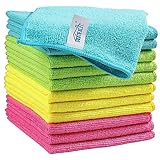
- Effective Streak-Free Cleaning: Clean kitchen countertops, windows, mirrors, bathroom surfaces, stainless steel, car interiors, glass, and other delicate surfaces with just water or your favorite cleaner—these microfiber cloths deliver streak-free, neat results with minimal effort, making daily cleanup fast and simple
- Lint-Free & Scratch-Safe: Soft to the touch and completely lint-free, these cloths won't scratch or damage delicate finishes like glass, ceramic, coated metals, car paint, or polished surfaces—clean with confidence on everything from household appliances to auto trim and electronics screens
- Ultra-Absorbent for Spills, Polishing & Drying: Designed to quickly soak up liquids, grease, and grime, making them ideal for drying dishes, wiping spills, polishing stainless steel, buffing car surfaces, and tackling everyday messes around the house, garage, or workshop—efficient cleaning without extra effort
- Reusable, Washable & Long-lasting: Machine washable and reusable hundreds of times with reinforced edges that hold up wash after wash—a durable replacement for disposable paper towels that cuts down on waste and repeat purchases for families, pet owners, detailers, and busy households
- Versatile Across Home, Auto & Beyond: Equally suited for general household cleaning, interior car detailing, exterior buffing, polishing wheels, wiping down tools, workshop surfaces, electronics, eyeglasses, screens, and more—simply rinse after use or toss in the washing machine; a practical all-around choice for homes, garages, shops, and small businesses
5. Clear the return route and run a close test
Remove snag and blockage hazards
Before starting a test, pick up chairs that narrow the approach, boxes, clothing, toys, plastic bags, loose wires and other objects that can catch a wheel or block the dock. Leave the full 1.5-metre front and 0.5-metre side clearances, not just a narrow gap aimed at the dock.
Test from a short distance
Place the powered-on robot on the floor a short distance from the dock, facing generally toward it, and start the return command. A successful close test shows that the dock can emit its signal and the robot can align its contacts. If it still cannot locate or charge, the issue is less likely to be room size or a long route and more likely to involve power, sensors, contacts, dock hardware or the robot itself.
Then test a normal run
After the close test succeeds, start a complete cleaning run from the dock. Observe whether the robot leaves, maps normally and returns without anyone moving the dock. If it fails only after visiting a particular room, inspect that room’s thresholds, furniture and cables for a route obstruction rather than repeatedly relocating the dock.
Do these 3 things before closing this tab:
1Clear out junk files and repair common Windows errors2Scan for outdated or missing drivers - takes under a minute3Repair Windows errors before they cause bigger problemsRecord the result of each test
Write down four observations: whether the dock indicator is on, whether the robot detects the dock, whether it makes contact, and whether the app reports charging. Changing several things at once makes the result difficult to interpret. A short record also gives TP-Link support a useful sequence instead of a general report that the vacuum “doesn’t work.”
A controlled five-minute diagnostic sequence
- Unplug and reconnect the adapter at both ends, then verify the outlet with another device.
- Turn the robot on using the exact control described for your model.
- Remove protective film and dry-clean the dock springs, robot contacts and both recharge sensors.
- Confirm the dock is against a wall on a hard, level floor with the specified clearances and no direct sun or reflective panel nearby.
- Place the robot near the dock and run a return test.
- If that succeeds, seat the robot at the dock, start a complete cleaning run, and watch the return.
- If it fails at close range, stop repeating long runs and prepare the model details and test results for support.
This sequence separates a supply problem from a contact problem and a navigation problem without requiring a reset. It also avoids erasing a map before you know that the physical dock can power the robot.
Match the remedy to the symptom
| Symptom | Checks that apply | When to stop self-troubleshooting |
|---|---|---|
| Dock indicator stays off | Outlet, both adapter ends, cable condition and model-specific power controls. | The indicator remains off with a verified outlet and correctly seated adapter; a power supply or dock fault is possible. |
| Robot touches dock but battery does not increase | Dry-clean both sets of contacts, remove protective film, clean both recharge sensors and confirm the robot is on. | Contacts are damaged, do not spring back, or charging still fails after a verified powered dock. |
| Robot cannot see the dock from across the room | Flat hard floor, wall placement, sunlight/glare control, required clearances and an unobstructed route. | A close test also fails after placement and sensor cleaning. |
| Robot returns to the wrong place or loops | Start from the dock, verify the dock icon, lock the map where supported, or use Backup & Restore on RV30/RV30C. | The map repeatedly corrupts or the robot loses its position with a clear route. |
| Failure began after moving furniture or the dock | Restore the dock’s physical position, clear new obstacles and create a fresh, consistent map reference. | Navigation remains wrong after a correctly started mapping run. |
Model and hardware differences matter
Tapo’s RV and RVA families do not share identical buttons, switches, dock designs or map menus. The RV10 documentation describes a left-side physical power switch and calls out the dock LED and adapter. Newer series may use different power controls. Map Lock is available on most models but not RV30 or RV30C, which use Backup & Restore. The RV20 Max Plus manual makes the dock icon and dock-start requirement explicit.
Identify the exact RV model and hardware version printed on the robot, dock or label before attempting a reset, firmware procedure or part replacement. A procedure that is safe for one series may be absent or different on another. Region-specific firmware and app releases can also change menu names.
Recommended Free Tools
Do not infer compatibility from a similar-looking model. An RV10 switch location, an RV20 Max Plus map instruction and an RV30 backup workflow are model-specific examples, not universal controls. Check the manual supplied for your hardware revision and region before following any button combination.
Rank #4

- Unparalleled Cleaning Performance: Our microfiber towels provide outstanding water absorption and adhesion; effortlessly absorb dirt and liquid, delivering exceptional cleaning results that will leave your car looking brand new
- No Scratching: Made from incredibly soft fabric; provides gentle care for your car; delicately wipes surfaces without scratching or damaging the paint, restoring your car's shine
- Super Absorbent: Ideal for drying your car quickly; designed to rapidly soak up water and moisture; perfect for wiping down surfaces and ensuring a streak-free, spotless finish after washing your vehicle
- Versatile Applications: Suitable for various applications; ideal for exterior car care; also effective for household cleaning, such as wiping furniture, kitchen utensils, and glass surfaces
- Easy to Clean and Long-lasting: Designed to withstand repeated use and washing; maintains performance and quality after multiple washes; machine washable and quick-drying for convenient and efficient cleaning
Cost and replacement decisions
The first-line fixes in this guide are inspection, dry cleaning, placement and map recovery; they do not require buying a part. If the dock remains unpowered with a known-good outlet and correctly seated adapter, a replacement power supply or dock may be considered only after TP-Link confirms compatibility. A robot that navigates correctly but will not charge may need a charging assembly or battery diagnosis, while a robot that cannot detect the dock may need sensor or dock testing.
Because Tapo models use different hardware, do not order a generic dock, adapter or battery based only on appearance. Confirm the exact model number and hardware version, and ask support whether the part is approved for your region. Official guidance does not provide a universal user battery-replacement procedure, so opening the robot or substituting an unverified battery is not a general fix.
Independent reader supportYour contribution helps us test, update, and keep practical guides available for everyone.What not to do
- Do not clean electrical contacts with water or spray cleaner.
- Do not place the dock on unstable carpet, in direct sun or directly beside a mirror or glass panel.
- Do not move the dock while a mapping run is in progress and then expect the old map to remain accurate.
- Do not repeatedly push the robot onto the dock if a contact is bent or the adapter is damaged.
- Do not apply a generic battery-replacement or reset procedure without the exact model manual. Official guidance reviewed for this issue does not provide one universal user battery-replacement method.
- Do not delete a functioning map as the first response to a charging-only symptom; verify power and contacts first.
- Do not judge the dock from a test performed with bags, cables or furniture blocking the required approach.
When to contact TP-Link/Tapo support
Escalate after you have verified a powered outlet and adapter, cleaned the contacts and sensors, met the dock clearances, cleared the route, and completed a close test. Persistent failure can indicate a defective dock power supply, charging assembly, recharge sensor or battery. The official guidance does not establish a single user-serviceable fix for those possibilities.
Quick wins for a faster PC:
Scan for outdated or missing drivers - takes under a minuteDriver Scan →Repair Windows errors before they cause bigger problemsFix Now →Open the support page or manual for the exact model and hardware version. When contacting support, prepare the model number, MAC address or serial number (SN), router model and a concise record of the checks you completed. Include whether the dock LED lights, whether the robot reaches the dock, whether its battery percentage changes, and whether the close test succeeds. This information helps support distinguish a map problem from a power or hardware fault.
If the robot or adapter shows heat, a damaged cable, a cracked housing or a bent contact, stop testing and describe that condition to support. Avoid repeated charging attempts with visibly damaged hardware. Support can then advise whether the dock, adapter, robot or battery should be inspected or replaced.
Prevent the problem from returning
- Keep the dock on the same flat, hard surface with its front and side clearances maintained.
- Wipe the contacts and recharge sensors with a dry cloth whenever dust or hair is visible.
- Start cleaning from the dock so the app retains a dependable dock location.
- Keep cables, bags, toys and clothing out of the robot’s normal return lanes.
- Back up maps on RV30 and RV30C, or lock the map on models that support Map Lock, after a successful mapping run.
- Keep the dock away from direct sunlight, mirrors and glossy panels that can interfere with the recharge sensor.
- Recheck the dock position after rearranging furniture or moving the vacuum between floors.
These practices address the alignment, signal and navigation conditions that determine whether the robot can both locate the dock and make a reliable electrical connection.
Frequently Asked Questions
Why does my Tapo robot vacuum find the dock but not charge?
Check that the dock is powered, then turn the robot off where permitted and dry-clean the dock spring contacts, robot charging contacts and both recharge sensors. Remove protective film and confirm the robot is seated straight. If charging still fails with a verified powered dock, the contacts, charging assembly, sensor or battery may need model-specific service.
Why can’t my Tapo robot vacuum find its charging dock?
Clear the return route, keep the dock on a hard level floor against a wall, and provide at least 1.5 m in front and 0.5 m on each side. Avoid direct sunlight and glossy surfaces. Start cleaning from the dock so the app records its location, and verify that the dock icon appears on the map.
Best Value

- Super Absorbent: Experience the excellent quality of AIDEA all-purpose microfiber cleaning cloths; made from premium materials; offering exceptional absorbency and quickly wicking away water to keep you dry; ideal for swiftly and safely removing dirt, grime, and liquids
- Soft & Lint-Free: Our ultra-soft and non-abrasive microfiber towels ensure a scratch-free cleaning experience on surfaces, paint, glass, and coatings; effective in tackling the toughest grease, grime, and dirt; suitable for cleaning kitchens or cars; leaving surfaces shiny and pristine
- Remarkable Durability and Reusability: These microfiber dusting cloths can be washed and reused hundreds of times; resistant to shrinking, falling apart, or losing cleaning power; designed for long-term use
- Easy Care and Use: The shop towels available in five different colors for easy color coding of cleaning tasks; designed with premium fabrics that prevent scratching; ideal for polishing and drying without damaging surfaces; keeps your car shiny and intact
- Versatile: AIDEA cleaning rags are perfect for a variety of tasks; effective with just plain water; suitable for use in kitchens, bathrooms, and for dusting; an essential tool for any cleaning routine
Should I reset the Tapo vacuum when it will not return home?
Not as a first step. Verify power, clean the contacts and sensors, correct dock placement and run a close test first. Reset and map procedures differ by model, so follow the exact manual for your RV or RVA model.
How do I fix a Tapo map that sends the robot to the wrong dock location?
Restore the dock to its mapped position, remove new obstacles and start a complete run from the dock. On most supported models use Tapo app > Map > Map Management > Lock after the map is correct. RV30 and RV30C use Backup & Restore instead of Map Lock.
Can carpet cause Tapo docking or charging problems?
Yes. A soft or thick carpet can let the dock sink or tilt, changing the robot’s alignment with the charging contacts. Move the dock to a flat, hard floor and maintain the required clearances.
Crashes, No Sound, or Screen Glitches?
Random freezes, missing sound and display glitches usually trace back to one bad driver. Find and replace yours safely.Free scan · under a minuteWindows Errors? Fix Them Before They Spread
Repair common Windows errors and clear accumulated junk for a smoother, more stable PC - no reinstall needed.Free scan · no reinstallWhat information should I give Tapo support?
Provide the exact model and hardware version, MAC address or serial number, router model, dock-LED status, whether the robot reaches the dock, whether its battery status changes, and the results of the close-range return test.
Is there a universal Tapo robot vacuum battery replacement procedure?
No universal user procedure is provided across the RV and RVA families. Do not open the robot or install an unverified battery; contact TP-Link/Tapo support for the exact model.
Can sunlight or a mirror stop the robot from docking?
It can interfere with the recharge sensor’s signal path. Move the dock out of direct sunlight and away from glossy surfaces such as mirrors or glass, then establish a consistent map reference by starting a run from the dock.
The Bottom Line
Start with the physical basics: verify the dock and robot are powered, dry-clean the contacts and recharge sensors, and place the dock on a hard floor with 1.5 m of front clearance and 0.5 m at each side. Then clear the route, test from nearby, and rebuild the map reference by starting runs from the dock. Use Map Lock where available or Backup & Restore on RV30/RV30C. If a powered, clean dock still fails the close test, stop experimenting and give TP-Link support your exact model and troubleshooting results.
What’s actually slowing this PC down?
Pick the symptom - the matching free tool is one click away.
Quick Recap
Product prices and availability are accurate as of the date/time indicated and are subject to change. Any price and availability information displayed on Amazon at the time of purchase will apply.

