Short answer: a traditional debit card spends money already held in your bank or credit-union account. A stablecoin card spends a stablecoin balance such as USDC, usually converting it to fiat at authorization or using a pre-funded fiat balance. A broader crypto debit card can sell stablecoins or volatile assets such as Bitcoin, Ethereum, or Solana when you pay, then send fiat through Visa or Mastercard rails.
The right choice depends on what you hold, how much conversion and price risk you accept, the card’s fees and limits, and whether its issuer, custodian, dispute process, and insurance disclosures fit your jurisdiction.
As an Amazon Associate I earn from qualifying purchases.
What each card actually spends
Traditional debit cards: money in a bank account
The Consumer Financial Protection Bureau (CFPB) defines the basic transaction plainly: “With a debit card, you are spending money you have in your bank or credit union account.” The card authorizes a withdrawal from that account, subject to the bank’s available-balance rules.
Unless you have opted into an overdraft program or another form of coverage, a purchase that exceeds the available balance is generally declined. An overdraft program can allow the transaction to proceed for a fee. The Federal Trade Commission (FTC) notes that declining overdraft protection can instead leave the transaction declined without an overdraft fee.
#1 Best Overall

- Seedless by design, nothing to steal: Your private key is generated inside the EAL6+ chip and never leaves it. No seed phrase is shown or typed at setup, so a tampered device, keylogger, or phishing site has nothing to capture. 9+ years, millions of cards, no known remote hacks.
- Tap once to manage your entire crypto wallet across 90 blockchains - no USB cables or Bluetooth, no batteries, no setup. Access 16,100+ coins & tokens, DeFi, NFTs, and staking instantly from your phone
- Backup without a seed phrase: Your wallet is copied to 2 backup cards with end-to-end encryption, so there are no words on paper to lose or leak. Keep them in separate places; if one card is lost, the others restore full access. Optional seed phrase for advanced users.
- Engineered to last up to 25 years: Waterproof (IP69K), shockproof and tested for extreme temperatures from −25°C to 50°C. A durable cold wallet with long‑term protection and independently audited security.
- Trusted by 6 million users worldwide (4.9 App Store, 4.8 Google Play) - buy, sell, swap, stake, and spend cryptocurrency directly. The secure offline storage wallet designed for how people actually use crypto wallets
Stablecoin cards: a stablecoin-funded payment product
A stablecoin card is defined by the asset used to fund it, not by a unique card-network technology. You connect a wallet or platform balance denominated in a stablecoin such as USDC. At authorization, the provider may convert the stablecoin to fiat or draw on a fiat balance that was funded in advance. The merchant normally receives fiat over the card network rather than receiving the stablecoin directly.
In practice, most stablecoin cards are debit-style or prepaid-style products running on conventional Visa or Mastercard acceptance rails. The stablecoin reduces price volatility compared with spending a floating cryptoasset, but it is not the same as money in an insured bank deposit. The issuer, reserve, custody, redemption and regulatory arrangements still matter.
Crypto debit cards: any supported digital asset may fund the purchase
“Crypto debit card” is the broader category. Mastercard describes a crypto card as “a payment card issued by a financial institution where card transactions are funded by your digital assets.” For a debit-style product, Mastercard says the issuer “instantly sells the equivalent amount of cryptocurrency from your connected digital wallet.”
The Tool Desk
Outbyte PC Repair FREEClear out junk files and repair common Windows errorsFree Scan →Outbyte Driver Updater FREEFix the driver behind crashes, sound loss and screen glitchesFind Drivers →The selected asset can be a stablecoin or a volatile cryptoasset such as Bitcoin, Ethereum or Solana. Some products require you to top up a card balance manually; others perform the conversion automatically when you make a purchase. A crypto debit card therefore can behave like a stablecoin card for one user and like a volatile-crypto liquidation tool for another.
Stablecoin card vs crypto debit card vs traditional debit card
| Comparison point | Traditional debit card | Stablecoin card | Broader crypto debit card |
|---|---|---|---|
| Funding source | Bank or credit-union account balance | Stablecoin balance such as USDC, or a fiat balance funded from it | Stablecoin or supported volatile cryptoasset; some also support ordinary fiat |
| What happens at purchase | Funds are debited from the bank account | Stablecoin is converted to fiat, or a pre-funded fiat balance is debited | The selected cryptoasset may be sold automatically, or you spend a manually topped-up balance |
| Price exposure while spending | No crypto price exposure to the card balance | Lower volatility than floating crypto, but stablecoin and provider risks remain | Potential price movement until the asset is sold |
| Merchant settlement | Banking and card-network settlement in fiat | Normally fiat through Visa or Mastercard | Normally fiat through Visa or Mastercard |
| Typical account relationship | Checking account, sometimes with overdraft | Wallet or crypto platform, sometimes with a linked fiat account | Wallet or crypto platform, sometimes with a linked fiat account |
| Conversion choices | Usually none at the point of sale, apart from currency conversion abroad | Automatic conversion or prior top-up, depending on the product | Automatic sale or manual top-up, depending on the product |
| Tax event to investigate | Ordinary spending from after-tax bank funds | Any conversion or disposal required by the product and local rules | Sale of a cryptoasset can be a taxable disposal, depending on jurisdiction |
| Insurance assumption | Ask what deposit insurance and account protections apply | Do not assume the stablecoin or wallet balance is an insured deposit | Do not assume the cryptoasset or wallet balance is an insured deposit |
| Best fit | Everyday spending from predictable bank funds | Someone who holds stablecoins and wants card acceptance without routinely selling volatile assets | Someone who deliberately wants to spend supported digital assets and accepts conversion, price and tax complexity |
How a purchase moves from your balance to a merchant
Traditional debit transaction
- You present or enter the card at a merchant.
- The issuer checks available funds and any fraud, merchant-category or daily-limit rules.
- If approved, the bank account is reduced through the card network’s normal authorization and settlement process.
- If the balance is insufficient, the transaction is generally declined unless an overdraft or other coverage arrangement applies.
Stablecoin-card transaction
- You hold the required stablecoin in the connected wallet or platform account and select it as the funding source, if the product supports source selection.
- The card authorization is requested in the merchant’s fiat currency.
- The provider either sells or converts enough stablecoin to cover the authorization or uses a fiat balance that was funded earlier.
- The merchant receives fiat through the card network. Your wallet or platform records the corresponding deduction, conversion, or top-up.
Volatile-crypto debit transaction
- You choose a supported asset or leave the card configured to use a default asset.
- The issuer calculates the amount of that asset needed for the fiat purchase at the applicable conversion rate.
- The issuer or provider sells the equivalent amount, either immediately at authorization or from a balance you topped up earlier.
- The network completes the transaction in fiat. The crypto sale, exchange rate, spread and any fees appear in the provider’s records and statement.
These steps explain why a crypto card can be accepted like a normal debit card even though the funding asset never reaches the merchant.
Rank #2

- Seedless by design, nothing to steal: Your private key is generated inside the EAL6+ chip and never leaves it. No seed phrase is shown or typed at setup, so a tampered device, keylogger, or phishing site has nothing to capture. 9+ years, millions of card.
- Tap once to manage your entire crypto wallet across 90 blockchains - no USB cables or Bluetooth, no batteries, no setup. Access 16,100+ coins & tokens, DeFi, NFTs, and staking instantly from your phone
- Backup without a seed phrase: Your wallet is copied to 2 backup cards with end-to-end encryption, so there are no words on paper to lose or leak. Keep them in separate places; if one card is lost, the others restore full access. Optional seed phrase for advanced users.
- Engineered to last up to 25 years: Waterproof (IP69K), shockproof and tested for extreme temperatures from −25°C to 50°C. A durable cold wallet with long‑term protection and independently audited security.
- Trusted by 6 million users worldwide - buy, sell, swap, stake, and spend cryptocurrency directly. The secure offline storage wallet designed for how people actually use crypto wallets
Where the total cost comes from
The advertised “no transaction fee” figure is not the same as the total cost of spending. Compare the complete fee schedule and the exchange rate used for a real purchase scenario.
| Cost component | What to check |
|---|---|
| Issuer or account fee | Monthly, annual, inactivity, replacement, expedited-delivery and account-maintenance charges |
| Conversion spread | The difference between the provider’s crypto-to-fiat rate and a reference market rate; a zero transaction fee does not rule out a spread |
| Foreign-exchange cost | The network’s exchange rate, an issuer markup, or both when the merchant charges in another currency |
| ATM fee | The card provider’s fee plus any surcharge imposed by the ATM operator; an operator can charge even when the provider advertises no card transaction fee |
| Top-up fee | Charges for moving crypto or fiat into the card balance, including different rates for bank transfer, card funding or instant methods |
| Overdraft cost | Relevant to a checking-account debit card if overdraft is enabled; the CFPB warns that the program can permit spending beyond the balance for a fee |
| Network or merchant restrictions | A blocked category, declined transaction or forced conversion can create indirect costs, such as a second payment or an extra exchange |
For a stablecoin card, the practical calculation is: stablecoin sold or reserved for the purchase, plus any conversion spread, foreign-exchange charge, ATM surcharge and account or top-up fees. For a volatile-crypto card, add the value change between the time you decide to spend and the time the provider executes the sale, where the product’s process creates that interval.
Do these 3 things before closing this tab:
1Repair Windows errors before they cause bigger problems2Scan for outdated or missing drivers - takes under a minute3Clear out junk files and repair common Windows errorsThe CFPB says prepaid providers must provide fee information before you select a product. Use that disclosure, the cardholder agreement and the in-app transaction breakdown rather than relying only on a headline fee.
Risk, custody and consumer protections
Identify the legal parties
Before applying, record the legal card issuer, the wallet or asset custodian, the entity executing conversions, and the network brand. A familiar card logo does not by itself tell you who holds your assets or handles a dispute.
Do not equate an FDIC-member issuer with insured crypto
An issuing bank may be an FDIC member while the stablecoin, cryptoasset or wallet balance remains outside deposit insurance. Insurance generally depends on the legal nature and location of the funds, the account structure and the applicable rules. Read the product’s insurance disclosure for the exact balance you intend to hold; do not infer coverage from the issuer’s membership alone.
Rank #3

- READY IN 3 MINUTES – Set up your ELLIPAL X Card crypto wallet on the offline Starter device, then tap to the ELLIPAL mobile App and start using it. This 100% offline crypto wallet is a no battery crypto wallet with no charging, no firmware updates, and no complicated setup.
- TURN ANY WALLET INTO A CARD – Already have a wallet? Import your recovery phrase from MetaMask, Trust Wallet, Ledger, Trezor, or any compatible seed phrase wallet. X Card works as a backup wallet and physical twin of your existing bitcoin wallet, ethereum wallet, NFT wallet, or altcoin wallet — no transfers, no new accounts, no starting over.
- BUILT ON AN EAL6+ SECURE CHIP – Designed as a secure crypto wallet and private key wallet, X Card generates and stores your private keys inside the EAL6+ secure chip. Your keys never reach your phone, the App, USB, Bluetooth, or the internet, making it a true no bluetooth hardware wallet and no USB crypto wallet.
- ONE APP, EVERYTHING CRYPTO – Manage more with one cold storage wallet. Buy, sell, swap, send, spend, and earn across 45+ blockchains and 10,000+ tokens. Use X Card as your cryptocurrency wallet, coins and tokens wallet, DeFi wallet, and staking wallet for everyday crypto management.
- TAP TO CRYPTO – Carry your crypto cold wallet on a card and secure every transaction with one NFC tap. ELLIPAL X Card combines the simplicity of a crypto wallet with the protection of a cold storage hardware wallet.
Understand custody and access risk
- Custodial products hold the private keys or control access for you, so a platform freeze, insolvency event or account review can affect spending.
- A self-custodied wallet may give you more control but may require a separate top-up flow and places recovery responsibility on you.
- Stablecoin redemption, reserve and operational policies can affect how quickly a balance becomes spendable fiat.
- Volatile-asset cards add market exposure until the asset is converted.
Check the dispute path
Find the process for a fraudulent charge, a merchant dispute, a wrong exchange rate, a reversed authorization and a missing ATM withdrawal. Confirm whether the card follows the dispute rules of a debit, prepaid or other product class, which entity receives the complaint, and how long you have to file.
Acceptance, limits and eligibility
Visa or Mastercard branding normally gives a card access to merchants that accept that network, but it does not guarantee universal use. Issuers can block merchant categories, countries, gambling or cash-like transactions, and other risk categories. Contactless, online, recurring-billing and offline-terminal support can also differ.
- Geography: Check whether residents of your country, state or territory can apply and whether you can use the card abroad.
- Supported assets: Confirm that the exact stablecoin or cryptoasset is supported for card spending, not merely for trading or deposits.
- Limits: Review daily purchase, ATM, top-up, balance and monthly limits, including separate limits for virtual and physical cards.
- Settlement timing: Learn whether a card authorization reserves funds immediately and how long reversals or refunds take to return to the wallet.
- Cash access: Verify ATM availability, network fees and whether cash withdrawals use a different conversion rate.
- Merchant holds: Hotels, car rentals and fuel stations may place an authorization larger than the final bill, tying up additional balance.
Rewards and convenience trade-offs
Crypto cards may offer crypto cashback, staking-related benefits or app controls that ordinary debit cards do not. Those benefits can require a minimum balance, a particular asset, a subscription, a lock-up or other conditions. Treat rewards as a separate calculation from payment cost: a reward can be reduced by a spread, a conversion charge or the tax treatment of the underlying transaction.
Useful convenience features include instant virtual-card issuance, the ability to freeze a card in the app, per-transaction controls, spending-source selection, real-time notifications and rapid settlement. A card that lacks manual source selection may sell an asset you intended to hold, while one that requires manual top-ups may be less useful for an unexpected purchase.
How to evaluate a card before applying
- Define the funding asset. Decide whether you will spend bank funds, a stablecoin such as USDC, or a volatile cryptoasset. If you hold several assets, determine whether the card lets you choose the source for each purchase.
- Read the legal disclosures. Write down the issuer, custodian, conversion provider, governing agreement, dispute channel and insurance language. Check which entity actually holds the balance.
- Model one ordinary purchase and one ATM withdrawal. Include the quoted conversion rate, spread, network foreign-exchange rate, provider fee and ATM operator surcharge. Use the same currency and amount for each card you compare.
- Verify eligibility and limits. Confirm your country or state, identity-verification requirements, supported assets, card-delivery area, daily limits and ATM rules.
- Check tax records. Find out what transaction history, cost-basis information and downloadable statements the provider supplies. Ask a qualified tax adviser how disposals and conversions are treated where you live.
- Test the controls with a small balance. Confirm that you can freeze the card, change the spending source, obtain a virtual card, see the conversion details and complete a refund before relying on it for essential expenses.
- Keep a bank-card fallback. A crypto or stablecoin card can be unavailable because of a platform review, network block, limit or wallet issue. Maintain an alternative payment method for rent, travel and emergencies.
Can you spend USDC with a debit card?
Yes, if the card explicitly supports USDC for spending and is available in your jurisdiction. The card will normally convert the USDC to fiat or use a fiat balance funded from USDC; the merchant will not receive USDC directly. Verify the supported-asset list, conversion rate, limits, refund handling and tax records before treating it as a primary spending account.
Rank #4
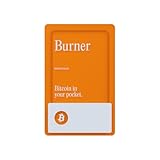
- Simple, Secure Bitcoin Storage for Anyone: Create a safe, offline place to hold Bitcoin without needing an app, account, seed phrase, or technical setup. Perfect for beginners, casual users, and anyone who wants a stress-free cold storage option.
- Easy to Load with Bitcoin in Seconds: Each card includes a unique deposit address so you can add Bitcoin quickly from any exchange or wallet. Designed to make storing and gifting Bitcoin intuitive, even for people who are new to crypto.
- Keeps Your Bitcoin Offline and Protected: Funds are stored in cold storage, keeping them completely offline and isolated from online threats. A durable, printed wallet format ensures long-term security whether you store it at home, in a safe, or on the go.
- Great for Gifting Bitcoin to Family & Friends: A fun, thoughtful way to introduce others to Bitcoin. Perfect as a birthday gift, stocking stuffer, party favor, graduation present, or starter wallet for someone learning how digital assets work.
- High-Quality Card Built for Everyday Use: Printed on premium materials and sealed for security and durability. Slim, credit-card style design fits easily into a wallet, gifting envelope, or safe deposit box for long-term use and convenience.
Product example: Coinbase Card
Coinbase Card is a concrete example of a Visa-branded crypto debit card that supports USDC and other supported crypto. Its current help pages state that it can spend USD, USDC or supported crypto with no Coinbase transaction fee, while an ATM operator may still charge its own fee.
Those pages also state that U.S. residents except Hawaii can use the card wherever Visa debit cards are accepted. The named issuer is Pathward, N.A., Member FDIC, under a Visa license. That issuer relationship does not by itself mean that crypto or wallet balances are FDIC-insured; read the current disclosures to determine what, if anything, is covered.
Availability, supported assets, fees, rewards, limits, tax language and eligibility can change. Re-check the current card agreement and help pages immediately before applying, and confirm that your state or country is eligible.
Common failure modes and fixes
The purchase is declined despite a sufficient crypto balance
Check that the asset is enabled for card spending rather than merely held for trading, that the card is activated and unlocked, and that the purchase is within merchant-category, geographic and daily limits. A fiat authorization may require extra balance for a temporary hold or conversion spread.
The amount received back after a refund is different
Ask whether the provider refunds in fiat, in the original asset or at the current conversion rate. A volatile asset can have a different value when the refund is processed. Keep the original authorization, conversion record and refund confirmation.
Best Value
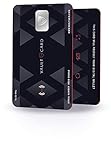
- SECURITY - Protects your RFID enabled cards, passport, driving license, etc from RFID skimming (electronic pickpocketing).
- TECHNOLOGY - Uses sophisticated electromagnetic jamming technology frequently used in military applications.
- CONVENIENCE - You no longer need to wrap your credit card in foil. Just keep VAULTCARD together with your cards in your wallet to ensure RFID security.
- NO BATTERY - VAULTCARD lasts forever. The card has an extremely efficient energy harnessing technology which allows it to be powered by energy from RFID scanner.
- AUTO-ADJUST POWER - VAULTCARD automatically adjust power of its jamming signal to ensure your RFID enabled cards, passport etc remain protected even against very powerful RFID skimming systems.
An ATM withdrawal costs more than expected
Separate the provider’s ATM fee from the operator’s surcharge and any foreign-exchange charge. Use an in-network machine where available and check the card’s cash limit before retrying.
You cannot reconcile the crypto sold
Download the transaction record showing the asset, quantity, execution time, fiat value, spread and fee. Keep it with your wallet transfer and acquisition records so a tax professional can determine whether a disposal must be reported.
The card stops working while the wallet still shows funds
A wallet balance does not guarantee card availability. Investigate account review, identity-verification requests, a frozen card, an unsupported merchant category, a network outage or a product limit. Use the issuer’s formal support and dispute channels, and keep a separate bank-card fallback.
Free tools Windows power users keep installed
One-click scans. No signup required.
Which card type fits which situation?
| Your situation | Usually the simpler fit | Reason |
|---|---|---|
| You receive income into a bank account and want predictable household spending | Traditional debit card | No crypto conversion or wallet custody is required; overdraft can be declined if you do not want its fees |
| You hold USDC and want to spend it at ordinary merchants | Stablecoin-capable card | It can convert the stablecoin to merchant fiat without requiring routine sales of volatile assets |
| You intentionally want to spend Bitcoin, Ethereum, Solana or another supported asset | Crypto debit card | It can sell the selected asset at purchase, but you must accept conversion costs, market exposure and possible tax reporting |
| You need guaranteed access to rent, bills or emergency cash | Bank debit card plus a backup | Crypto and stablecoin products can have eligibility, custody, limit or network interruptions |
| You value crypto rewards more than simplicity | Whichever product’s reward terms survive a full fee calculation | Balance requirements, staking conditions, spreads and taxes can outweigh the advertised reward |
Tax and record-keeping questions
Spending a volatile cryptoasset generally involves a sale or exchange of that asset. Depending on your jurisdiction, that disposal may create a gain or loss that must be reported. A card that converts automatically does not remove the underlying transaction; it only hides the conversion inside the payment flow.
Stablecoin spending usually has less price movement than spending floating crypto, but the tax result still depends on the legal treatment of the conversion, the asset and the jurisdiction. Do not assume that calling a card “debit” makes the transaction ordinary bank-account spending.
- Save the date and time of each conversion.
- Record the asset, quantity, fiat proceeds, exchange rate, spread and fee.
- Keep acquisition cost and wallet-transfer records.
- Download monthly statements before an account is closed or a provider changes its history format.
- Use a tax professional for local rules, especially where stablecoin conversions or rewards have specific treatment.
Bottom line
A traditional debit card spends bank-account money. A stablecoin card is usually a conventional debit or prepaid-style card funded by a stablecoin and converted to fiat. A crypto debit card is the wider category and may sell a volatile asset every time you pay. Compare the legal issuer, custodian, conversion method, complete fee schedule, acceptance and limits, dispute process, insurance disclosures and tax records before choosing. Stablecoins can reduce price volatility, but they do not turn a crypto wallet into an insured bank account.
Quick Recap
Product prices and availability are accurate as of the date/time indicated and are subject to change. Any price and availability information displayed on Amazon at the time of purchase will apply.
Quick wins for a faster PC:
Scan for outdated or missing drivers - takes under a minuteDriver Scan →Repair Windows errors before they cause bigger problemsFix Now →
