Short answer: the Solo Leveling anime keeps the manhwa’s central progression story and follows its major direction closely, but it changes the television experience by giving other characters more psychological depth, rearranging emphasis into a more dynamic episodic structure, localizing names and terminology by market, and turning panel-based action into voiced, scored animation. The producers have confirmed those broad changes; they have not published a complete, reliable list of every scene cut, added, or moved.
That distinction matters. You can compare the anime and manhwa confidently at the level of narrative focus, pacing, localization, and action presentation. You should not treat an online episode-to-chapter change list as authoritative unless you have checked the exact episode and chapter side by side.
As an Amazon Associate I earn from qualifying purchases.
What is the Solo Leveling anime adapting?
Solo Leveling began as a South Korean web novel by Chugong and was later turned into the illustrated WEBTOON/manhwa associated with Chugong (original story), DUBU of REDICE STUDIO (illustration), and h-goon (screenplay credit cited by the producer interview). The television adaptation is animated by A-1 Pictures and co-produced by Aniplex and Crunchyroll. It began airing in January 2024; the producer interview used here was published while the second season was airing in early 2025.
The Tool Desk
Outbyte PC Repair FREEClear out junk files and repair common Windows errorsFree Scan →Outbyte Driver Updater FREEFix the driver behind crashes, sound loss and screen glitchesFind Drivers →The source’s basic promise is unchanged: Sung Jinwoo starts as the lowest-ranked hunter, receives the ability to level up, and gains the power to defeat enemies who were previously beyond him. Aniplex producer Sota Furuhashi said the team wanted to preserve that fast-moving emotional release while adapting the work for episodic television. Crunchyroll’s 2022 announcement records the anime’s initial presentation and production information: Crunchyroll’s Solo Leveling anime announcement.
#1 Best Overall
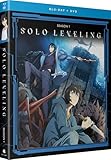
- Textless Opening & Ending Songs
- Promo Video Collection
- Character Video Collection
- The Leveling of Solo Leveling Documentary
- ...and more!
In other words, the adaptation is not a new continuity that discards the manhwa. Its most defensible description is a close adaptation with expanded viewpoint, television-oriented structure, market-specific localization, and a different way of staging action.
What did the Solo Leveling anime change from the manhwa?
It broadens the narrative beyond Jinwoo
The clearest confirmed story adjustment is not a replacement of the central plot but a change in emphasis. The manhwa’s compact scroll chapters focus heavily on Jinwoo. Furuhashi explained that transferring that approach directly to television could feel repetitive or monotonous, so the anime gives psychological depth to other characters and weaves their material into the structure.
“So, in the anime adaptation, we made sure to include the psychological depth of other characters and weave that into the story to create a more dynamic structure.”
DriversOutdated Drivers Are Slowing You DownPerformanceWindows Errors? Fix Them Before They SpreadDriversCrashes, No Sound, or Screen Glitches?Special offer. See more information about Outbyte and uninstall instructions. Please review EULA and Privacy policy.— Sota Furuhashi, Aniplex producer, Cocotame/Sony Music Group interview, Part 1 (March 28, 2025)
This means an anime episode may spend more time establishing what another hunter, guild member, family member, or official is thinking and feeling before the story returns to Jinwoo. The added material supports television’s need for emotional variation: viewers hear dialogue, see reactions, and receive context that a fast vertical-scroll chapter may imply more briefly.
It is important not to overstate this point. The producers describe broader perspective and psychological development, not a wholesale rewrite of Jinwoo’s journey. The leveling premise, the escalating threat, and the protagonist’s progression remain the organizing spine.
It uses a more dynamic episodic structure
A WEBTOON chapter is consumed in a compact, vertically scrolling unit. A television episode must create an opening hook, vary its intensity, place transitions around commercial-length or streaming-friendly beats, and finish with momentum into the next episode. The anime therefore distributes information differently even when the underlying events remain recognizable.
Free tools Windows power users keep installed
One-click scans. No signup required.
Furuhashi’s explanation gives the reason for that structural adjustment: a literal, protagonist-only transfer could make repeated victories and power increases feel monotonous. Additional character perspective lets the episode breathe between fights, gives consequences more weight, and makes the same progression premise work over a longer running time.
Rank #2

- Episode Previews
- Promo Videos
- Textless Opening & Ending Songs
When you compare a chapter with an episode, look for changes in emphasis and sequence within the episode rather than assuming every difference is a plot alteration. A reaction shot, a conversation moved earlier for context, or a longer look at another character can change the viewing rhythm without changing the story’s outcome.
Does the anime follow the Solo Leveling manhwa?
Yes, in the sense that the production team says it aimed to follow the WEBTOON closely and preserve its core progression. The anime is best understood as a faithful adaptation with deliberate additions around character perspective and presentation.
“Follows closely” does not mean “duplicates every panel in the same order.” The manhwa and anime are different formats with different tools:
Recommended Free Tools
| Comparison point | Manhwa/WEBTOON | Anime |
|---|---|---|
| Primary focus | Strong concentration on Jinwoo’s experience and progression. | Jinwoo remains central, while other characters receive more psychological context. |
| Structure | Compact vertical-scroll chapters designed for web reading. | Episodic sequencing with television pacing, transitions, and episode-ending momentum. |
| Action | Sequential illustrated panels, composition, color, and implied movement. | Animated timing, camera movement, voice acting, sound effects, music, and color in motion. |
| Localization | Names and terms vary between Japanese and global editions. | Separate dialogue recordings and on-screen terminology reflect those editions. |
| Scene-level fidelity | The complete source sequence is available in the manhwa. | Specific omissions, additions, or reordered beats must be verified episode by episode. |
The table describes adaptation axes, not a claim that every episode changes every item. Some passages will be nearly direct transfers; others will feel different because the anime adds performance, sound, or viewpoint.
Why do the anime’s characters feel different?
More interiority for supporting characters
In a comic, a character’s expression, pose, or a short line can imply an entire emotional state. The anime can make that state explicit through acting, pauses, vocal delivery, framing, and added dialogue. The producers’ stated goal is to use those tools for characters other than Jinwoo, creating a fuller emotional field around his advancement.
This broadening can change how viewers interpret the same event. A hunter’s hesitation may register as fear rather than simple caution. A rival’s response may reveal status anxiety or ambition. A family member’s reaction may make Jinwoo’s risks feel consequential outside the dungeon. Those are interpretive and structural expansions, not evidence that the underlying character has been replaced.
Avoiding the “power-up loop” problem
Jinwoo’s appeal comes from the release of watching the lowest-ranked hunter gain a system that lets him improve. That loop is intentionally fast and satisfying. On television, however, repeating the pattern without counter-perspective can flatten the rhythm: enter danger, level up, win, repeat. The added psychological material gives episodes contrasting beats and lets victories affect people who are not in the fight.
Outdated Drivers Are Slowing You Down
One free scan finds every outdated or missing driver and matches the right update for your exact hardware.Free scan · exact hardware matchWindows Errors? Fix Them Before They Spread
Repair common Windows errors and clear accumulated junk for a smoother, more stable PC - no reinstall needed.Free scan · no reinstallThe anime therefore preserves the source’s wish-fulfillment engine while adjusting the route by which viewers experience it. If you prefer the manhwa’s concentrated focus, the anime can seem more expansive. If you want motivations and reactions made explicit, the added material supplies context the scroll format often leaves compact.
Rank #3

- Episode Previews
- Promo Videos
- Textless Opening & Ending Songs
- 68-page art book featuring Japanese cast & staff interviews, Shadow’s Daily Life Comic
- 4 exclusive art cards / Sticker sheet
Names, terminology, and the Japanese-versus-global editions
The most concrete release difference is localization. In the Japanese WEBTOON release, the protagonist is named Shun Mizushino. International audiences generally know him by the Korean name Sung Jinwoo. The producers say the anime recorded separate Japanese dialogue versions for domestic and overseas editions, using different character names. Other place names and terms also receive separate versions, and the anime’s status-screen text was standardized in English.
Sony’s 2025 corporate report independently describes the same policy: Korean names and terminology are used in the global edition, while the Japanese edition uses Japanese localization. This is a translation and market-localization distinction, not a change to the character’s identity, history, or role. See the report’s Solo Leveling discussion in the Sony Corporate Report 2025.
| Edition or market | Protagonist name | Terminology treatment |
|---|---|---|
| Global release | Sung Jinwoo | Korean names and terms; the anime’s status-screen text is presented in English. |
| Japanese release | Shun Mizushino | Japanese-localized names and terms, with separately recorded dialogue. |
Readers sometimes mistake these names for evidence of two different characters or a rewritten nationality. They are localization choices applied to the same protagonist. When discussing a scene, use the name shown in the edition you are describing and mention the alternate name once if your audience may encounter both.
How is the action different on screen?
Animation adds time, sound, and performance
The manhwa presents combat through a sequence of carefully composed panels. The reader controls the pace of scrolling and supplies imagined motion between images. The anime fixes that timing and adds movement, voice acting, sound effects, music, camera changes, and color transitions. A sword swing can accelerate or pause; a summon can arrive with a vocal cue and musical hit; a reaction can occupy a fraction of a second or linger for dramatic effect.
Those choices can make a familiar fight feel more forceful without adding a new story event. Conversely, animation may shorten a panel sequence because motion communicates what several still images once showed. Neither difference automatically means the plot was changed.
The shadow army is a production-scale challenge
As Jinwoo’s level rises, his action becomes more extravagant. The producer’s second interview specifically discusses the workload of scenes in which many shadow soldiers battle at once. Crowd combat requires animators and compositors to coordinate numerous characters, effects, camera movements, and layers of action. That production demand helps explain why the anime treats large-scale encounters as major set pieces.
The evidence supports a statement about presentation and production scale—not a claim that a particular shadow fight was invented for television, removed from the manhwa, or moved to another episode. For that level of comparison, consult the exact episode and chapter together. The production discussion appears in Cocotame/Sony Music Group interview, Part 2 (March 29, 2025).
What has not been reliably established?
There is no producer-supplied, episode-by-episode catalogue that identifies every cut, addition, or reordered beat. The available interviews establish adaptation intention, localization, and production context, but they do not provide a verified anime-to-chapter concordance.
Rank #4

- Cartoon Characters This set contains 50 stickers featuring cute blue cartoon figures. With various expressions, poses, and accessory - matched looks, they bring a lively and fun atmosphere. Ideal for adding a touch of playfulness to your items.
- Premium Material Quality Made from durable vinyl, these stickers are waterproof, UV - resistant, and not easy to fade or tear. They can firmly stick to smooth surfaces like laptops, water bottles, phone cases, maintaining good condition for a long time.
- Versatile Application Scenarios Suitable for personalizing a wide range of belongings. Decorate skateboards, notebooks, luggage, or room walls.
- Easy to Apply and Remove Equipped with a user - friendly adhesive. Just peel off the backing and stick on clean, dry surfaces. When removed, they leave no sticky residue, ensuring no damage to the applied items.
- Share the joy of decorating with these lovely cartoon stickers.
- Do not infer that a manhwa scene is absent merely because you have not seen it yet in the anime.
- Do not treat a fan-made change list as authoritative without checking the cited episode and chapter.
- Do not assign a precise “start reading after episode X” chapter number unless you have verified the ending of that episode against the manhwa.
- Do not confuse an added reaction or reordered explanation with a changed central plot.
This limitation is especially relevant to the common question, “Where does the Solo Leveling anime leave off in the manhwa?” A dependable answer depends on which season and episode you mean, the edition you are reading, and the exact final scene. Without that verification, a chapter number would be guesswork rather than useful guidance.
Independent reader supportYour contribution helps us test, update, and keep practical guides available for everyone.How to compare an episode with its manhwa chapters
If you want a precise scene-level answer, use a repeatable comparison instead of relying on memory or an uncited list.
- Identify the exact anime episode and release edition. Japanese and global dialogue can use different names and terms, so record which version you watched.
- Locate the corresponding manhwa chapters. Use an official table of contents or volume sequence rather than an unsourced search result. Mark the chapter range as provisional until the opening and closing scenes match.
- Compare narrative focus first. Note whether the anime adds thoughts, reactions, or conversations for supporting characters. Label these as perspective or characterization changes.
- Compare structure next. Record scenes that appear earlier or later within the episode, including flashbacks and explanatory dialogue. A rearrangement is not necessarily an omission.
- Compare localization separately. Track names, place names, system terms, subtitles, and status-screen text. Keep translation differences out of the plot-change column.
- Compare action as a medium. Mark changes in camera movement, timing, sound, music, and choreography before claiming that an event was added or removed.
- Verify every alleged cut or addition in both texts. Quote the panel or describe the exact timestamp and chapter page so another reader can reproduce the comparison.
This method produces a defensible scene list while respecting what the producers have actually confirmed: broad adaptation choices rather than a published concordance.
Production and release context
The anime was announced at Anime Expo in 2022. Sony’s 2025 corporate report identifies Aniplex and Crunchyroll as co-producers, A-1 Pictures as the animation studio, and a global distribution and localization strategy. Sony also describes Season 1 as the “most-viewed new anime on Crunchyroll in 2024.” That is Sony’s platform-specific description for that year; it is not an audience count and should not be generalized to every streaming service or all anime releases.
For English-language readers, Crunchyroll’s premiere coverage identified Yen Press as the English comic publisher and noted a Volume 8 release scheduled for January 21, 2024: Crunchyroll’s premiere and Yen Press volume context. That date is historical publication information, not a statement about current stock, format, price, or retailer availability. Check the edition and territory before buying a print volume for comparison.
Which version should you choose?
Choose the anime if you want performed action and broader viewpoint
The anime is the better starting point if you value motion, voice performances, music, and the atmosphere of large battles. Its additional attention to supporting characters can make the world feel less like a sequence of Jinwoo’s victories and more like a network of people reacting to a rapidly changing hunter.
Choose the manhwa if you want direct control of the reading pace
The manhwa lets you pause on artwork, reread compact chapters, and move through Jinwoo’s progression at your own speed. It also gives you the source sequence without waiting for an episode schedule. Readers comparing adaptations should remember that the Japanese and global editions may use different names and terms.
Do these 3 things before closing this tab:
1Repair Windows errors before they cause bigger problems2Fix the driver behind crashes, sound loss and screen glitches3Clear out junk files and repair common Windows errorsUse both when you care about adaptation craft
Reading a chapter before watching its episode makes added perspective and rearranged exposition easy to spot. Watching first highlights what animation contributes: timing, vocal nuance, music, and the scale of the shadow army. Keep a two-column note—“story emphasis” and “medium presentation”—so localization and production differences do not get mistaken for plot changes.
The practical verdict
The anime changes how the story is delivered more than what the central story is. Its confirmed adjustments are a broader emotional viewpoint, a more dynamic television structure, separate Japanese and global localization, and animated action designed around sound, movement, and large ensembles. The core appeal remains the same: a lowest-ranked hunter gains the ability to level up and overcome enemies once beyond his reach.
For a scene-by-scene list of omissions, additions, or a precise continuation chapter, verify the relevant episode and manhwa chapters directly. The available producer statements do not establish those details on their own.
Quick Recap
Product prices and availability are accurate as of the date/time indicated and are subject to change. Any price and availability information displayed on Amazon at the time of purchase will apply.
What’s actually slowing this PC down?
Pick the symptom - the matching free tool is one click away.

