Crashes, No Sound, or Screen Glitches?
Random freezes, missing sound and display glitches usually trace back to one bad driver. Find and replace yours safely.Free scan · under a minutePC Slower Than It Used to Be?
A free scan shows the junk files, broken settings and background clutter dragging Windows down - then fixes them in one click.Free scan · Windows 10 & 11Do not cut or suck a snakebite, and do not apply a tight tourniquet. Those actions are ineffective or dangerous and can delay the treatment that prevents disability or death. Move away from the snake, keep the bitten person still, remove constricting items, immobilize the limb, monitor breathing and arrange urgent transport to a health facility.
Snakebite first aid is a bridge to professional assessment, not a way to remove venom at home. Advice can differ by snake species, venom effects and local emergency protocols, so follow instructions from local emergency services or a poison center whenever available.
As an Amazon Associate I earn from qualifying purchases.
What to do immediately after a snakebite
Act in this order. The goal is to prevent another bite, slow the spread of venom through movement and get the person to medical care without adding injury.
The Tool Desk
Outbyte PC Repair FREERepair Windows errors before they cause bigger problemsFix Now →Outbyte Driver Updater FREEScan for outdated or missing drivers - takes under a minuteDriver Scan →- Get everyone away from the snake. Do not try to catch, corner, photograph at close range or kill it. A safe-distance description or photograph can help clinicians only if it does not delay care.
- Call local emergency services or arrange urgent transport. Do not wait to see whether symptoms appear. Venom effects can progress, and early assessment determines whether antivenom and other treatment are needed.
- Keep the person calm and as still as possible. Do not have them walk if they can be carried safely. Movement can increase circulation of venom.
- Remove rings, watches, bracelets, tight footwear and restrictive clothing near the bite. Swelling can make these items dangerous to leave in place.
- Immobilize the bitten limb. Support it in a comfortable position and use a splint if one is available, taking care not to create a tight constriction.
- Monitor responsiveness, the airway and breathing. If the person vomits, place them on their side while maintaining safety and continue watching their breathing. Tell the dispatcher about any weakness, drooping eyelids, trouble swallowing, vomiting, bleeding or breathing change.
- Follow local medical instructions while transport is arranged. Do not give the person a home remedy or delay departure to identify the snake.
These steps reflect the World Health Organization (WHO) treatment guidance in its snakebite first-aid box, along with advice from the CDC Yellow Book and CDC/NIOSH.
#1 Best Overall

- 【First Aid Kit Survival Sets】Camping supplies comes with snake bite kit, bandage adhesive strips, scissors, emergency blanket, compass whistle and other multi-use items for any possible potential emergency, it’s a great emergency kit for basic supplies
- 【Durable First Aid Bag】It was made by high quality EVA bag, water resistant and shockproof and wear resistant. Thanks to its compact dimensions, it is ideal for taking with you when travelling, hiking, skiing, camping, in the car, backpack, handbag and outdoor adventures. Perfect for extended use
- 【Top Practical Stings Bites Survival Tools】Snake bite kit by WAEKIYTL is a sturdy, reliable First Aid tool for extracting subcutaneous venom from snake bites, bee stings, wasp stings, etc. Note, venom extractors work well to pull venom from just beneath the skin but not from within the muscle tissue. Effectiveness will vary depending upon where the bite/sting occurred and how deep it is. Always seek professional medical attention immediately
- 【Comprehensive First Aid Treatment】The first aid kit contains more than enough supply to treat a single family or a group of friends under emergency circumstances. A dainty first aid set ideal for home, travel, and on the go use. Perfect for any emergency needs. When outdoor travel in cold weather, when in the process of sports accidental falls, sprains, or when accidental burns at work, survival first aid kit can give the first time emergency treatment
- 【Multipurpose Emergency Blanket】Perfect for emergency situations where warmth or protection from all-weather conditions is required. Helps prevent hypothermia and shock by retaining of a user's body heat. our blankets can help block rain, snow, and moisture to keep you dry in damp, wet, cold, rainy environments
The three myths at a glance
| Action people often try | What guidance says | What to do instead |
|---|---|---|
| Apply a tight arterial tourniquet | Do not use one. It can cut off blood flow and damage tissue. | Keep the limb still, use only region-specific immobilization advice from qualified responders, and obtain urgent care. |
| Cut, incise, puncture or excise the bite | It does not drain venom and can add bleeding, infection and tissue injury. | Leave the wound intact and proceed to medical evaluation. |
| Suck venom out by mouth or with a suction device | Suction is ineffective and can injure the wound or expose the rescuer. | Do not manipulate the wound; concentrate on stillness, monitoring and transport. |
WHO summarizes the problem plainly: “Most of the methods currently proposed as first aid for snakebites are either ineffective, dangerous, or delay proper medical treatment.” Read the full explanation in its snakebite-envenoming Q&A.
Myth 1: a tourniquet will stop the venom
Why a tight tourniquet is unsafe
A tourniquet that stops arterial blood flow may temporarily keep venom from moving beyond the strap, but it also deprives the hand or foot of oxygen. Prolonged restriction can cause severe tissue damage. Releasing it without medical supervision may also allow a concentrated venom load to circulate suddenly. WHO says never to use a tourniquet for snakebite, and the CDC warns against tourniquets that cut off blood flow.
Do not improvise with belts, cords, wire, clothing or elastic bands. A strap that causes numbness, color change, cold skin or loss of a pulse is an emergency, not effective treatment.
Do not confuse a tourniquet with pressure immobilization
“Pressure immobilization” is a specialized bandaging-and-splinting method, not a tight arterial tourniquet. It may be considered in selected settings, particularly for bites from neurotoxic snakes that do not cause substantial local swelling. WHO limits the Australian-style method to that context, and the CDC says first-aid recommendations vary with the snake involved.
Rank #2

- 🐍COMPREHENSIVE OUTDOOR EMERGENCY KIT-This 40-piece emergency kit includes a compact extractor tool, CPR mask, tourniquet, razor, marker, sting relief pads, prep wipes, iodine wipes, bandages, cotton tips, gloves, whistle, tweezers, and carabiner—organized to support outdoor preparedness during unexpected emergencies.
- ✋EASY ONE-HAND OPERATION-Engineered for quick response. The included suction tool is designed for simple, one-hand use, making it easy to operate even when you’re alone or under pressure.
- 📘STAY ORGANIZED & INFORMED-Extra support in a compact package: This survival kit includes a step-by-step instruction manual and a marker for noting important details, all packed into a lightweight bag measuring just 5.5 × 4 × 2 inches and weighing only 6 oz—easy to carry in your backpack, car, or travel gear.
- 🎒YOUR ADVENTURE SAFETY COMPANION-Whether you’re camping under the stars, fishing by the lake, or hiking new trails, this compact first aid kit offers peace of mind in the outdoors. Perfect for hiking, camping, backpacking, fishing, and travel.
- 🛡️ALWAYS READY WHEN NEEDED-This snake bite kit is a sturdy, reliable outdoor first aid accessory designed for hikers, campers, and travelers. It comes with a compact suction tool, bandages, gloves, and other essentials to keep you prepared during outdoor activities. For best outcomes in any emergency, seek professional assistance right away.
Pressure methods can be unsuitable when a snake causes major local tissue damage or swelling. They also require a local protocol and an appropriately trained responder. A general reader should not copy an internet demonstration or apply a tight wrap on the assumption that every snakebite is the same. Ask emergency services or a poison center whether a region-specific method is appropriate. The International Federation of Red Cross and Red Crescent Societies’ 2025 guidelines likewise distinguish specialized pressure immobilization from an arterial tourniquet.
Myth 2: cutting the bite lets venom drain out
Why incision does not remove venom
Venom spreads through tissues and the body’s circulation; making a larger opening at the bite does not provide a safe route to drain it. WHO describes incision and excision as dangerous and ineffective. Cutting can sever blood vessels, tendons or nerves, create additional wounds and make infection more likely. It also complicates the clinician’s assessment of the original bite.
Do not slash, puncture, burn or excise the skin around fang marks. Do not try to “bleed out” the venom. Leave the area undisturbed while arranging care.
Do these 3 things before closing this tab:
1Repair Windows errors before they cause bigger problems2Fix the driver behind crashes, sound loss and screen glitches3Clear out junk files and repair common Windows errorsWhat if the wound is bleeding?
Tell emergency services about the bleeding and follow their instructions. Do not turn bleeding control into a tight tourniquet. The priority remains urgent transport, limb immobilization and observation for changes in breathing or responsiveness. A clean dressing may be part of a local first-aid kit, but it must not delay departure or substitute for medical treatment.
Rank #3

- Complete Venom Extractor Kit: Archer MedTech Brand Ven-Ex venom extractor kit with Bonus keychain CPR shield included for first aid emergency preparedness
- Convenient for Outdoor Activities: Keep a Ven-Ex bite and sting extractor kit handy for all of your outdoor activities as a handy addition to your First Aid Supplies, car glovebox, backpack, and more
- Effective Bee and Wasp Sting Relief: This bee sting kit can be helpful in extracting bee, wasp or spider venom from the wound site, and the pump is easy to use even with only one hand
- Portable and Compact Design: Ven-Ex snake bite kit is light, compact and highly portable, coming in a hard-shell case with two sizes of extraction cups and a tourniquet band to help control the spread of the venom until it can be extracted
- Reliable First Aid Tool: Ven-Ex snake bite kit by Archer MedTech is a sturdy, reliable First Aid tool for extracting subcutaneous venom from snake bites, bee stings, wasp stings, and similar injuries. Note, venom extractors work well to pull venom from just beneath the skin but not from within the muscle tissue. Effectiveness will vary depending upon where the bite or sting occurred and how deep it is. Always seek professional medical attention immediately
Myth 3: sucking venom out works
Mouth suction and devices
Sucking the wound by mouth does not extract a clinically useful amount of venom. Suction devices marketed for snakebite have the same fundamental problem: they cannot reach venom already moving through tissue, and aggressive suction can worsen local injury. WHO, the CDC Yellow Book and Poison Control advise against both approaches.
Mouth suction also exposes the rescuer to blood and wound fluid. A rescuer with cuts in the mouth or gums faces an avoidable exposure, while the victim loses time that should be spent getting professional help. Do not spit, rinse repeatedly, or apply chemicals in an attempt to neutralize venom; none replaces assessment and treatment.
Why stillness and fast transport matter
Movement can worsen venom distribution
Walking, running or repeatedly moving the bitten limb increases muscle activity and circulation. Keeping the person quiet and supporting the limb reduces unnecessary movement while help is arranged. If the person cannot be carried safely, ask emergency services for instructions rather than forcing them to walk.
Symptoms may be delayed
Some bites cause pain and swelling quickly; others may initially look minor while venom affects nerves, muscles, blood clotting or breathing. The absence of early symptoms is not proof that a bite is harmless. Do not wait for swelling, paralysis, vomiting or breathing difficulty before seeking care.
Rank #4

- Used in variety of occasions:Keep a DLY brand bite and sting extractor kit handy for all of your outdoor activities. It's a handy addition to your First Aid Supplies, car glovebox, backpack, etc. Rattlesnake Bite Kit is essential for backcountry camping, fishing, hiking or just a day at the local park.
- Easy to use:This bee sting kit can be helpful helpful in extracting bee, wasp or spider venom from the wound site. The pump is easy to use even with only one hand.Just need to press the bar to the bottom to absorb venom, DO NOT REPEAT IT!
- Reasonable design:On the package of venom tool includes three kinds of round suction cup, a oval suction cup and a tourniquet. it will control the spread of venom effectively, and works for the venom absorption in every parts of the body.
- Easy to take:Snake bite kit is light, compact and highly portable. dimensions is 4.92 x 3.14 x 1.18 inch ( 16. 8 x 11 x 5cm) and weight only 0.44 pounds. So easy to carry, can be placed in a backpack, cars, hiking or camping gear.
- Ask for medical advice immediately:Snake bite kit is a sturdy, reliable First Aid tool for extracting subcutaneous venom from snake bites, bee stings, wasp stings,Absorbing pus in the wound, etc. Note, venom extractors work well to pull venom from just beneath the skin but not from within the muscle tissue. Effectiveness will vary depending upon where the bite/sting occurred and how deep it is. Always seek professional medical attention immediately.
Breathing can deteriorate
Neurologic venom effects can produce weakness, difficulty swallowing or paralysis. Vomiting can obstruct the airway. Keep watching the person’s responsiveness and breathing, place a vomiting person on their side, and communicate every change to the dispatcher or medical team. If breathing stops, follow emergency-dispatch instructions for resuscitation if you are trained and able.
Independent reader supportYour contribution helps us test, update, and keep practical guides available for everyone.Snake identification: useful only when it is safe
Clinicians may use a safe-distance photograph, the location and time of the bite, the snake’s color or pattern and the direction in which it moved. Never delay transport to obtain a picture, and never handle a dead snake: reflex biting can still injure someone. Do not rely on a guessed species to decide whether treatment is necessary. The CDC Yellow Book recommends consulting qualified local professionals familiar with the snakes and venom effects in that region.
What happens at a health facility
First aid cannot neutralize venom. At a clinic or hospital, staff assess the bite, vital signs, blood clotting, neurologic function, swelling and breathing. When envenomation is confirmed or strongly suspected, antivenom may be used, alongside supportive care such as airway support, fluids, pain management, treatment of bleeding or other complications and observation. The WHO’s snakebite topic page explains that antivenom and supportive medical care address envenomation; home procedures do not.
Recommended Free Tools
Tell clinicians what time the bite occurred, where it happened, what first aid was attempted and whether the person has medical conditions or takes regular medicines. Do not conceal an incision, suction attempt or constricting bandage; those details help clinicians manage additional injury.
Best Value
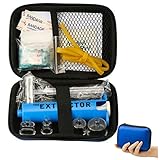
- Keep a bite and sting extractor kit handy for all of your outdoor activities. It's a handy addition to your First Aid Supplies, car glovebox, backpack, etc. Rattlesnake Bite Kit is essential for backcountry camping, fishing, hiking or just a day at the local park
- This bee sting kit can be helpful helpful in extracting bee, wasp or spider venom from the wound site. The pump is easy to use even with only one hand
- Venom extractor includes four sizes of extraction vessels that attach to the pump handle. Choose the size that best suits your current needs. As a rattle snake bite kit, bee sting kit and venom extractor this versatility is essential
- Snake bite kit is light, compact and highly portable. It comes in a hard-shell case with four sizes of extraction cups and a tourniquet band to help control the spread of the venom until it can be extracted
- Snake bite kit by WAEKIYTL is a sturdy, reliable First Aid tool for extracting subcutaneous venom from snake bites, bee stings, wasp stings, etc. Note, venom extractors work well to pull venom from just beneath the skin but not from within the muscle tissue. Effectiveness will vary depending upon where the bite/sting occurred and how deep it is. Always seek professional medical attention immediately
Regional differences you should not ignore
There is no single bandaging rule that is safe for every snakebite worldwide. Venoms differ: some primarily affect nerves, while others cause marked swelling and tissue destruction. A technique designed for one venom profile may worsen another. Local emergency services, poison centers and hospitals know which snakes occur in the area and whether a pressure immobilization protocol is used.
- Australia and some settings with neurotoxic snakes: trained responders may be instructed to use pressure immobilization in carefully defined circumstances.
- Areas where local tissue damage is common: a tight pressure wrap may be inappropriate; seek local professional direction instead.
- Travel or remote work: learn the regional emergency number and nearest capable health facility before entering snake habitat.
The CDC’s travel guidance specifically cautions that first-aid recommendations vary by snake. Treat generic online instructions as incomplete unless they match qualified local advice.
A practical checklist for companions and workplaces
- Move away from the snake without chasing it.
- Call for emergency help and state that this is a suspected snakebite.
- Record the time and location of the bite.
- Keep the person calm, still and warm enough to remain comfortable.
- Remove constricting jewelry and clothing near the affected limb.
- Support and immobilize the limb without cutting off circulation.
- Monitor breathing, responsiveness, vomiting, weakness and swelling.
- Do not cut, suck, burn, apply chemicals, use folk remedies or apply a tight tourniquet.
- Do not delay transport for a snake photograph or species identification.
For outdoor workers, the updated CDC/NIOSH guidance (reviewed September 23, 2026) also emphasizes preventing a second bite and obtaining medical care promptly. A workplace first-aid plan should make the emergency number, transport route and local snakebite protocol easy to find.
Free tools Windows power users keep installed
One-click scans. No signup required.
Bottom line for the three myths
Cutting, suction and a tight tourniquet do not remove venom and can create new harm. Move away from the snake, keep the person still, remove constricting items, immobilize the limb, watch breathing and get urgent medical care. Use pressure immobilization only when qualified local guidance says it fits the snake and situation.
Quick Recap
Product prices and availability are accurate as of the date/time indicated and are subject to change. Any price and availability information displayed on Amazon at the time of purchase will apply.

