Static alert thresholds are reliable when a metric has a known limit, but they can miss meaningful changes when normal server behavior rises and falls with traffic, time of day, or resource. Adaptive thresholds learn a metric’s patterns and adjust their boundaries, while newer AI operations features can help investigate alerts. Neither guarantees that an anomaly is an incident—or replaces an operator’s judgment.
What static and adaptive thresholds actually do
Static thresholds: explicit limits
A static alert rule compares a selected metric and aggregation against a value an operator sets. For example, a rule might alert when average CPU utilization exceeds a configured percentage for a chosen period. The rule is straightforward to inspect, explain, and validate against a known service or business limit.

As an Amazon Associate I earn from qualifying purchases.
The weakness is not that a fixed number is inherently wrong. It is that one number may not describe normal behavior at every hour, workload level, or resource. A value suitable during a busy period may be too high to catch an unusual rise overnight; a limit suitable for one server may not fit every server in a large fleet.
What’s actually slowing this PC down?
Pick the symptom - the matching free tool is one click away.
Adaptive thresholds: boundaries learned from behavior
Microsoft Azure Monitor describes dynamic thresholds as using machine-learning algorithms to learn metric behavior patterns and calculate changing thresholds for unexpected behavior. Its metric-alert experience provides upper and lower bounds and high, medium, and low sensitivity settings. Higher sensitivity creates tighter bounds and can alert on smaller deviations; lower sensitivity tolerates larger deviations and generally means fewer alerts. Microsoft Learn explains Azure Monitor metric alert rules.
#1 Best Overall

- Upgraded Two Zipper Pockets: Forvencer server books feature two secure zipper pockets for better organization of coins, cash, and receipts, ensuring that everything you collect has a safe and secure place
- Smart Storage & Quick Access: Designed with 8 multi-functional compartments, the right side includes a guest receipt pad, while the left has a money pocket, ticket pocket, and credit card slot. Two small clear pockets store bills, receipts, and other visible items. A stitched pen loop ensures you always have your favorite pen ready
- High-quality & Easy to Clean: Crafted from high-quality PU leather with heavy-duty stitching, this server book is built to last. It resists tears, scratches, and its waterproof surface makes cleaning easy with just a damp cloth or a non-chlorine sanitizer
- Perfect Fit for Your Apron: Measuring 5” x 8”, this compact organizer is slightly smaller than other models, making it ideal for bending or sitting while carrying in your server apron. It holds everything a waitress needs—a place for everything
- What's Included: This server organizer comes with multiple open and zippered pockets to store money, receipts, tips, etc. Clear sleeves are perfect for keeping menus or special lists while serving. Available in a variety of colors, allowing you to express yourself even when in uniform
Microsoft recommends using dynamic thresholds “where appropriate,” particularly when the right value is uncertain or a single configured limit does not work across monitored resources. That is a contextual recommendation, not a reason to retire fixed limits. Azure Monitor alert best practices.
When a fixed threshold is the better choice
Keep a fixed rule when crossing a specific boundary matters regardless of recent history. Examples include a contractual or policy limit, a capacity ceiling, or a known operating maximum. A learned baseline could regard a persistently unhealthy state as normal if that state dominates its history; an explicit limit can continue to express the requirement that must not be exceeded.
Rank #2

- 5 Pockets & 1 Pen Hook: Keep essentials neatly organized with 5 pockets for cash, cards, receipts, and guest checks, plus a pen holder for easy access.
- Perfect Size for Aprons: Compact 5”x7” size fits comfortably in aprons without poking or bulging. Expandable design ensures easy handling, helping you stay professional and efficient.
- Durable & Easy to Clean: Made from premium, cruelty-free PU leather that’s water-resistant and scratch-proof. Easy to clean, ensuring it stays looking great through busy shifts.
- Stay Organized on the Go: Designed to keep everything securely in place, this server book helps you stay organized even during the busiest shifts, so you can focus on providing great service.
- High Quality at an Affordable Price: A well-crafted server organizer that offers premium quality at a reasonable price, trusted by waitstaff for everyday use.
Adaptive thresholds are a better candidate when the metric has meaningful daily or weekly variation, or when multiple similar resources have different normal levels and a single value would be awkward to maintain. This is an operational selection principle, not a universal product rule: first confirm the metric represents a condition you care about and that its normal patterns can be learned from available data.
Recommended Free Tools
What adaptive monitoring can miss
It needs enough usable history
Azure Monitor dynamic thresholds require at least 3 days and 30 metric samples before activation. This is a requirement for that Azure feature, not a universal minimum across monitoring products. A new server, a sparse metric, or a recently changed workload may not yet have enough representative data. Microsoft’s dynamic-threshold troubleshooting guidance describes the activation requirement and common issues.
Rank #3

- Built for Heavy-Duty Shifts — Unlike Vinyl, PU Leather Won't Crack: This server books for waitress for Reinforced odorless PU leather with double-stitched seams resists tears and scratches far better than vinyl, which cracks and peels over time. The textured surface adds grip and an anti-slip effect on counters and tabletops for steadier writing. The thickened rigid writing surface stays perfectly flat for comfortable order-taking in high-traffic dining rooms and busy bars. This waitress book design works for both left- and right-handed users — built to withstand fast-paced service without warping.
- Wipes Clean in Seconds — Water-Resistant Surface, Hand Wipe Only: This black server book spill-resistant surface wipes clean with a damp cloth between tables — coffee spills and food grease come right off. Avoid alcohol-based sanitizers; for stubborn oil stains, wipe with mild soapy water, let sit 2 minutes, then wipe. This waitress book is not machine washable — hand wipe only to preserve the PU leather finish. Maintains a sharp, professional look shift after shift.
- 7 Compartments Keep Cash, Cards & Tips Organized: This serving book Secure zipper pocket (1,000+ open/close cycles) is designed for coins and small bills (For maximum security, keep coin pocket moderately filled) — use the main compartment for unfolded bills up to 6.75 inches. Clear receipt windows are made from thickened, scratch-resistant PVC for lasting clarity and durability. The waitress books for servers Clear card slots that hold multiple cards and an elastic pen loop keep everything visible and accessible. Fits standard 3.5" x 6.75" guest checks without folding, so cash, cards, and order slips stay organized during rush hours.
- Slim Apron Fit — Elastic Pen Loop Fits Standard & Jumbo Pens: This server book Compact 5" x 8" slim profile slips into any apron pocket and sits flush against your waist for unrestricted movement — whether bending, sitting, or rushing through a busy dining room. The elastic pen loop stretches to fit both standard pens and jumbo markers, so you always have your preferred writing tool ready. The waitress book Holds all shift essentials without adding weight or bulk.(Pen is not included and must be purchased separately)
- Professional Server Gear for Waitstaff, Bartenders & Cashiers: Streamline orders, tips, and payments with a server book built for waitstaff, bartenders, cashiers, and fast-food crews — not just waitresses. This server books for waitress is Ideal for fine dining, busy cafes, high-volume bars, and fast-food counters. A practical gift for new staff or a reliable upgrade for seasoned teams who demand professional appearance and secure cash handling. This waitress book built for daily professional use with durable construction that holds up shift after shift.
Irregular data can make the boundary misleading
Azure’s troubleshooting guidance notes that irregular distributions can make detection insufficiently sensitive. High variance may produce boundaries outside expected values; abrupt changes, including an outage, can broaden calculated boundaries; and limited history can leave seasonality poorly represented. A learned boundary is therefore not automatically a trustworthy definition of healthy behavior.
Alert settings and metric shape matter
Sensitivity, aggregation granularity, which older data is ignored, and the number of violations required within a time period all affect alert behavior. Requiring repeated violations can filter transient deviations, but also changes how quickly a rule responds. Check the alert’s chart and context, make sure the chart and rule use comparable aggregation, and review dimensions: Azure evaluates each resulting series independently.
Independent reader supportYour contribution helps us test, update, and keep practical guides available for everyone.What AI adds beyond a threshold
“AI monitoring” can refer to different jobs. Pattern detection, forecasting, and anomaly identification look for behavior that differs from expected patterns. Agentic operations capabilities are a separate layer: Microsoft describes Azure Monitor features that can explore metrics and logs, explain changes, correlate signals, and guide follow-up investigation. These are vendor-described capabilities, not proof that every monitoring tool diagnoses incidents accurately or resolves them autonomously. Microsoft’s Azure Monitor AIOps overview.
Detection is not diagnosis. An unusual metric may be harmless, and a real incident may not appear as an unusual value in the signals being watched. Treat an alert as evidence to investigate alongside logs, related metrics, deployment changes, and service context—not as a verdict or an instruction to remediate automatically.
Best Value
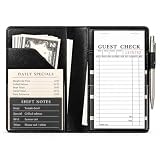
- Compact Size: Measuring 4.7 x 7.6 inches, this server book is slim, lightweight, and fits effortlessly into your apron pocket. It's designed to hold a standard guest check book (not included), making it an ideal tool for busy waitstaff.
- Ample Storage and Functionality: Featuring 7 pockets and compartments, this server book provides plenty of space to keep all your essentials organized. The tiny front pocket is perfect for holding guest credit cards, while see-through pockets on both sides offer quick access to reference lists. Plus, it even holds a pen when closed without adding bulk.
- Premium Material with a Stylish Touch: Crafted from high-quality PU faux leather with classic solid black, this server book feels luxurious in your hand. It’s waterproof exterior and interior are resistant to water, scratches, punctures, and heat, ensuring durability and easy cleaning.
- Professional Appearance: The smooth, rich black finish and meticulously crafted seams and stitching give this server book a polished, professional look, making it a reliable companion for any server.
- Durable and Easy to Clean: Designed to withstand the demands of the job, this server book is built to last. The waterproof material not only protects against spills and stains but also wipes clean easily, maintaining its pristine appearance even with regular use.
Prometheus and OpenTelemetry example
Azure Monitor’s query-based metric alerts support Prometheus metrics or custom OpenTelemetry metrics in an Azure Monitor Workspace and use PromQL expressions. The feature documentation lists dynamic thresholds, but the page is explicitly marked Preview, so availability and terms may change. See the Azure Monitor query-based metric alerts documentation.
How to choose and tune an alerting approach
| Decision factor | Fixed threshold | Adaptive threshold or AI-assisted monitoring |
|---|---|---|
| Signal behavior | Best fit when a stable, meaningful hard limit is known. | Useful to consider when normal behavior varies over time or across resources. |
| History | Can be configured without a learned baseline. | Azure Monitor dynamic thresholds need at least 3 days and 30 samples before activation. |
| Sensitivity and noise | Operator chooses the value and comparison; tuning still matters. | Sensitivity, aggregation, and violation-count settings influence alerts; noisy or high-variance data can still mislead. |
| Many resources | A shared value may not fit each resource. | Can learn behavior patterns; Azure evaluates dimension-based series independently. |
| Diagnosis | Signals a configured condition. | Anomaly detection still signals unusual behavior; agentic capabilities may help investigate and explain, but do not remove the need for review. |
| Cost and operations | Depends on the configured rule and monitored scope. | Evaluation frequency and resource scope can affect Azure Monitor alert cost; check current service pricing and deployment configuration. |
- Start with the operational question. Decide what failure or risk the alert should reveal, then select a metric and aggregation that meaningfully represent it.
- Use a fixed limit for a real hard boundary. Do not replace a known policy or capacity limit merely because adaptive thresholds are available.
- Evaluate an adaptive rule where behavior varies. Confirm there is enough representative history and inspect whether the metric has stable patterns rather than irregular spikes or frequent regime changes.
- Tune with actual alert context. Review bounds, sensitivity, aggregation granularity, dimensions, and violation requirements. Compare the visualization with the alert rule’s aggregation so the same signal is being assessed.
- Define the response separately from detection. Specify who checks correlated telemetry and what evidence is required before taking action; an anomaly alert alone is not an incident diagnosis.
Microsoft’s documentation provides product guidance and configuration requirements, not an independent cross-vendor outcome study. It does not establish a universal reduction in alert volume, faster incident resolution, or improved uptime from adaptive thresholds.
Quick Recap
Product prices and availability are accurate as of the date/time indicated and are subject to change. Any price and availability information displayed on Amazon at the time of purchase will apply.

