Quick wins for a faster PC:
Scan for outdated or missing drivers - takes under a minuteDriver Scan →Repair Windows errors before they cause bigger problemsFix Now →Fix the driver behind crashes, sound loss and screen glitchesFind Drivers →Signal is the best starting point for most people who want a private desktop messenger and already use a phone. Its official Windows, macOS and Linux apps are linked to a Signal account on a phone. Choose Element when Matrix federation, self-hosting or organizational control matters more than a conventional consumer setup. Choose Threema for another desktop-capable messenger that pairs its computer client with a mobile app. “Secure” is not a single ranking: compare each service’s encryption defaults, device model, hosting control and the likelihood that your contacts will switch.
What are secure messaging app alternatives to Telegram for desktop?
The practical shortlist is Signal, Element and Threema, but they solve different problems.
As an Amazon Associate I earn from qualifying purchases.
- Signal: the clearest conventional personal-messenger alternative. Signal publishes official Windows, macOS and Linux desktop downloads, and the desktop app requires Signal to be installed on a phone first.
- Element: the strongest fit for Matrix federation, managed hosting, self-hosting and organizational data control. Element describes Matrix as an open standard and says its messenger has end-to-end encryption (E2EE) enabled by default.
- Threema: a desktop-capable option with Windows, macOS and Linux clients. Its ordinary setup pairs the computer with the mobile app by QR code and synchronizes messages using end-to-end encryption.
Telegram also has official Windows, macOS and Linux clients, so desktop availability is not the deciding factor. The important distinction is whether E2EE is on by default for ordinary conversations. Element’s own comparison says E2EE is enabled by default in Element, Signal and WhatsApp, but not Telegram. That is a vendor comparison, not an independent cryptographic audit, and it does not mean Telegram has no encrypted mode.
Comparison at a glance
| Service | Encryption default | Desktop platforms established by the reviewed pages | Phone requirement and connectivity model | Hosting or federation control | Switching and contact reality |
|---|---|---|---|---|---|
| Signal | E2EE by default, according to Element’s comparison of the services | Windows, macOS and Linux | A phone with Signal is required before the desktop app can be used; the reviewed page does not establish the app’s offline-connectivity behavior | Conventional centralized service; self-hosting is not presented as a user option in the cited material | Simple personal-messenger model, but conversations require contacts to install Signal |
| Element | E2EE by default, according to Element’s product comparison | Desktop support is established; the reviewed pages do not enumerate a current Windows/macOS/Linux list | The cited pages do not specify a phone-first pairing requirement | Matrix open standard; choose managed hosting or host the service yourself | Best where an organization can manage accounts or invite people across a federated network; consumer contact adoption still varies |
| Threema | The service describes computer-phone communication and synchronization as end-to-end encrypted | Windows, macOS and Linux | Standard setup pairs the desktop client to the mobile app by QR code. A separate beta 2.0 capability is described as working while the phone is off or offline | Hosting and federation choices are not established in the cited product material | Requires contacts to use Threema; the mobile pairing step is part of the normal setup |
| Telegram | Element’s comparison says E2EE is not enabled by default; do not read that as “Telegram has no encrypted mode” | Windows, macOS and Linux | The reviewed pages do not establish a phone-linking requirement for desktop use | Hosting and federation choices are not established in the cited material | Switching means persuading contacts to adopt another service, not merely installing a second desktop app |
The table separates facts established by the vendor pages from questions those pages do not answer. In particular, the reviewed material does not provide a current adoption ranking, independent metadata analysis, comparative usability testing or a complete price comparison.
#1 Best Overall

- GSM Unlocked: Enjoy seamless connectivity with your preferred GSM carrier. Compatible with T-Mobile, Metro PCS, AT&T, Cricket, Mint Mobile and other GSM networks. SIM card not included. For network compatibility, please check with your carrier. Note: Not compatible with CDMA networks like Verizon (Visible, Spectrum Mobile, US Mobile, Total Wireless, Straight Talk Wireless)
- Boundless Views: Enjoy immersive viewing on the spacious 6.5” HD+ display. Whether you're watching videos, browsing, or gaming, every detail comes through with stunning clarity.
- Smooth Performance, All Day: Powered by an efficient octa-core processor, the G35 ensures smooth performance for your everyday tasks. Enjoy faster app launches, seamless multitasking, and reliable speed.
- Snap, Share, Repeat: The G35 features a dual rear camera setup for sharp, detailed shots, and a front-facing camera that’s perfect for selfies and video calls. Capture every moment with ease and clarity.
- Effortless Access: Keep your phone secure with A.I. Face ID technology. Instantly unlock your G35 with just a glance. It's fast, easy, and secure.
Why “secure” depends on defaults and device design
End-to-end encryption is a default question
With E2EE, the intended content protection runs between the communicating devices rather than relying on a server to decrypt messages during delivery. For a real-world choice, ask whether E2EE covers the ordinary chat you will actually use and whether it is enabled automatically. An optional encrypted mode that most contacts never select is a different practical protection level from an encrypted default.
Element’s comparison is useful for framing this question, but it is written by Element and compares its own product with competitors. Treat its statement that Element and Signal have E2EE enabled by default, while Telegram does not, as a product claim to verify against your own account and chat settings—not as an independent audit of every implementation.
Desktop availability does not describe the trust model
A Windows, macOS or Linux download only tells you that a client exists. It does not tell you whether chats are E2EE by default, whether a phone must remain involved, whether a provider can host your account, or whether you can operate the service yourself. Those device and deployment choices determine what happens when a phone is unavailable, when an employer manages the server, and when a contact uses a different Matrix home server or a different app.
PC Slower Than It Used to Be?
A free scan shows the junk files, broken settings and background clutter dragging Windows down - then fixes them in one click.Free scan · Windows 10 & 11Crashes, No Sound, or Screen Glitches?
Random freezes, missing sound and display glitches usually trace back to one bad driver. Find and replace yours safely.Free scan · under a minuteDefine the threat before choosing
- If your priority is private one-to-one and group conversations with a familiar consumer workflow, start with Signal.
- If your priority is control over where the service is hosted, federation between organizations or independence from one provider, examine Element and Matrix deployment choices.
- If you want a conventional mobile-paired messenger with desktop clients and are comfortable with a beta caveat for phone-off operation, examine Threema.
- If your contacts will not move, a technically attractive alternative may protect fewer of your real conversations than the service they already use.
Signal: the conventional private-messenger choice
What you get on desktop
Signal provides official desktop downloads for Windows, macOS and Linux. Its model is deliberately phone-centered: Signal must first be installed on a phone before the desktop application can be linked. That requirement is a benefit for readers who already want a phone-anchored identity and a limitation for anyone seeking a completely phone-free desktop account.
The cited Signal material establishes the operating-system availability and the prerequisite phone installation. It does not establish how the desktop client behaves during every kind of phone outage, so do not assume that initial pairing proves permanent independence from the phone.
When Signal is the right recommendation
- You want one familiar app for personal messaging rather than a server administration project.
- You can install and maintain Signal on a phone for the initial link.
- Your contacts are willing to install the same service.
- You prefer an E2EE-by-default model as described in Element’s comparison.
Signal setup checklist
- Install Signal on the phone you intend to use as the account’s starting device.
- Download the official desktop client for Windows, macOS or Linux.
- Use the desktop app’s linking flow to connect it to the phone installation.
- Before moving important conversations, confirm that the desktop account shows the expected contacts and that new messages appear on both devices.
- Invite contacts individually and explain that desktop availability does not remove the phone prerequisite.
That sequence is intentionally conservative: the reviewed vendor information confirms the phone-first requirement, but it does not justify promising a particular offline or multi-device behavior beyond the documented link.
Element: Matrix federation and control over hosting
What makes Element different
Element is built on Matrix, which Element describes as an open standard. Instead of treating one company’s server as the only place an account can live, Matrix supports a federated model in which homeservers communicate. Element says users may choose managed hosting or host the service themselves.
Do these 3 things before closing this tab:
1Clear out junk files and repair common Windows errors2Scan for outdated or missing drivers - takes under a minute3Repair Windows errors before they cause bigger problemsThat choice changes the administration question. A managed deployment can reduce operational work; self-hosting can give an organization more control over infrastructure, retention policies and where data is processed. The cited pages do not establish that every reader should self-host, nor do they provide a universal security ranking for one deployment type. Your administrators still have to secure servers, accounts, backups and endpoints.
Rank #2

- Unmatched Security: The MC02 isn't just a smartphone; it's your digital guardian. Unlike other smartphones that sell your data, ours protects your privacy. Enjoy an intentional mobile experience where your personal information stays yours—never tracked, sold, or compromised
- Your Digital Sanctuary: An ecosystem of secure communications, access essentials such as Email, Calendar, Contacts, Notes and Storage without advertising-based data infiltration. The built-in VPN allows you to protect your connectivity and privacy, even on public networks
- Intuitive Design: Experience the MC02's seamless blend of sleek design and user-friendly interface, complemented by an IPS display. Capture stunning moments with 64MP/24MP cameras, shoot in 4K video, all while enjoying ample storage with 128GB memory and a long-lasting battery
- Privacy at Your Fingertips: Regain control and true consent of your digital and mobile use, with real-time insights from the groundbreaking Data & Carbon Ledger. Empower yourself with real-time data to view the safety risk and environmental imprint of individual apps
- Apostrophy OS: The MC02 includes a 12-month Apostrophy Services subscription, designed to protect your digital sovereignty beyond a standard OS. Threema comes pre-installed—a Swiss messenger known for rigorous data protection—so you can communicate with added peace of mind from a smartphone that values your privacy as much as you do.
Encryption and product claims
Element says E2EE is enabled by default in its messenger. The same statement appears in Element’s comparison with Signal and WhatsApp, while Telegram is listed as not having E2EE enabled by default. Because the comparison comes from Element, use it as a description of Element’s product position and a prompt to inspect the current settings, not as an independent test of cryptographic code or metadata handling.
When Element is the better fit
- An organization needs the option of managed hosting today and self-hosting later.
- Different teams or communities need to communicate across federated Matrix homeservers.
- Data location, provider independence or operational sovereignty is more important than a single consumer network.
- You can explain homeservers, administration and account governance to users who may be unfamiliar with federated messaging.
Questions to settle before deployment
- Will the organization use Element-managed hosting or operate its own Matrix homeserver?
- Who controls user creation, moderation, backups, retention and account recovery?
- Which desktop operating systems must be supported, and which Element client builds will the organization maintain?
- How will external federated users be verified and supported?
- Which conversations require E2EE, and how will users recognize the intended encrypted state?
Element’s flexibility is valuable only when someone owns those decisions. Self-hosting transfers control to you; it also transfers maintenance and incident-response responsibility to you.
Threema: desktop clients with mobile pairing
Standard pairing model
Threema lists desktop clients for Windows, macOS and Linux. Its documented ordinary setup pairs the computer client with the mobile app using a QR code. Threema says communication between the computer and phone is end-to-end encrypted and that synchronized messages are deleted from the desktop after the session ends.
This is a useful distinction for people who want a desktop window without treating the desktop as an entirely separate account. The mobile app remains part of normal setup, so it is not the same device model as a standalone desktop service.
The phone-off feature is beta
Threema’s page separately describes beta 2.0 desktop functionality that can operate while the mobile phone is switched off or not connected. The beta label matters: do not treat this as a guarantee of stable, universal phone-free operation. If your decision depends on working during phone loss, travel or network separation, test the exact current build and deployment you plan to use.
When Threema makes sense
- You need Windows, macOS and Linux desktop clients.
- You accept QR pairing to a mobile app for the normal setup.
- You want the vendor’s documented end-to-end encrypted computer-phone synchronization.
- You are willing to treat phone-off or offline desktop use as beta functionality rather than a baseline promise.
The cited Threema page does not establish a self-hosting or federation option, so do not choose it when infrastructure control is your primary requirement.
Telegram as the baseline: desktop clients are not the same as encrypted defaults
Telegram has official desktop clients for Windows, macOS and Linux. That makes it a convenient baseline for a comparison, but the presence of those clients says nothing by itself about the encryption mode of everyday chats.
The Tool Desk
Outbyte PC Repair FREEClear out junk files and repair common Windows errorsFree Scan →Outbyte Driver Updater FREEFix the driver behind crashes, sound loss and screen glitchesFind Drivers →Element’s comparison states that Telegram does not enable E2EE by default, while also listing E2EE-by-default for Element, Signal and WhatsApp. The precise conclusion is about the default setting, not about the total absence of encrypted messaging in Telegram. If a reader remains on Telegram, they should understand which chat mode they are using rather than infer protection from the desktop download alone.
Rank #3

- Carrier: This phone is locked to Tracfone, which means this device can only be used on the Tracfone wireless network. Tracfone plan required, activating is easy, just 3 steps.
- DISPLAY: Immersive viewing on a 6.7-inch super-bright 120Hz display with powerful stereo speakers and Bass Boost for cinematic entertainment.
- CAMERA SYSTEM: Advanced 50MP Quad Pixel camera captures sharp, detailed photos and videos in any lighting condition
- PERFORMANCE: Lightning-fast 5G connectivity paired with a powerful processor and RAM Boost for smooth multitasking.
- BATTERY LIFE: Long-lasting 5000mAh battery with TurboPower charging technology delivers hours of power in minutes.
WhatsApp appears in Element’s comparison as E2EE-by-default, but the reviewed material does not establish its current desktop operating-system requirements or phone-linking details. It is therefore not a complete recommendation in this guide; the only supported statement here is the one attributed to Element’s comparison.
Choose by use case, not by a universal “most secure” label
For a personal messenger across phone and desktop
Choose Signal if you want the most straightforward conventional alternative, have a phone available for installation and linking, and can persuade the people you message to join. Its official Windows, macOS and Linux availability removes the platform question; the phone prerequisite is the key trade-off.
For a company, school or community that needs control
Choose Element when managed hosting, self-hosting, federation or Matrix interoperability is central. Decide first who will operate the homeserver and how governance will work. The value is not simply an encryption checkbox; it is the ability to choose a deployment model instead of accepting one provider as the only infrastructure.
Recommended Free Tools
For a paired desktop experience with a beta independence path
Choose Threema when its Windows, macOS and Linux clients fit your fleet and QR pairing to a mobile app is acceptable. Consider the phone-off or offline desktop capability only as beta 2.0 functionality, and validate it before making it a continuity requirement.
For a mixed-contact network
Map your actual contacts before migrating. A service with excellent defaults is less useful if the people you need to reach will not install it. Plan a transition period in which you announce the new account, keep the old channel available for a defined period and move sensitive conversations only after the intended recipients have joined.
Independent reader supportYour contribution helps us test, update, and keep practical guides available for everyone.A practical migration plan for desktop users
1. Inventory devices and constraints
- List every desktop operating system you must support: Windows, macOS, Linux or a mixture.
- Identify whether each user has a phone available for Signal’s required installation or Threema’s normal QR pairing.
- For an organization, decide whether managed hosting or self-hosting is realistic before selecting Element.
2. Pick one pilot group
Start with a small group that uses more than one desktop platform and includes at least one person responsible for support. Test account creation, desktop linking, message delivery, sign-in recovery and the exact encryption state your policy requires. Record which behaviors are documented and which are merely assumptions.
3. Test the contact handoff
Invite the people who participate in a real conversation, not just internal testers. Confirm that each person can find the right account, open the intended desktop client and understand which device remains part of setup. The adoption test is part of security: an encrypted channel that nobody uses cannot protect the conversation you actually need.
Free tools Windows power users keep installed
One-click scans. No signup required.
4. Move conversations deliberately
Do not copy sensitive material into a new chat until the recipients have confirmed they are in the correct conversation. Keep an agreed migration notice in the old channel, set a date for retiring it and tell participants how to report a mistaken account or an unrecognized device.
Rank #4
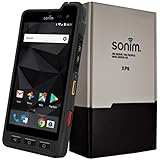
- Dual-SIM (Nano-SIM), Network Standard-SIM CARD 1 [ 2G GSM 850 , 900 , 1800 , 1900 and,or 3G 850(B5) , 900(B8) , 1700|2100(B4) , 1900(B2) , 2100(B1) and,or 4G LTE 700(B12) , 700c(B13) , 700(B14) , 700(B28) , 700(B29) , 800(B20) , 800(B27) , 850(B5) , 850(B26) , 900(B8) , 1800(B3) , 1900(B2) , 1900(B25) , 1700|2100(B4) , 1700|2100(B66) , 2100(B1) , 2300(B30) , 2600(B7) | TD-LTE-1900(B39) , 2300(B40) , 2500(B41) , 2600(B38) ] and SIM CARD 2 [ 2G GSM 850 , 900 , 1800 , 1900 ]
- This Smartphone is compatible/will work with any GSM Networks such as AT&T, T-Mobile. For exact 2G GSM, 3G, 4G/LTE compatibility, please check with your network provider in advance prior to your purchase.
- 5.0Inches Gorilla Glass 3 Screen, FHD 1080 x 1920, 16.7M Colors
- 64GB ROM, 4GB RAM, Up to 128GB MicroSD Slot, 12MP PDAF Rear Camera with Flash 8MP FF Front Camera without Flash
5. Document the operating model
Write down who manages phones, desktop installations, homeservers, backups, account recovery and user removal. For Element self-hosting, this documentation is an operational requirement, not optional paperwork. For Signal or Threema, document the phone-linking expectations so a replacement desktop or phone does not become an improvised emergency process.
Desktop security checks that apply to any choice
- Install from the service’s official desktop distribution. A third-party download can undermine the trust you are trying to establish.
- Check the default chat mode. Do not infer E2EE from a lock icon, a desktop badge or the fact that transport traffic is encrypted.
- Protect the endpoint. E2EE cannot stop someone who controls an unlocked desktop, a compromised operating system or an account session left open.
- Control linked devices. Remove old desktops and phones when they are replaced, lost or transferred to another person.
- Separate provider control from message secrecy. E2EE addresses message content; it does not automatically answer questions about metadata, account records, backups or server administration.
- Test recovery before a crisis. A phone requirement, a QR-pairing step or a self-hosted account can become a lockout risk if nobody knows the recovery procedure.
What the available evidence does—and does not—prove
The vendor pages establish desktop downloads, pairing descriptions and Element’s stated encryption comparison. They do not independently evaluate cryptographic implementations, metadata practices across all services, current usability, current prices or contact adoption. No current popularity ranking is established, so claims that one of these services is universally “the most secure” or the most widely adopted would go beyond the available evidence.
That limitation should change how you read the recommendations. Signal is recommended conditionally for a conventional private-messenger workflow with a phone. Element is recommended conditionally for Matrix-based control and deployment choice. Threema is recommended conditionally for its documented desktop clients and mobile-paired synchronization, with its phone-off capability clearly marked beta.
Why digital sovereignty enters the decision
Element frames hosting choice as part of digital sovereignty. On its site, Element cites a commissioned Forrester Consulting study in which 77% of surveyed IT leaders reportedly had difficulty maintaining privacy and control of data shared through communications technologies. The page does not state the study year, and the figure is an organizational survey claim—not a consumer adoption statistic or a head-to-head test of messaging apps.
“Digital sovereignty means having choices, so no single technology and provider become a dependency that can be used against our interests. It is always good to have choices to avoid dependencies.” — Karsten Wildberger, federal minister for Bundesministerium für Digitales und Staatsmodernisierung, as quoted by Element
“We are working together towards one goal: European digital sovereignty.” — Friedrich Merz, Chancellor of Germany, as quoted by Element
Those quotations describe a policy idea and are presented by Element; they should not be read as endorsements of Element. For a desktop messenger buyer, the practical translation is simple: decide whether you need a provider-managed service, a federated network or the option to operate infrastructure yourself, then choose the app whose device and hosting model matches that decision.
Quick Recap
Decision checklist
- Pick Signal when you want the conventional personal-messenger experience, E2EE by default as described by Element, official Windows/macOS/Linux clients and you accept installing Signal on a phone first.
- Pick Element when Matrix’s open standard, federation, managed hosting or self-hosting is more important than a single-provider consumer network.
- Pick Threema when Windows/macOS/Linux clients and end-to-end encrypted mobile pairing fit your needs, while treating phone-off desktop use as beta 2.0 functionality.
- Reconsider Telegram if your requirement is E2EE by default in ordinary chats; its desktop clients alone do not establish that default.
Product prices and availability are accurate as of the date/time indicated and are subject to change. Any price and availability information displayed on Amazon at the time of purchase will apply.

