Recommended Free Tools
SanDisk does not currently sell a directly comparable home-security camera ecosystem. Its relevant product is the SANDISK Security Cam Card, a high-endurance microSD card for compatible third-party cameras. Ring and Blink sell cameras, apps, and (depending on the setup) cloud or local-storage systems. That means the practical comparison is between SanDisk media used inside a compatible camera, Ring’s recording options, and Blink’s subscription and local-storage choices.
For saved footage, standard Ring setups depend on a Ring Protect subscription, while Blink documents a subscription-free local path through Sync Module 2 with a USB flash drive or Sync Module XR with a microSD card. A SanDisk card can improve retention and recording resilience in a camera that accepts it, but it cannot improve that camera’s lens, sensor, night vision, field of view, or detection software.
As an Amazon Associate I earn from qualifying purchases.
What you are actually comparing
The title combines three different product categories. Understanding that distinction prevents a costly buying mistake.
SanDisk: storage media, not a camera
The current relevant product is the SANDISK Security Cam Card, a microSD card designed for compatible security cameras. SanDisk describes it as suitable for security-camera footage from Full HD through 4K UHD and says the 512GB version is tested for up to four years of continuous recording. Those are workload and endurance claims for the card; they are not a promise that any camera using it will produce a sharper image.
#1 Best Overall
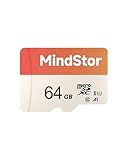
- Fast Read up to 90MB/s — Open photos, transfer files, and browse galleries faster; ideal for daily shooting and quick backups. The read and write speed is based on internal testing conducted under controlled conditions. The actual speed may vary depending on the device, interface, usage conditions, and other factors used
- A1 App Performance — Optimized random IOPS for smoother app installs and faster launches on Android devices. (1GB = 1,000,000,000 bytes. Actual user storage less.)
- Full HD Ready — Stable 1080P recording for phones, dashcams, and security cameras without frame drops. Temperature, shock, water, and X-ray resistant; keeps your data safe on the move.
- Built for Daily Use — Due to different measurement standards, the actual storage capacity shown by the device's operating system may be less than the capacity shown on the product label. Available storage capacity is higher than 58GB.
- Wide Compatibility — Works with phones, tablets, dash cams, action cams, laptops; includes adapter. Check if your device is compatible with MicroSD capacity. The SD logo is a trademark of SD-3 C, LLC.
SanDisk also positions the card for continuous operation alongside, or instead of, cloud storage. In SanDisk’s wording, it is “engineered to operate continuously alongside – or in lieu of – cloud storage, so your footage can be reliably recorded even when the Wi-Fi drops.” The camera still has to support microSD recording, the card’s capacity, and the camera’s required format.
Ring: cameras tied to a recording service, with a local option in a specific setup
Ring’s cameras provide live viewing through the Ring app. Ring says a Ring Protect subscription activates video recording and photo capture. Without that subscription, you can view real-time video, but missed videos and photos are not saved for later review or sharing.
Ring also documents Ring Edge, which processes and stores video on a local system rather than only in the cloud. Ring Edge is not a card-only feature: its documented setup requires a Ring Alarm Pro base station, a microSD card, and a compatible Ring subscription.
What’s actually slowing this PC down?
Pick the symptom - the matching free tool is one click away.
Blink: cameras with cloud service or documented local storage
Blink offers two distinct storage routes. A Blink Subscription Plan provides cloud storage, while local storage uses a USB flash drive with Sync Module 2 or a microSD card with Sync Module XR. Blink says local clips can be saved without a subscription, remain until you delete them or the storage device fills, and can be viewed in the Blink app.
Blink’s cited U.S. policy says cloud clips are stored for up to 60 days. Subscription terms, retention, supported hardware, and availability can vary by market and may change, so check the terms for your country and exact camera model.
Local storage and subscription comparison
| Setup | Can it save recordings without a monthly plan? | Local-storage hardware | Retention or limitation stated in the documentation |
|---|---|---|---|
| SANDISK Security Cam Card in a compatible third-party camera | Depends on the camera. The card itself has no subscription. | A compatible camera with a microSD slot and supported card capacity. | Depends on the camera’s recording and overwrite rules. The 512GB card is tested for up to four years of continuous recording. |
| Standard Ring setup | No for missed recordings and photos. Live view remains available without Ring Protect. | Cloud recording is the normal subscription route. | Ring says videos and photos you missed are not saved without Ring Protect. |
| Ring Edge | Not on the documented hardware combination alone; Ring lists a compatible Ring subscription as a requirement. | Ring Alarm Pro base station plus microSD card. | Video is processed and stored on the local system rather than only in the cloud. |
| Blink cloud storage | No cloud recording without the applicable Blink plan. | Blink cloud service. | The cited U.S. policy states cloud clips are stored for up to 60 days; terms can change by market. |
| Blink local storage | Yes, when the supported Sync Module and removable storage are used. | Sync Module 2 with a USB flash drive, or Sync Module XR with a microSD card. | Clips remain until deleted or the drive/card fills, and are viewable in the Blink app. |
The table shows why a brand-level “winner” is misleading. Ring and Blink are complete camera ecosystems with different recording policies; SanDisk is an input component whose usefulness depends on the camera selected.
Does Ring work without a subscription?
Yes, but only for a limited use case. Ring states that without Ring Protect you can view a camera’s live feed. You cannot review videos or images that you missed, save videos or photos, or share those saved captures. If you need an event history after a motion alert, the standard setup therefore requires the appropriate Ring Protect plan.
Rank #2

- Compatible with Nintendo-Switch (NOT Nintendo-Switch 2)
- Ideal for dash cams and home monitoring systems
- Designed for high endurance so you can record for up to 10,000 hours with no worries (Actual hours of video saved less. Full HD (1920x1080) video only; total hours less for 4K UHD (3840 x 2160) video.)
- Built for and tested in harsh conditions; temperature proof, water proof, shock proof, humidity proof and magnet proof (Card only. See product packaging and official SanDisk website for more information and limitations.)
- Save more videos with capacities up to 128GB (1GB = 1,000,000,000 bytes. Actual user storage less.)
The free trial is temporary
Ring includes a free 30-day trial with a new Ring doorbell or home-security camera under the conditions on its offer page. Treat that as an evaluation period, not as permanent free recording. Before the trial ends, decide whether the recording features justify the recurring plan cost for your household.
How Ring Edge changes the storage design
Ring Edge moves processing and storage to a local Ring system, but it does not remove every requirement. The documented prerequisites are:
- A Ring Alarm Pro base station.
- A microSD card installed for local storage.
- A compatible Ring subscription.
That makes Ring Edge most relevant to households already using, or willing to buy into, the Ring Alarm Pro platform. It is not equivalent to inserting a card directly into every Ring camera, and the base station requirement adds hardware to the system.
Can Blink record without a subscription?
Yes. Blink explicitly documents local storage without a Blink Subscription Plan.
Do these 3 things before closing this tab:
1Repair Windows errors before they cause bigger problems2Scan for outdated or missing drivers - takes under a minute3Clear out junk files and repair common Windows errorsSync Module 2 route
With Sync Module 2, local clips are stored on a compatible USB flash drive attached to the module. The clips can be viewed in the Blink app. They remain available until you delete them or the drive reaches capacity.
Sync Module XR route
With Sync Module XR, Blink documents local storage on a microSD card. This is a different hardware path from Sync Module 2, so verify which module your camera system supports before buying removable media.
Cloud versus local retention
Cloud storage and local storage behave differently. Blink’s cited U.S. policy gives cloud clips a retention period of up to 60 days, whereas local clips remain until deletion or the storage device fills. Local storage can therefore provide a longer archive, but it also makes capacity management your responsibility. A full drive or card can stop accepting new clips unless the system overwrites old footage or you remove files, and a universal overwrite rule for every Blink setup is not specified.
Rank #3

- Compatible with Nintendo-Switch (NOT Nintendo-Switch 2)
- Ideal for dash cams and home monitoring systems
- Designed for high endurance so you can record for up to 20,000 hours with no worries (Actual hours of video saved less. Full HD (1920x1080) video only; total hours less for 4K UHD (3840 x 2160) video.)
- Built for and tested in harsh conditions; temperature proof, water proof, shock proof, humidity proof and magnet proof (Card only. See product packaging and official SanDisk website for more information and limitations.)
- Save more videos with capacities up to 256GB (1GB = 1,000,000,000 bytes. Actual user storage less.)
What the SANDISK Security Cam Card can—and cannot—do
What it can do
- Provide removable local capacity in a camera that supports microSD recording.
- Handle a continuous-recording workload; SanDisk says the 512GB model is tested for up to four years of continuous recording.
- Support security-camera footage from Full HD through 4K UHD, subject to the camera’s own capabilities and requirements.
- Keep recording available when a camera’s Wi-Fi connection drops, if that camera is configured to record locally.
What it cannot do
- Turn a non-camera device into a security camera.
- Add 4K resolution to a camera whose sensor records only 1080p.
- Improve the lens, field of view, low-light sensitivity, HDR, night-vision illumination, frame rate, compression, or smart-detection algorithms.
- Guarantee compatibility with every camera that has a microSD slot.
Storage media affects how much footage can be retained and how well a card tolerates repeated writing. Image quality is created primarily by the camera’s optical system, sensor, image processing, lighting, and compression settings.
The Tool Desk
Outbyte Driver Updater FREEScan for outdated or missing drivers - takes under a minuteDriver Scan →Outbyte PC Repair FREERepair Windows errors before they cause bigger problemsFix Now →What SD card do you need for a security camera?
Start with the camera manual, not the card’s capacity label. Before purchasing, check all of these requirements:
- Physical slot: Confirm that the camera itself accepts a microSD card. A camera that records only to a hub, USB device, or cloud service cannot use a card inserted into the camera.
- Supported capacity: Verify the camera’s maximum supported capacity. A 512GB card is useful only when the camera and its firmware recognize that size.
- Recording mode: Determine whether the camera records motion clips, scheduled clips, or 24/7 footage. Continuous recording writes far more data than event-only recording.
- Resolution and bitrate: Match the card to the camera’s Full HD or 4K recording workload. SanDisk’s Full HD-to-4K statement describes compatibility with the workload range, not a guarantee for an unnamed camera.
- Formatting: Use the camera or hub’s supported formatting process when the instructions require it. Do not assume a card formatted for a phone or computer will work unchanged.
- Overwrite behavior: Find out whether the camera overwrites the oldest clips when full, stops recording, or requires manual deletion. Retention depends on this behavior as much as on capacity.
- Operating conditions: Check the camera manufacturer’s temperature, moisture, and power requirements. A durable card cannot compensate for a camera that loses power or overheats.
For Blink, do not substitute a camera microSD card for the storage required by the module: Sync Module 2 uses a USB flash drive, while Sync Module XR uses a microSD card. For Ring Edge, the card belongs in the Ring Alarm Pro local-storage system and the documented subscription and base-station requirements still apply.
Which has the best video quality?
The available evidence does not support a single SanDisk-versus-Ring-versus-Blink video-quality winner. SanDisk’s product is storage media, and the Ring and Blink names cover multiple camera models with different sensors and lenses.
A fair comparison must use exact camera models and the same test conditions. Evaluate the following attributes:
Quick wins for a faster PC:
Scan for outdated or missing drivers - takes under a minuteDriver Scan →Repair Windows errors before they cause bigger problemsFix Now →| Quality factor | Why it matters | What is established here |
|---|---|---|
| Resolution | Determines the number of recorded pixels and the ability to crop detail. | No model-specific Ring or Blink resolution comparison is established. |
| Field of view | Controls how much of a room, doorway, or yard appears in one frame. | Not stated for a matched set of models. |
| Low-light performance | Determines whether faces and objects remain identifiable at dusk or indoors. | Not stated for a matched set of models. |
| HDR and night vision | Help with backlighting and darkness, but implementations vary by model. | Not stated for a matched set of models. |
| Frame rate and compression | Affect motion smoothness and fine detail at a given storage size. | Not stated for a matched set of models. |
| Smart detection | Changes which events generate alerts or clips, not the optical sharpness of the image. | Model- and plan-dependent; no universal brand verdict is supported. |
A card can preserve the data a camera produces, but it cannot create detail the sensor never captured. To choose on image quality, select the precise Ring or Blink camera models first, then compare their published specifications and independent, controlled tests under the same lighting and distance.
Five-year cost: calculate the whole system
Prices and plan availability are volatile, and no current prices are established here. Use a five-year worksheet rather than comparing a camera’s purchase price with a card’s price.
Rank #4

- [4K Ultra HD] Read/Write up to 95/40 MB/s. 4K Ultra HD video displaying/recording
- [Compatibility] Storage for Camera, Security Camera, Action Camera, Sports Camera, Laptop, Tablet, PC, Smartphones. IMPORTANT DEVICE COMPATIBILITY: This 128GB card is natively formatted to exFAT. If using with older security cameras, dash cams, or Android phones, you must format the card to FAT32 using your device settings prior to use.
- [Environment] Waterproof, shockproof, temperature-proof and X-Ray proof
- [Support] Gigastone 5-year limited warranty
| Cost component | SanDisk card in a compatible camera | Ring | Blink |
|---|---|---|---|
| Camera hardware | Required; the card is not a camera. | Required. | Required. |
| Hub or base station | Depends on the chosen camera. | Ring Alarm Pro is required for Ring Edge. | Sync Module 2 or Sync Module XR is required for the documented local-storage routes. |
| Removable storage | Compatible microSD card, such as the Security Cam Card. | MicroSD card for Ring Edge. | USB flash drive for Sync Module 2 or microSD card for Sync Module XR. |
| Subscription over five years | None for the card itself; the camera may impose its own service fee. | Standard saved recordings require Ring Protect; Ring Edge also lists a compatible subscription. | None for documented local storage; cloud recording uses a Blink plan. |
| Replacement and maintenance | Allow for card replacement if the camera’s workload or environment requires it. | Allow for card, base-station, and subscription changes. | Allow for storage-device replacement and any plan changes. |
To calculate your total, add the camera, required hub, removable media, installation accessories, and five years of recurring fees. Then compare the retention period and convenience you receive, not just the first-year hardware total.
Choose the setup that matches your priority
You already own a camera with a microSD slot
A high-endurance card is the relevant upgrade. Confirm capacity and formatting support first, then decide whether event-only or continuous recording matches your retention needs. The SanDisk card is a storage choice in this scenario, not an alternative to Ring or Blink camera hardware.
Free tools Windows power users keep installed
One-click scans. No signup required.
You want Ring cameras and need saved clips
Plan for Ring Protect in the standard setup. If local processing and storage are important, evaluate Ring Edge only if you accept the Ring Alarm Pro base station, microSD card, and compatible subscription requirements.
You want Blink without a monthly plan
Choose the module and storage path supported by your system: Sync Module 2 with a USB flash drive, or Sync Module XR with a microSD card. Confirm that your camera and region support the selected module and local-storage features.
You care primarily about image quality
Compare exact camera models, not the storage brands. Examine resolution, field of view, low-light and night-vision behavior, HDR, frame rate, compression, and detection features under comparable conditions. A SanDisk card should be selected for compatibility and endurance after the camera’s imaging performance is known.
Independent reader supportYour contribution helps us test, update, and keep practical guides available for everyone.Setup and verification checklists
For a camera using a microSD card
- Read the camera’s storage section and record its supported card type, maximum capacity, formatting method, and recording modes.
- Insert the card with the camera powered down if the manufacturer instructs you to do so.
- Use the camera’s supported format procedure.
- Enable local recording and choose event or continuous mode according to your retention goal.
- Trigger a test event, remove the network connection briefly if safe, and verify that the clip is present locally afterward.
- Check what happens when storage fills and schedule periodic capacity checks.
For Ring Edge
- Confirm that the system includes a Ring Alarm Pro base station.
- Install a compatible microSD card in the local-storage system.
- Confirm that the required compatible Ring subscription is active.
- Complete Ring’s setup for local processing and storage in the Ring app.
- Test a motion event and verify where the resulting clip is stored and how it is retrieved.
For Blink local storage
- Identify whether your system uses Sync Module 2 or Sync Module XR.
- Attach a USB flash drive to Sync Module 2, or insert a supported microSD card into Sync Module XR.
- Complete the module’s setup and confirm that the Blink app recognizes local storage.
- Trigger a test clip and open it in the Blink app.
- Monitor available capacity and delete or export clips before the device fills.
Common failure modes and fixes
“The card is inserted, but there are no recordings.”
First check whether the camera actually supports local recording. Then verify that the card capacity and format are supported, local recording is enabled, and the camera has continuous power. A microSD card cannot create recordings when the camera is cloud-only or when recording is disabled.
“My Ring camera shows live video, but no history.”
This is the expected result without Ring Protect: live view remains available, while missed videos and photos are not saved. Check the subscription status before troubleshooting the card or network.
Best Value

- EXTREME ENDURANCE FOR MONITORING DEVICES: Capture your crucial moments in high-resolution, even in harsh conditions; Engineered to deliver long lasting performance, the Samsung PRO Endurance SSD is a perfect fit for CCTV, dash cams and body cams
- BUILT TO LAST UP TO 140K HOURS OF RECORDING: With capacities up to 256GB*, the PRO Endurance records and rewrites up to 140K hours (over 16 years)**; Plus, with a warranty up to 5 years***, you can rest assured that your data endures
- RECORD & PLAY IN FHD/4K: PRO Endurance simplifies large file transfers with read/write speeds up to 100/40MB/s;**** Plus, FHD & 4K resolution support ensures that crucial moments are recorded in high-res so every detail is documented when it matters most
- CRITICAL DATA, SAFEGUARDED: After rigorous testing, it stands up against magnets¹, X-rays², water³, drop⁴, wearout⁵ and stays cool under pressure with operating temperatures ranging from -25°C to 85°C⁶
- WORLD'S #1 FLASH MEMORY BRAND: Experience the performance and reliability from the world's #1 brand for flash memory since 2003;****** All firmware & components, including Samsung's world-renowned DRAM & NAND, are produced in-house
“Blink local clips disappeared.”
Check whether the USB drive or microSD card reached capacity and whether clips were deleted from the app. Blink says local clips remain until deletion or the storage device fills; storage management is therefore part of operating a no-subscription setup.
“The image looks no better after installing a faster or larger card.”
That is normal. Storage media affects recording capacity and endurance, not the camera’s sensor, lens, field of view, or night-vision system. Image improvements require a camera with better imaging hardware or processing.
“Wi-Fi dropped and the clip is missing.”
Local recording can protect against a network interruption only when the camera or hub is configured to record locally and has functioning storage. Test the exact failure mode after installation instead of assuming that a card automatically creates an offline archive.
SanDisk’s older wireless products are not the same thing
SanDisk’s lifecycle information lists older Connect Wireless products as end-of-updates, and SanDisk says the Connect Wireless Media Drive app was removed from Google Play and the Apple App Store on September 1, 2021. Those legacy products should not be treated as evidence of a current SanDisk home-security-camera line. The current Security Cam Card is storage media for compatible cameras.
Bottom line
Choose the component that solves your actual problem. Buy the SANDISK Security Cam Card when you already have, or plan to buy, a compatible microSD security camera and need durable local capacity. Choose Ring when its camera ecosystem and subscription model fit your need for managed recording; Ring Edge is a specialized local-storage arrangement requiring Ring Alarm Pro, a microSD card, and a compatible subscription. Choose Blink when subscription-free local recording is a priority and you are comfortable using Sync Module 2 with USB storage or Sync Module XR with microSD storage.
For video quality, there is no honest brand-wide verdict from these storage and service descriptions. Compare exact camera models and test the imaging features that matter at your property. Verify the current model, region, card compatibility, plan terms, and retention behavior before purchase, because those details can change.
Quick Recap
Product prices and availability are accurate as of the date/time indicated and are subject to change. Any price and availability information displayed on Amazon at the time of purchase will apply.

