Free tools Windows power users keep installed
One-click scans. No signup required.
R.F. Kuang’s Taipei Story is literary fiction about a young Chinese American woman who goes to Taiwan hoping language study and family history will bring her closer to a culture she feels she has missed. The novel’s central strength is its refusal to make that hope easy: fluency cannot guarantee belonging, and grief can make the questions a homecoming raises more urgent without making them answerable. Kuang has described the story as autobiographically inspired, but Lily Chen’s personality and views are fictional.
What is Taipei Story about?
Lily Chen, a Yale student, spends a summer in Taipei in an intensive Mandarin program. She hopes to find family, culture, and connection, but the daily realities of language classes and life abroad complicate that aim. Her roommate frustrates her; an awkward hot-springs outing becomes a source of gossip. Then her grandfather dies, shifting the emotional stakes of the trip and sharpening questions about family and inherited culture.


As an Amazon Associate I earn from qualifying purchases.
The premise gives the novel room for both social discomfort and grief. Miscommunication and the uneasy business of being a foreigner can be funny, but the family questions Lily brings with her are not simply solved by being in Taiwan.
What does the novel say about language and belonging?
Taipei Story tests the appealing idea that learning a heritage language will close the distance between a person and their ancestry. Kirkus describes language in the novel as both bridge and barrier; Publishers Weekly likewise presents Lily as seeking fluency and a deeper connection to her culture through study in Taiwan. The tension is more interesting than a simple success-or-failure story: language can offer access while leaving some relationships, histories, and meanings out of reach.
#1 Best Overall
That uncertainty also shapes the novel’s attention to diaspora. Kirkus reads the book as resisting a single archetypal Chinese American experience. That is a critic’s interpretation, not a claim that one character can stand for every diaspora story. Lily’s particular confusions and assumptions are part of what makes the question of belonging feel unsettled rather than universal.
How does grief change Lily’s trip?
Lily’s grandfather’s death turns an exploratory summer into a more urgent encounter with family memory. The loss raises the cost of what she does not know, while also making clear that some questions cannot be answered simply because she has traveled to a place associated with her heritage. The publisher’s description identifies the death as a turning point in Lily’s confrontation with family and inherited culture.
Rank #2
Is Taipei Story autobiographical?
It draws on autobiographical experience, but it should not be read as memoir. In a BOMB interview with Brian Gresko, Kuang said, “Lily’s entire personality and her understanding of China, Taiwan, and history are all fictional inventions.” She also described the challenge of writing a character who repeatedly gets things wrong without withholding compassion: “I wanted to give myself the technical challenge of creating a character who’s getting every single thing wrong and writing her with compassion.”
The Tool Desk
Outbyte PC Repair FREERepair Windows errors before they cause bigger problemsFix Now →Outbyte Driver Updater FREEScan for outdated or missing drivers - takes under a minuteDriver Scan →That distinction matters to how the novel works. Lily is not a transparent stand-in for the author or a guide whose understanding readers should accept as definitive. Kuang’s own post describes Lily as anxious, judgmental, neurotic, and lonely, and notes that she cannot grasp the region’s political relationships beyond simplistic frames. The book’s awkwardness and flawed perspective are part of its design, not evidence that it offers an uncomplicated cultural lesson.
Rank #3
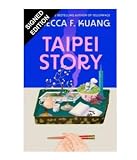
- Hand Signed By R. F. Kuang At A Book Signing - A MUST HAVE for all fans!
- Supplied With Certificate Of Authenticity (COA)
- Hand signed exclusive edition with sprayed edges!
- 1st Edition
- Hard Cover Edition
Is it literary fiction or fantasy?
Taipei Story is literary fiction, not fantasy. Publishers Weekly frames it as a turn toward literary fiction after Kuang’s work across fantasy and satire. Readers who know her through The Poppy War, Babel, or Katabasis should not expect this novel to return to those books’ historical or speculative modes. Its sources of tension are interpersonal, cultural, and emotional.
Independent reader supportYour contribution helps us test, update, and keep practical guides available for everyone.Who is likely to enjoy it?
This is a good fit for readers drawn to fiction about language, diaspora, family memory, grief, and the discomfort of discovering that one’s assumptions do not travel well. Its cringe-comic social moments sit alongside the more serious limits of what Lily can know. Readers looking for a practical Mandarin course, a straightforward guide to Taiwan, or a protagonist who arrives at a tidy answer about identity may find that the book is deliberately doing something else.
Rank #4
![[By R. F Kuang ] The Poppy War: A Novel (Hardcover)【2018】 by R. F Kuang (Author) (Hardcover)](https://m.media-amazon.com/images/I/51w-Sx7ZK3L._SL160_.jpg)
- A "Best of May" Science Fiction and Fantasy pick by Amazon, Barnes and Noble, Audible, The Verge, SyFy Wire, and Kirkus
- “I have no doubt this will end up being the best fantasy debut of the year [...] I have absolutely no doubt that [Kuang’s] name will be up there with the likes of Robin Hobb and N.K. Jemisin.” -- Booknest
- A brilliantly imaginative talent makes her exciting debut with this epic historical military fantasy, inspired by the bloody history of China’s twentieth century and filled with treachery and magic, in the tradition of Ken Liu’s Grace of Kings and N.K. Jemisin’s Inheritance Trilogy.
Readers coming from Yellowface or Babel may recognize Kuang’s interest in how culture and language carry power, but Taipei Story changes genre and scale: it focuses on an imperfect student’s intimate, uncertain experience rather than repeating the earlier books’ forms.
Which edition of Taipei Story should you choose?
The listed page counts differ because the sources describe distinct market editions, not because one listing necessarily contains an error. Check the market and ISBN when ordering:
| Edition | Publisher and format | Pages | ISBN | Release date |
|---|---|---|---|---|
| UK | Borough Press hardback, listed by HarperReach | 368 | 978-0-00-884147-8 | 8 September 2026 |
| U.S. | Morrow/HarperCollins, listed by Kirkus Reviews | 288 | 9780063473744 | 8 September 2026 |
These page counts describe the respective listed editions; they do not indicate differences in quality or reception. A separate Google Books record concerns large-print metadata, so it should not be used as a substitute for identifying a standard-market edition.
Quick Recap
Product prices and availability are accurate as of the date/time indicated and are subject to change. Any price and availability information displayed on Amazon at the time of purchase will apply.

