Yes—an herbicide dose too small to kill a weed can sometimes stimulate growth or reproduction, a phenomenon called hormesis. A 2026 field study of wood sorrel (Oxalis stricta) found that dicamba drift consistently increased flower production, although the effect on seed output differed between years. The finding does not mean every drift event strengthens weeds or creates herbicide resistance; it shows that low-dose exposure can trigger conditional, short-term compensation.
What the new study found
Researchers led by Anah Soble Botran at the University of Michigan exposed replicated maternal lines of Oxalis stricta, commonly called wood sorrel, to simulated dicamba drift in two field experiments. They tracked plant growth, flowering, reproductive traits, how plants allocated resources to flowers, and pollinator visits.
As an Amazon Associate I earn from qualifying purchases.
The most consistent response was more flowers after the low, indirect exposure. In 2022, the extra flowering was connected through indirect pathways to greater seed production. In 2023, plants produced more flowers but showed no detectable difference in total reproductive output. Flower size also declined, and pollinator visitation changed. Those results matter because a visible increase in one trait—such as flower number—does not automatically translate into more successful reproduction or a larger next generation.
The authors detected little genetic variation in the response among the tested maternal lines. On the evidence available from this experiment, the effect is best described as plastic compensation: plants changed their performance in response to the environment, rather than demonstrating an evolved, heritable hormetic adaptation.
#1 Best Overall
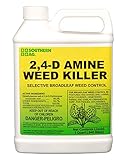
- Low, economical use rate of 1 to 4 pints per acre
- Controls many broadleaf weeds & woody plants
- Use in turf, pastures, rangeland, ditch banks, fences…
As the authors wrote in the 2026 New Phytologist abstract (DOI 10.1111/nph.71643): “Together, our results show that low-dose herbicide exposure can generate compensatory responses that reshape ecological interactions, even when evolutionary responses are constrained.”
How hormesis works
Hormesis describes a dose-response curve in which a chemical is harmful at high concentrations but produces a temporary stimulatory response at a narrow, lower range. A simplified pattern is:
- No exposure: normal baseline growth or reproduction.
- Sublethal exposure: a short-lived increase in a trait such as biomass, branching, flowering or seed production.
- Higher exposure: visible injury, reduced growth and eventual death as toxicity overwhelms compensation.
The low dose does not make herbicide beneficial in general. It can alter plant hormones, resource allocation or stress responses in ways that briefly increase a measured trait. The position and height of the stimulation peak vary with the active ingredient, species, resistance genotype, plant age, water supply, weather and application pattern.
Quick wins for a faster PC:
Clear out junk files and repair common Windows errorsFree Scan →Scan for outdated or missing drivers - takes under a minuteDriver Scan →Repair Windows errors before they cause bigger problemsFix Now →Rank #2

- KILLS WEEDS AND GRASSES: Use on driveways and walkways, and around fences, trees, flower beds, shrubs and other listed areas
- ACCUSHOT SPRAYER: Includes continuous power sprayer with extendable wand
- KILLS THE ROOT: Visible results as fast as 3 hours — replant new flowers, trees and shrubs the same weekend
- RAINFAST: Rainfall or watering 15 minutes after application will not wash away effectiveness
Drift is only one route. Similar low-dose exposure can come from an application error, runoff, residues left in soil, shielding by taller plants or uneven spray deposition. A plant may receive a dose well below the labeled field rate without being uniformly exposed across its leaves or roots.
What other experiments show
Earlier studies illustrate how large—but also how study-specific—the response can be. Their percentages should not be treated as universal predictions for weeds, herbicides or field conditions.
| Study and exposure | Measured response | Important qualification |
|---|---|---|
| Echinochloa colona (2020), glyphosate at 5 g ha−1 | Biomass increased 64% in resistant biotypes and 54% in susceptible biotypes | Plants were adequately watered; results came from the PLOS ONE study’s tested conditions |
| Common sowthistle (2020), glyphosate at 5 g ha−1 | Seed production increased 154% in one experimental run and 101% in another | Two runs of one study; not a general glyphosate effect |
| Chenopodium album (2018), realistic metamitron rates | Reproductive fitness increased 15–32%; the largest seed-yield stimulation was 45% above untreated plants | Measured in the tested resistant populations and experimental conditions |
| Chenopodium album (2020), parental metamitron conditioning | Offspring sensitivity changed by as much as 2.2-fold | A transgenerational result from the tested experiment, not proof of a permanent inherited change in all descendants |
Water availability can change the outcome. In E. colona, water stress reduced glyphosate’s stimulatory effect. That makes a result from a well-watered pot or field plot a poor basis for predicting what will happen during drought, after rain or under a different spray pattern.
Rank #3

- FAST-ACTING FORMULA: The fast-acting weed and grass killer concentrate starts working immediately and is rainproof in 1 hour
- HOW TO USE: Apply this weed killer concentrate for sprayer by mixing 24 fl. oz. per gallon of water and using a tank sprayer to treat up to 300 sq. ft.
- COVERAGE: One 2 gal. container of Ortho GroundClear Year Long Vegetation Killer2 Concentrate weed spray makes enough product to treat up to 3,200 sq. ft.
- WHERE TO USE: Use this weed control product where no plant growth is wanted for at least a year on driveways, sidewalks, fence lines, paver patios, walkways, gravel areas, parking areas, and other hardscapes
- LONG-LASTING CONTROL: Ortho GroundClear Year Long Vegetation Killer2 Concentrate kills weeds, grasses and existing vegetation, and prevents regrowth for up to 1 year
Does a low dose make resistant weeds stronger?
Hormesis and herbicide resistance are related but not interchangeable.
Free tools Windows power users keep installed
One-click scans. No signup required.
Resistance is a heritable sensitivity difference
Herbicide resistance means a population has inherited traits that allow some plants to survive a dose that would normally control the species. Those traits can involve target-site changes, faster detoxification or other mechanisms. A single plant growing faster after a low dose has not thereby become resistant.
Hormesis can still affect selection
If resistant plants gain more biomass, flowers or seeds after realistic low exposure than competing plants, they may contribute more offspring to the next generation. The metamitron work in Chenopodium album found enhanced relative fitness under tested field-relevant rates, and a follow-up experiment found altered sensitivity in offspring after parental conditioning. Together, those findings establish a plausible route by which repeated low-dose exposure could influence population dynamics.
Rank #4

- Water-Based Formulation: Experience the power of our unique water-based formulation that ensures superior control and faster plant uptake, delivering results you can see quickly
- Extended Residual Control: Enjoy up to 30 days of residual control, keeping your turfgrass free from troublesome weeds for longer periods and reducing the need for frequent applications; Rainfast in less than an hour
- Broad-Spectrum Weed Control: Effectively targets a wide range of weeds, including crabgrass, foxtail, kikuyu grass, signal grass, torpedo grass, and key broadleaves like bindweed, clover, dandelion, black medic, and horseweed
- Versatile Application: Perfect for residential lawns, golf courses, commercial properties, and other non-residential turfgrass sites. It is labeled for use on both warm-season and cool-season turf types, ensuring adaptability to various environments; See label for proper mixing instructions
- USE AS INTENDED: Read, understand and follow label safety and application instructions; Follow proper storage and disposal instructions; NY can only be applied as a spot application; Proper PPE required long sleeve shirt, long pants, socks and shoes, chemical resistant gloves; See label for environmental hazards; State restrictions may apply
They do not show that every drift incident creates resistance, that hormesis is always inherited, or that a weed population will evolve resistance because it flowered more in one season. The 2026 wood-sorrel study found little genetic variation in the response, which argues against claiming demonstrated adaptive evolution from that experiment.
Independent reader supportYour contribution helps us test, update, and keep practical guides available for everyone.Why more flowers may not mean more weeds
Plants have limited carbon, nutrients and water. A stress response can shift resources toward one reproductive component while reducing another. In the wood-sorrel experiments, flower number rose while flower size fell, and pollinator visitation changed. In 2022, the chain of effects ended in higher seed production; in 2023, it did not produce a detectable change in total reproductive output.
The Tool Desk
Outbyte PC Repair FREERepair Windows errors before they cause bigger problemsFix Now →Outbyte Driver Updater FREEScan for outdated or missing drivers - takes under a minuteDriver Scan →For that reason, studies should be compared by the endpoint they actually measured: biomass, flower number, flower size, seed count, total reproductive output, pollinator visits or offspring sensitivity. “Growth stimulation” is not a synonym for higher lifetime fitness.
Best Value
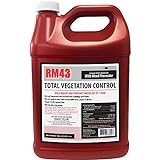
- Concentrated mix with water, add to sprayer
- Serious Weed Control
- Up to one year control
- Total Vegetation control
What this means for herbicide use
The practical response is prevention, not intentional under-dosing. Low-dose exposure outside the target area can have effects that are difficult to predict from a single species or chemical.
- Calibrate sprayers and verify nozzle output before treatment.
- Follow the product label for application rate, weather limits, buffers and permitted uses.
- Reduce drift by avoiding unsuitable wind, temperature and humidity conditions and by using application methods approved for the product.
- Inspect field edges and nearby vegetation for unintended exposure, especially where shielding or uneven deposition is likely.
- Use integrated weed management—crop competition, rotation, mechanical control and appropriately timed herbicide applications—to reduce repeated selection pressure.
- Record active ingredients and rates so repeated low-dose exposure is not mistaken for a mysterious change in weed biology.
For growers, the key warning is that a plant need not be visibly damaged for exposure to matter. For researchers and advisers, the key limitation is that the direction and size of the response depend on species, dose, resistance status, life stage, water availability, weather and the trait being measured.
Bottom line
Some weeds can respond to an indirect, sublethal herbicide dose with a temporary burst of growth or flowering. The 2026 dicamba-drift study found that effect in wood sorrel, but seed outcomes varied by year and the experiment did not demonstrate adaptive evolution. Hormesis may give resistant weeds a reproductive advantage under some conditions, making drift control and accurate application important, but it is not proof that every low-dose exposure produces stronger or permanently resistant weeds.
What’s actually slowing this PC down?
Pick the symptom - the matching free tool is one click away.
Quick Recap
Product prices and availability are accurate as of the date/time indicated and are subject to change. Any price and availability information displayed on Amazon at the time of purchase will apply.

