What’s actually slowing this PC down?
Pick the symptom - the matching free tool is one click away.
The best RDR2 side activity depends on your mood and the time you have. Choose wildlife or fishing for a calm, focused ride; camp chores and conversations for story immersion; poker and other table games for a self-contained break; collectibles for checklist progress; or Red Dead Online roles and challenges when you want multiplayer goals. The sections below keep Story Mode and Online separate so you can pick the right kind of diversion between missions.
Pick an activity by mood, time and goal
There is no objective winner. A player looking for ten quiet minutes needs something different from someone planning a two-hour completion push. Use this quick comparison before you leave camp or load into a session.



As an Amazon Associate I earn from qualifying purchases.
| Activity | Mode | What you do | Best fit | Typical shape of a session |
|---|---|---|---|---|
| Wildlife watching and hunting | Story Mode | Explore habitats, observe animals and birds, and pursue hunting targets. | Landscape exploration with a concrete objective | Open-ended; stop when you have seen or found enough |
| Fishing | Story Mode | Travel to water and spend time on a slower, focused activity. | A calm break between missions | Short or extended, depending on how long you stay at the water |
| Camp chores and gang conversations | Story Mode | Complete camp work and talk with gang members for leads. | Character and story immersion | Brief visits that can become a longer camp stop |
| Poker, blackjack, dominoes and Five Finger Fillet | Story Mode | Play a contained table or skill game. | Progress without committing to a long ride | Round-based; easy to leave after a few hands or games |
| Collectibles and completion goals | Story Mode | Follow maps, search for collectibles and work through a completion plan. | Checklist-minded players | Structured and potentially long-term |
| Roles, Free Roam Events, Daily Challenges and Awards | Red Dead Online | Advance through multiplayer role content and rotating or achievement-style goals. | Players who want online progression | Goal-driven sessions that can be repeated across play periods |
The categories above are preference guidance, not a measured ranking. No published source establishes which activity players enjoy most.
Recommended Free Tools
Story Mode: the best solo diversions
1. Wildlife watching and hunting for purposeful wandering
Wildlife is the strongest choice when you want to ride without feeling aimless. Rockstar’s 2018 wildlife feature says the game’s varied habitats and climates are home to “around 200 species of animals, birds and fish,” and that each behaves and responds to its environment in a unique way. Read the full description in Rockstar’s wildlife feature. The number is Rockstar’s historical figure from 2018, not a newly measured count.
That breadth gives a free-roam trip a simple structure: choose a habitat, travel slowly, watch for movement, then decide whether you are observing or hunting. You can make the ride contemplative by leaving your weapons holstered and treating animal sightings as the destination. If you want a practical target, set out to find a particular kind of animal, bird or fish and return once you have made a satisfactory sighting. The game’s ecosystem supplies the reason to look around; you do not need to manufacture a checklist before every ride.
- Choose this when: you want scenery, movement and a goal that can end at any time.
- Make it calmer: ride at a walking pace, stop to watch behavior and avoid turning every encounter into combat.
- Make it more purposeful: select one habitat or species target before leaving and stop when you have found it.
- Watch the trade-off: hunting creates a concrete outcome, while observation is more open-ended and may not advance a completion plan.
The PlayStation Blog’s overview also identifies hunting wild game as part of the game’s broader camp and wilderness loop. Its feature is a useful companion to Rockstar’s wildlife description: 22 Things You Need to Know About Red Dead Redemption 2.
2. Fishing for a deliberate, low-pressure break
Fishing is the better choice when you want to focus on one activity rather than scan a whole landscape. Fish are included in Rockstar’s around-200-species description, and the single-player guide index lists fishing as its own activity guide (RDR2.org single-player guides index). Those sources establish fishing as both part of the world’s wildlife and a distinct Story Mode pastime.
Free tools Windows power users keep installed
One-click scans. No signup required.
Plan a fishing session around the time you have. For a short break, travel to a nearby body of water, fish until you have had a satisfying catch or two, and return to your next mission. With more time, make the trip itself part of the activity: ride out, pause at the shoreline, fish without rushing, and head back when you are ready. The appeal is the narrow focus. You are not asking the game to provide a new objective every minute; you are choosing a small routine and letting it occupy the gap between larger story beats.
- Best for: players who want a slower rhythm than missions or gunfights.
- Useful boundary: decide before you leave whether the session ends after a catch, a short stay or a longer outing.
- Why it works between missions: it gives you a clear activity without requiring a major exploration route or a multiplayer group.
3. Camp chores and gang conversations for story immersion
Return to camp when the characters matter more to you than map distance. The PlayStation Blog specifically names chopping wood, hunting wild game and talking with gang members for leads on money-making activities among the things you can do around camp. These details are covered in PlayStation’s overview.
Camp is a good reset after an intense mission because it keeps you inside the story’s social space. Start with the chores that are available, then speak to gang members rather than immediately riding away. Conversations can point you toward money-making activities, so a camp visit can be both atmospheric and practical. If your aim is immersion, listen and spend time with the group. If your aim is efficient preparation, use the conversations to identify a lead and leave with one clear next step.
- Return to camp instead of opening another distant map objective.
- Complete the available camp work, including the chores the PlayStation feature calls out, such as chopping wood.
- Talk with gang members and note any lead on a money-making activity.
- Choose whether to stay for the social atmosphere or follow one lead into the world.
This option is less suitable when you want measurable completion progress immediately. Its reward is time with the camp and its characters, not a universal score or ranking.
Do these 3 things before closing this tab:
1Repair Windows errors before they cause bigger problems2Fix the driver behind crashes, sound loss and screen glitches3Clear out junk files and repair common Windows errors4. Poker, blackjack, dominoes and Five Finger Fillet for a contained session
Table and skill games are ideal when you want to stop moving. The single-player activity index at RDR2.org lists guides for fishing, poker, blackjack, dominoes and Five Finger Fillet. Use that index as a secondary reference for the named games; it is not an official Rockstar rules manual.
Poker and blackjack suit players who want a series of rounds with changing decisions. Dominoes gives you a different kind of turn-based pace, while Five Finger Fillet is a compact skill-game diversion. Because each is self-contained, you can set a simple stopping rule: one round, a fixed number of hands or “leave after I have had enough.” That makes these games more reliable than open-world wandering when you only have a small window.
| If you want… | Start with… | Why |
|---|---|---|
| Cards and repeated hands | Poker or blackjack | The activity is organized into rounds, so you can stop between them. |
| A board-style turn structure | Dominoes | It keeps the session contained while changing the pace from card play. |
| A quick dexterity challenge | Five Finger Fillet | It is a focused skill activity rather than a long ride or search. |
These games are best when your goal is a break, not when you are trying to see more of the map. They also keep the focus on the activity itself, so they are a natural choice after a mission when you do not want another combat encounter.
5. Collectibles and completion goals for checklist progress
Choose collectibles when “what should I do next?” is less useful than “what remains on my list?” The indexed description of the Red Dead Redemption 2 Complete Official Guide advertises annotated maps, collectibles and completion roadmaps. A search-indexed copy of that description is hosted at this third-party PDF. It does not establish the current edition, availability, price or an affiliate relationship, so treat it as a description of the guide’s stated contents rather than a buying recommendation.
Windows Errors? Fix Them Before They Spread
Repair common Windows errors and clear accumulated junk for a smoother, more stable PC - no reinstall needed.Free scan · no reinstallCrashes, No Sound, or Screen Glitches?
Random freezes, missing sound and display glitches usually trace back to one bad driver. Find and replace yours safely.Free scan · under a minuteIn the game, a completion-focused session works best when you define a small route before setting out. Pick one map area or one category of target, search until you have made meaningful progress, then record where you stopped. That prevents a long ride from becoming an unfocused search. If you prefer discovery, use the maps only as a broad direction and allow detours. If you prefer efficiency, follow a road-by-road plan and avoid unrelated encounters until the target is complete.
- Best for: players who enjoy visible progress and organized goals.
- Set a stopping point: one target, one area or one segment of a roadmap is enough for a single session.
- Expect a longer commitment: unlike a card game, a completion route can expand into many rides.
- Keep the mode clear: these are Story Mode exploration goals, not Red Dead Online role ranks or daily objectives.
Red Dead Online: multiplayer goals, not Story Mode wandering
Red Dead Online should be treated as a separate menu of activities. Rockstar’s store page describes Online as an evolving world with additional features; the same product is sold separately from Story Mode on the official listing at Rockstar’s store page. The PlayStation-specific listing names the same Online role structure at the PlayStation version of the store page.
Roles for structured multiplayer progression
Rockstar names Bounty Hunter, Trader, Collector, Moonshiner and Naturalist as Red Dead Online roles. Each gives you a goal-driven frame that Story Mode’s unstructured roaming does not provide. Pick the role that matches the kind of progress you want, then use free-roam time to work toward that role’s objectives rather than expecting the single-player activity list to transfer directly.
| Role named by Rockstar | Choose it when you want… | Mode note |
|---|---|---|
| Bounty Hunter | A pursuit-oriented progression path | Online role content; do not confuse it with a Story Mode side activity. |
| Trader | A business-style progression goal | Online role content. |
| Collector | Search and accumulation objectives | Online role content, separate from Story Mode collectibles. |
| Moonshiner | A specialized role track | Online role content. |
| Naturalist | A wildlife-focused multiplayer role | Online role content, distinct from Story Mode hunting and observation. |
The table identifies the roles Rockstar names; it does not claim that one role is universally better. Your choice should follow whether you want pursuit, trade, collection, a specialized track or wildlife-centered progression.
Rank #4
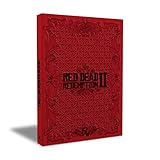
- Brand New in box. The product ships with all relevant accessories
Free Roam Events, Daily Challenges and Awards
Rockstar’s Title Update 1.11 notes refer to role-specific content, Free Roam Events, Daily Challenges and Awards in Online. Read those notes at Rockstar Customer Support. The notes document features associated with that 2019 update; they should not be read as a statement of the service’s current schedule or availability.
Use these systems when you want a rotating or achievement-oriented reason to log in. A Daily Challenge can give a short session a defined target, while an Award gives a longer-term objective. Free Roam Events add a shared multiplayer activity when you want other players to be part of the session. Because these features are Online systems, they belong in a separate plan from a quiet Story Mode fishing trip.
- Short Online session: choose one available challenge and stop after the objective is complete.
- Social session: join a Free Roam Event when you want a shared activity rather than solo exploration.
- Longer progression session: combine role content with an Award objective so the time advances both immediate and long-term goals.
Session plans by the time you have
These are practical routines, not fixed game rules. Adjust them to your location, unlocked content and current objective.
About 15 minutes
- Play one table-game round or a short Five Finger Fillet session.
- Complete a quick camp visit: do one chore and speak with a gang member.
- In Online, select one Daily Challenge target or check one role objective.
A short session benefits from a hard stopping point. Avoid starting a distant collectible route when you know you will need to leave soon.
About 30 minutes
- Travel to a nearby fishing spot and stay until you have completed the small goal you set.
- Choose one wildlife target and explore a single habitat rather than crossing the whole map.
- Play several hands of poker, blackjack or dominoes, then return to the story.
About one hour
- Combine camp conversations with one money-making lead, then follow that lead only as far as your time allows.
- Plan a collectible search in one area and stop after a defined target or route segment.
- In Online, pair a role activity with a Free Roam Event or an Award objective.
Two hours or more
- Build a deliberate wildlife or fishing expedition around several stops and a clear return point.
- Work through a larger completion-roadmap segment, recording where you stopped.
- Spend the session in Online role progression, using challenges or events to vary the pace.
How to choose when two activities sound good
Calm versus action
Fishing, camp time and observation are the calmest choices in this menu. Hunting adds a concrete target and more tension. Table games keep the action contained. Online events and role objectives are the best fit when you want systems and other players to create momentum.
Best Value

- Printed on Highest Quality Poster Paper.
- Poster measures 16" x 24" inches
Open roaming versus checklist progress
Wildlife watching lets the world decide what you notice. Collectibles and completion roadmaps let you decide what counts as progress. Fishing sits between them: the destination is focused, but the session can end whenever you choose.
Story immersion versus systems progression
Camp chores and gang conversations reinforce the single-player cast. Table games and wildlife let you inhabit the setting without advancing a major plot beat. Collectibles create a completion system. Online roles, Daily Challenges and Awards are explicitly progression systems in a multiplayer environment.
Solo versus multiplayer
Everything in the Story Mode sections can be planned as a solo diversion. Online roles, Free Roam Events and Daily Challenges belong to the multiplayer side and may involve other players or service-dependent objectives. Do not use an Online role as a substitute for a Story Mode camp activity, and do not assume a Story Mode collectible route advances an Online role.
Quick wins for a faster PC:
Repair Windows errors before they cause bigger problemsFix Now →Scan for outdated or missing drivers - takes under a minuteDriver Scan →Common mistakes and how to avoid them
- Calling one activity “the best” for everyone: choose by mood, available time and whether you want exploration, immersion or measurable progression.
- Mixing the two modes: label your plan Story Mode or Online before you start.
- Treating the 200-species figure as current measurement: it is Rockstar’s 2018 description of the wildlife ecosystem.
- Turning an open-ended ride into an obligation: set one wildlife or fishing target, then stop when it is met.
- Starting a completion route without a boundary: choose one area, category or roadmap segment so the session has a clear end.
- Assuming 2019 update notes describe today’s Online schedule: use them to identify the documented feature types, not to infer current event rotations or service status.
- Relying on an unofficial guide as an authority: the activity index and reproduced guide description are secondary references; Rockstar and PlayStation provide the core descriptions linked above.
A simple decision checklist
- How much time do you have: a few minutes, about half an hour, an hour or a long session?
- Do you want calm focus, story interaction, a contained game, exploration or active progression?
- Are you in Story Mode or Red Dead Online?
- Do you want an open-ended activity or a target you can mark complete?
- Choose one activity and define its stopping point before you leave your current location.
If you still cannot decide, use the lowest-commitment option first: a table game or camp visit for a short break, fishing for focused calm, wildlife for roaming, collectibles for structured progress, and an Online role or challenge for multiplayer advancement.
Quick Recap
Product prices and availability are accurate as of the date/time indicated and are subject to change. Any price and availability information displayed on Amazon at the time of purchase will apply.

