Short answer: NASA’s Perseverance rover detected bright, silica-rich rocks near the Pico Turquino Hills on the rim of Jezero Crater. SuperCam measurements are consistent with hydrated silica and possible quartz formed by water-related or hydrothermal processes. That makes the site a potentially valuable record of ancient habitability and biosignature preservation—not a discovery of Martian life.
The “rare quartz” wording comes from a December 18, 2024 Daily Galaxy headline, not a NASA announcement (The Daily Galaxy). As of August 18, 2026, the finding remains an active geological investigation.
As an Amazon Associate I earn from qualifying purchases.
What Perseverance actually detected
At Pico Turquino Hills, Perseverance encountered unusually bright rocks enriched in silica. The rover’s observations support interpretations involving hydrated silica and possibly quartz, a crystalline form of silicon dioxide. “Silica-rich rock” is the broad category; quartz, opal, chalcedony and amorphous silica are different possible phases within it.
The Tool Desk
Outbyte Driver Updater FREEFix the driver behind crashes, sound loss and screen glitchesFind Drivers →Outbyte PC Repair FREERepair Windows errors before they cause bigger problemsFix Now →The U.S. Geological Survey describes the material as potential hydrothermal silica precipitates, with quartz among the possible mineral phases (USGS technical interpretation). This is not the same as confirming a large deposit of pure quartz. Nor did the rover excavate a fossil: the identification comes from measurements made at the Martian surface, not a laboratory examination of a returned specimen.
#1 Best Overall

- GENUINE MARTIAN METEORITE: Each display features a real, authentic specimen of a Martian meteorite—rare material ejected from the surface of Mars by ancient impacts that eventually landed on Earth.
- ONE OF A KIND: Every Martian meteorite specimen is unique and will vary in size, shape, color, and texture, making each display a truly individual piece of space history.
- EDUCATIONAL DISPLAY: Includes an information card explaining how Martian meteorites are scientifically identified using chemical signatures matching samples taken from the Martian surface.
- HANDCRAFTED IN THE USA: The 6" x 8" display is carefully handcrafted, making it an impressive piece for home décor, classrooms, or a collector's showcase.
- PERFECT GIFT FOR SPACE ENTHUSIASTS: Ideal for collectors, students, educators, and anyone fascinated by space exploration and the mysteries of the Red Planet.
Where the rocks were found
Jezero Crater was selected for Perseverance because orbital data indicate that it once held a lake and river delta. The rover landed there in February 2021 and first investigated the crater floor, then climbed toward the rim and its Pico Turquino Hills campaign.
Rim rocks may expose older crust and geological units than many deposits on the floor. NASA’s crater-rim coverage describes a diverse collection of rocks, including material that may date to Mars’ earliest geological era, although the exact age of any individual quartz-bearing piece is not established by this observation (NASA JPL). Older rocks are valuable because they could preserve evidence from a time when Mars had more persistent surface water; age alone does not make a rock biological.
Rank #2

- Own a Genuine Piece of Mars: This authentic Martian meteorite was ejected from the surface of Mars by a cosmic impact and traveled millions of miles through space before landing on Earth.
- Certified Extraterrestrial Specimen: Each piece comes from a scientifically documented meteorite classified as Martian in origin.
- A Tangible Link to Interplanetary Exploration: As missions by NASA, SpaceX, and global space agencies gear up for Mars exploration, this specimen offers a rare physical connection to the Red Planet.
- Rare and Scientifically Priceless: Martian meteorites are among the rarest materials on Earth—ideal for collectors, educators, and those with an eye on the stars.
- Perfect Gift for Space Enthusiasts: Whether you're a seasoned meteorite collector or a future-focused dreamer, this piece of Mars is a timeless treasure from beyond Earth.
How SuperCam identified the material
Perseverance used its SuperCam remote-sensing suite rather than a terrestrial laboratory. The reported detections draw on three complementary techniques:
- Laser-induced breakdown spectroscopy (LIBS): a laser vaporizes a microscopic spot, and the resulting plasma reveals elemental composition.
- Raman spectroscopy: scattered laser light provides clues to molecular and crystal structure.
- Infrared spectroscopy: absorption features help distinguish minerals and hydrated phases.
These tools let scientists map composition while preserving the rover’s mobility, but remote spectra have limits. Mixed minerals, weathering coatings, dust, viewing geometry and incomplete exposure can make a phase identification less definitive than analysis of a cut, uncontaminated sample on Earth.
Rank #3
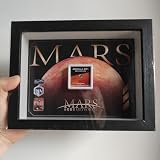
- ✅ Amgala 001 Martian meteorite (shergottite) specimen with themed shadow box display frame, found in Western Sahara 2022, genuine mars rock fragment.
Why quartz and silica matter to astrobiology
The interest is not that quartz is inherently biological. It is that silica can record the conditions under which water moved through ancient rock.
- On Earth, hot, mineral-rich fluids circulating through fractures can precipitate silica and quartz.
- Hydrothermal systems can provide liquid water, chemical gradients and usable energy—ingredients relevant to microbial habitability.
- Silica deposits at some terrestrial hot springs can entomb microbial textures or preserve organic compounds and other biosignatures.
- A Martian silica deposit formed in a comparable setting could therefore identify both a potentially habitable environment and a medium capable of preserving evidence.
This is an analogy and a conditional inference. If the Jezero material formed through hydrothermal activity, that setting may have supported microbes and may have protected traces of them. The mineral itself does not show that life was present (NASA’s science objectives).
Rank #4
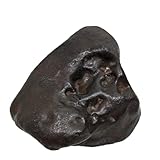
- AUTHENTIC METEORITE: Genuine iron meteorite specimen from outer space, featuring a distinctive dark fusion crust and unique surface patterns
- NATURAL FEATURES: Iron meteorite exhibits characteristic rough texture, pitted surface, and natural weathering marks from its journey through Earth's atmosphere
- Exquisite collectibles: Each specimen is completely unique in shape and texture, making it the first choice for meteorite collectors
- SCIENTIFIC VALUE: Iron meteorites contain rare metals and minerals formed during the early solar system's development
- DISPLAY WORTHY: As an impressive conversational material and educational tool, it contributes to a deeper understanding of space objects and planetary science
Habitability is not the same as inhabited
| Term | Meaning in this investigation |
|---|---|
| Habitability | Conditions that could have supported life, such as water, energy sources and suitable chemistry. |
| Biosignature | A mineral, texture, molecule or chemical pattern that might result from life but requires testing against non-biological explanations. |
| Confirmed life | Evidence that survives plausible abiotic explanations, contamination checks and independent laboratory analyses. |
The quartz-rich observation currently reaches the first category and may help locate material relevant to the second. It does not reach the third. Quartz forms through ordinary geological processes, and organic molecules—if found nearby—would not automatically be biological.
What remains uncertain
- Mineral phase: the spectra may indicate quartz or another hydrated or silica-rich phase; the report does not establish a pure-quartz body.
- Formation process: hydrothermal precipitation is a possibility, not a confirmed ancient hot spring. Groundwater alteration, volcanic processes or surface weathering could also contribute.
- Geological context: a loose fragment may have been transported from elsewhere. Silica still attached to bedrock, in veins, coatings or layered deposits, would provide stronger evidence about its origin.
- Age: an estimate for an enclosing geological unit or event should not be treated as the measured age of every quartz grain.
- Biological specificity: no reported feature from this observation requires biology as its explanation.
How this fits Perseverance’s wider mission
Perseverance has examined igneous rocks on the crater floor, ancient lakebed and delta deposits, and rocks altered by water. It is building a diverse collection of drilled cores and regolith samples for possible future retrieval. Those findings are related through Jezero’s water history and habitability, but they are not one combined “quartz proves life” result.
Best Value

- Wearable Space History Gift : This meteorite necklace lets you carry a real meteorite close to your heart, showcasing a naturally formed meteorite rock that sparks curiosity, invites conversation, and makes a meaningful keepsake for stargazers and science lovers alike.
- Rare Collector Grade Piece : Each meteorite for sale features an authentic meteorite rock sourced from campo del cielo meteorites, offering a distinctive texture and origin story that elevates your jewelry collection and makes a memorable present for cosmic enthusiasts.
- Capture Cosmic Wonder Daily : Explore unforgettable astronomy gift ideas with a genuine meteorite chunk suspended from your chain, a real meteorite specimen that turns everyday outfits into conversations about space, deep time, and your passion for the universe.
- Authentic, Hand-selected Space Relic : Each small meteorite piece is carefully chosen within meteorite specimen 3g-6g, then paired with a meteorite with authentication card so you can wear it proudly, share its origin story, and gift it with total confidence.
- Meaningful Gift With A Story : Give a unique science gift that feels personal and timeless, a meteorite collection gift featuring an ancient campo del cielo space rock that sparks curiosity, celebrates milestones, and becomes a treasured keepsake for any space lover.
Other targets, including organic carbon and the Cheyava Falls rock, are separate investigations. NASA’s mission goals are to assess ancient habitability, seek materials capable of preserving biosignatures and collect samples—not to declare life from a single mineral observation (NASA science highlights).
What scientists will look for next
On Mars
- Find silica-rich material in place, still connected to bedrock.
- Compare bright targets with surrounding rocks and soil.
- Determine whether silica occurs as veins, coatings, cement or layered precipitates.
- Identify associated minerals that constrain fluid temperature, acidity, chemistry and timing.
- Drill and cache suitable material while preserving its exact geological context.
In the sample archive
The most informative samples will combine evidence of a water-altered or energy-rich environment with a strong chance of preserving organic compounds or microscopic textures. Recording the sample’s location and relationship to nearby layers is as important as the chemistry itself.
In Earth laboratories
Returned samples could be examined with high-resolution microscopy, mass spectrometry, isotope measurements, organic chemistry and mineralogical techniques that are too large or power-intensive to send to Mars. Those analyses could test whether a texture, molecule or isotope pattern is better explained by abiotic mineral formation or ancient biology. NASA describes the collection as intended for possible retrieval and return by a future mission; Perseverance has not returned samples to Earth (NASA mission overview; NASA on Jezero discoveries).
Recommended Free Tools
What the headline gets wrong
“Unearths” suggests excavation, while the reported result is a remote detection at the surface. “Rare quartz” can also imply that quartz is intrinsically rare across Mars or the universe; the evidence instead indicates an unusual silica-rich occurrence in the rover’s explored region. Most importantly, “clues to life” is defensible only when it means a clue about where ancient life might have lived or left a trace—not evidence that organisms have been found.
Bottom line
Perseverance has identified a promising silica-rich target on the Jezero crater rim. If the material formed in a hydrothermal system, it could preserve a record of water, chemical energy and perhaps biosignatures. For now, scientists have evidence of a potentially habitable geological setting, not proof that Mars ever hosted life.
Quick Recap
Product prices and availability are accurate as of the date/time indicated and are subject to change. Any price and availability information displayed on Amazon at the time of purchase will apply.

