Quick wins for a faster PC:
Fix the driver behind crashes, sound loss and screen glitchesFind Drivers →Repair Windows errors before they cause bigger problemsFix Now →The best OpenCode alternative depends on where you want the agent to work. Choose Aider or Codex CLI when your normal review loop is a shell; choose Cursor or Cline when code, diffs, and agent controls should stay in an editor; choose OpenHands when you need a broader workspace that can span local, cloud, or self-hosted deployment. OpenCode remains a useful terminal-oriented baseline, but these products are not interchangeable versions of the same tool.
Compare the workflow surface first, then autonomy, model and provider choices, deployment, and total cost. Product interfaces, plans, provider compatibility, and cloud availability change quickly, so confirm the current terms in each project’s official documentation before committing a team.
As an Amazon Associate I earn from qualifying purchases.
OpenCode alternatives at a glance
The table is a workflow map, not a performance ranking. No comparable benchmark in the available material establishes that one agent writes better code, responds faster, or produces fewer defects than another.
Do these 3 things before closing this tab:
1Clear out junk files and repair common Windows errors2Scan for outdated or missing drivers - takes under a minute3Repair Windows errors before they cause bigger problems| Tool | Primary surface | Best fit | What distinguishes it | Important qualification |
|---|---|---|---|---|
| OpenCode | Terminal-oriented, with terminal, desktop, and IDE surfaces described in an OpenHands-authored July 2026 comparison | Developers who want an agent centered on command-line work but may also use graphical surfaces | Baseline for comparing terminal, desktop, and IDE workflows | Confirm the currently supported surfaces and providers in OpenCode’s documentation |
| Aider | Terminal | Pair programming around an existing Git repository | Its official site describes it as “AI Pair Programming in Your Terminal” | Provider, model, and plan details are changeable; check current documentation |
| Codex CLI | Terminal CLI | Users who want a maintained command-line coding agent and are comfortable with a provider’s account and eligibility requirements | OpenAI maintains dedicated CLI documentation | Installation, access requirements, and features must be checked on the current documentation page |
| Cursor | Desktop code editor | Developers who want agent actions, code context, and review in one editor | Its official product page presents an AI coding editor and agent experience | Desktop workflow and plan terms can change; verify current limits and supported models |
| Cline | VS Code-centered editor workflow | VS Code users who want an agent integrated into their existing editor | An OpenHands-authored July 2026 comparison describes VS Code as its strongest surface | The same comparison says its CLI was still in preview; confirm the current status before planning around it |
| OpenHands | Local-first workspace/platform, with cloud and self-hosted routes described in its documentation | Teams or individuals who need a broader agent workspace rather than one local terminal or editor extension | Combines agent use with deployment and workspace choices | Specific browser features and hosted availability should be verified currently |
The June 2026 comparison published by OpenHands also groups these tools by autonomy, provider flexibility, licensing, interface, and cost or team fit. It is useful for category mapping, but it is vendor-authored rather than an independent benchmark, and its pricing snapshot is not a reliable October 2026 price list.
#1 Best Overall

- Take your gaming skills to the next level: The Logitech G413 SE is a full-size keyboard with gaming-first features and the durability and performance necessary to compete
- PBT keycaps: Heat- and wear-resistant, this computer gaming keyboard features the most durable material used in keycap design
- Tactile mechanical switches: Uncompromising performance is always within reach with this wired gaming keyboard
- Premium color, material and finish: Elevate your gaming setup with this backlit keyboard featuring a sleek, black-brushed aluminum top case and white LED lighting
- 6-Key rollover anti-ghosting performance: Experience reliable key input with this anti-ghosting keyboard versus non-gaming mechanical keyboards
What you are actually replacing when you leave OpenCode
An “alternative” can replace different parts of an OpenCode workflow. If you mainly type prompts beside shell commands, the closest substitutes are Aider and Codex CLI. If you want an agent to inspect files, edit them, and show diffs beside your source code, an editor-centered product such as Cursor or Cline may feel more natural. If your requirement is a persistent environment that can be run locally, hosted, or self-hosted and shared across sessions, OpenHands is a platform choice rather than a one-for-one local-agent swap.
That distinction matters because interface changes the sequence of work. In a terminal, you normally describe a task, inspect command output, review a patch, run tests, and ask for another change without leaving the shell. In an editor, the same loop is organized around open files, inline diagnostics, a source-control view, and visible diffs. A workspace or platform can add session management, deployment controls, and automation around those interactions. The available sources establish these categories; they do not establish that any interface is inherently more productive.
Terminal-first alternatives
Aider: terminal pair programming around your repository
Aider is the most direct comparison when your preferred collaboration style is conversational pair programming in a shell. Its official descriptor, “AI Pair Programming in Your Terminal,” accurately signals the intended surface. You can keep your editor of choice while using the terminal agent to discuss a change, inspect a repository, and review the resulting patch through your normal version-control workflow.
Choose Aider when:
- Your source of truth is a Git repository and you want changes to remain visible as ordinary diffs.
- You prefer explicit back-and-forth supervision rather than handing an agent a long-running task with minimal intervention.
- You move between editors or work on remote machines where a terminal is more dependable than a desktop application.
Before adopting it for a team, verify which model providers and authentication methods are supported in the current release, how it records or summarizes sessions, and what its licensing permits for commercial use. “Terminal-first” describes the interaction surface; it does not by itself tell you how autonomous a particular model configuration will be.
Codex CLI: a maintained command-line option
Codex CLI is a separate terminal alternative with dedicated documentation maintained by OpenAI. The documentation is the authority for current installation steps, eligibility, authentication, and available features. Those details can change independently of the general idea of a terminal coding agent, so do not copy an old setup command from a blog or assume that access is identical across accounts and regions.
Rank #2

- Full Key Programmable: This custom keyboard supports full-key macro programming to create exclusive shortcut operations, helping you trigger complex commands with a single click and be a step ahead in the game. The unique dual-mode knob design of the black and white keyboard wireless allows you to quickly switch between gaming and office modes. In addition, with 3 programmable shortcut keys (M1/M2/M3), the usb keyboard lets you easily set up personalized functions to improve operational efficiency
- Vibrant RGB Keyboard: The led keyboard comes with 16.8 million RGB color and 16 preset light effects add more fun to your desktop. With the knob or FN+ key combination, you can freely adjust the brightness and speed of the cute keyboard's lights to create an exclusive atmosphere(FN+END can switch backlit colour effect). With the macro software, you can also customize the lights to make your silent backlit keyboard truly unique and enjoy an immersive visual experience whether you are working or gaming
- 99 Keys Compact Ergonomic Keyboard: This 96% layout retro keyboard combines vintage aesthetics with modern craftsmanship, and the integrated numeric keypad retains the familiar typing experience while freeing up more desktop space. This aula keyboard is equipped with a foldable two-stage stand, you can adjust the angle of the clicky keyboard according to your needs, reducing the pressure on your wrists and creating a more comfortable typing experience
- Multi-device Connectivity: AULA light up keyboard supports Bluetooth 5.0, 2.4GHz wireless and USB-C wired connectivity modes, enjoying convenient switching anytime, anywhere. Up to 5 devices can be connected at the same time, one key switch, no need to pair repeatedly. Whether it's for office, gaming or mobile use, this typewriter keyboard delivers a seamless experience for another level of efficiency
- Gaming Keyboard: All keys on this aula s99 wireless keyboard support macro customization, which allows you to record and edit macros to program a series of complex actions into a key, useful in very real-time games for amateur gamers.If you have very strict requirements for game response speed, it is recommended that you purchase a mechanical keyboard priced at $50 or more, which is more suitable for professional gamers.The aula s99 pc keyboard is compatible with Windows XP/7/8/10, Mac, Android and iOS. Please NOTE: this product is a membrane keyboard not mechanical keyboard and this doesn't support hot-swapping
Codex CLI is a sensible candidate when:
- You want a command-line interface rather than an editor extension.
- Your organization already has an approved account and provider relationship for the service.
- You are willing to follow the current access and usage terms instead of selecting a tool solely by its name.
Evaluate it against OpenCode and Aider using the same repository and supervision policy: what files can the agent read, when it asks for approval, how you inspect a diff, and how you run tests. The available material does not establish a relative code-quality or speed advantage among these terminal tools.
OpenCode compared with terminal alternatives
OpenCode is the baseline when the shell is the center of your development workflow. An OpenHands-authored July 2026 comparison describes OpenCode as supporting terminal, desktop, and IDE surfaces, while still positioning it as a terminal-oriented option. That combination may suit someone who wants to begin in a shell and occasionally use a graphical surface, but the exact availability of each surface should be checked in current OpenCode documentation.
Free tools Windows power users keep installed
One-click scans. No signup required.
Use this decision sequence:
- Start with your review location. If every meaningful review happens in a terminal and Git diff, compare OpenCode, Aider, and Codex CLI first.
- Check provider constraints. List the models your organization is allowed to use, then confirm each candidate can access them under current terms.
- Check approval behavior. Decide whether the agent may edit automatically, must request permission for file changes, or must stop before running commands.
- Run a representative repository task. Use a non-sensitive branch and the same prompt, tests, and review checklist for each candidate. Treat the result as your team’s observation, not a universal benchmark.
Editor and desktop alternatives
Cursor: an editor-centered agent workflow
Cursor is the editor-centered choice in this comparison. Its official product page presents an AI coding editor and agent experience, so the main benefit is keeping context, edits, diagnostics, and review in one desktop application instead of switching between a terminal and an editor.
This workflow is useful when:
- You navigate unfamiliar code through symbols, search, and open-file context while the agent works.
- You want to inspect proposed edits as editor diffs before accepting them.
- Your team already standardizes on a desktop editor and wants agent features in that same environment.
Ask practical questions before rollout: Which repositories and files are included in context? What approval prompts appear before edits or command execution? Which models and providers are available on your plan? How are team accounts, retention, and administrative controls handled? The product’s current documentation, not a static comparison, must answer those questions.
Cline: VS Code-centered supervision
The OpenHands-authored July 2026 comparison describes Cline as strongest in VS Code and says its CLI was still in preview at that time. That makes it a natural candidate for developers who already perform code review, debugging, and source control inside VS Code. If a command-line interface is essential, treat the preview status as a decision risk and confirm whether the CLI has since become generally available.
Rank #3
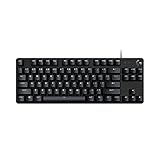
- Take your gaming skills to the next level: The Logitech G413 TKL SE is a tenkeyless keyboard with gaming-first features and the durability and performance necessary to compete
- PBT keycaps: Heat- and wear-resistant, this computer gaming keyboard features the most durable material used in keycap design
- Tactile mechanical switches: Uncompromising performance is always within reach with this wired gaming keyboard
- Premium color, material and finish: Elevate your gaming setup with this backlit keyboard featuring a sleek, black-brushed aluminum top case and white LED lighting
- 6-Key rollover anti-ghosting performance: Experience reliable key input with this anti-ghosting keyboard versus non-gaming mechanical keyboards
An editor agent changes the supervision habit. Instead of reading a terminal transcript alone, you can inspect the exact files touched, compare hunks, and use editor diagnostics before accepting a change. You still need repository permissions, test commands, and a policy for generated changes. Editor integration does not remove the need to review dependency updates, migrations, security-sensitive code, or broad refactors.
Choosing between an editor agent and a terminal agent
| Question | Prefer a terminal workflow when… | Prefer an editor workflow when… |
|---|---|---|
| Where do you review changes? | You rely on shell-based Git commands and terminal test output | You rely on inline diagnostics, visual diffs, and open-file navigation |
| Where do you work? | Remote hosts, containers, SSH sessions, or minimal environments | A managed desktop with a consistent editor installation |
| How do you supervise? | You want short conversational turns and explicit command output | You want file context and proposed hunks visible beside the code |
| What is the switching cost? | Moving between terminal and editor is acceptable | Keeping prompts, edits, and review in one application matters |
Workspace, browser, and deployment-oriented alternatives
OpenHands: a broader local-first platform
OpenHands represents a different category from a single terminal agent or editor extension. Its documentation describes a platform for using coding agents, and its support material describes local-first operation alongside cloud and self-hosted deployment routes. That makes it relevant when the requirement includes where sessions run, how environments are provisioned, or how a team manages agent work—not merely which prompt box is most convenient.
Use OpenHands as a candidate when:
- You need to evaluate local execution and hosted or self-hosted deployment as separate options.
- You want a workspace around agent sessions, rather than an agent attached only to one terminal window.
- Your team must consider environment isolation, credentials, persistence, or shared operational controls.
Do not assume that “platform” means every browser feature is available in every edition. Confirm the current cloud offering, self-hosting requirements, supported environments, data handling, and authentication model. The documentation supports local-first and cloud or self-hosted paths; specific browser capabilities can change and should be verified before you promise a browser-only workflow to users.
When a browser-based experience is the real requirement
First define what “browser-based” means for your team. It might mean a hosted editor that runs entirely in a browser, a web dashboard that starts or monitors local agents, or a remote development environment reached through a browser. Those are operationally different.
- Define the execution location. Decide whether source code and credentials remain on a developer machine, run in a controlled cloud environment, or run on infrastructure your team operates.
- Define persistence. Specify whether sessions must survive a closed browser, whether multiple people can inspect them, and how workspace state is backed up.
- Define network boundaries. Record which repositories, package registries, issue trackers, and deployment systems the agent may reach.
- Verify the product edition. Check that the current documentation explicitly supports the browser, cloud, or self-hosted path you intend to use; do not infer it from a marketing category.
Five decision axes that matter more than feature lists
1. Interface and review loop
Map the complete loop from prompt to merged change. A terminal-first tool may minimize context switching for shell-oriented developers. An editor agent may reduce the cost of locating files and inspecting hunks. A workspace can add visibility and automation around sessions. Pick the loop your team will actually follow, not the interface that looks most impressive in a demonstration.
Rank #4

- 4 Extra Hotkeys, Full-Size 108-Key Anti-Ghosting - Dedicated shortcut keys default to mute, calculator, screen lock and desktop, while 104 keys register accurately even during rapid multi-key combos.
- Swap Switches Without Soldering, Smooth and Quiet - The upgraded socket accepts almost any 3-pin or 5-pin switch, and stock Red linear switches keep clicks discreet for shared spaces.
- Vibrant RGB for a True eSports Vibe - Up to 19 preset lighting modes with adjustable brightness and flow speed, including a music-sync mode that lights up in time with your desktop audio.
- Ergonomic 2-Stage Feet, 2 Sets of Mixed Color Keycaps - Adjustable feet relax your wrists during long sessions, and two included keycap sets let you swap looks whenever you want a fresh vibe.
- Pro Software for Even Deeper Customization - Reassign the 4 hotkeys to your own shortcuts, design custom lighting effects, and program macros with your own keybindings.
2. Autonomy and supervision
“Agent” does not describe one fixed level of independence. Ask whether the tool can plan several steps, edit multiple files, run commands, open pull requests, or continue after a failed test. Then set a policy for approvals. For production repositories, require explicit review for destructive commands, dependency changes, database migrations, authentication code, and generated infrastructure. For experiments, you may permit broader autonomy inside an isolated branch or container.
3. Model and provider flexibility
Provider flexibility affects portability, policy, and cost. Record the models your team can use, whether credentials are supplied by the service or by your organization, and whether requests can be routed through an approved endpoint. Do not infer provider support from a comparison table written months earlier. Confirm the current list, regional availability, data-use terms, and rate limits in official documentation.
4. License and deployment
Separate the license of the client or platform from the terms of the models it invokes. A tool may be installable locally while still depending on a hosted provider, or it may support self-hosting with infrastructure work that a hosted plan would avoid. Check commercial-use rights, source-availability expectations, authentication integration, logging, secrets handling, and upgrade responsibilities.
5. Cost and team fit
Calculate total cost rather than comparing a single advertised number. Include seats or subscriptions, model usage, provider API charges, cloud workspaces, self-hosted compute, storage, observability, and the engineering time needed to maintain the setup. A low software fee can be offset by infrastructure and administration; a managed plan can cost more per user while reducing operational work. The June 2026 vendor comparison contains a time-sensitive pricing snapshot, so do not treat those figures as current October 2026 prices.
A practical selection process
Use this process for an individual choice or a team pilot. It avoids declaring a universal winner and produces a decision tied to your own repositories.
Best Value

- Brilliant Color Illumination- With 11 unique backlights, choose the perfect ambiance for any mood. Adjust light speed and brightness among 5 levels for a comfortable environment, day or night. The double injection ABS keycaps ensure clear backlight and precise typing. From late-night tasks to immersive gaming, our mechanical keyboard enhances every experience
- Support Macro Editing: The K671 Mechanical Gaming Keyboard can be macro editing, you can remap the keys function, set shortcuts, or combine multiple key functions in one key to get more efficient work and gaming. The LED Backlit Effects also can be adjusted by the software(note: the color can not be changed)
- Hot-swappable Linear Red Switch- Our K671 gaming keyboard features red switch, which requires less force to press down and the keys feel smoother and easier to use. It's best for rpgs and mmo, imo games. You will get 4 spare switches and two red keycaps to exchange the key switch when it does not work.
- Full keys Anti-ghosting- All keys can work simultaneously, easily complete any combining functions without conflicting keys. 12 multimedia key shortcuts allow you to quickly access to calculator/media/volume control/email
- Professional After-Sales Service- We provide every Redragon customer with 24-Month Warranty , Please feel free to contact us when you meet any problem. We will spare no effort to provide the best service to every customer
- Write the non-negotiables. State whether terminal, desktop editor, browser access, local execution, self-hosting, or a particular provider is mandatory. Mark preferences separately from requirements.
- Choose two or three candidates from the same workflow category. For terminal work, start with OpenCode, Aider, and Codex CLI. For editor work, compare Cursor and Cline. Add OpenHands when deployment or workspace scope is part of the requirement.
- Prepare one representative task. Select a bug fix or small feature that exercises your language, test suite, repository structure, and normal review process. Remove secrets and use a disposable branch.
- Apply the same supervision rules. Give each tool equivalent permissions and require the same tests and human review. Record interruptions, rejected edits, unclear explanations, and setup friction instead of relying on memory.
- Check operational terms. Verify current model access, data retention, license, authentication, seat limits, usage limits, and deployment requirements.
- Decide by workflow fit. Select the tool that your developers can operate safely and consistently. If two tools fit, keep the one with the lower total cost and fewer policy exceptions.
Migration checklist from OpenCode
- Export or document the prompts, repository instructions, test commands, and approval conventions your team uses with OpenCode.
- Map each instruction to the candidate’s equivalent configuration mechanism; names and locations will differ by product.
- Recreate a least-privilege environment with a disposable branch, restricted credentials, and a known test command.
- Run a read-only exploration task first, then a small edit, then a multi-file change. Review the generated diff after each stage.
- Test failure recovery: stop an agent during a command, revert its changes, restart the session, and confirm that the repository remains recoverable.
- Document who pays for model usage, where logs are stored, and who handles provider or platform outages.
Common mistakes when comparing coding agents
Treating categories as direct substitutes
A terminal pair-programming tool, an editor-integrated agent, and a deployment-oriented workspace solve different problems. Compare products within the workflow you need before comparing individual features.
Using old pricing or availability claims
Plans, included usage, provider lists, and cloud features are volatile. Date every internal comparison and recheck official terms immediately before purchase or rollout.
Confusing autonomy with quality
A tool that performs more steps without asking may be convenient, but autonomy increases the impact of a wrong assumption. Measure the review burden and recovery behavior, not just how much work the agent attempts.
Skipping deployment and data questions
Local, hosted, and self-hosted modes can have different network access, logging, retention, and maintenance implications. Make those constraints part of the first screening round.
Calling a vendor comparison independent evidence
The OpenHands-authored June and July 2026 comparisons are useful for mapping categories and stated product positioning, but OpenHands is one of the products being compared. They do not constitute an independent benchmark of coding quality, speed, or reliability.
Bottom line: match the agent to the place you review code
Stay with OpenCode or compare it directly with Aider and Codex CLI if your work is fundamentally terminal-based. Move toward Cursor or Cline when the editor is where you understand and approve changes. Evaluate OpenHands when the requirement expands to a local-first workspace with cloud or self-hosted deployment choices. There is no evidence here for a universal winner; the durable decision is the one that matches your interface, supervision policy, approved providers, deployment boundary, and total cost.
Quick Recap
Product prices and availability are accurate as of the date/time indicated and are subject to change. Any price and availability information displayed on Amazon at the time of purchase will apply.
Recommended Free Tools

